Zarathustra summons his 'most abysmal thought' from the depths of his being, positioning himself as the advocate of life, suffering, and the eternal circuit of existence.
1 of 7 in Chapter LVII. THE CONVALESCENT415 of 593 in work
Now entering Chapter LVII. THE CONVALESCENT
Abysmal Thought's Awakening
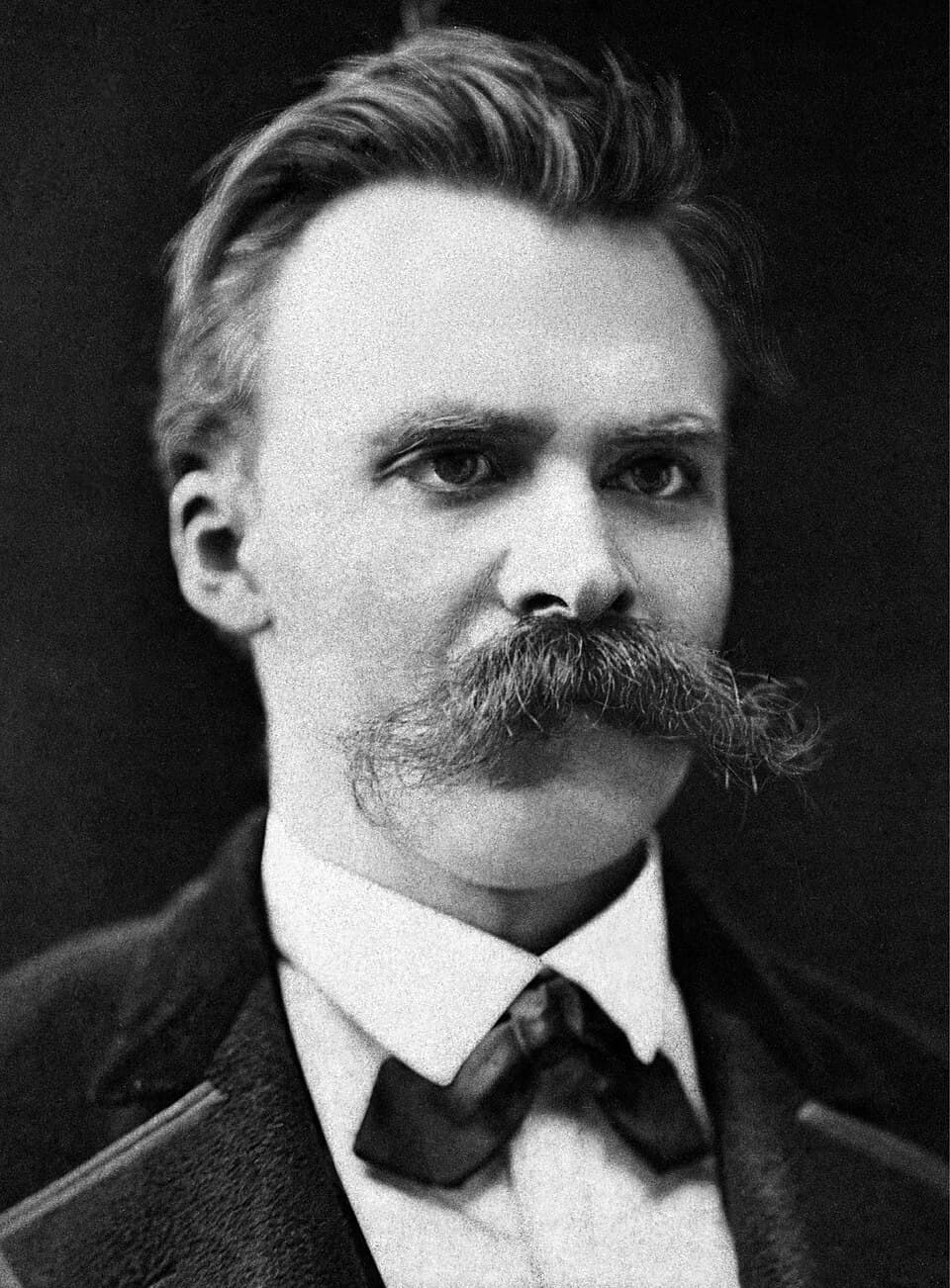
Friedrich Nietzsche
Thus Spake Zarathustra...ong after his return to his cave, Zarathustra sprang up from his couch like a madman, crying with a frightful voice, and acting as if some one still lay on the couch who did not wish to rise. Zarathustra’s voice also resounded in such a manner that his animals came to him frightened, and out of all the neighbouring caves and lurking-places all the creatures slipped away—flying, fluttering, creeping or leaping, according to their variety of foot or wing. Zarathustra, however, spake these words:
Up, abysmal thought out of my depth! I am thy cock and morning dawn, thou overslept reptile: Up! Up! My voice shall soon crow thee awake! Unbind the fetters of thine ears: listen! For I wish to hear thee! Up! Up! There is thunder enough to make the very graves listen! And rub the sleep and all the dimness and blindness out of thine eyes! Hear me also with thine eyes: my voice is a medicine even for those born blind. And once thou art awake, then shalt thou ever remain awake. It is not MY custom to awake great-grandmothers out of their sleep that I may bid them—sleep on! Thou stirrest, stretchest thyself, wheezest? Up! Up! Not wheeze, shalt…
Come hither! Give me thy hand—ha! let be! aha!—Disgust, disgust, disgust—alas to me! 2. Hardly, however, had Zarathustra spoken these words, when he fell down as one dead, and remained long as one dead. When however he again came to himself, then was he pale and trembling, and remained lying; and for long he would neither eat nor drink. This condition continued for seven days; his animals, however, did not leave him day nor night, except that the eagle flew forth to fetch food. And what it fe...
Continue reading →
2
2 of 7 in Chapter LVII. THE CONVALESCENT416 of 593 in work
⚖Words as Rainbow Bridges

Friedrich Nietzsche
Thus Spake ZarathustraThe author argues that language and music are beautiful illusions that allow eternally separated souls to bridge their isolation and 'dance' over the abyss of reality.
...would like to run after thee. All things long for thee, since thou hast remained alone for seven days—step forth out of thy cave! All things want to be thy physicians! Did perhaps a new knowledge come to thee, a bitter, grievous knowledge? Like leavened dough layest thou, thy soul arose and swelled beyond all its bounds.—” —O mine animals, answered Zarathustra, talk on thus and let me listen! It refresheth me so to hear your talk: where there is talk, there is the world as a garden unto me.
How charming it is that there are words and tones; are not words and tones rainbows and seeming bridges ‘twixt the eternally separated? To each soul belongeth another world; to each soul is every other soul a back-world. Among the most alike doth semblance deceive most delightfully: for the smallest gap is most difficult to bridge over. For me—how could there be an outside-of-me? There is no outside! But this we forget on hearing tones; how delightful it is that we forget! Have not names and tones been given unto things that man may refresh himself with them? It is a beautiful folly, speaking; therewith danceth man over everything. How lovely…
Everything goeth, everything returneth; eternally rolleth the wheel of existence. Everything dieth, everything blossometh forth again; eternally runneth on the year of existence. Everything breaketh, everything is integrated anew; eternally buildeth itself the same house of existence. All things separate, all things again greet one another; eternally true to itself remaineth the ring of existence. Every moment beginneth existence, around every ‘Here’ rolleth the ball ‘There.’ The middle is e...
Continue reading →
2
3 of 7 in Chapter LVII. THE CONVALESCENT417 of 593 in work
⚖Eternal Wheel of Existence

Friedrich Nietzsche
Thus Spake ZarathustraThe author presents the doctrine of the eternal recurrence, asserting that all things in existence move in an eternal cycle of return and renewal. He posits that time is a 'crooked path' where every moment is a beginning and the center of existence is everywhere.
...we forget on hearing tones; how delightful it is that we forget! Have not names and tones been given unto things that man may refresh himself with them? It is a beautiful folly, speaking; therewith danceth man over everything. How lovely is all speech and all falsehoods of tones! With tones danceth our love on variegated rainbows.— —“O Zarathustra,” said then his animals, “to those who think like us, things all dance themselves: they come and hold out the hand and laugh and flee—and return.
Everything goeth, everything returneth; eternally rolleth the wheel of existence. Everything dieth, everything blossometh forth again; eternally runneth on the year of existence. Everything breaketh, everything is integrated anew; eternally buildeth itself the same house of existence. All things separate, all things again greet one another; eternally true to itself remaineth the ring of existence. Every moment beginneth existence, around every ‘Here’ rolleth the ball ‘There.’ The middle is everywhere. Crooked is the path of eternity.”
— —O ye wags and barrel-organs! answered Zarathustra, and smiled once more, how well do ye know what had to be fulfilled in seven days:— —And how that monster crept into my throat and choked me! But I bit off its head and spat it away from me. And ye—ye have made a lyre-lay out of it? Now, however, do I lie here, still exhausted with that biting and spitting-away, still sick with mine own salvation. AND YE LOOKED ON AT IT ALL? O mine animals, are ye also cruel? Did ye like to look at my gre...
6
4 of 7 in Chapter LVII. THE CONVALESCENT418 of 593 in work
⚖Cruelty to Self

Friedrich Nietzsche
Thus Spake ZarathustraThe author confesses that man's 'baddest' qualities are essential for his 'best' creative power, lamenting that human evil is often too small rather than too great.
...earth. When the great man crieth—: immediately runneth the little man thither, and his tongue hangeth out of his mouth for very lusting. He, however, calleth it his “pity.” The little man, especially the poet—how passionately doth he accuse life in words! Hearken to him, but do not fail to hear the delight which is in all accusation! Such accusers of life—them life overcometh with a glance of the eye. “Thou lovest me?” saith the insolent one; “wait a little, as yet have I no time for thee.”
Towards himself man is the cruellest animal; and in all who call themselves “sinners” and “bearers of the cross” and “penitents,” do not overlook the voluptuousness in their plaints and accusations! And I myself—do I thereby want to be man’s accuser? Ah, mine animals, this only have I learned hitherto, that for man his baddest is necessary for his best,— —That all that is baddest is the best POWER, and the hardest stone for the highest creator; and that man must become better AND badder:— Not to THIS torture-stake was I tied, that I know man is bad,—but I cried, as no one hath yet cried: “Ah, that his baddest is so very small!
Ah, that his best is so very small!” The great disgust at man—IT strangled me and had crept into my throat: and what the soothsayer had presaged: “All is alike, nothing is worth while, knowledge strangleth.” A long twilight limped on before me, a fatally weary, fatally intoxicated sadness, which spake with yawning mouth. “Eternally he returneth, the man of whom thou art weary, the small man”—so yawned my sadness, and dragged its foot and could not go to sleep. A cavern, became the human ear...
2
5 of 7 in Chapter LVII. THE CONVALESCENT419 of 593 in work
⚖The Great Disgust

Friedrich Nietzsche
Thus Spake ZarathustraThe author reflects on a profound existential disgust and the wearying realization that the 'small man' eternally returns, stalling spiritual progress.
...ints and accusations! And I myself—do I thereby want to be man’s accuser? Ah, mine animals, this only have I learned hitherto, that for man his baddest is necessary for his best,— —That all that is baddest is the best POWER, and the hardest stone for the highest creator; and that man must become better AND badder:— Not to THIS torture-stake was I tied, that I know man is bad,—but I cried, as no one hath yet cried: “Ah, that his baddest is so very small! Ah, that his best is so very small!”
The great disgust at man—IT strangled me and had crept into my throat: and what the soothsayer had presaged: “All is alike, nothing is worth while, knowledge strangleth.” A long twilight limped on before me, a fatally weary, fatally intoxicated sadness, which spake with yawning mouth. “Eternally he returneth, the man of whom thou art weary, the small man”—so yawned my sadness, and dragged its foot and could not go to sleep.
A cavern, became the human earth to me; its breast caved in; everything living became to me human dust and bones and mouldering past. My sighing sat on all human graves, and could no longer arise: my sighing and questioning croaked and choked, and gnawed and nagged day and night: —“Ah, man returneth eternally! The small man returneth eternally!” Naked had I once seen both of them, the greatest man and the smallest man: all too like one another—all too human, even the greatest man! All too...
1