16 of 28 in APPENDIX.581 of 593 in work
The Art of Self-Love
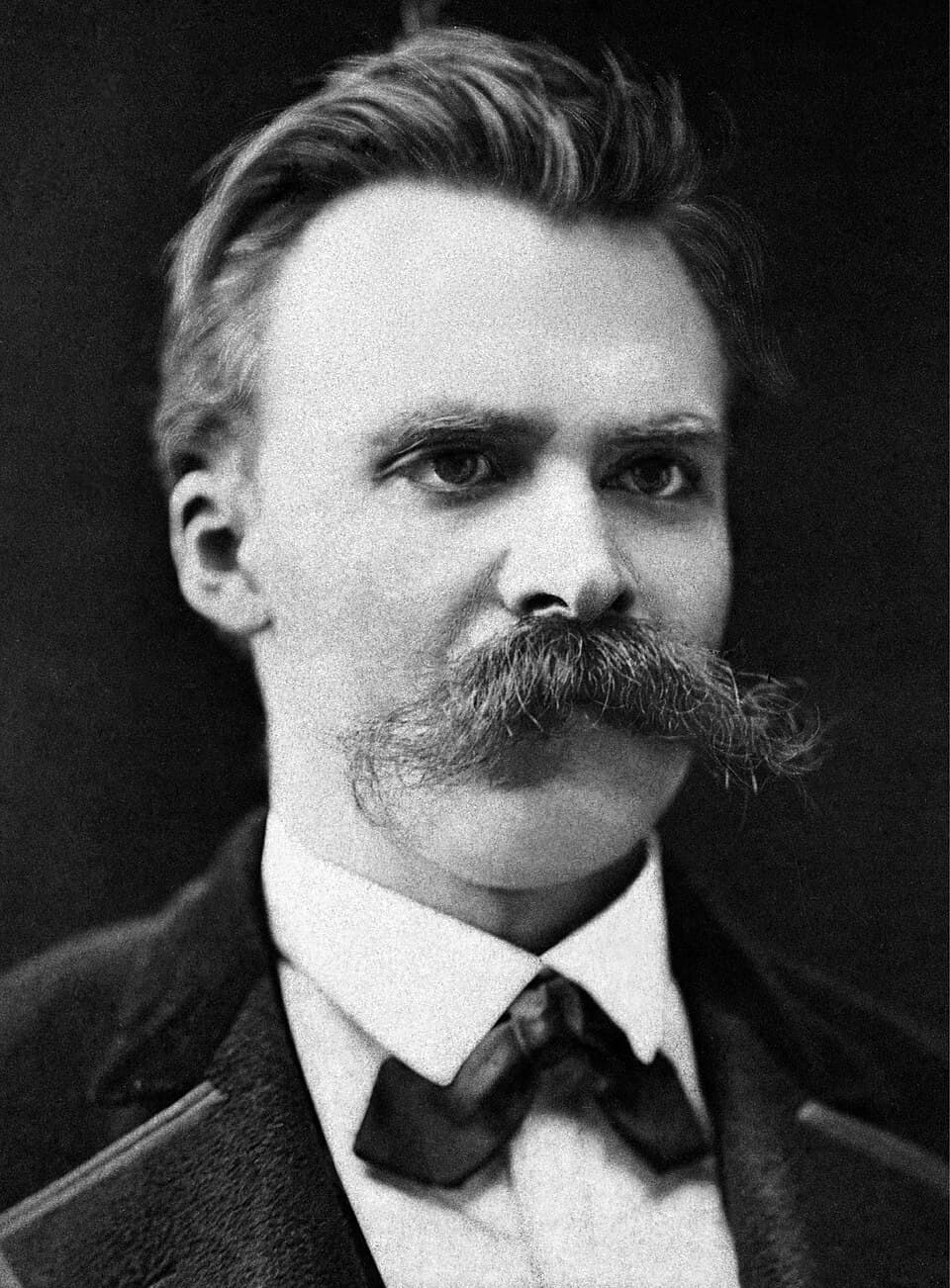
Friedrich Nietzsche
Thus Spake Zarathustra

A thesis on the modern man's inability to endure himself, leading to a frantic search for external diversions. The author argues that learning to love oneself is the finest and most difficult art, requiring an inner transformation to overcome self-contempt.

...the original context, are repeated far and wide as internal evidence proving the general unsoundness of Nietzsche’s philosophy. Already in the last of the “Thoughts out of Season” Nietzsche speaks as follows about modern men: “...these modern creatures wish rather to be hunted down, wounded and torn to shreds, than to live alone with themselves in solitary calm. Alone with oneself!—this thought terrifies the modern soul; it is his one anxiety, his one ghastly fear” (English Edition, page 141).
In his feverish scurry to find entertainment and diversion, whether in a novel, a newspaper, or a play, the modern man condemns his own age utterly; for he shows that in his heart of hearts he despises himself. One cannot change a condition of this sort in a day; to become endurable to oneself an inner transformation is necessary. Too long have we lost ourselves in our friends and entertainments to be able to find ourselves so soon at another’s bidding. “And verily, it is no commandment for to-day and to-morrow to LEARN to love oneself. Rather is it of all arts the finest, subtlest, last, and patientest.”
In the last verse Nietzsche challenges us to show that our way is the right way. In his teaching he does not coerce us, nor does he overpersuade; he simply says: “I am a law only for mine own, I am not a law for all. This—is now MY way,—where is yours?” Chapter LVI. Old and New Tables. Par. 2. Nietzsche himself declares this to be the most decisive portion of the whole of “Thus Spake Zarathustra”. It is a sort of epitome of his leading doctrines. In verse 12 of the second paragraph, we lear...
6
17 of 28 in APPENDIX.582 of 593 in work
Philosophy's Art-Form Garb
Friedrich Nietzsche
Thus Spake Zarathustra

The author observes that new philosophies must often adopt the 'garb' of art or the mask of madness to survive the hostile struggle of competing values.

...where is yours?” Chapter LVI. Old and New Tables. Par. 2. Nietzsche himself declares this to be the most decisive portion of the whole of “Thus Spake Zarathustra”. It is a sort of epitome of his leading doctrines. In verse 12 of the second paragraph, we learn how he himself would fain have abandoned the poetical method of expression had he not known only too well that the only chance a new doctrine has of surviving, nowadays, depends upon its being given to the world in some kind of art-form.
Just as prophets, centuries ago, often had to have recourse to the mask of madness in order to mitigate the hatred of those who did not and could not see as they did; so, to-day, the struggle for existence among opinions and values is so great, that an art-form is practically the only garb in which a new philosophy can dare to introduce itself to us.
Pars. 3 and 4. Many of the paragraphs will be found to be merely reminiscent of former discourses. For instance, par. 3 recalls “Redemption”. The last verse of par. 4 is important. Freedom which, as I have pointed out before, Nietzsche considered a dangerous acquisition in inexperienced or unworthy hands, here receives its death-blow as a general desideratum. In the first Part we read under “The Way of the Creating One”, that freedom as an end in itself does not concern Zarathustra at all. He...
5
18 of 28 in APPENDIX.583 of 593 in work
Heroism's Final Despair
Friedrich Nietzsche
Thus Spake Zarathustra

This thesis distinguishes between constitutional pessimism and the desperation of a 'netted lion' who ceases to struggle out of sheer exhaustion. It describes a state where heroism is thwarted to the point that the individual renounces the fight in favor of total surrender.

...16, 17. These are supplementary to the discourse “Backworld’s-men”. Par. 18. We must be careful to separate this paragraph, in sense, from the previous four paragraphs. Nietzsche is still dealing with Pessimism here; but it is the pessimism of the hero—the man most susceptible of all to desperate views of life, owing to the obstacles that are arrayed against him in a world where men of his kind are very rare and are continually being sacrificed. It was to save this man that Nietzsche wrote.
Heroism foiled, thwarted, and wrecked, hoping and fighting until the last, is at length overtaken by despair, and renounces all struggle for sleep. This is not the natural or constitutional pessimism which proceeds from an unhealthy body—the dyspeptic’s lack of appetite; it is rather the desperation of the netted lion that ultimately stops all movement, because the more it moves the more involved it becomes.
Par. 20. “All that increases power is good, all that springs from weakness is bad. The weak and ill-constituted shall perish: first principle of our charity. And one shall also help them thereto.” Nietzsche partly divined the kind of reception moral values of this stamp would meet with at the hands of the effeminate manhood of Europe. Here we see that he had anticipated the most likely form their criticism would take (see also the last two verses of par. 17). Par. 21. The first ten verses,...
5
19 of 28 in APPENDIX.584 of 593 in work
Peace vs Greatness
Friedrich Nietzsche
Thus Spake Zarathustra

The author critiques the modern desire for comfort and the cessation of pain as a sign of cultural decline. He argues that such an attitude makes both ruling and obeying too burdensome, preventing the development of great races or castes.

...lso the last two verses of par. 17). Par. 21. The first ten verses, here, are reminiscent of “War and Warriors” and of “The Flies in the Market-place.” Verses 11 and 12, however, are particularly important. There is a strong argument in favour of the sharp differentiation of castes and of races (and even of sexes; see Note on Chapter XVIII.) running all through Nietzsche’s writings. But sharp differentiation also implies antagonism in some form or other—hence Nietzsche’s fears for modern men.
What modern men desire above all, is peace and the cessation of pain. But neither great races nor great castes have ever been built up in this way. “Who still wanteth to rule?” Zarathustra asks in the “Prologue”. “Who still wanteth to obey? Both are too burdensome.” This is rapidly becoming everybody’s attitude to-day.
The tame moral reading of the face of nature, together with such democratic interpretations of life as those suggested by Herbert Spencer, are signs of a physiological condition which is the reverse of that bounding and irresponsible healthiness in which harder and more tragic values rule. Par. 24. This should be read in conjunction with “Child and Marriage”. In the fifth verse we shall recognise our old friend “Marriage on the ten-years system,” which George Meredith suggested some years ago...
5
20 of 28 in APPENDIX.585 of 593 in work
Wickedness as Wholeness
Friedrich Nietzsche
Thus Spake Zarathustra

The author argues that morality is relative to the 'ascending' or 'descending' line of life, suggesting that suppressing a great man's 'wickedness' may actually destroy his wholeness and potential for greatness.

...in England at the time Darwin wrote, may both, according to Nietzsche, have induced the renowned naturalist to describe the forces of nature as he did in his “Origin of Species”. In verses 28, 29, and 30 of the second portion of this discourse we meet with a doctrine which, at first sight, seems to be merely “le manoir a l’envers,” indeed one English critic has actually said of Nietzsche, that “Thus Spake Zarathustra” is no more than a compendium of modern views and maxims turned upside down.
Examining these heterodox pronouncements a little more closely, however, we may possibly perceive their truth. Regarding good and evil as purely relative values, it stands to reason that what may be bad or evil in a given man, relative to a certain environment, may actually be good if not highly virtuous in him relative to a certain other environment. If this hypothetical man represent the ascending line of life—that is to say, if he promise all that which is highest in a Graeco-Roman sense, then it is likely that he will be condemned as wicked if introduced into the society of men representing the opposite and descending line of life. By…
Fortunately, the natural so-called “wickedness” of higher men has in a certain measure been able to resist this lopping process which successive slave-moralities have practised; but signs are not wanting which show that the noblest wickedness is fast vanishing from society—the wickedness of courage and determination—and that Nietzsche had good reasons for crying: “Ah, that (man’s) baddest is so very small! Ah, that his best is so very small. What is good? To be brave is good! It is the good war...
Continue reading →
4