The text distinguishes between suffering, which seeks heirs and a future beyond itself, and joy, which desires only its own eternal recurrence.
12 of 15 in Chapter LXXIX. THE DRUNKEN SONG555 of 593 in work
Suffering's Desire for Heirs
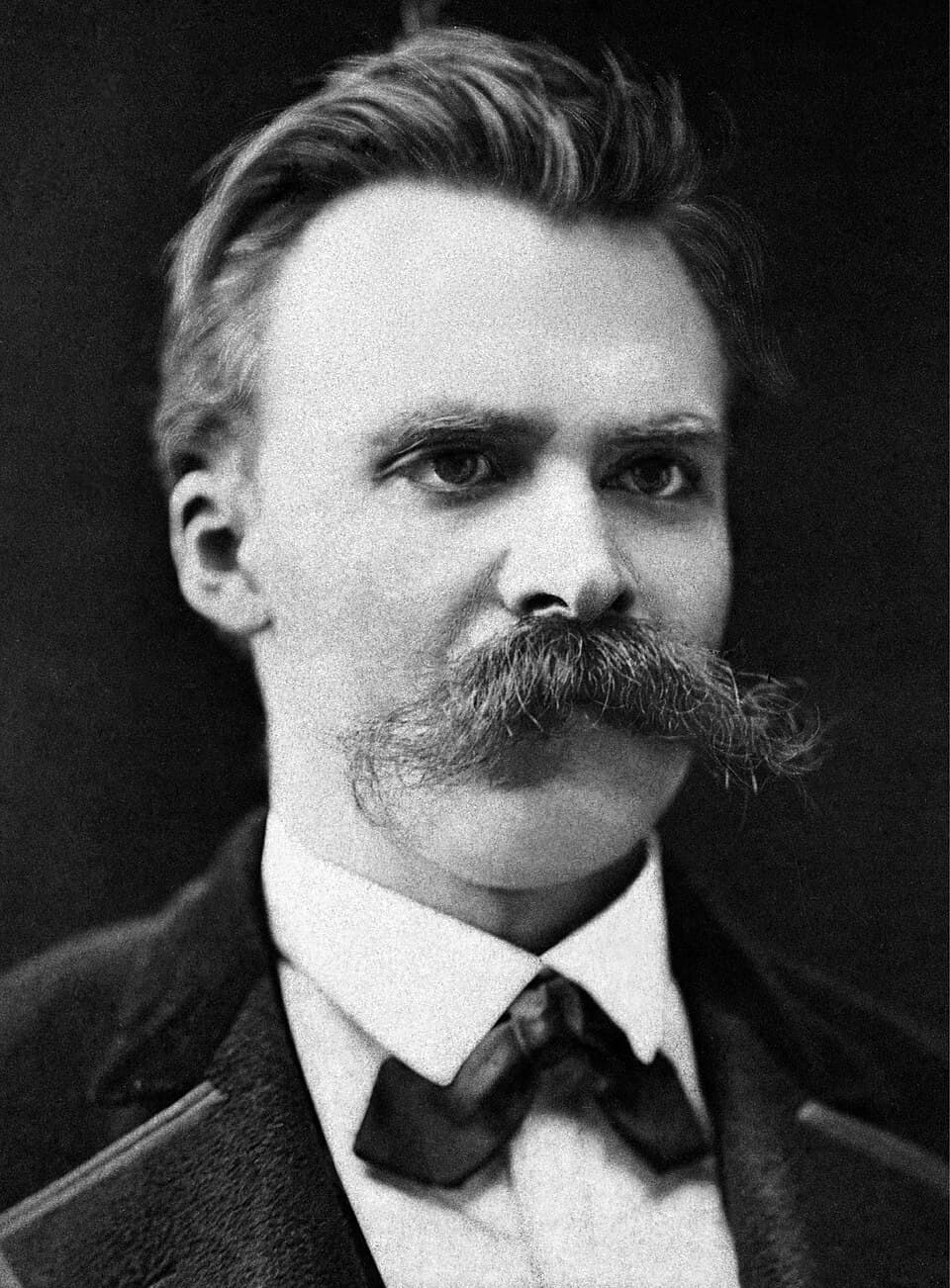
Friedrich Nietzsche
Thus Spake Zarathustra...rdrunk her drunkenness? hath she become overawake? doth she ruminate? —Her woe doth she ruminate over, in a dream, the old, deep midnight—and still more her joy. For joy, although woe be deep, JOY IS DEEPER STILL THAN GRIEF CAN BE. 9. Thou grape-vine! Why dost thou praise me? Have I not cut thee! I am cruel, thou bleedest—: what meaneth thy praise of my drunken cruelty? “Whatever hath become perfect, everything mature—wanteth to die!” so sayest thou. Blessed, blessed be the vintner’s knife!
But everything immature wanteth to live: alas! Woe saith: “Hence! Go! Away, thou woe!” But everything that suffereth wanteth to live, that it may become mature and lively and longing, —Longing for the further, the higher, the brighter. “I want heirs,” so saith everything that suffereth, “I want children, I do not want MYSELF,”— Joy, however, doth not want heirs, it doth not want children,—joy wanteth itself, it wanteth eternity, it wanteth recurrence, it wanteth everything eternally-like-itself.
Woe saith: “Break, bleed, thou heart! Wander, thou leg! Thou wing, fly! Onward! upward! thou pain!” Well! Cheer up! O mine old heart: WOE SAITH: “HENCE! GO!” 10. Ye higher men, what think ye? Am I a soothsayer? Or a dreamer? Or a drunkard? Or a dream-reader? Or a midnight-bell? Or a drop of dew? Or a fume and fragrance of eternity? Hear ye it not? Smell ye it not? Just now hath my world become perfect, midnight is also midday,— Pain is also a joy, curse is also a blessing, night is also a...
5
13 of 15 in Chapter LXXIX. THE DRUNKEN SONG556 of 593 in work
⚖Midnight's Perfection

Friedrich Nietzsche
Thus Spake ZarathustraA visionary declaration of the unity of opposites, where the perfection of the world is found in the realization that pain is joy and midnight is midday.
...y and longing, —Longing for the further, the higher, the brighter. “I want heirs,” so saith everything that suffereth, “I want children, I do not want MYSELF,”— Joy, however, doth not want heirs, it doth not want children,—joy wanteth itself, it wanteth eternity, it wanteth recurrence, it wanteth everything eternally-like-itself. Woe saith: “Break, bleed, thou heart! Wander, thou leg! Thou wing, fly! Onward! upward! thou pain!” Well! Cheer up! O mine old heart: WOE SAITH: “HENCE! GO!” 10.
Ye higher men, what think ye? Am I a soothsayer? Or a dreamer? Or a drunkard? Or a dream-reader? Or a midnight-bell? Or a drop of dew? Or a fume and fragrance of eternity? Hear ye it not? Smell ye it not? Just now hath my world become perfect, midnight is also midday,— Pain is also a joy, curse is also a blessing, night is also a sun,—go away! or ye will learn that a sage is also a fool.
Said ye ever Yea to one joy? O my friends, then said ye Yea also unto ALL woe. All things are enlinked, enlaced and enamoured,— —Wanted ye ever once to come twice; said ye ever: “Thou pleasest me, happiness! Instant! Moment!” then wanted ye ALL to come back again! —All anew, all eternal, all enlinked, enlaced and enamoured, Oh, then did ye LOVE the world,— —Ye eternal ones, ye love it eternally and for all time: and also unto woe do ye say: Hence! Go! but come back! FOR JOYS ALL WANT—ETERNI...
2
14 of 15 in Chapter LXXIX. THE DRUNKEN SONG557 of 593 in work
⚖Joy's Insatiable Hunger

Friedrich Nietzsche
Thus Spake ZarathustraA rapturous vision of joy as a force that hungers for eternity and encompasses all contradictions, including woe, hate, and shame, in its over-rich desire for the world.
...ever Yea to one joy? O my friends, then said ye Yea also unto ALL woe. All things are enlinked, enlaced and enamoured,— —Wanted ye ever once to come twice; said ye ever: “Thou pleasest me, happiness! Instant! Moment!” then wanted ye ALL to come back again! —All anew, all eternal, all enlinked, enlaced and enamoured, Oh, then did ye LOVE the world,— —Ye eternal ones, ye love it eternally and for all time: and also unto woe do ye say: Hence! Go! but come back! FOR JOYS ALL WANT—ETERNITY! 11.
All joy wanteth the eternity of all things, it wanteth honey, it wanteth lees, it wanteth drunken midnight, it wanteth graves, it wanteth grave-tears’ consolation, it wanteth gilded evening-red— —WHAT doth not joy want! it is thirstier, heartier, hungrier, more frightful, more mysterious, than all woe: it wanteth ITSELF, it biteth into ITSELF, the ring’s will writheth in it,— —It wanteth love, it wanteth hate, it is over-rich, it bestoweth, it throweth away, it beggeth for some one to take from it, it thanketh the taker, it would fain be hated,— —So rich is joy that it thirsteth for woe, for hell, for hate, for shame, for the lame, for the WORLD,—for this world, Oh, ye know it indeed!
Ye higher men, for you doth it long, this joy, this irrepressible, blessed joy—for your woe, ye failures! For failures, longeth all eternal joy. For joys all want themselves, therefore do they also want grief! O happiness, O pain! Oh break, thou heart! Ye higher men, do learn it, that joys want eternity. —Joys want the eternity of ALL things, they WANT DEEP, PROFOUND ETERNITY! 12. Have ye now learned my song? Have ye divined what it would say? Well! Cheer up! Ye higher men, sing now my rou...
2
15 of 15 in Chapter LXXIX. THE DRUNKEN SONG558 of 593 in work
⚖Joys Want Eternity

Friedrich Nietzsche
Thus Spake ZarathustraA vision of joy's ultimate desire, which is not just for the present moment but for the eternal recurrence of all things, including the failures and woes that make joy possible.
...HAT doth not joy want! it is thirstier, heartier, hungrier, more frightful, more mysterious, than all woe: it wanteth ITSELF, it biteth into ITSELF, the ring’s will writheth in it,— —It wanteth love, it wanteth hate, it is over-rich, it bestoweth, it throweth away, it beggeth for some one to take from it, it thanketh the taker, it would fain be hated,— —So rich is joy that it thirsteth for woe, for hell, for hate, for shame, for the lame, for the WORLD,—for this world, Oh, ye know it indeed!
Ye higher men, for you doth it long, this joy, this irrepressible, blessed joy—for your woe, ye failures! For failures, longeth all eternal joy. For joys all want themselves, therefore do they also want grief! O happiness, O pain! Oh break, thou heart! Ye higher men, do learn it, that joys want eternity. —Joys want the eternity of ALL things, they WANT DEEP, PROFOUND ETERNITY!
12. Have ye now learned my song? Have ye divined what it would say? Well! Cheer up! Ye higher men, sing now my roundelay! Sing now yourselves the song, the name of which is “Once more,” the signification of which is “Unto all eternity!”—sing, ye higher men, Zarathustra’s roundelay! O man! Take heed! What saith deep midnight’s voice indeed? “I slept my sleep—, “From deepest dream I’ve woke, and plead:— “The world is deep, “And deeper than the day could read....
2
1 of 7 in Chapter LXXX. THE SIGN559 of 593 in work
Now entering Chapter LXXX. THE SIGN
⚖The Unheard Prophet

Friedrich Nietzsche
Thus Spake ZarathustraZarathustra realizes that the 'higher men' currently seeking him are not his true companions, as they lack the 'obedient ear' necessary to understand his morning call and his work.
...the signification of which is “Unto all eternity!”—sing, ye higher men, Zarathustra’s roundelay! O man! Take heed! What saith deep midnight’s voice indeed? “I slept my sleep—, “From deepest dream I’ve woke, and plead:— “The world is deep, “And deeper than the day could read. “Deep is its woe—, “Joy—deeper still than grief can be: “Woe saith: Hence! Go! “But joys all want eternity—, “—Want deep, profound eternity!” LXXX. THE SIGN.
In the morning, however, after this night, Zarathustra jumped up from his couch, and, having girded his loins, he came out of his cave glowing and strong, like a morning sun coming out of gloomy mountains. “Thou great star,” spake he, as he had spoken once before, “thou deep eye of happiness, what would be all thy happiness if thou hadst not THOSE for whom thou shinest! And if they remained in their chambers whilst thou art already awake, and comest and bestowest and distributest, how would thy proud modesty upbraid for it! Well! they still sleep, these higher men, whilst I am awake: THEY are not my proper companions! Not for them do I wait…
—This had Zarathustra spoken to his heart when the sun arose: then looked he inquiringly aloft, for he heard above him the sharp call of his eagle. “Well!” called he upwards, “thus is it pleasing and proper to me. Mine animals are awake, for I am awake. Mine eagle is awake, and like me honoureth the sun. With eagle-talons doth it grasp at the new light. Ye are my proper animals; I love you. But still do I lack my proper men!”— Thus spake Zarathustra; then, however, it happened that all on...
Continue reading →
1