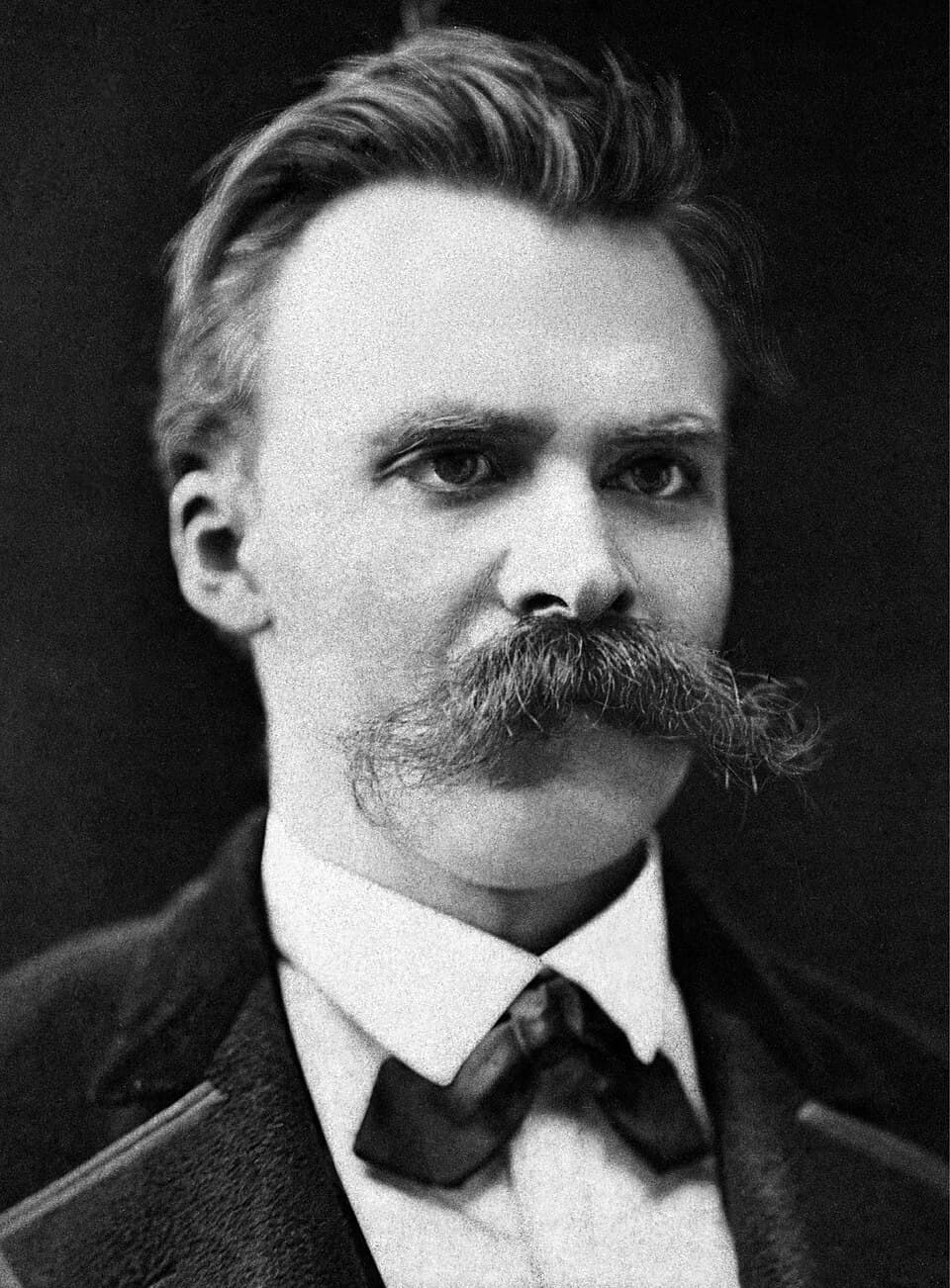
A vision depicting a confrontation where Zarathustra's 'hard' truths expose the performative deceptions of an old man, proving the strength of Zarathustra's wisdom.
3 of 6 in Chapter LXV. THE MAGICIAN457 of 593 in work
Hard Truth's Cudgel
Friedrich Nietzsche
Thus Spake Zarathustra...our— Up-glow’th to THEE! Oh, come thou back, Mine unfamiliar God! my PAIN! My final bliss! 2. —Here, however, Zarathustra could no longer restrain himself; he took his staff and struck the wailer with all his might. “Stop this,” cried he to him with wrathful laughter, “stop this, thou stage-player! Thou false coiner! Thou liar from the very heart! I know thee well! I will soon make warm legs to thee, thou evil magician: I know well how—to make it hot for such as thou!” —
“Leave off,” said the old man, and sprang up from the ground, “strike me no more, O Zarathustra! I did it only for amusement! That kind of thing belongeth to mine art. Thee thyself, I wanted to put to the proof when I gave this performance. And verily, thou hast well detected me! But thou thyself—hast given me no small proof of thyself: thou art HARD, thou wise Zarathustra! Hard strikest thou with thy ‘truths,’ thy cudgel forceth from me—THIS truth!”
—“Flatter not,” answered Zarathustra, still excited and frowning, “thou stage-player from the heart! Thou art false: why speakest thou—of truth! Thou peacock of peacocks, thou sea of vanity; WHAT didst thou represent before me, thou evil magician; WHOM was I meant to believe in when thou wailedst in such wise?” “THE PENITENT IN SPIRIT,” said the old man, “it was him—I represented; thou thyself once devisedst this expression— —The poet and magician who at last turneth his spirit against him...
1
4 of 6 in Chapter LXV. THE MAGICIAN458 of 593 in work
⚖The Disenchanted Enchanter

Friedrich Nietzsche
Thus Spake ZarathustraA confession addressed to a 'false coiner' who has become so adept at deceiving others that he is now trapped in self-disgust and unable to find his own truth.
...ent ‘we have loved him too little, loved him too little!’ Because I so far deceived thee, my wickedness rejoiced in me.” “Thou mayest have deceived subtler ones than I,” said Zarathustra sternly. “I am not on my guard against deceivers; I HAVE TO BE without precaution: so willeth my lot. Thou, however,—MUST deceive: so far do I know thee! Thou must ever be equivocal, trivocal, quadrivocal, and quinquivocal! Even what thou hast now confessed, is not nearly true enough nor false enough for me!
Thou bad false coiner, how couldst thou do otherwise! Thy very malady wouldst thou whitewash if thou showed thyself naked to thy physician. Thus didst thou whitewash thy lie before me when thou saidst: ‘I did so ONLY for amusement!’ There was also SERIOUSNESS therein, thou ART something of a penitent-in-spirit! I divine thee well: thou hast become the enchanter of all the world; but for thyself thou hast no lie or artifice left,—thou art disenchanted to thyself! Thou hast reaped disgust as thy one truth. No word in thee is any longer genuine, but thy mouth is so: that is to say, the disgust that cleaveth unto thy mouth.”
— —“Who art thou at all!” cried here the old magician with defiant voice, “who dareth to speak thus unto ME, the greatest man now living?”—and a green flash shot from his eye at Zarathustra. But immediately after he changed, and said sadly: “O Zarathustra, I am weary of it, I am disgusted with mine arts, I am not GREAT, why do I dissemble! But thou knowest it well—I sought for greatness! A great man I wanted to appear, and persuaded many; but the lie hath been beyond my power. On it do I col...
2
5 of 6 in Chapter LXV. THE MAGICIAN459 of 593 in work
⚖The Collapse of Pretense

Friedrich Nietzsche
Thus Spake ZarathustraA dialogue on the nature of honesty, where Zarathustra honors a magician not for his false greatness, but for the genuine moment of self-awareness in which he admits his own failure.
...e world; but for thyself thou hast no lie or artifice left,—thou art disenchanted to thyself! Thou hast reaped disgust as thy one truth. No word in thee is any longer genuine, but thy mouth is so: that is to say, the disgust that cleaveth unto thy mouth.”— —“Who art thou at all!” cried here the old magician with defiant voice, “who dareth to speak thus unto ME, the greatest man now living?”—and a green flash shot from his eye at Zarathustra. But immediately after he changed, and said sadly:
“O Zarathustra, I am weary of it, I am disgusted with mine arts, I am not GREAT, why do I dissemble! But thou knowest it well—I sought for greatness! A great man I wanted to appear, and persuaded many; but the lie hath been beyond my power. On it do I collapse. O Zarathustra, everything is a lie in me; but that I collapse—this my collapsing is GENUINE!”— “It honoureth thee,” said Zarathustra gloomily, looking down with sidelong glance, “it honoureth thee that thou soughtest for greatness, but it betrayeth thee also. Thou art not great. Thou bad old magician, THAT is the best and the honestest thing I honour in thee, that thou hast become…
But tell me, what seekest thou here in MY forests and rocks? And if thou hast put thyself in MY way, what proof of me wouldst thou have?— —Wherein didst thou put ME to the test?” Thus spake Zarathustra, and his eyes sparkled. But the old magician kept silence for a while; then said he: “Did I put thee to the test? I—seek only. O Zarathustra, I seek a genuine one, a right one, a simple one, an unequivocal one, a man of perfect honesty, a vessel of wisdom, a saint of knowledge, a great man!...
Continue reading →
2
6 of 6 in Chapter LXV. THE MAGICIAN460 of 593 in work
⚖The Inflated Frog

Friedrich Nietzsche
Thus Spake ZarathustraA critique of the public's inability to recognize true greatness, noting that they often mistake self-inflation and loud posturing for importance. The author suggests that such 'great men' are merely hollow vessels that eventually collapse under their own emptiness.
...here there arose a long silence between them: Zarathustra, however, became profoundly absorbed in thought, so that he shut his eyes. But afterwards coming back to the situation, he grasped the hand of the magician, and said, full of politeness and policy: “Well! Up thither leadeth the way, there is the cave of Zarathustra. In it mayest thou seek him whom thou wouldst fain find. And ask counsel of mine animals, mine eagle and my serpent: they shall help thee to seek. My cave however is large.
I myself, to be sure—I have as yet seen no great man. That which is great, the acutest eye is at present insensible to it. It is the kingdom of the populace. Many a one have I found who stretched and inflated himself, and the people cried: ‘Behold; a great man!’ But what good do all bellows do! The wind cometh out at last. At last bursteth the frog which hath inflated itself too long: then cometh out the wind.
To prick a swollen one in the belly, I call good pastime. Hear that, ye boys! Our to-day is of the populace: who still KNOWETH what is great and what is small! Who could there seek successfully for greatness! A fool only: it succeedeth with fools. Thou seekest for great men, thou strange fool? Who TAUGHT that to thee? Is to-day the time for it? Oh, thou bad seeker, why dost thou—tempt me?”— Thus spake Zarathustra, comforted in his heart, and went laughing on his way. LXVI. OUT OF SERVICE...
2
1 of 4 in Chapter LXVI. OUT OF SERVICE461 of 593 in work
Now entering Chapter LXVI. OUT OF SERVICE
⚖God's Empty Service

Friedrich Nietzsche
Thus Spake ZarathustraAn old pope, left masterless by the death of God, seeks out Zarathustra as the most pious of non-believers to find a new sense of purpose.
...appiness overtaketh, he sprang to his feet, and went straight towards Zarathustra. “Whoever thou art, thou traveller,” said he, “help a strayed one, a seeker, an old man, who may here easily come to grief! The world here is strange to me, and remote; wild beasts also did I hear howling; and he who could have given me protection—he is himself no more. I was seeking the pious man, a saint and an anchorite, who, alone in his forest, had not yet heard of what all the world knoweth at present.”
“WHAT doth all the world know at present?” asked Zarathustra. “Perhaps that the old God no longer liveth, in whom all the world once believed?” “Thou sayest it,” answered the old man sorrowfully. “And I served that old God until his last hour. Now, however, am I out of service, without master, and yet not free; likewise am I no longer merry even for an hour, except it be in recollections. Therefore did I ascend into these mountains, that I might finally have a festival for myself once more, as becometh an old pope and church-father: for know it, that I am the last pope!—a festival of pious recollections and divine services. Now, however, is…
Thus spake the hoary man, and gazed with keen eyes at him who stood before him. Zarathustra however seized the hand of the old pope and regarded it a long while with admiration. “Lo! thou venerable one,” said he then, “what a fine and long hand! That is the hand of one who hath ever dispensed blessings. Now, however, doth it hold fast him whom thou seekest, me, Zarathustra. It is I, the ungodly Zarathustra, who saith: ‘Who is ungodlier than I, that I may enjoy his teaching?’”— Thus spake Z...
Continue reading →
2