6 of 9 in Chapter LXXI. THE GREETING498 of 593 in work
Solitude's Fragile Break
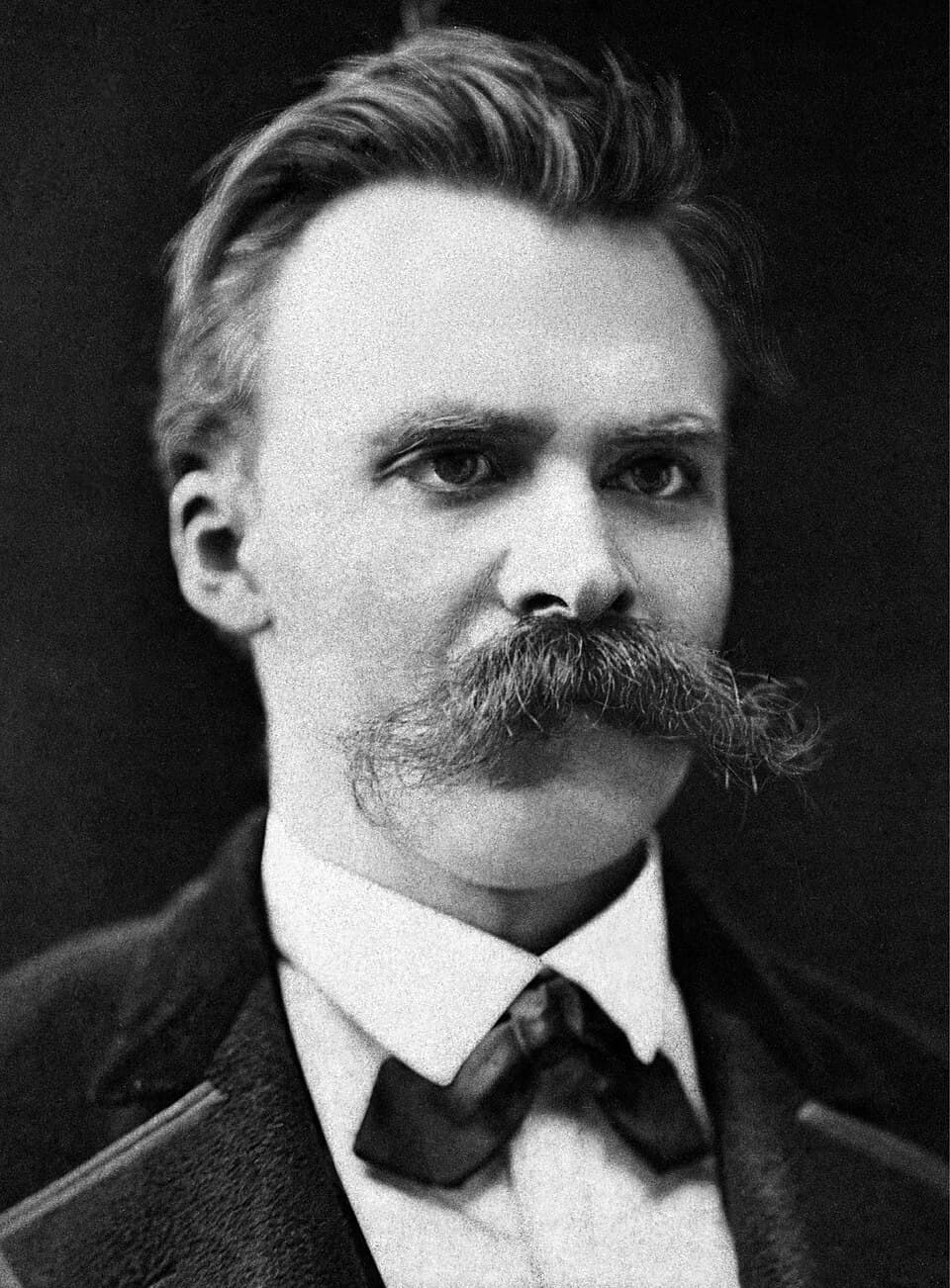
Friedrich Nietzsche
Thus Spake Zarathustra

A vision of the 'despairing ones' seeking out Zarathustra as a source of hope, representing the last remnant of those who loathe their current existence and long for a higher meaning.

...And verily, towards thy mountain and thy tree do many eyes turn to-day; a great longing hath arisen, and many have learned to ask: ‘Who is Zarathustra?’ And those into whose ears thou hast at any time dripped thy song and thy honey: all the hidden ones, the lone-dwellers and the twain-dwellers, have simultaneously said to their hearts: ‘Doth Zarathustra still live? It is no longer worth while to live, everything is indifferent, everything is useless: or else—we must live with Zarathustra!’
‘Why doth he not come who hath so long announced himself?’ thus do many people ask; ‘hath solitude swallowed him up? Or should we perhaps go to him?’ Now doth it come to pass that solitude itself becometh fragile and breaketh open, like a grave that breaketh open and can no longer hold its dead. Everywhere one seeth resurrected ones. Now do the waves rise and rise around thy mountain, O Zarathustra. And however high be thy height, many of them must rise up to thee: thy boat shall not rest much longer on dry ground. And that we despairing ones have now come into thy cave, and already no longer despair:—it is but a prognostic and a presage that…
Thus spake the king on the right, and seized the hand of Zarathustra in order to kiss it; but Zarathustra checked his veneration, and stepped back frightened, fleeing as it were, silently and suddenly into the far distance. After a little while, however, he was again at home with his guests, looked at them with clear scrutinising eyes, and said: “My guests, ye higher men, I will speak plain language and plainly with you. It is not for YOU that I have waited here in these mountains.” (“‘Plai...
Continue reading →
1
7 of 9 in Chapter LXXI. THE GREETING499 of 593 in work
The Inexorable Standard
Friedrich Nietzsche
Thus Spake Zarathustra

Nietzsche confesses that even the 'higher men' are not yet strong or 'beautiful' enough for his ultimate warfare, as they still require an indulgence he refuses to grant.

..., he was again at home with his guests, looked at them with clear scrutinising eyes, and said: “My guests, ye higher men, I will speak plain language and plainly with you. It is not for YOU that I have waited here in these mountains.” (“‘Plain language and plainly?’ Good God!” said here the king on the left to himself; “one seeth he doth not know the good Occidentals, this sage out of the Orient! But he meaneth ‘blunt language and bluntly’—well! That is not the worst taste in these days!”)
“Ye may, verily, all of you be higher men,” continued Zarathustra; “but for me—ye are neither high enough, nor strong enough. For me, that is to say, for the inexorable which is now silent in me, but will not always be silent. And if ye appertain to me, still it is not as my right arm. For he who himself standeth, like you, on sickly and tender legs, wisheth above all to be TREATED INDULGENTLY, whether he be conscious of it or hide it from himself. My arms and my legs, however, I do not treat indulgently, I DO NOT TREAT MY WARRIORS INDULGENTLY: how then could ye be fit for MY warfare? With you I should spoil all my victories. And many of you…
On your shoulders presseth many a burden, many a recollection; many a mischievous dwarf squatteth in your corners. There is concealed populace also in you. And though ye be high and of a higher type, much in you is crooked and misshapen. There is no smith in the world that could hammer you right and straight for me. Ye are only bridges: may higher ones pass over upon you! Ye signify steps: so do not upbraid him who ascendeth beyond you into HIS height! Out of your seed there may one day ari...
Continue reading →
2
8 of 9 in Chapter LXXI. THE GREETING500 of 593 in work
Bridges to Higher Ones
Friedrich Nietzsche
Thus Spake Zarathustra

Zarathustra dismisses the 'higher men' of his time as mere bridges or presages, asserting that he waits for a stronger, more triumphant type of humanity characterized as 'laughing lions.'

...LGENTLY: how then could ye be fit for MY warfare? With you I should spoil all my victories. And many of you would tumble over if ye but heard the loud beating of my drums. Moreover, ye are not sufficiently beautiful and well-born for me. I require pure, smooth mirrors for my doctrines; on your surface even mine own likeness is distorted. On your shoulders presseth many a burden, many a recollection; many a mischievous dwarf squatteth in your corners. There is concealed populace also in you.
And though ye be high and of a higher type, much in you is crooked and misshapen. There is no smith in the world that could hammer you right and straight for me. Ye are only bridges: may higher ones pass over upon you! Ye signify steps: so do not upbraid him who ascendeth beyond you into HIS height! Out of your seed there may one day arise for me a genuine son and perfect heir: but that time is distant. Ye yourselves are not those unto whom my heritage and name belong. Not for you do I wait here in these mountains; not with you may I descend for the last time. Ye have come unto me only as a presage that higher ones are on the way to me,— —NOT…
O my guests, ye strange ones—have ye yet heard nothing of my children? And that they are on the way to me? Do speak unto me of my gardens, of my Happy Isles, of my new beautiful race—why do ye not speak unto me thereof? This guests’-present do I solicit of your love, that ye speak unto me of my children. For them am I rich, for them I became poor: what have I not surrendered, —What would I not surrender that I might have one thing: THESE children, THIS living plantation, THESE life-trees of...
Continue reading →
2
9 of 9 in Chapter LXXI. THE GREETING501 of 593 in work
Waiting for Laughing Lions
Friedrich Nietzsche
Thus Spake Zarathustra

The author expresses a longing for a new, superior race of 'laughing lions'—individuals characterized by strength, joy, and physical and spiritual wholeness—rather than the weary men of the present.

...populace also in you. And though ye be high and of a higher type, much in you is crooked and misshapen. There is no smith in the world that could hammer you right and straight for me. Ye are only bridges: may higher ones pass over upon you! Ye signify steps: so do not upbraid him who ascendeth beyond you into HIS height! Out of your seed there may one day arise for me a genuine son and perfect heir: but that time is distant. Ye yourselves are not those unto whom my heritage and name belong.
Not for you do I wait here in these mountains; not with you may I descend for the last time. Ye have come unto me only as a presage that higher ones are on the way to me,— —NOT the men of great longing, of great loathing, of great satiety, and that which ye call the remnant of God; —Nay! Nay! Three times Nay! For OTHERS do I wait here in these mountains, and will not lift my foot from thence without them; —For higher ones, stronger ones, triumphanter ones, merrier ones, for such as are built squarely in body and soul: LAUGHING LIONS must come! O my guests, ye strange ones—have ye yet heard nothing of my children? And that they are on the way…
For them am I rich, for them I became poor: what have I not surrendered, —What would I not surrender that I might have one thing: THESE children, THIS living plantation, THESE life-trees of my will and of my highest hope!” Thus spake Zarathustra, and stopped suddenly in his discourse: for his longing came over him, and he closed his eyes and his mouth, because of the agitation of his heart. And all his guests also were silent, and stood still and confounded: except only that the old soothsaye...
Continue reading →
1
1 of 1 in Chapter LXXII. THE SUPPER502 of 593 in work
Now entering Chapter LXXII. THE SUPPER
Law for Mine Own
Friedrich Nietzsche
Thus Spake Zarathustra

Zarathustra asserts that his way of life is a personal law rather than a universal one, advocating for a joyous, strong, and self-assertive existence that claims the best of life's offerings.

...wish to eat with us must also give a hand to the work, even the kings. For with Zarathustra even a king may be a cook.” This proposal appealed to the hearts of all of them, save that the voluntary beggar objected to the flesh and wine and spices. “Just hear this glutton Zarathustra!” said he jokingly: “doth one go into caves and high mountains to make such repasts? Now indeed do I understand what he once taught us: Blessed be moderate poverty!’ And why he wisheth to do away with beggars.”
“Be of good cheer,” replied Zarathustra, “as I am. Abide by thy customs, thou excellent one: grind thy corn, drink thy water, praise thy cooking,—if only it make thee glad! I am a law only for mine own; I am not a law for all. He, however, who belongeth unto me must be strong of bone and light of foot,— —Joyous in fight and feast, no sulker, no John o’ Dreams, ready for the hardest task as for the feast, healthy and hale. The best belongeth unto mine and me; and if it be not given us, then do we take it:—the best food, the purest sky, the strongest thoughts, the fairest women!”
— Thus spake Zarathustra; the king on the right however answered and said: “Strange! Did one ever hear such sensible things out of the mouth of a wise man? And verily, it is the strangest thing in a wise man, if over and above, he be still sensible, and not an ass.” Thus spake the king on the right and wondered; the ass however, with ill-will, said YE-A to his remark. This however was the beginning of that long repast which is called “The Supper” in the history-books. At this there was nothi...
2