29 of 30 in ZARATHUSTRA’S PROLOGUE.40 of 593 in work
The Eagle and Serpent
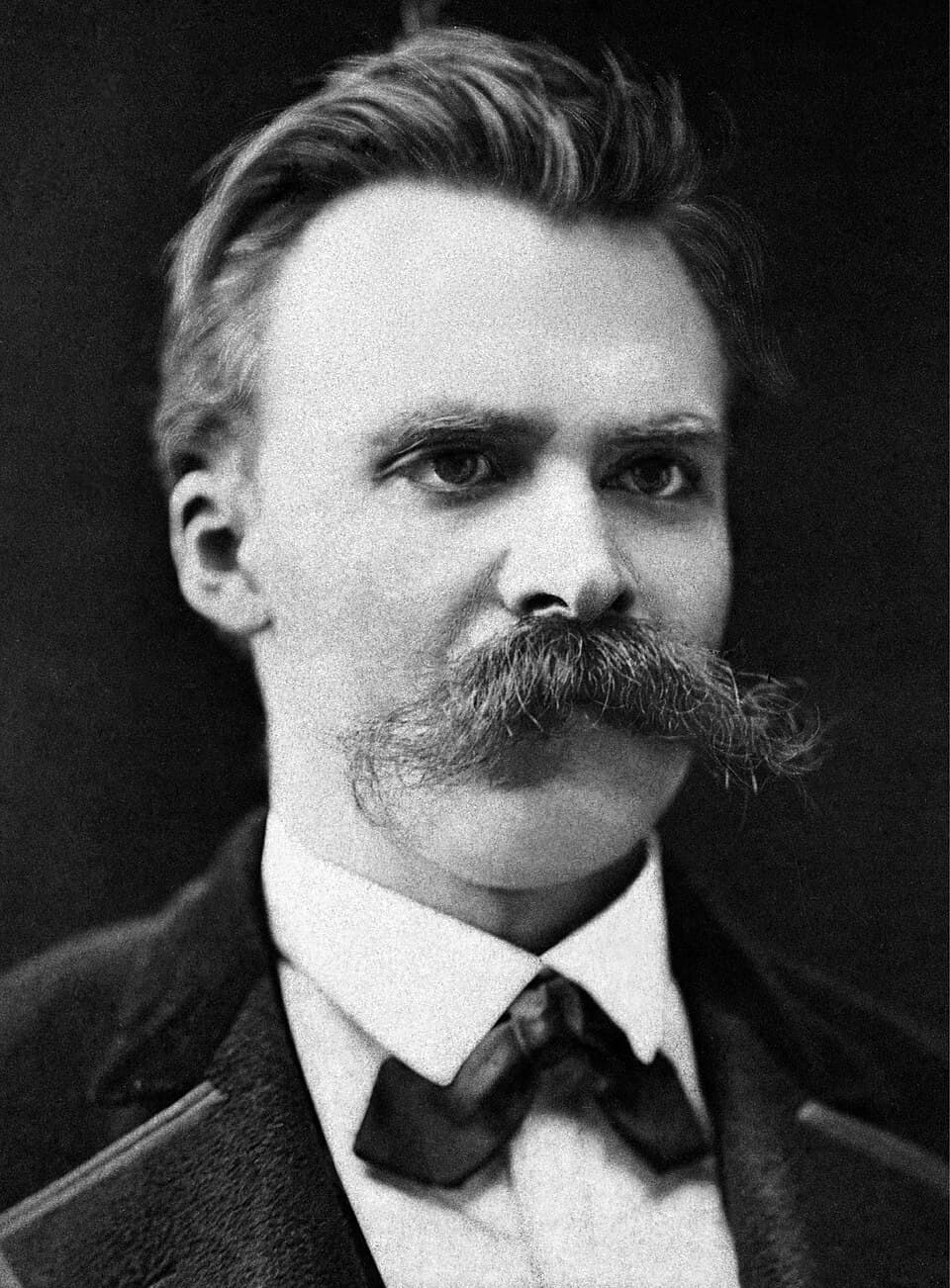
Friedrich Nietzsche
Thus Spake Zarathustra

Zarathustra observes his symbolic animals, the eagle and the serpent, representing pride and wisdom, and concludes that the company of animals is safer than the dangerous paths of men.

...show them, and all the stairs to the Superman. To the lone-dwellers will I sing my song, and to the twain-dwellers; and unto him who hath still ears for the unheard, will I make the heart heavy with my happiness. I make for my goal, I follow my course; over the loitering and tardy will I leap. Thus let my on-going be their down-going! 10. This had Zarathustra said to his heart when the sun stood at noontide. Then he looked inquiringly aloft,—for he heard above him the sharp call of a bird.
And behold! An eagle swept through the air in wide circles, and on it hung a serpent, not like a prey, but like a friend: for it kept itself coiled round the eagle’s neck. “They are mine animals,” said Zarathustra, and rejoiced in his heart. “The proudest animal under the sun, and the wisest animal under the sun,—they have come out to reconnoitre. They want to know whether Zarathustra still liveth. Verily, do I still live? More dangerous have I found it among men than among animals; in dangerous paths goeth Zarathustra. Let mine animals lead me!”
When Zarathustra had said this, he remembered the words of the saint in the forest. Then he sighed and spake thus to his heart: “Would that I were wiser! Would that I were wise from the very heart, like my serpent! But I am asking the impossible. Therefore do I ask my pride to go always with my wisdom! And if my wisdom should some day forsake me:—alas! it loveth to fly away!—may my pride then fly with my folly!” Thus began Zarathustra’s down-going. ZARATHUSTRA’S DISCOURSES. I. THE...
1
30 of 30 in ZARATHUSTRA’S PROLOGUE.41 of 593 in work
Pride with Wisdom
Friedrich Nietzsche
Thus Spake Zarathustra

A confession of the speaker's desire for wisdom to be tempered by pride, acknowledging that if his intellect fails him, he would rather be guided by his dignity than by folly alone.

...animals,” said Zarathustra, and rejoiced in his heart. “The proudest animal under the sun, and the wisest animal under the sun,—they have come out to reconnoitre. They want to know whether Zarathustra still liveth. Verily, do I still live? More dangerous have I found it among men than among animals; in dangerous paths goeth Zarathustra. Let mine animals lead me!” When Zarathustra had said this, he remembered the words of the saint in the forest. Then he sighed and spake thus to his heart:
“Would that I were wiser! Would that I were wise from the very heart, like my serpent! But I am asking the impossible. Therefore do I ask my pride to go always with my wisdom! And if my wisdom should some day forsake me:—alas! it loveth to fly away!—may my pride then fly with my folly!”
Thus began Zarathustra’s down-going. ZARATHUSTRA’S DISCOURSES. I. THE THREE METAMORPHOSES. Three metamorphoses of the spirit do I designate to you: how the spirit becometh a camel, the camel a lion, and the lion at last a child. Many heavy things are there for the spirit, the strong load-bearing spirit in which reverence dwelleth: for the heavy and the heaviest longeth its strength. What is heavy? so asketh the load-bearing spirit; then kneeleth it down like the camel, and wanteth...
2
1 of 5 in Chapter I. THE THREE METAMORPHOSES42 of 593 in work
Now entering Chapter I. THE THREE METAMORPHOSES
Spirit's Three Metamorphoses
Friedrich Nietzsche
Thus Spake Zarathustra

This passage outlines the spirit's evolution from the 'camel,' which seeks to bear the heaviest burdens of tradition and duty, toward further transformations. It emphasizes the spirit's initial need to test its strength through reverence and the weight of 'the heaviest' things.

...said this, he remembered the words of the saint in the forest. Then he sighed and spake thus to his heart: “Would that I were wiser! Would that I were wise from the very heart, like my serpent! But I am asking the impossible. Therefore do I ask my pride to go always with my wisdom! And if my wisdom should some day forsake me:—alas! it loveth to fly away!—may my pride then fly with my folly!” Thus began Zarathustra’s down-going. ZARATHUSTRA’S DISCOURSES. I. THE THREE METAMORPHOSES.
Three metamorphoses of the spirit do I designate to you: how the spirit becometh a camel, the camel a lion, and the lion at last a child. Many heavy things are there for the spirit, the strong load-bearing spirit in which reverence dwelleth: for the heavy and the heaviest longeth its strength. What is heavy? so asketh the load-bearing spirit; then kneeleth it down like the camel, and wanteth to be well laden. What is the heaviest thing, ye heroes? asketh the load-bearing spirit, that I may take it upon me and rejoice in my strength.
Is it not this: To humiliate oneself in order to mortify one’s pride? To exhibit one’s folly in order to mock at one’s wisdom? Or is it this: To desert our cause when it celebrateth its triumph? To ascend high mountains to tempt the tempter? Or is it this: To feed on the acorns and grass of knowledge, and for the sake of truth to suffer hunger of soul? Or is it this: To be sick and dismiss comforters, and make friends of the deaf, who never hear thy requests? Or is it this: To go into foul...
1
2 of 5 in Chapter I. THE THREE METAMORPHOSES43 of 593 in work
The Spirit's Metamorphosis
Friedrich Nietzsche
Thus Spake Zarathustra

The author describes the spirit's metamorphosis from a load-bearing camel into a lion that seeks freedom. This lion must fight the 'great dragon' of traditional morality, whose name is 'Thou shalt,' in order to assert its own will.

...? To ascend high mountains to tempt the tempter? Or is it this: To feed on the acorns and grass of knowledge, and for the sake of truth to suffer hunger of soul? Or is it this: To be sick and dismiss comforters, and make friends of the deaf, who never hear thy requests? Or is it this: To go into foul water when it is the water of truth, and not disclaim cold frogs and hot toads? Or is it this: To love those who despise us, and give one’s hand to the phantom when it is going to frighten us?
All these heaviest things the load-bearing spirit taketh upon itself: and like the camel, which, when laden, hasteneth into the wilderness, so hasteneth the spirit into its wilderness. But in the loneliest wilderness happeneth the second metamorphosis: here the spirit becometh a lion; freedom will it capture, and lordship in its own wilderness. Its last Lord it here seeketh: hostile will it be to him, and to its last God; for victory will it struggle with the great dragon. What is the great dragon which the spirit is no longer inclined to call Lord and God? “Thou shalt,” is the great dragon called.
But the spirit of the lion saith, “I will.” “Thou shalt,” lieth in its path, sparkling with gold—a scale-covered beast; and on every scale glittereth golden, “Thou shalt!” The values of a thousand years glitter on those scales, and thus speaketh the mightiest of all dragons: “All the values of things—glitter on me. All values have already been created, and all created values—do I represent. Verily, there shall be no ‘I will’ any more.” Thus speaketh the dragon. My brethren, wherefore is the...
1
3 of 5 in Chapter I. THE THREE METAMORPHOSES44 of 593 in work
The Lion's Rebellion
Friedrich Nietzsche
Thus Spake Zarathustra

A description of the spirit's second metamorphosis into a lion, which seeks freedom by slaying the 'dragon' of traditional moral obligation ('Thou shalt') with the power of 'I will.'

...ick and dismiss comforters, and make friends of the deaf, who never hear thy requests? Or is it this: To go into foul water when it is the water of truth, and not disclaim cold frogs and hot toads? Or is it this: To love those who despise us, and give one’s hand to the phantom when it is going to frighten us? All these heaviest things the load-bearing spirit taketh upon itself: and like the camel, which, when laden, hasteneth into the wilderness, so hasteneth the spirit into its wilderness.
But in the loneliest wilderness happeneth the second metamorphosis: here the spirit becometh a lion; freedom will it capture, and lordship in its own wilderness. Its last Lord it here seeketh: hostile will it be to him, and to its last God; for victory will it struggle with the great dragon. What is the great dragon which the spirit is no longer inclined to call Lord and God? “Thou shalt,” is the great dragon called. But the spirit of the lion saith, “I will.”
“Thou shalt,” lieth in its path, sparkling with gold—a scale-covered beast; and on every scale glittereth golden, “Thou shalt!” The values of a thousand years glitter on those scales, and thus speaketh the mightiest of all dragons: “All the values of things—glitter on me. All values have already been created, and all created values—do I represent. Verily, there shall be no ‘I will’ any more.” Thus speaketh the dragon. My brethren, wherefore is there need of the lion in the spirit? Why suff...
2