5 of 6 in Chapter XLVI. THE VISION AND THE ENIGMA321 of 593 in work
The Shepherd's Swallowed Serpent
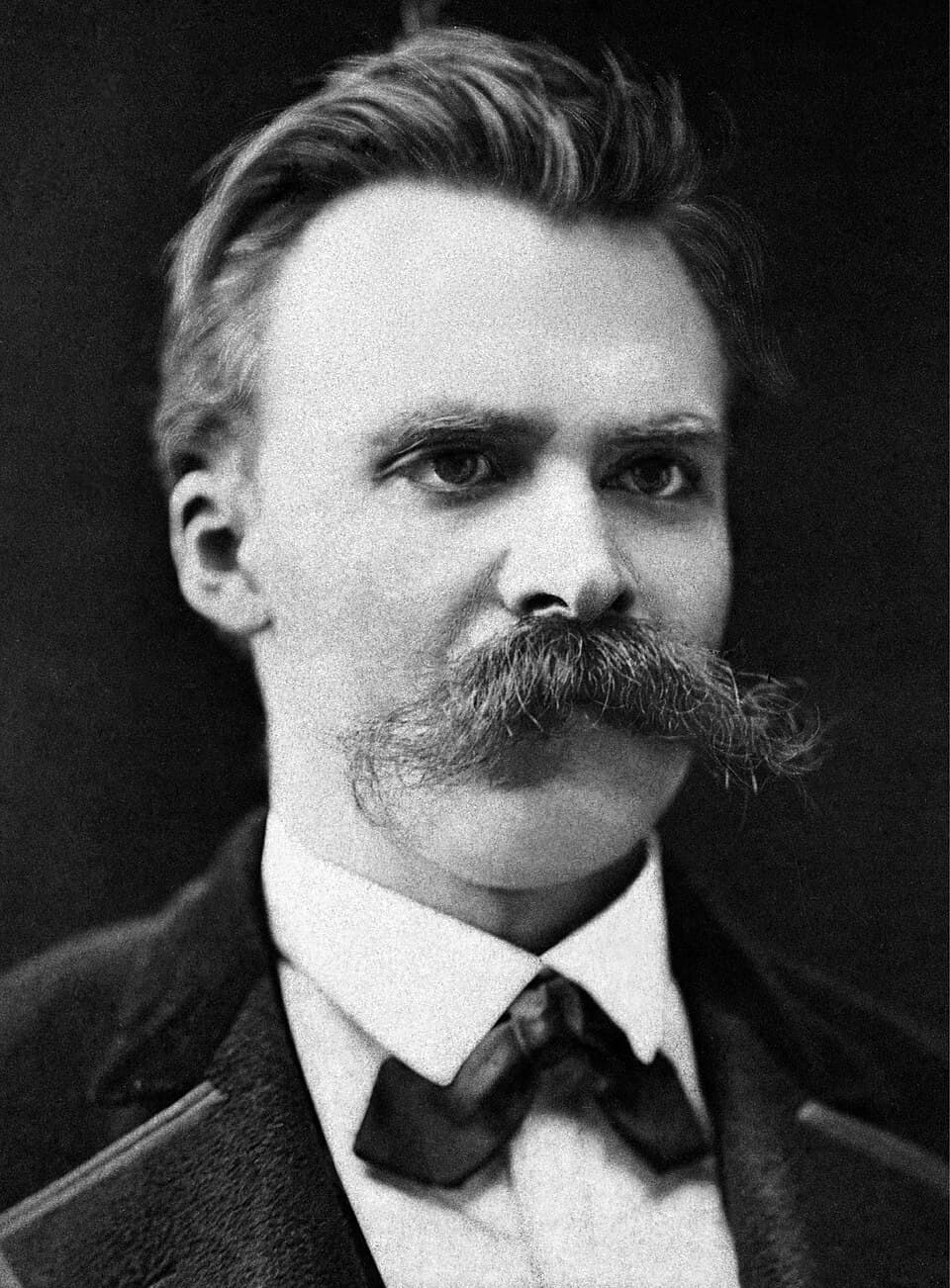
Friedrich Nietzsche
Thus Spake Zarathustra

Zarathustra challenges the adventurous and the 'enigma-enjoyers' to interpret a dark vision of a shepherd struggling with a serpent, symbolizing the confrontation with the heaviest truths.

...serpent hanging out of his mouth. Had I ever seen so much loathing and pale horror on one countenance? He had perhaps gone to sleep? Then had the serpent crawled into his throat—there had it bitten itself fast. My hand pulled at the serpent, and pulled:—in vain! I failed to pull the serpent out of his throat. Then there cried out of me: “Bite! Bite! Its head off! Bite!”—so cried it out of me; my horror, my hatred, my loathing, my pity, all my good and my bad cried with one voice out of me.—
Ye daring ones around me! Ye venturers and adventurers, and whoever of you have embarked with cunning sails on unexplored seas! Ye enigma-enjoyers! Solve unto me the enigma that I then beheld, interpret unto me the vision of the lonesomest one! For it was a vision and a foresight:—WHAT did I then behold in parable? And WHO is it that must come some day? WHO is the shepherd into whose throat the serpent thus crawled? WHO is the man into whose throat all the heaviest and blackest will thus crawl?
—The shepherd however bit as my cry had admonished him; he bit with a strong bite! Far away did he spit the head of the serpent—: and sprang up.— No longer shepherd, no longer man—a transfigured being, a light-surrounded being, that LAUGHED! Never on earth laughed a man as HE laughed! O my brethren, I heard a laughter which was no human laughter,—and now gnaweth a thirst at me, a longing that is never allayed. My longing for that laughter gnaweth at me: oh, how can I still endure to live! A...
1
6 of 6 in Chapter XLVI. THE VISION AND THE ENIGMA322 of 593 in work
The Transfigured Laughter
Friedrich Nietzsche
Thus Spake Zarathustra

A transformative vision of a man who, by biting through a serpent of despair, becomes a transfigured being characterized by a superhuman, life-affirming laughter.

...ring ones around me! Ye venturers and adventurers, and whoever of you have embarked with cunning sails on unexplored seas! Ye enigma-enjoyers! Solve unto me the enigma that I then beheld, interpret unto me the vision of the lonesomest one! For it was a vision and a foresight:—WHAT did I then behold in parable? And WHO is it that must come some day? WHO is the shepherd into whose throat the serpent thus crawled? WHO is the man into whose throat all the heaviest and blackest will thus crawl? —
The shepherd however bit as my cry had admonished him; he bit with a strong bite! Far away did he spit the head of the serpent—: and sprang up.— No longer shepherd, no longer man—a transfigured being, a light-surrounded being, that LAUGHED! Never on earth laughed a man as HE laughed! O my brethren, I heard a laughter which was no human laughter,—and now gnaweth a thirst at me, a longing that is never allayed. My longing for that laughter gnaweth at me: oh, how can I still endure to live!
And how could I endure to die at present!— Thus spake Zarathustra. XLVII. INVOLUNTARY BLISS. With such enigmas and bitterness in his heart did Zarathustra sail o’er the sea. When, however, he was four day-journeys from the Happy Isles and from his friends, then had he surmounted all his pain—: triumphantly and with firm foot did he again accept his fate. And then talked Zarathustra in this wise to his exulting conscience: Alone am I again, and like to be so, alone with the pure heaven,...
1
1 of 8 in Chapter XLVII. INVOLUNTARY BLISS323 of 593 in work
Now entering Chapter XLVII. INVOLUNTARY BLISS
Afternoon's Luminous Stillness
Friedrich Nietzsche
Thus Spake Zarathustra

A nostalgic reflection on the 'afternoon' of life, where the author finds contentment in solitude and the 'living plantation' of his thoughts. He expresses a sense of fulfillment in having surrendered everything to protect his highest hopes and intellectual legacy.

...that laughter gnaweth at me: oh, how can I still endure to live! And how could I endure to die at present!— Thus spake Zarathustra. XLVII. INVOLUNTARY BLISS. With such enigmas and bitterness in his heart did Zarathustra sail o’er the sea. When, however, he was four day-journeys from the Happy Isles and from his friends, then had he surmounted all his pain—: triumphantly and with firm foot did he again accept his fate. And then talked Zarathustra in this wise to his exulting conscience:
Alone am I again, and like to be so, alone with the pure heaven, and the open sea; and again is the afternoon around me. On an afternoon did I find my friends for the first time; on an afternoon, also, did I find them a second time:—at the hour when all light becometh stiller. For whatever happiness is still on its way ‘twixt heaven and earth, now seeketh for lodging a luminous soul: WITH HAPPINESS hath all light now become stiller. O afternoon of my life! Once did my happiness also descend to the valley that it might seek a lodging: then did it find those open hospitable souls. O afternoon of my life! What did I not surrender that I might…
Companions did the creating one once seek, and children of HIS hope: and lo, it turned out that he could not find them, except he himself should first create them. Thus am I in the midst of my work, to my children going, and from them returning: for the sake of his children must Zarathustra perfect himself. For in one’s heart one loveth only one’s child and one’s work; and where there is great love to oneself, then is it the sign of pregnancy: so have I found it. Still are my children verda...
Continue reading →
2
2 of 8 in Chapter XLVII. INVOLUNTARY BLISS324 of 593 in work
Creating One's Companions
Friedrich Nietzsche
Thus Spake Zarathustra

The author confesses that true creation requires self-perfection and that one's greatest love is reserved for the 'children' of one's own work and spirit.

...our when all light becometh stiller. For whatever happiness is still on its way ‘twixt heaven and earth, now seeketh for lodging a luminous soul: WITH HAPPINESS hath all light now become stiller. O afternoon of my life! Once did my happiness also descend to the valley that it might seek a lodging: then did it find those open hospitable souls. O afternoon of my life! What did I not surrender that I might have one thing: this living plantation of my thoughts, and this dawn of my highest hope!
Companions did the creating one once seek, and children of HIS hope: and lo, it turned out that he could not find them, except he himself should first create them. Thus am I in the midst of my work, to my children going, and from them returning: for the sake of his children must Zarathustra perfect himself. For in one’s heart one loveth only one’s child and one’s work; and where there is great love to oneself, then is it the sign of pregnancy: so have I found it.
Still are my children verdant in their first spring, standing nigh one another, and shaken in common by the winds, the trees of my garden and of my best soil. And verily, where such trees stand beside one another, there ARE Happy Isles! But one day will I take them up, and put each by itself alone: that it may learn lonesomeness and defiance and prudence. Gnarled and crooked and with flexible hardness shall it then stand by the sea, a living lighthouse of unconquerable life. Yonder where t...
2
3 of 8 in Chapter XLVII. INVOLUNTARY BLISS325 of 593 in work
Trees of Defiance
Friedrich Nietzsche
Thus Spake Zarathustra

The author envisions a process of growth where individuals must eventually be separated from the collective to learn loneliness and defiance. This isolation is intended to forge them into 'living lighthouses' of unconquerable strength.

...is dawn of my highest hope! Companions did the creating one once seek, and children of HIS hope: and lo, it turned out that he could not find them, except he himself should first create them. Thus am I in the midst of my work, to my children going, and from them returning: for the sake of his children must Zarathustra perfect himself. For in one’s heart one loveth only one’s child and one’s work; and where there is great love to oneself, then is it the sign of pregnancy: so have I found it.
Still are my children verdant in their first spring, standing nigh one another, and shaken in common by the winds, the trees of my garden and of my best soil. And verily, where such trees stand beside one another, there ARE Happy Isles! But one day will I take them up, and put each by itself alone: that it may learn lonesomeness and defiance and prudence. Gnarled and crooked and with flexible hardness shall it then stand by the sea, a living lighthouse of unconquerable life.
Yonder where the storms rush down into the sea, and the snout of the mountain drinketh water, shall each on a time have his day and night watches, for HIS testing and recognition. Recognised and tested shall each be, to see if he be of my type and lineage:—if he be master of a long will, silent even when he speaketh, and giving in such wise that he TAKETH in giving:— —So that he may one day become my companion, a fellow-creator and fellow-enjoyer with Zarathustra:—such a one as writeth my wi...
2