7 of 7 in Chapter LVIII. THE GREAT LONGING428 of 593 in work
The Soul's Final Gift
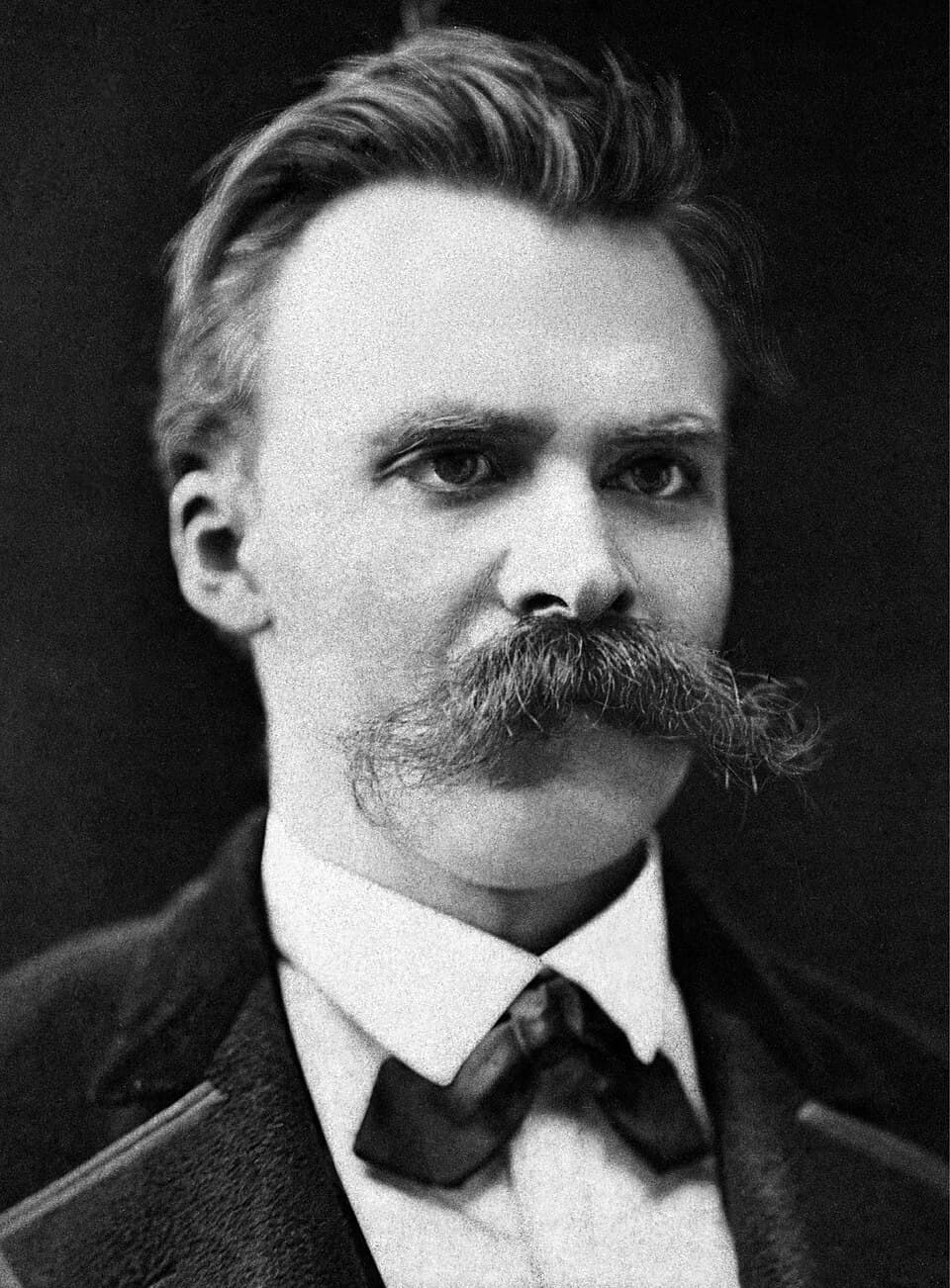
Friedrich Nietzsche
Thus Spake Zarathustra

A lyrical confession where the speaker reflects on the act of singing as his final gift to his soul, ultimately seeking a reciprocal relationship of gratitude and expression.

...violet-blue paths,— —Towards the golden marvel, the spontaneous bark, and its master: he, however, is the vintager who waiteth with the diamond vintage-knife,— —Thy great deliverer, O my soul, the nameless one—for whom future songs only will find names! And verily, already hath thy breath the fragrance of future songs,— —Already glowest thou and dreamest, already drinkest thou thirstily at all deep echoing wells of consolation, already reposeth thy melancholy in the bliss of future songs!—
O my soul, now have I given thee all, and even my last possession, and all my hands have become empty by thee:—THAT I BADE THEE SING, behold, that was my last thing to give! That I bade thee sing,—say now, say: WHICH of us now—oweth thanks?— Better still, however: sing unto me, sing, O my soul! And let me thank thee!— Thus spake Zarathustra.
LIX. THE SECOND DANCE-SONG. 1. “Into thine eyes gazed I lately, O Life: gold saw I gleam in thy night-eyes,—my heart stood still with delight: —A golden bark saw I gleam on darkened waters, a sinking, drinking, reblinking, golden swing-bark! At my dance-frantic foot, dost thou cast a glance, a laughing, questioning, melting, thrown glance: Twice only movedst thou thy rattle with thy little hands—then did my feet swing with dance-fury.— My heels reared aloft, my toes they hearkened,—t...
2
1 of 2 in Chapter LIX. THE SECOND DANCE-SONG429 of 593 in work
Now entering Chapter LIX. THE SECOND DANCE-SONG
Love's Contradictory Pull
Friedrich Nietzsche
Thus Spake Zarathustra

A passionate confession addressed to a paradoxical figure—likely Life or Wisdom—whose flight and mockery serve to further enchant and entrap the author.

...—then did my feet swing with dance-fury.— My heels reared aloft, my toes they hearkened,—thee they would know: hath not the dancer his ear—in his toe! Unto thee did I spring: then fledst thou back from my bound; and towards me waved thy fleeing, flying tresses round! Away from thee did I spring, and from thy snaky tresses: then stoodst thou there half-turned, and in thine eye caresses. With crooked glances—dost thou teach me crooked courses; on crooked courses learn my feet—crafty fancies!
I fear thee near, I love thee far; thy flight allureth me, thy seeking secureth me:—I suffer, but for thee, what would I not gladly bear! For thee, whose coldness inflameth, whose hatred misleadeth, whose flight enchaineth, whose mockery—pleadeth: —Who would not hate thee, thou great bindress, inwindress, temptress, seekress, findress! Who would not love thee, thou innocent, impatient, wind-swift, child-eyed sinner!
Whither pullest thou me now, thou paragon and tomboy? And now foolest thou me fleeing; thou sweet romp dost annoy! I dance after thee, I follow even faint traces lonely. Where art thou? Give me thy hand! Or thy finger only! Here are caves and thickets: we shall go astray!—Halt! Stand still! Seest thou not owls and bats in fluttering fray? Thou bat! Thou owl! Thou wouldst play me foul? Where are we? From the dogs hast thou learned thus to bark and howl. Thou gnashest on me sweetly with litt...
2
2 of 2 in Chapter LIX. THE SECOND DANCE-SONG430 of 593 in work
The Envious Friendship
Friedrich Nietzsche
Thus Spake Zarathustra

A personified dialogue with Life, who reminds Zarathustra that noise kills thought and that their relationship is defined by a playful, envious tension between wisdom and existence.

...her; let just thine arm sink! And art thou thirsty—I should have something; but thy mouth would not like it to drink!— —Oh, that cursed, nimble, supple serpent and lurking-witch! Where art thou gone? But in my face do I feel through thy hand, two spots and red blotches itch! I am verily weary of it, ever thy sheepish shepherd to be. Thou witch, if I have hitherto sung unto thee, now shalt THOU—cry unto me! To the rhythm of my whip shalt thou dance and cry! I forget not my whip?—Not I!”— 2.
Then did Life answer me thus, and kept thereby her fine ears closed: “O Zarathustra! Crack not so terribly with thy whip! Thou knowest surely that noise killeth thought,—and just now there came to me such delicate thoughts. We are both of us genuine ne’er-do-wells and ne’er-do-ills. Beyond good and evil found we our island and our green meadow—we two alone! Therefore must we be friendly to each other! And even should we not love each other from the bottom of our hearts,—must we then have a grudge against each other if we do not love each other perfectly? And that I am friendly to thee, and often too friendly, that knowest thou: and the reason…
— Thereupon did Life look thoughtfully behind and around, and said softly: “O Zarathustra, thou art not faithful enough to me! Thou lovest me not nearly so much as thou sayest; I know thou thinkest of soon leaving me. There is an old heavy, heavy, booming-clock: it boometh by night up to thy cave:— —When thou hearest this clock strike the hours at midnight, then thinkest thou between one and twelve thereon— —Thou thinkest thereon, O Zarathustra, I know it—of soon leaving me!”— “Yea,” answ...
Continue reading →
1
1 of 7 in Chapter LX. THE SEVEN SEALS431 of 593 in work
Now entering Chapter LX. THE SEVEN SEALS
The Prophet's Heavy Cloud
Friedrich Nietzsche
Thus Spake Zarathustra

The author describes the lonely, pregnant silence of the visionary who waits like a heavy storm cloud on a mountain, ready to ignite the future with the 'lightning' of a new affirmation.

...3. One! O man! Take heed! Two! What saith deep midnight’s voice indeed? Three! “I slept my sleep— Four! “From deepest dream I’ve woke and plead:— Five! “The world is deep, Six! “And deeper than the day could read. Seven! “Deep is its woe— Eight! “Joy—deeper still than grief can be: Nine! “Woe saith: Hence! Go! Ten! “But joys all want eternity— Eleven! “Want deep profound eternity!” Twelve! LX. THE SEVEN SEALS. (OR THE YE-A AND AMEN LAY.) 1.
If I be a diviner and full of the divining spirit which wandereth on high mountain-ridges, ‘twixt two seas,— Wandereth ‘twixt the past and the future as a heavy cloud—hostile to sultry plains, and to all that is weary and can neither die nor live: Ready for lightning in its dark bosom, and for the redeeming flash of light, charged with lightnings which say Yea! which laugh Yea! ready for divining flashes of lightning:— —Blessed, however, is he who is thus charged! And verily, long must he hang like a heavy tempest on the mountain, who shall one day kindle the light of the future!— Oh, how could I not be ardent for Eternity and for the…
Never yet have I found the woman by whom I should like to have children, unless it be this woman whom I love: for I love thee, O Eternity! FOR I LOVE THEE, O ETERNITY! 2. If ever my wrath hath burst graves, shifted landmarks, or rolled old shattered tables into precipitous depths: If ever my scorn hath scattered mouldered words to the winds, and if I have come like a besom to cross-spiders, and as a cleansing wind to old charnel-houses: If ever I have sat rejoicing where old Gods lie buri...
Continue reading →
1
2 of 7 in Chapter LX. THE SEVEN SEALS432 of 593 in work
Wrath's Creative Destruction
Friedrich Nietzsche
Thus Spake Zarathustra

A vision of iconoclasm where the author rejoices in the destruction of old values and 'Gods'-graves,' finding beauty in ruins that allow the pure sky to look through.

...ch laugh Yea! ready for divining flashes of lightning:— —Blessed, however, is he who is thus charged! And verily, long must he hang like a heavy tempest on the mountain, who shall one day kindle the light of the future!— Oh, how could I not be ardent for Eternity and for the marriage-ring of rings—the ring of the return? Never yet have I found the woman by whom I should like to have children, unless it be this woman whom I love: for I love thee, O Eternity! FOR I LOVE THEE, O ETERNITY! 2.
If ever my wrath hath burst graves, shifted landmarks, or rolled old shattered tables into precipitous depths: If ever my scorn hath scattered mouldered words to the winds, and if I have come like a besom to cross-spiders, and as a cleansing wind to old charnel-houses: If ever I have sat rejoicing where old Gods lie buried, world-blessing, world-loving, beside the monuments of old world-maligners:— —For even churches and Gods’-graves do I love, if only heaven looketh through their ruined roofs with pure eyes; gladly do I sit like grass and red poppies on ruined churches— Oh, how could I not be ardent for Eternity, and for the marriage-ring of rings—the ring of the return?
Never yet have I found the woman by whom I should like to have children, unless it be this woman whom I love: for I love thee, O Eternity! FOR I LOVE THEE, O ETERNITY! 3. If ever a breath hath come to me of the creative breath, and of the heavenly necessity which compelleth even chances to dance star-dances: If ever I have laughed with the laughter of the creative lightning, to which the long thunder of the deed followeth, grumblingly, but obediently: If ever I have played dice with the G...
1