6 of 6 in Chapter LXI. THE HONEY SACRIFICE443 of 593 in work
Fate's Forgotten Time
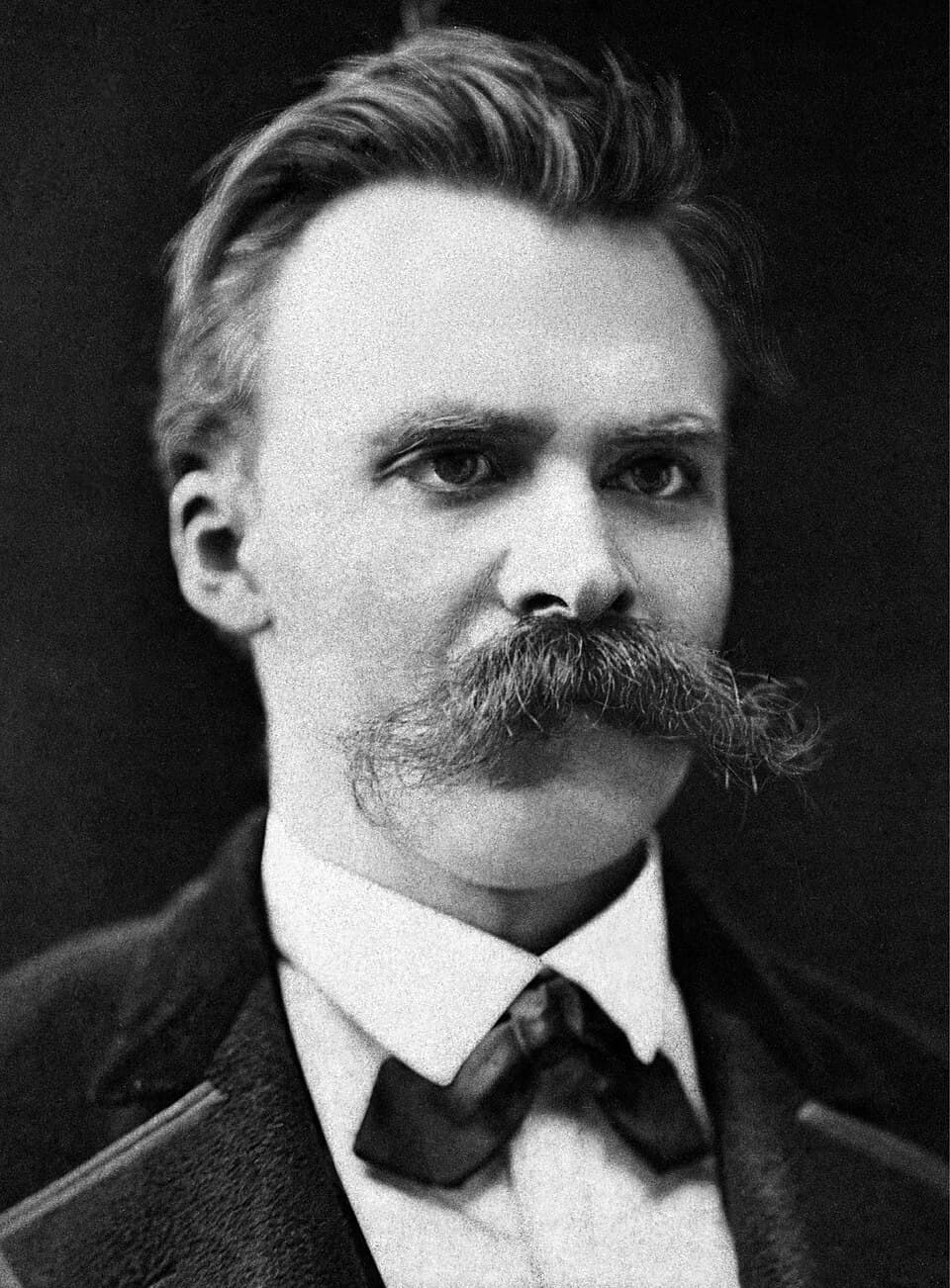
Friedrich Nietzsche
Thus Spake Zarathustra

The author expresses a patient and mischievous relationship with fate, preferring the 'folly' of his own path to the solemnity of those who wait for divine intervention.

...hither-drawing, upward-drawing, upbringing; a drawer, a trainer, a training-master, who not in vain counselled himself once on a time: “Become what thou art!” Thus may men now come UP to me; for as yet do I await the signs that it is time for my down-going; as yet do I not myself go down, as I must do, amongst men. Therefore do I here wait, crafty and scornful upon high mountains, no impatient one, no patient one; rather one who hath even unlearnt patience,—because he no longer “suffereth.”
For my fate giveth me time: it hath forgotten me perhaps? Or doth it sit behind a big stone and catch flies? And verily, I am well disposed to mine eternal fate, because it doth not hound and hurry me, but leaveth me time for merriment and mischief; so that I have to-day ascended this high mountain to catch fish. Did ever any one catch fish upon high mountains? And though it be a folly what I here seek and do, it is better so than that down below I should become solemn with waiting, and green and yellow— —A posturing wrath-snorter with waiting, a holy howl-storm from the mountains, an impatient one that shouteth down into the valleys:…
Not that I would have a grudge against such wrathful ones on that account: they are well enough for laughter to me! Impatient must they now be, those big alarm-drums, which find a voice now or never! Myself, however, and my fate—we do not talk to the Present, neither do we talk to the Never: for talking we have patience and time and more than time. For one day must it yet come, and may not pass by. What must one day come and may not pass by? Our great Hazar, that is to say, our great, remot...
Continue reading →
2
1 of 3 in Chapter LXII. THE CRY OF DISTRESS444 of 593 in work
Now entering Chapter LXII. THE CRY OF DISTRESS
Waves of Distress
Friedrich Nietzsche
Thus Spake Zarathustra

A visionary moment where Zarathustra is warned of a rising tide of human distress and hears a haunting cry from the abyss, signaling a coming period of great affliction.

...ce more to recognise each other. “Welcome hither,” said Zarathustra, “thou soothsayer of the great weariness, not in vain shalt thou once have been my messmate and guest. Eat and drink also with me to-day, and forgive it that a cheerful old man sitteth with thee at table!”—“A cheerful old man?” answered the soothsayer, shaking his head, “but whoever thou art, or wouldst be, O Zarathustra, thou hast been here aloft the longest time,—in a little while thy bark shall no longer rest on dry land!”—
“Do I then rest on dry land?”—asked Zarathustra, laughing.—“The waves around thy mountain,” answered the soothsayer, “rise and rise, the waves of great distress and affliction: they will soon raise thy bark also and carry thee away.”—Thereupon was Zarathustra silent and wondered.—“Dost thou still hear nothing?” continued the soothsayer: “doth it not rush and roar out of the depth?”—Zarathustra was silent once more and listened: then heard he a long, long cry, which the abysses threw to one another and passed on; for none of them wished to retain it: so evil did it sound.
“Thou ill announcer,” said Zarathustra at last, “that is a cry of distress, and the cry of a man; it may come perhaps out of a black sea. But what doth human distress matter to me! My last sin which hath been reserved for me,—knowest thou what it is called?” —“PITY!” answered the soothsayer from an overflowing heart, and raised both his hands aloft—“O Zarathustra, I have come that I may seduce thee to thy last sin!”— And hardly had those words been uttered when there sounded the cry once mor...
1
2 of 3 in Chapter LXII. THE CRY OF DISTRESS445 of 593 in work
Pity as Final Sin
Friedrich Nietzsche
Thus Spake Zarathustra

The author identifies 'pity' as his final sin and greatest temptation, a cry of human distress that threatens to divert him from his path.

...mountain,” answered the soothsayer, “rise and rise, the waves of great distress and affliction: they will soon raise thy bark also and carry thee away.”—Thereupon was Zarathustra silent and wondered.—“Dost thou still hear nothing?” continued the soothsayer: “doth it not rush and roar out of the depth?”—Zarathustra was silent once more and listened: then heard he a long, long cry, which the abysses threw to one another and passed on; for none of them wished to retain it: so evil did it sound.
“Thou ill announcer,” said Zarathustra at last, “that is a cry of distress, and the cry of a man; it may come perhaps out of a black sea. But what doth human distress matter to me! My last sin which hath been reserved for me,—knowest thou what it is called?” —“PITY!” answered the soothsayer from an overflowing heart, and raised both his hands aloft—“O Zarathustra, I have come that I may seduce thee to thy last sin!”
— And hardly had those words been uttered when there sounded the cry once more, and longer and more alarming than before—also much nearer. “Hearest thou? Hearest thou, O Zarathustra?” called out the soothsayer, “the cry concerneth thee, it calleth thee: Come, come, come; it is time, it is the highest time!”— Zarathustra was silent thereupon, confused and staggered; at last he asked, like one who hesitateth in himself: “And who is it that there calleth me?” “But thou knowest it, certainly,” a...
2
3 of 3 in Chapter LXII. THE CRY OF DISTRESS446 of 593 in work
Happiness's Elusive Search
Friedrich Nietzsche
Thus Spake Zarathustra

A soothsayer challenges Zarathustra's happiness, claiming that true joy is impossible among the solitary and that the 'Happy Isles' no longer exist, prompting a moment of serene resolve in Zarathustra.

...d the soothsayer warmly, “why dost thou conceal thyself? It is THE HIGHER MAN that crieth for thee!” “The higher man?” cried Zarathustra, horror-stricken: “what wanteth HE? What wanteth HE? The higher man! What wanteth he here?”—and his skin covered with perspiration. The soothsayer, however, did not heed Zarathustra’s alarm, but listened and listened in the downward direction. When, however, it had been still there for a long while, he looked behind, and saw Zarathustra standing trembling.
“O Zarathustra,” he began, with sorrowful voice, “thou dost not stand there like one whose happiness maketh him giddy: thou wilt have to dance lest thou tumble down! But although thou shouldst dance before me, and leap all thy side-leaps, no one may say unto me: ‘Behold, here danceth the last joyous man!’ In vain would any one come to this height who sought HIM here: caves would he find, indeed, and back-caves, hiding-places for hidden ones; but not lucky mines, nor treasure-chambers, nor new gold-veins of happiness. Happiness—how indeed could one find happiness among such buried-alive and solitary ones! Must I yet seek the last happiness on…
“Nay! Nay! Three times Nay!” exclaimed he with a strong voice, and stroked his beard—“THAT do I know better! There are still Happy Isles! Silence THEREON, thou sighing sorrow-sack! Cease to splash THEREON, thou rain-cloud of the forenoon! Do I not already stand here wet with thy misery, and drenched like a dog? Now do I shake myself and run away from thee, that I may again become dry: thereat mayest thou not wonder! Do I seem to thee discourteous? Here however is MY court. But as regards the...
Continue reading →
2
1 of 5 in Chapter LXIII. TALK WITH THE KINGS447 of 593 in work
Now entering Chapter LXIII. TALK WITH THE KINGS
The False Nobility
Friedrich Nietzsche
Thus Spake Zarathustra

A critique of the 'false and foul' nature of high society and the nobility, with the author expressing a preference for the coarse but honest nature of the peasant over the 'hodgepodge' of the modern populace.

...see—and only one ass!” Thereupon the two kings made a halt; they smiled and looked towards the spot whence the voice proceeded, and afterwards looked into each other’s faces. “Such things do we also think among ourselves,” said the king on the right, “but we do not utter them.” The king on the left, however, shrugged his shoulders and answered: “That may perhaps be a goat-herd. Or an anchorite who hath lived too long among rocks and trees. For no society at all spoileth also good manners.”
“Good manners?” replied angrily and bitterly the other king: “what then do we run out of the way of? Is it not ‘good manners’? Our ‘good society’? Better, verily, to live among anchorites and goatherds, than with our gilded, false, over-rouged populace—though it call itself ‘good society.’ —Though it call itself ‘nobility.’ But there all is false and foul, above all the blood—thanks to old evil diseases and worse curers. The best and dearest to me at present is still a sound peasant, coarse, artful, obstinate and enduring: that is at present the noblest type. The peasant is at present the best; and the peasant type should be master! But it is…
Populace-hodgepodge: therein is everything mixed with everything, saint and swindler, gentleman and Jew, and every beast out of Noah’s ark. Good manners! Everything is false and foul with us. No one knoweth any longer how to reverence: it is THAT precisely that we run away from. They are fulsome obtrusive dogs; they gild palm-leaves. This loathing choketh me, that we kings ourselves have become false, draped and disguised with the old faded pomp of our ancestors, show-pieces for the stupides...
Continue reading →
2