5 of 6 in Chapter LXXV. SCIENCE532 of 593 in work
Fear as Original Feeling
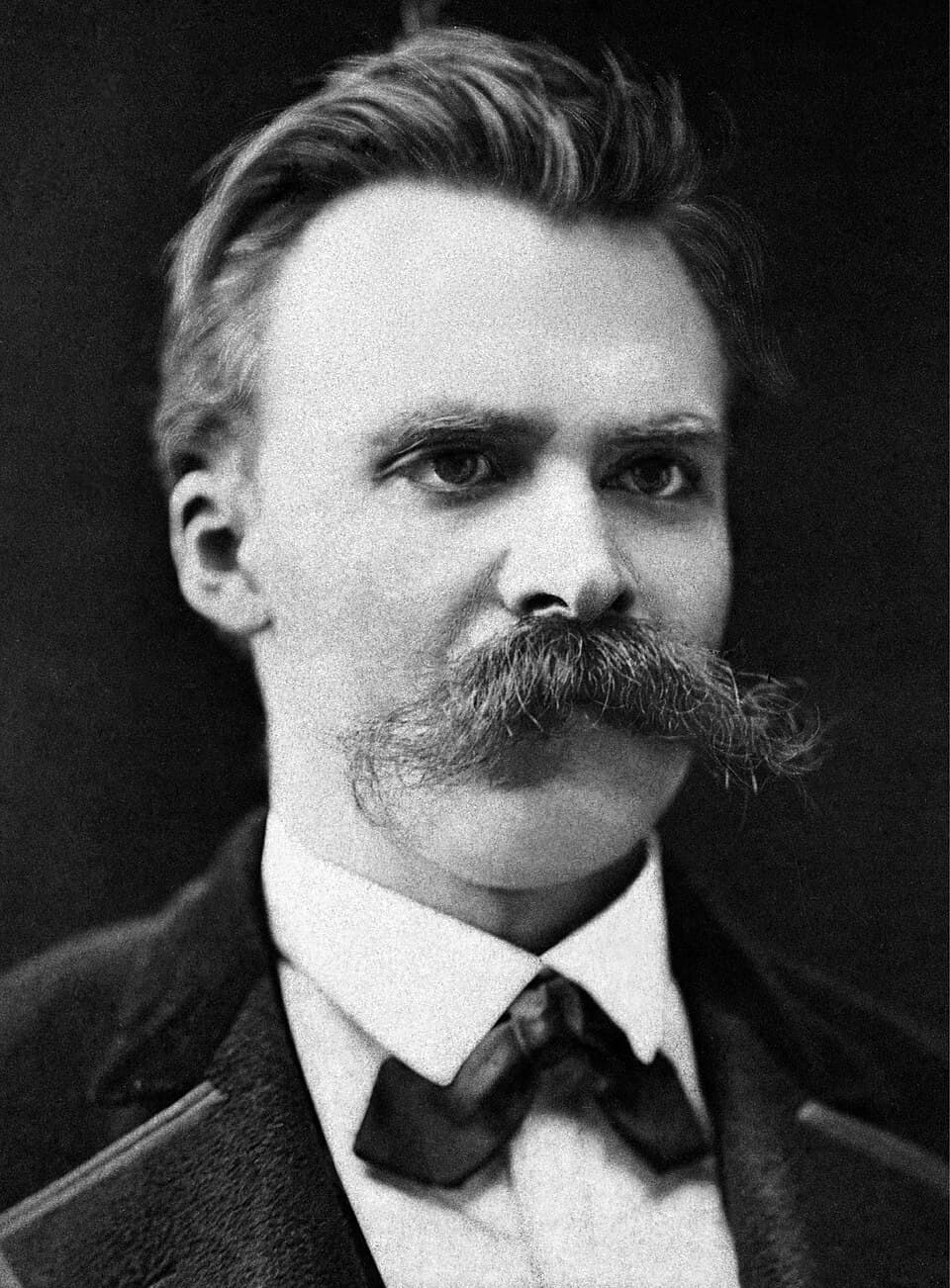
Friedrich Nietzsche
Thus Spake Zarathustra

The author posits that fear is the fundamental human emotion and the origin of both virtue and science, critiquing those who long for a dangerous life they cannot truly sustain.

...not to be unaware that we ARE different. We SEEK different things even here aloft, ye and I. For I seek more SECURITY; on that account have I come to Zarathustra. For he is still the most steadfast tower and will— —To-day, when everything tottereth, when all the earth quaketh. Ye, however, when I see what eyes ye make, it almost seemeth to me that ye seek MORE INSECURITY, —More horror, more danger, more earthquake. Ye long (it almost seemeth so to me—forgive my presumption, ye higher men)— —
Ye long for the worst and dangerousest life, which frighteneth ME most,—for the life of wild beasts, for forests, caves, steep mountains and labyrinthine gorges. And it is not those who lead OUT OF danger that please you best, but those who lead you away from all paths, the misleaders. But if such longing in you be ACTUAL, it seemeth to me nevertheless to be IMPOSSIBLE. For fear—that is man’s original and fundamental feeling; through fear everything is explained, original sin and original virtue. Through fear there grew also MY virtue, that is to say: Science.
For fear of wild animals—that hath been longest fostered in man, inclusive of the animal which he concealeth and feareth in himself:—Zarathustra calleth it ‘the beast inside.’ Such prolonged ancient fear, at last become subtle, spiritual and intellectual—at present, me thinketh, it is called SCIENCE.”— Thus spake the conscientious one; but Zarathustra, who had just come back into his cave and had heard and divined the last discourse, threw a handful of roses to the conscientious one, and lau...
3
6 of 6 in Chapter LXXV. SCIENCE533 of 593 in work
Courage's Primacy
Friedrich Nietzsche
Thus Spake Zarathustra

The author contrasts the 'conscientious' view that science is born from ancient fear with Zarathustra’s claim that human history is actually rooted in courage and adventure.

..., —More horror, more danger, more earthquake. Ye long (it almost seemeth so to me—forgive my presumption, ye higher men)— —Ye long for the worst and dangerousest life, which frighteneth ME most,—for the life of wild beasts, for forests, caves, steep mountains and labyrinthine gorges. And it is not those who lead OUT OF danger that please you best, but those who lead you away from all paths, the misleaders. But if such longing in you be ACTUAL, it seemeth to me nevertheless to be IMPOSSIBLE.
For fear—that is man’s original and fundamental feeling; through fear everything is explained, original sin and original virtue. Through fear there grew also MY virtue, that is to say: Science. For fear of wild animals—that hath been longest fostered in man, inclusive of the animal which he concealeth and feareth in himself:—Zarathustra calleth it ‘the beast inside.’ Such prolonged ancient fear, at last become subtle, spiritual and intellectual—at present, me thinketh, it is called SCIENCE.”— Thus spake the conscientious one; but Zarathustra, who had just come back into his cave and had heard and divined the last discourse, threw a handful of…
But what can I do with regard to its tricks! Have I created it and the world? Well! Let us be good again, and of good cheer! And although Zarathustra looketh with evil eye—just see him! he disliketh me—: —Ere night cometh will he again learn to love and laud me; he cannot live long without committing such follies. HE—loveth his enemies: this art knoweth he better than any one I have seen. But he taketh revenge for it—on his friends!” Thus spake the old magician, and the higher men appla...
Continue reading →
3
1 of 2 in Chapter LXXVI. AMONG DAUGHTERS OF THE DESERT534 of 593 in work
Now entering Chapter LXXVI. AMONG DAUGHTERS OF THE DESERT
Strong Clear Air
Friedrich Nietzsche
Thus Spake Zarathustra

The 'shadow' of Zarathustra pleads for his presence to ward off the damp melancholy and 'bad game' of despair that threatens to overtake the higher men in his absence.

...have seen. But he taketh revenge for it—on his friends!” Thus spake the old magician, and the higher men applauded him; so that Zarathustra went round, and mischievously and lovingly shook hands with his friends,—like one who hath to make amends and apologise to every one for something. When however he had thereby come to the door of his cave, lo, then had he again a longing for the good air outside, and for his animals,—and wished to steal out. LXXVI. AMONG DAUGHTERS OF THE DESERT. 1.
“Go not away!” said then the wanderer who called himself Zarathustra’s shadow, “abide with us—otherwise the old gloomy affliction might again fall upon us. Now hath that old magician given us of his worst for our good, and lo! the good, pious pope there hath tears in his eyes, and hath quite embarked again upon the sea of melancholy. Those kings may well put on a good air before us still: for that have THEY learned best of us all at present! Had they however no one to see them, I wager that with them also the bad game would again commence,— —The bad game of drifting clouds, of damp melancholy, of curtained heavens, of stolen suns, of howling…
Did I ever find anywhere on earth such good air as with thee in thy cave? Many lands have I seen, my nose hath learned to test and estimate many kinds of air: but with thee do my nostrils taste their greatest delight! Unless it be,—unless it be—, do forgive an old recollection! Forgive me an old after-dinner song, which I once composed amongst daughters of the desert:— For with them was there equally good, clear, Oriental air; there was I furthest from cloudy, damp, melancholy Old-Europe! T...
Continue reading →
1
2 of 2 in Chapter LXXVI. AMONG DAUGHTERS OF THE DESERT535 of 593 in work
The Dancing Palm
Friedrich Nietzsche
Thus Spake Zarathustra

A poetic vision of a palm tree as a dancer, illustrating a state of being that is free from the burdens of the past and future, existing in a moment of pure, rhythmic presence.

...nning!) —Sit I here the best of air sniffling, Paradisal air, truly, Bright and buoyant air, golden-mottled, As goodly air as ever From lunar orb downfell— Be it by hazard, Or supervened it by arrogancy? As the ancient poets relate it. But doubter, I’m now calling it In question: with this do I come indeed Out of Europe, That doubt’th more eagerly than doth any Elderly married woman. May the Lord improve it! Amen.
This the finest air drinking, With nostrils out-swelled like goblets, Lacking future, lacking remembrances Thus do I sit here, ye Friendly damsels dearly loved, And look at the palm-tree there, How it, to a dance-girl, like, Doth bow and bend and on its haunches bob, —One doth it too, when one view’th it long!— To a dance-girl like, who as it seem’th to me, Too long, and dangerously persistent, Always, always, just on SINGLE leg hath stood?
—Then forgot she thereby, as it seem’th to me, The OTHER leg? For vainly I, at least, Did search for the amissing Fellow-jewel —Namely, the other leg— In the sanctified precincts, Nigh her very dearest, very tenderest, Flapping and fluttering and flickering skirting. Yea, if ye should, ye beauteous friendly ones, Quite take my word: She hath, alas! LOST it! Hu! Hu! Hu! Hu! Hu! It is away! For ever away! The othe...
1
1 of 5 in Chapter LXXVII. THE AWAKENING536 of 593 in work
Now entering Chapter LXXVII. THE AWAKENING
Noise of Convalescence
Friedrich Nietzsche
Thus Spake Zarathustra

Zarathustra observes his guests' laughter as a sign of recovery from their distress, yet notes with a touch of irony that while they have unlearned their misery, they have not yet ceased their noise.

...our! Blow again, continue, Bellows-box of virtue! Ha! Once more thy roaring, Thy moral roaring! As a virtuous lion Nigh the daughters of deserts roaring! —For virtue’s out-howl, Ye very dearest maidens, Is more than every European fervour, European hot-hunger! And now do I stand here, As European, I can’t be different, God’s help to me! Amen! THE DESERTS GROW: WOE HIM WHO DOTH THEM HIDE! LXXVII. THE AWAKENING. 1.
After the song of the wanderer and shadow, the cave became all at once full of noise and laughter: and since the assembled guests all spake simultaneously, and even the ass, encouraged thereby, no longer remained silent, a little aversion and scorn for his visitors came over Zarathustra, although he rejoiced at their gladness. For it seemed to him a sign of convalescence. So he slipped out into the open air and spake to his animals. “Whither hath their distress now gone?” said he, and already did he himself feel relieved of his petty disgust—“with me, it seemeth that they have unlearned their cries of distress! —Though, alas! not yet their crying.”
And Zarathustra stopped his ears, for just then did the YE-A of the ass mix strangely with the noisy jubilation of those higher men. “They are merry,” he began again, “and who knoweth? perhaps at their host’s expense; and if they have learned of me to laugh, still it is not MY laughter they have learned. But what matter about that! They are old people: they recover in their own way, they laugh in their own way; mine ears have already endured worse and have not become peevish. This day is a...
1