The author praises Richard Wagner's music as a complex, late-stage artistic achievement that masterfully blends traditional German pride with modern, coarse, and foreign influences.
1 of 20 in Chapter VIII. PEOPLES AND COUNTRIES192 of 261 in work
Now entering Chapter VIII. PEOPLES AND COUNTRIES
Music's Mingled Seasons
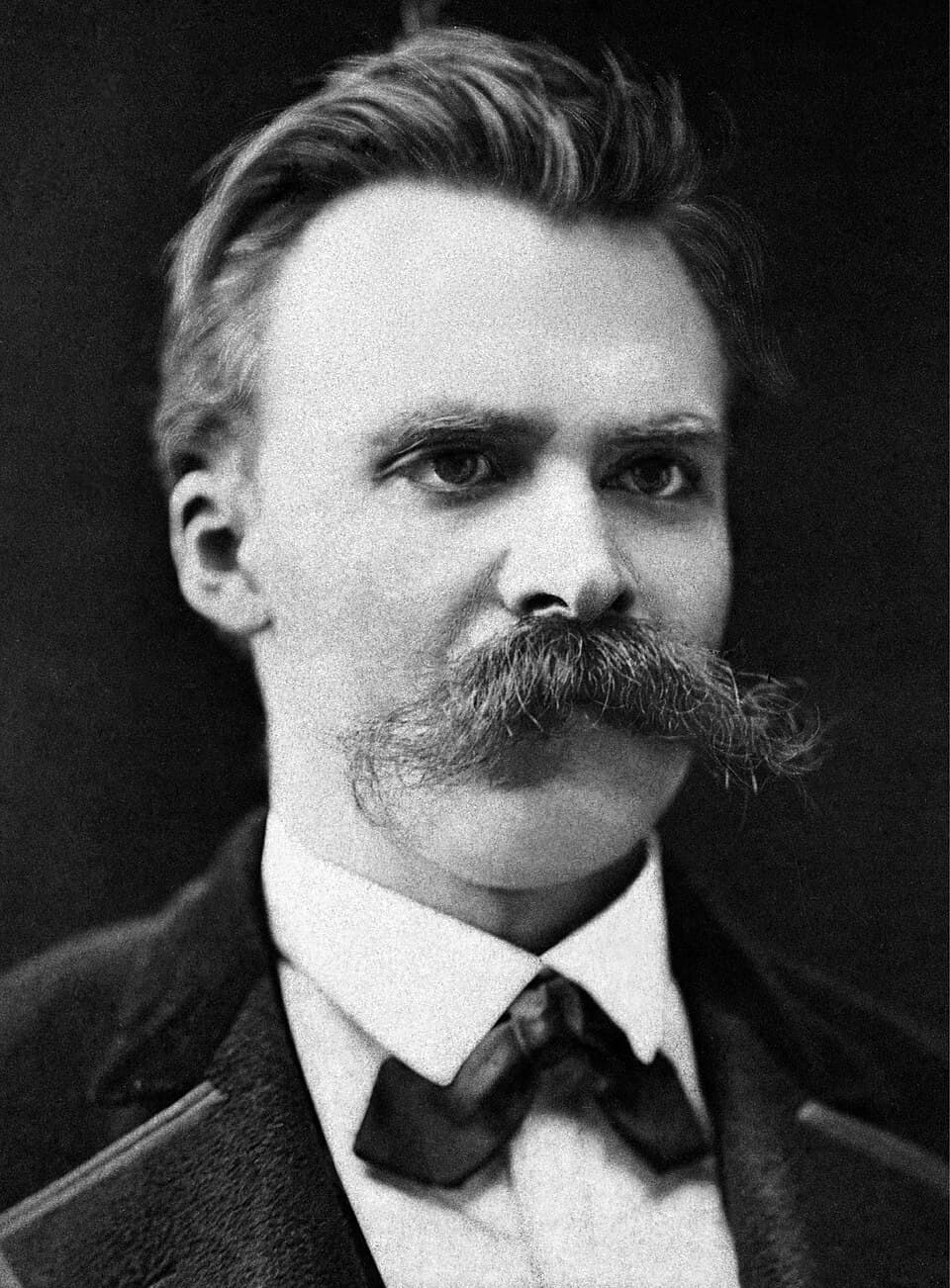
Friedrich Nietzsche
Beyond Good and Evil...l that is now to be at an end? And the DISENCHANTMENT of woman is in progress? The tediousness of woman is slowly evolving? Oh Europe! Europe! We know the horned animal which was always most attractive to thee, from which danger is ever again threatening thee! Thy old fable might once more become "history"--an immense stupidity might once again overmaster thee and carry thee away! And no God concealed beneath it--no! only an "idea," a "modern idea"! CHAPTER VIII. PEOPLES AND COUNTRIES 240.
I HEARD, once again for the first time, Richard Wagner's overture to the Mastersinger: it is a piece of magnificent, gorgeous, heavy, latter-day art, which has the pride to presuppose two centuries of music as still living, in order that it may be understood:--it is an honour to Germans that such a pride did not miscalculate! What flavours and forces, what seasons and climes do we not find mingled in it! It impresses us at one time as ancient, at another time as foreign, bitter, and too modern, it is as arbitrary as it is pompously traditional, it is not infrequently roguish, still oftener rough and coarse--it has fire and courage, and at the…
It flows broad and full: and suddenly there is a moment of inexplicable hesitation, like a gap that opens between cause and effect, an oppression that makes us dream, almost a nightmare; but already it broadens and widens anew, the old stream of delight--the most manifold delight,--of old and new happiness; including ESPECIALLY the joy of the artist in himself, which he refuses to conceal, his astonished, happy cognizance of his mastery of the expedients here employed, the new, newly acquired,...
Continue reading →
2
2 of 20 in Chapter VIII. PEOPLES AND COUNTRIES193 of 261 in work
⚖Art's Hesitant Flow

Friedrich Nietzsche
Beyond Good and EvilA vision of the artist's creative process, described as a fluctuating stream of delight and mastery over new, experimental methods of expression.
..., in order that it may be understood:--it is an honour to Germans that such a pride did not miscalculate! What flavours and forces, what seasons and climes do we not find mingled in it! It impresses us at one time as ancient, at another time as foreign, bitter, and too modern, it is as arbitrary as it is pompously traditional, it is not infrequently roguish, still oftener rough and coarse--it has fire and courage, and at the same time the loose, dun-coloured skin of fruits which ripen too late.
It flows broad and full: and suddenly there is a moment of inexplicable hesitation, like a gap that opens between cause and effect, an oppression that makes us dream, almost a nightmare; but already it broadens and widens anew, the old stream of delight--the most manifold delight,--of old and new happiness; including ESPECIALLY the joy of the artist in himself, which he refuses to conceal, his astonished, happy cognizance of his mastery of the expedients here employed, the new, newly acquired, imperfectly tested expedients of art which he apparently betrays to us.
All in all, however, no beauty, no South, nothing of the delicate southern clearness of the sky, nothing of grace, no dance, hardly a will to logic; a certain clumsiness even, which is also emphasized, as though the artist wished to say to us: "It is part of my intention"; a cumbersome drapery, something arbitrarily barbaric and ceremonious, a flirring of learned and venerable conceits and witticisms; something German in the best and worst sense of the word, something in the German style, manif...
2
3 of 20 in Chapter VIII. PEOPLES AND COUNTRIES194 of 261 in work
⚖Germany's Timeless Soul

Friedrich Nietzsche
Beyond Good and EvilA vision of the German soul as a formless, cumbersome, yet potent entity that lacks a clear 'today,' existing instead as a mixture of past traditions and future possibilities.
...hesitation, like a gap that opens between cause and effect, an oppression that makes us dream, almost a nightmare; but already it broadens and widens anew, the old stream of delight--the most manifold delight,--of old and new happiness; including ESPECIALLY the joy of the artist in himself, which he refuses to conceal, his astonished, happy cognizance of his mastery of the expedients here employed, the new, newly acquired, imperfectly tested expedients of art which he apparently betrays to us.
All in all, however, no beauty, no South, nothing of the delicate southern clearness of the sky, nothing of grace, no dance, hardly a will to logic; a certain clumsiness even, which is also emphasized, as though the artist wished to say to us: "It is part of my intention"; a cumbersome drapery, something arbitrarily barbaric and ceremonious, a flirring of learned and venerable conceits and witticisms; something German in the best and worst sense of the word, something in the German style, manifold, formless, and inexhaustible; a certain German potency and super-plenitude of soul, which is not afraid to hide itself under the RAFFINEMENTS of…
241. We "good Europeans," we also have hours when we allow ourselves a warm-hearted patriotism, a plunge and relapse into old loves and narrow views--I have just given an example of it--hours of national excitement, of patriotic anguish, and all other sorts of old-fashioned floods of sentiment. Duller spirits may perhaps only get done with what confines its operations in us to hours and plays itself out in hours--in a considerable time: some in half a year, others in half a lifetime, according...
Continue reading →
1
4 of 20 in Chapter VIII. PEOPLES AND COUNTRIES195 of 261 in work
⚖The Nomadic European

Friedrich Nietzsche
Beyond Good and EvilNietzsche views the democratic movement and European 'progress' as a physiological process leading to a 'super-national' and nomadic species of man characterized by a maximum power of adaptation.
...ything great has been just as mad at its commencement!"--"Misuse of words!" cried his interlocutor, contradictorily--"strong! strong! Strong and mad! NOT great!"--The old men had obviously become heated as they thus shouted their "truths" in each other's faces, but I, in my happiness and apartness, considered how soon a stronger one may become master of the strong, and also that there is a compensation for the intellectual superficialising of a nation--namely, in the deepening of another. 242.
Whether we call it "civilization," or "humanising," or "progress," which now distinguishes the European, whether we call it simply, without praise or blame, by the political formula the DEMOCRATIC movement in Europe--behind all the moral and political foregrounds pointed to by such formulas, an immense PHYSIOLOGICAL PROCESS goes on, which is ever extending the process of the assimilation of Europeans, their increasing detachment from the conditions under which, climatically and hereditarily, united races originate, their increasing independence of every definite milieu, that for centuries would fain inscribe itself with equal demands on soul…
This process of the EVOLVING EUROPEAN, which can be retarded in its TEMPO by great relapses, but will perhaps just gain and grow thereby in vehemence and depth--the still-raging storm and stress of "national sentiment" pertains to it, and also the anarchism which is appearing at present--this process will probably arrive at results on which its naive propagators and panegyrists, the apostles of "modern ideas," would least care to reckon. The same new conditions under which on an average a level...
Continue reading →
5
5 of 20 in Chapter VIII. PEOPLES AND COUNTRIES196 of 261 in work
⚖The Strong Exception

Friedrich Nietzsche
Beyond Good and EvilNietzsche argues that the same democratic leveling that produces a weak-willed 'herd' also creates the perfect conditions for the emergence of exceptionally strong and dangerous individuals.
...e art and power of adaptation as his typical distinction. This process of the EVOLVING EUROPEAN, which can be retarded in its TEMPO by great relapses, but will perhaps just gain and grow thereby in vehemence and depth--the still-raging storm and stress of "national sentiment" pertains to it, and also the anarchism which is appearing at present--this process will probably arrive at results on which its naive propagators and panegyrists, the apostles of "modern ideas," would least care to reckon.
The same new conditions under which on an average a levelling and mediocrising of man will take place--a useful, industrious, variously serviceable, and clever gregarious man--are in the highest degree suitable to give rise to exceptional men of the most dangerous and attractive qualities. For, while the capacity for adaptation, which is every day trying changing conditions, and begins a new work with every generation, almost with every decade, makes the POWERFULNESS of the type impossible; while the collective impression of such future Europeans will probably be that of numerous, talkative, weak-willed, and very handy workmen who REQUIRE a…
I meant to say that the democratising of Europe is at the same time an involuntary arrangement for the rearing of TYRANTS--taking the word in all its meanings, even in its most spiritual sense. 243. I hear with pleasure that our sun is moving rapidly towards the constellation Hercules: and I hope that the men on this earth will do like the sun. And we foremost, we good Europeans! 244. There was a time when it was customary to call Germans "deep" by way of distinction; but now that the most su...
Continue reading →
3