9 of 18 in Chapter III. THE RELIGIOUS MOOD72 of 261 in work
Philosophy's Anti-Christian Attentat
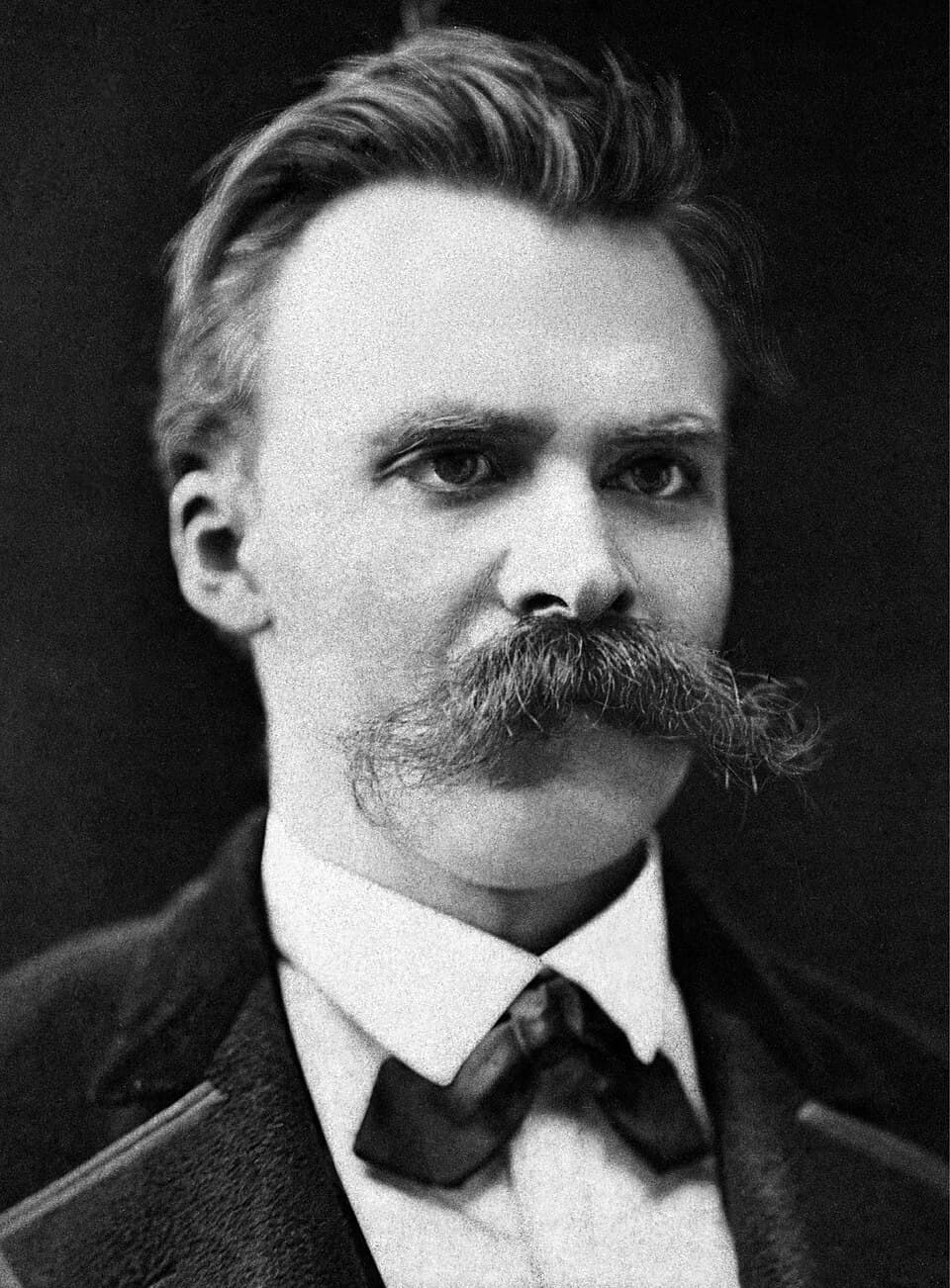
Friedrich Nietzsche
Beyond Good and Evil

A critique of modern philosophy as a covert attack on the Christian conception of the soul, framing epistemological skepticism as an inherently anti-Christian movement.

...ally so "the judge," "the rewarder." Also his "free will": he does not hear--and even if he did, he would not know how to help. The worst is that he seems incapable of communicating himself clearly; is he uncertain?--This is what I have made out (by questioning and listening at a variety of conversations) to be the cause of the decline of European theism; it appears to me that though the religious instinct is in vigorous growth,--it rejects the theistic satisfaction with profound distrust. 54.
What does all modern philosophy mainly do? Since Descartes--and indeed more in defiance of him than on the basis of his procedure--an ATTENTAT has been made on the part of all philosophers on the old conception of the soul, under the guise of a criticism of the subject and predicate conception--that is to say, an ATTENTAT on the fundamental presupposition of Christian doctrine. Modern philosophy, as epistemological skepticism, is secretly or openly ANTI-CHRISTIAN, although (for keener ears, be it said) by no means anti-religious.
Formerly, in effect, one believed in "the soul" as one believed in grammar and the grammatical subject: one said, "I" is the condition, "think" is the predicate and is conditioned--to think is an activity for which one MUST suppose a subject as cause. The attempt was then made, with marvelous tenacity and subtlety, to see if one could not get out of this net,--to see if the opposite was not perhaps true: "think" the condition, and "I" the conditioned; "I," therefore, only a synthesis which has...
6
10 of 18 in Chapter III. THE RELIGIOUS MOOD73 of 261 in work
Beyond World-Renouncing Thought
Friedrich Nietzsche
Beyond Good and Evil

The author describes a transition from Schopenhauer’s pessimistic world-denial to a 'world-approving' ideal that embraces the 'eternal recurrence' of all things, both good and bad, as a divine circle.

...ained to be sacrificed? Was it not necessary in the end for men to sacrifice everything comforting, holy, healing, all hope, all faith in hidden harmonies, in future blessedness and justice? Was it not necessary to sacrifice God himself, and out of cruelty to themselves to worship stone, stupidity, gravity, fate, nothingness? To sacrifice God for nothingness--this paradoxical mystery of the ultimate cruelty has been reserved for the rising generation; we all know something thereof already. 56.
Whoever, like myself, prompted by some enigmatical desire, has long endeavoured to go to the bottom of the question of pessimism and free it from the half-Christian, half-German narrowness and stupidity in which it has finally presented itself to this century, namely, in the form of Schopenhauer's philosophy; whoever, with an Asiatic and super-Asiatic eye, has actually looked inside, and into the most world-renouncing of all possible modes of thought--beyond good and evil, and no longer like Buddha and Schopenhauer, under the dominion and delusion of morality,--whoever has done this, has perhaps just thereby, without really desiring it,…
57. The distance, and as it were the space around man, grows with the strength of his intellectual vision and insight: his world becomes profounder; new stars, new enigmas, and notions are ever coming into view. Perhaps everything on which the intellectual eye has exercised its acuteness and profundity has just been an occasion for its exercise, something of a game, something for children and childish minds. Perhaps the most solemn conceptions that have caused the most fighting and suffering,...
Continue reading →
2
11 of 18 in Chapter III. THE RELIGIOUS MOOD74 of 261 in work
The Eternal Child
Friedrich Nietzsche
Beyond Good and Evil

A vision suggesting that as human insight grows, our most solemn concepts like 'God' and 'sin' may eventually be discarded as childish playthings, only to be replaced by new, more mature 'games.'

...most world-approving, exuberant, and vivacious man, who has not only learnt to compromise and arrange with that which was and is, but wishes to have it again AS IT WAS AND IS, for all eternity, insatiably calling out da capo, not only to himself, but to the whole piece and play; and not only the play, but actually to him who requires the play--and makes it necessary; because he always requires himself anew--and makes himself necessary.--What? And this would not be--circulus vitiosus deus? 57.
The distance, and as it were the space around man, grows with the strength of his intellectual vision and insight: his world becomes profounder; new stars, new enigmas, and notions are ever coming into view. Perhaps everything on which the intellectual eye has exercised its acuteness and profundity has just been an occasion for its exercise, something of a game, something for children and childish minds. Perhaps the most solemn conceptions that have caused the most fighting and suffering, the conceptions "God" and "sin," will one day seem to us of no more importance than a child's plaything or a child's pain seems to an old man;--and perhaps…
58. Has it been observed to what extent outward idleness, or semi-idleness, is necessary to a real religious life (alike for its favourite microscopic labour of self-examination, and for its soft placidity called "prayer," the state of perpetual readiness for the "coming of God"), I mean the idleness with a good conscience, the idleness of olden times and of blood, to which the aristocratic sentiment that work is DISHONOURING--that it vulgarizes body and soul--is not quite unfamiliar? And that...
Continue reading →
2
12 of 18 in Chapter III. THE RELIGIOUS MOOD75 of 261 in work
Idleness for Religion
Friedrich Nietzsche
Beyond Good and Evil

Nietzsche observes that the modern obsession with 'laboriousness' and work has dissolved the religious instincts, as the quiet idleness required for a spiritual life is now viewed as dishonorable.

...and profundity has just been an occasion for its exercise, something of a game, something for children and childish minds. Perhaps the most solemn conceptions that have caused the most fighting and suffering, the conceptions "God" and "sin," will one day seem to us of no more importance than a child's plaything or a child's pain seems to an old man;--and perhaps another plaything and another pain will then be necessary once more for "the old man"--always childish enough, an eternal child! 58.
Has it been observed to what extent outward idleness, or semi-idleness, is necessary to a real religious life (alike for its favourite microscopic labour of self-examination, and for its soft placidity called "prayer," the state of perpetual readiness for the "coming of God"), I mean the idleness with a good conscience, the idleness of olden times and of blood, to which the aristocratic sentiment that work is DISHONOURING--that it vulgarizes body and soul--is not quite unfamiliar? And that consequently the modern, noisy, time-engrossing, conceited, foolishly proud laboriousness educates and prepares for "unbelief" more than anything else?…
They feel themselves already fully occupied, these good people, be it by their business or by their pleasures, not to mention the "Fatherland," and the newspapers, and their "family duties"; it seems that they have no time whatever left for religion; and above all, it is not obvious to them whether it is a question of a new business or a new pleasure--for it is impossible, they say to themselves, that people should go to church merely to spoil their tempers. They are by no means enemies of reli...
Continue reading →
6
13 of 18 in Chapter III. THE RELIGIOUS MOOD76 of 261 in work
The Scholar's Naive Superiority
Friedrich Nietzsche
Beyond Good and Evil

The author critiques the modern scholar's 'naivete' and arrogance, arguing that their supposed tolerance is actually a shallow, mob-like instinct that treats religious depth as an inferior stage of human development.

...anted wherever any one still professes to belong to the Church. It is only with the help of history (NOT through his own personal experience, therefore) that the scholar succeeds in bringing himself to a respectful seriousness, and to a certain timid deference in presence of religions; but even when his sentiments have reached the stage of gratitude towards them, he has not personally advanced one step nearer to that which still maintains itself as Church or as piety; perhaps even the contrary.
The practical indifference to religious matters in the midst of which he has been born and brought up, usually sublimates itself in his case into circumspection and cleanliness, which shuns contact with religious men and things; and it may be just the depth of his tolerance and humanity which prompts him to avoid the delicate trouble which tolerance itself brings with it.--Every age has its own divine type of naivete, for the discovery of which other ages may envy it: and how much naivete--adorable, childlike, and boundlessly foolish naivete is involved in this belief of the scholar in his superiority, in the good conscience of his tolerance,…
59. Whoever has seen deeply into the world has doubtless divined what wisdom there is in the fact that men are superficial. It is their preservative instinct which teaches them to be flighty, lightsome, and false. Here and there one finds a passionate and exaggerated adoration of "pure forms" in philosophers as well as in artists: it is not to be doubted that whoever has NEED of the cult of the superficial to that extent, has at one time or another made an unlucky dive BENEATH it. Perhaps ther...
Continue reading →
4