27 of 41 in Chapter IV. APOPHTHEGMS AND INTERLUDES108 of 261 in work
Conversation's Dual Need
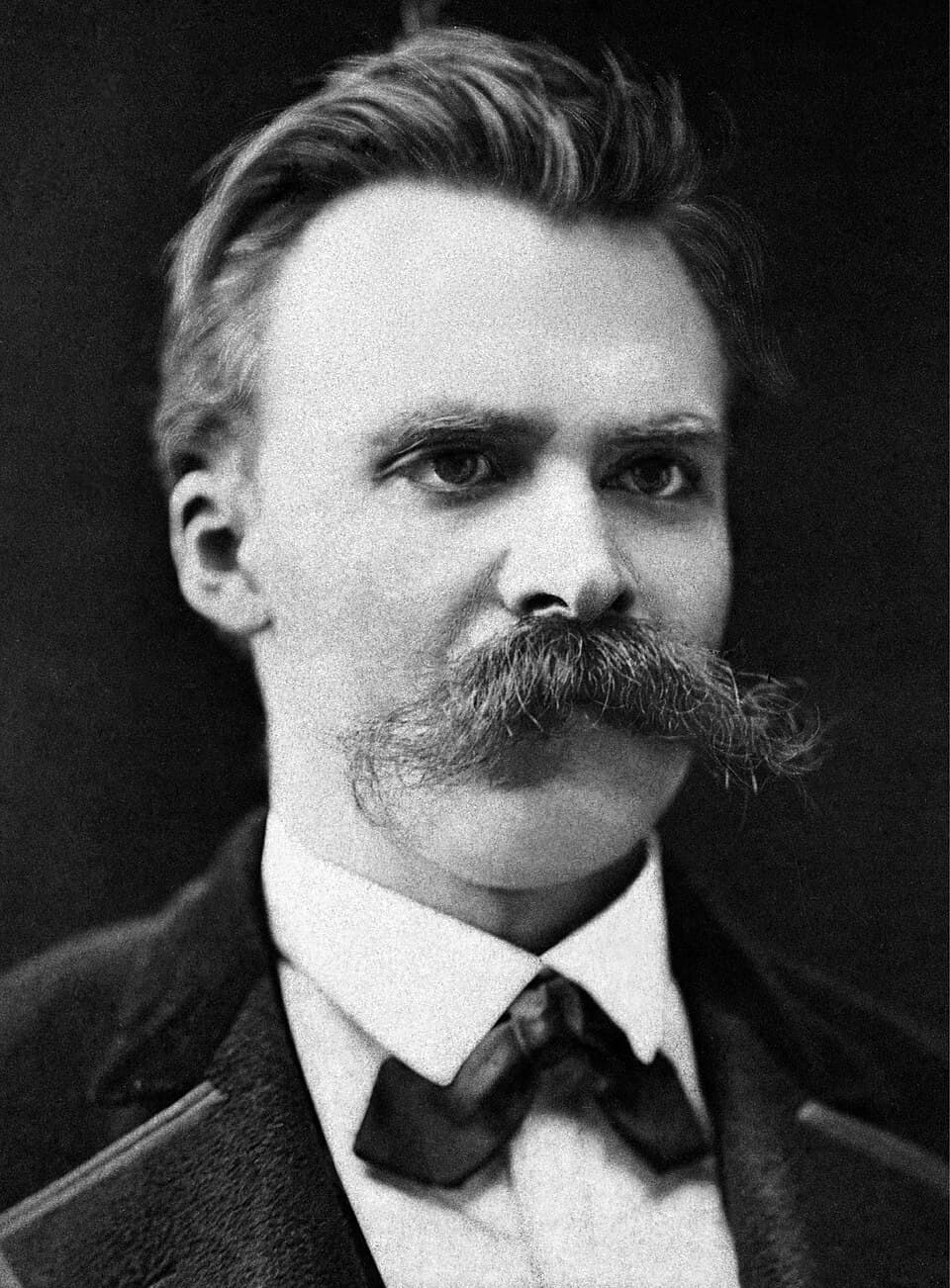
Friedrich Nietzsche
Beyond Good and Evil

The author defines a good conversation as a symbiotic relationship where one person seeks to give birth to thoughts while the other acts as a midwife.

...n is ESSENTIALLY unpeaceable, like the cat, however well she may have assumed the peaceable demeanour. 132. One is punished best for one's virtues. 133. He who cannot find the way to HIS ideal, lives more frivolously and shamelessly than the man without an ideal. 134. From the senses originate all trustworthiness, all good conscience, all evidence of truth. 135. Pharisaism is not a deterioration of the good man; a considerable part of it is rather an essential condition of being good. 136.
The one seeks an accoucheur for his thoughts, the other seeks some one whom he can assist: a good conversation thus originates.
137. In intercourse with scholars and artists one readily makes mistakes of opposite kinds: in a remarkable scholar one not infrequently finds a mediocre man; and often, even in a mediocre artist, one finds a very remarkable man. 138. We do the same when awake as when dreaming: we only invent and imagine him with whom we have intercourse--and forget it immediately. 139. In revenge and in love woman is more barbarous than man. 140. ADVICE AS A RIDDLE.--"If the band is not to break, bite it f...
6
28 of 41 in Chapter IV. APOPHTHEGMS AND INTERLUDES109 of 261 in work
Scholar vs Artist
Friedrich Nietzsche
Beyond Good and Evil

The author observes a common discrepancy between professional talent and personal character, noting that great scholars can be dull people while mediocre artists may possess remarkable personalities.

...one's virtues. 133. He who cannot find the way to HIS ideal, lives more frivolously and shamelessly than the man without an ideal. 134. From the senses originate all trustworthiness, all good conscience, all evidence of truth. 135. Pharisaism is not a deterioration of the good man; a considerable part of it is rather an essential condition of being good. 136. The one seeks an accoucheur for his thoughts, the other seeks some one whom he can assist: a good conversation thus originates. 137.
In intercourse with scholars and artists one readily makes mistakes of opposite kinds: in a remarkable scholar one not infrequently finds a mediocre man; and often, even in a mediocre artist, one finds a very remarkable man.
138. We do the same when awake as when dreaming: we only invent and imagine him with whom we have intercourse--and forget it immediately. 139. In revenge and in love woman is more barbarous than man. 140. ADVICE AS A RIDDLE.--"If the band is not to break, bite it first--secure to make!" 141. The belly is the reason why man does not so readily take himself for a God. 142. The chastest utterance I ever heard: "Dans le veritable amour c'est l'ame qui enveloppe le corps." 143. Our vanity woul...
6
29 of 41 in Chapter IV. APOPHTHEGMS AND INTERLUDES110 of 261 in work
The Abyss's Gaze
Friedrich Nietzsche
Beyond Good and Evil

A famous warning that in the struggle against evil, one risks adopting the very traits they oppose, as prolonged engagement with darkness inevitably leaves a mark on the soul.

...what we do best to pass precisely for what is most difficult to us.--Concerning the origin of many systems of morals. 144. When a woman has scholarly inclinations there is generally something wrong with her sexual nature. Barrenness itself conduces to a certain virility of taste; man, indeed, if I may say so, is "the barren animal." 145. Comparing man and woman generally, one may say that woman would not have the genius for adornment, if she had not the instinct for the SECONDARY role. 146.
He who fights with monsters should be careful lest he thereby become a monster. And if thou gaze long into an abyss, the abyss will also gaze into thee.
147. From old Florentine novels--moreover, from life: Buona femmina e mala femmina vuol bastone.--Sacchetti, Nov. 86. 148. To seduce their neighbour to a favourable opinion, and afterwards to believe implicitly in this opinion of their neighbour--who can do this conjuring trick so well as women? 149. That which an age considers evil is usually an unseasonable echo of what was formerly considered good--the atavism of an old ideal. 150. Around the hero everything becomes a tragedy; around the...
4
30 of 41 in Chapter IV. APOPHTHEGMS AND INTERLUDES111 of 261 in work
Evil as Atavism
Friedrich Nietzsche
Beyond Good and Evil

The author argues that what society currently labels as 'evil' is often simply an outdated version of what was once considered 'good.'

...he instinct for the SECONDARY role. 146. He who fights with monsters should be careful lest he thereby become a monster. And if thou gaze long into an abyss, the abyss will also gaze into thee. 147. From old Florentine novels--moreover, from life: Buona femmina e mala femmina vuol bastone.--Sacchetti, Nov. 86. 148. To seduce their neighbour to a favourable opinion, and afterwards to believe implicitly in this opinion of their neighbour--who can do this conjuring trick so well as women? 149.
That which an age considers evil is usually an unseasonable echo of what was formerly considered good--the atavism of an old ideal.
150. Around the hero everything becomes a tragedy; around the demigod everything becomes a satyr-play; and around God everything becomes--what? perhaps a "world"? 151. It is not enough to possess a talent: one must also have your permission to possess it;--eh, my friends? 152. "Where there is the tree of knowledge, there is always Paradise": so say the most ancient and the most modern serpents. 153. What is done out of love always takes place beyond good and evil. 154. Objection, evasion,...
6
31 of 41 in Chapter IV. APOPHTHEGMS AND INTERLUDES112 of 261 in work
Love Beyond Morality
Friedrich Nietzsche
Beyond Good and Evil

Nietzsche famously asserts that actions motivated by love transcend conventional moral categories of 'good' and 'evil.'

...ally an unseasonable echo of what was formerly considered good--the atavism of an old ideal. 150. Around the hero everything becomes a tragedy; around the demigod everything becomes a satyr-play; and around God everything becomes--what? perhaps a "world"? 151. It is not enough to possess a talent: one must also have your permission to possess it;--eh, my friends? 152. "Where there is the tree of knowledge, there is always Paradise": so say the most ancient and the most modern serpents. 153.
What is done out of love always takes place beyond good and evil.
154. Objection, evasion, joyous distrust, and love of irony are signs of health; everything absolute belongs to pathology. 155. The sense of the tragic increases and declines with sensuousness. 156. Insanity in individuals is something rare--but in groups, parties, nations, and epochs it is the rule. 157. The thought of suicide is a great consolation: by means of it one gets successfully through many a bad night. 158. Not only our reason, but also our conscience, truckles to our strongest...
6