11 of 16 in Chapter VI. WE SCHOLARS160 of 261 in work
Philosophers as Experimenters
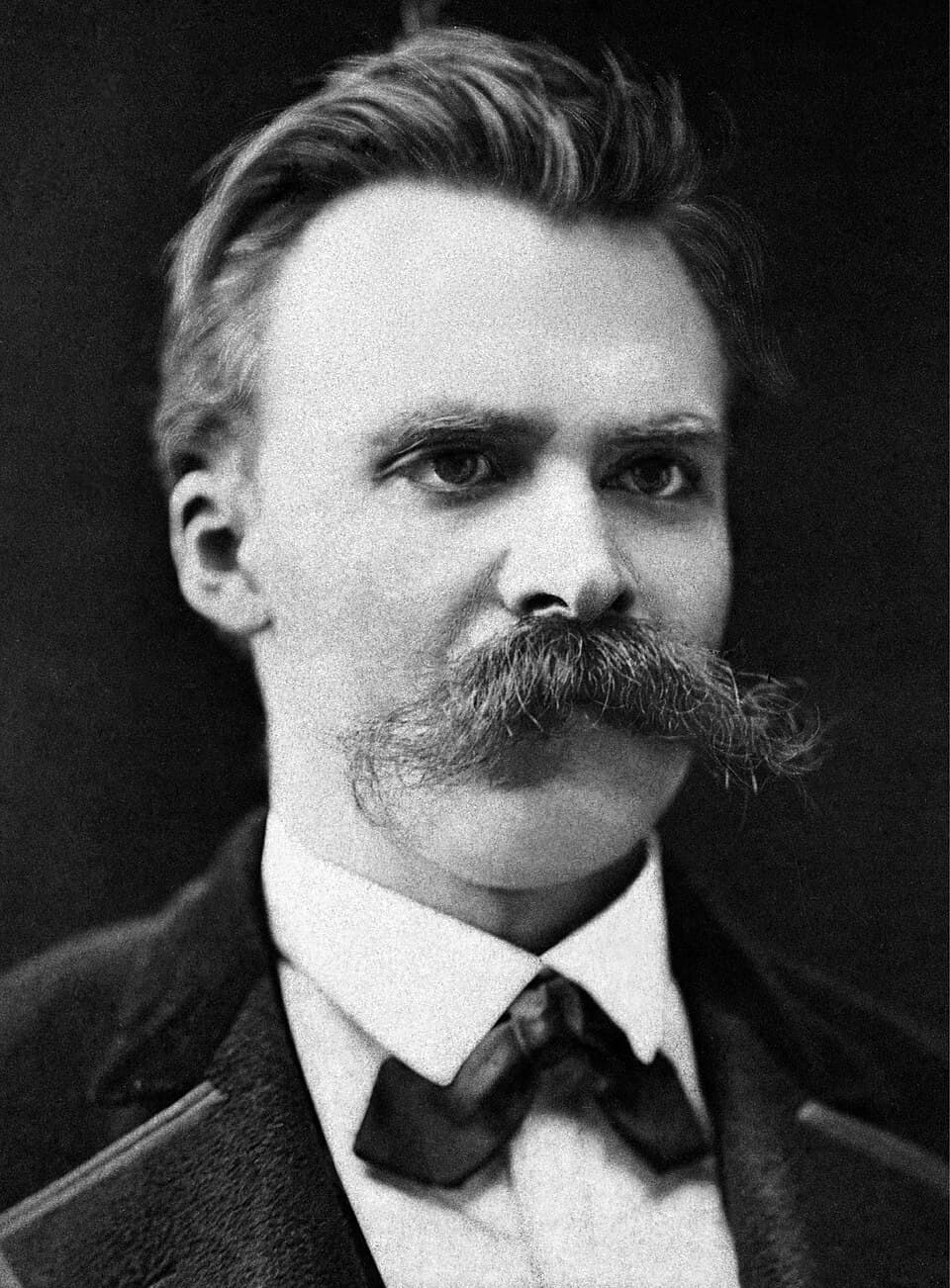
Friedrich Nietzsche
Beyond Good and Evil

A vision of future philosophers as daring 'experimenters' and 'critics' who will pursue knowledge through painful and dangerous attempts that defy the comforts of democratic society.

...this new one--and that it is not so very long ago that a masculinized woman could dare, with unbridled presumption, to recommend the Germans to the interest of Europe as gentle, good-hearted, weak-willed, and poetical fools. Finally, let us only understand profoundly enough Napoleon's astonishment when he saw Goethe it reveals what had been regarded for centuries as the "German spirit" "VOILA UN HOMME!"--that was as much as to say "But this is a MAN! And I only expected to see a German!" 210.
Supposing, then, that in the picture of the philosophers of the future, some trait suggests the question whether they must not perhaps be skeptics in the last-mentioned sense, something in them would only be designated thereby--and not they themselves. With equal right they might call themselves critics, and assuredly they will be men of experiments. By the name with which I ventured to baptize them, I have already expressly emphasized their attempting and their love of attempting is this because, as critics in body and soul, they will love to make use of experiments in a new, and perhaps wider and more dangerous sense? In their passion for…
--There is no doubt these coming ones will be least able to dispense with the serious and not unscrupulous qualities which distinguish the critic from the skeptic I mean the certainty as to standards of worth, the conscious employment of a unity of method, the wary courage, the standing-alone, and the capacity for self-responsibility, indeed, they will avow among themselves a DELIGHT in denial and dissection, and a certain considerate cruelty, which knows how to handle the knife surely and deftl...
Continue reading →
2
12 of 16 in Chapter VI. WE SCHOLARS161 of 261 in work
The Philosopher's Task
Friedrich Nietzsche
Beyond Good and Evil

The author distinguishes between 'philosophical workers' who formalize existing values and 'real philosophers' who are commanders and creators of new values, requiring a vast range of human experience to fulfill their task.

...othing else whatever!" Though this estimate of philosophy may enjoy the approval of all the Positivists of France and Germany (and possibly it even flattered the heart and taste of KANT: let us call to mind the titles of his principal works), our new philosophers will say, notwithstanding, that critics are instruments of the philosopher, and just on that account, as instruments, they are far from being philosophers themselves! Even the great Chinaman of Konigsberg was only a great critic. 211.
I insist upon it that people finally cease confounding philosophical workers, and in general scientific men, with philosophers--that precisely here one should strictly give "each his own," and not give those far too much, these far too little. It may be necessary for the education of the real philosopher that he himself should have once stood upon all those steps upon which his servants, the scientific workers of philosophy, remain standing, and MUST remain standing he himself must perhaps have been critic, and dogmatist, and historian, and besides, poet, and collector, and traveler, and riddle-reader, and moralist, and seer, and "free…
They determine first the Whither and the Why of mankind, and thereby set aside the previous labour of all philosophical workers, and all subjugators of the past--they grasp at the future with a creative hand, and whatever is and was, becomes for them thereby a means, an instrument, and a hammer. Their "knowing" is CREATING, their creating is a law-giving, their will to truth is--WILL TO POWER.--Are there at present such philosophers? Have there ever been such philosophers? MUST there not be suc...
Continue reading →
2
13 of 16 in Chapter VI. WE SCHOLARS162 of 261 in work
Philosophers as Law-Givers
Friedrich Nietzsche
Beyond Good and Evil

Nietzsche asserts that while scholars organize the past, true philosophers are 'law-givers' who use the Will to Power to creatively determine the future and the ultimate purpose of mankind.

...nd besides, poet, and collector, and traveler, and riddle-reader, and moralist, and seer, and "free spirit," and almost everything, in order to traverse the whole range of human values and estimations, and that he may BE ABLE with a variety of eyes and consciences to look from a height to any distance, from a depth up to any height, from a nook into any expanse. But all these are only preliminary conditions for his task; this task itself demands something else--it requires him TO CREATE VALUES.
The philosophical workers, after the excellent pattern of Kant and Hegel, have to fix and formalize some great existing body of valuations--that is to say, former DETERMINATIONS OF VALUE, creations of value, which have become prevalent, and are for a time called "truths"--whether in the domain of the LOGICAL, the POLITICAL (moral), or the ARTISTIC. It is for these investigators to make whatever has happened and been esteemed hitherto, conspicuous, conceivable, intelligible, and manageable, to shorten everything long, even "time" itself, and to SUBJUGATE the entire past: an immense and wonderful task, in the carrying out of which all refined…
--Are there at present such philosophers? Have there ever been such philosophers? MUST there not be such philosophers some day? ... 212. It is always more obvious to me that the philosopher, as a man INDISPENSABLE for the morrow and the day after the morrow, has ever found himself, and HAS BEEN OBLIGED to find himself, in contradiction to the day in which he lives; his enemy has always been the ideal of his day. Hitherto all those extraordinary furtherers of humanity whom one calls philosophers...
Continue reading →
2
14 of 16 in Chapter VI. WE SCHOLARS163 of 261 in work
Philosopher as Bad Conscience
Friedrich Nietzsche
Beyond Good and Evil

The author defines the philosopher's essential mission as being the 'bad conscience' of their age, necessitating a move into opposition against contemporary ideals to foster a new greatness in humanity.

...nd the Why of mankind, and thereby set aside the previous labour of all philosophical workers, and all subjugators of the past--they grasp at the future with a creative hand, and whatever is and was, becomes for them thereby a means, an instrument, and a hammer. Their "knowing" is CREATING, their creating is a law-giving, their will to truth is--WILL TO POWER.--Are there at present such philosophers? Have there ever been such philosophers? MUST there not be such philosophers some day? ... 212.
It is always more obvious to me that the philosopher, as a man INDISPENSABLE for the morrow and the day after the morrow, has ever found himself, and HAS BEEN OBLIGED to find himself, in contradiction to the day in which he lives; his enemy has always been the ideal of his day. Hitherto all those extraordinary furtherers of humanity whom one calls philosophers--who rarely regarded themselves as lovers of wisdom, but rather as disagreeable fools and dangerous interrogators--have found their mission, their hard, involuntary, imperative mission (in the end, however, the greatness of their mission), in being the bad conscience of their age. In…
In the face of a world of "modern ideas," which would like to confine every one in a corner, in a "specialty," a philosopher, if there could be philosophers nowadays, would be compelled to place the greatness of man, the conception of "greatness," precisely in his comprehensiveness and multifariousness, in his all-roundness, he would even determine worth and rank according to the amount and variety of that which a man could bear and take upon himself, according to the EXTENT to which a man cou...
Continue reading →
2
15 of 16 in Chapter VI. WE SCHOLARS164 of 261 in work
The Unknowable Philosopher
Friedrich Nietzsche
Beyond Good and Evil

The author asserts that the nature of a philosopher cannot be taught but must be experienced, noting that popular conceptions of philosophy are almost entirely false.

...fferent, to stand alone, to have to live by personal initiative, and the philosopher will betray something of his own ideal when he asserts "He shall be the greatest who can be the most solitary, the most concealed, the most divergent, the man beyond good and evil, the master of his virtues, and of super-abundance of will; precisely this shall be called GREATNESS: as diversified as can be entire, as ample as can be full." And to ask once more the question: Is greatness POSSIBLE--nowadays? 213.
It is difficult to learn what a philosopher is, because it cannot be taught: one must "know" it by experience--or one should have the pride NOT to know it. The fact that at present people all talk of things of which they CANNOT have any experience, is true more especially and unfortunately as concerns the philosopher and philosophical matters:--the very few know them, are permitted to know them, and all popular ideas about them are false.
Thus, for instance, the truly philosophical combination of a bold, exuberant spirituality which runs at presto pace, and a dialectic rigour and necessity which makes no false step, is unknown to most thinkers and scholars from their own experience, and therefore, should any one speak of it in their presence, it is incredible to them. They conceive of every necessity as troublesome, as a painful compulsory obedience and state of constraint; thinking itself is regarded by them as something slow a...
6