3 of 27 in Chapter V. THE NATURAL HISTORY OF MORALS125 of 261 in work
Morals as Emotional Signs
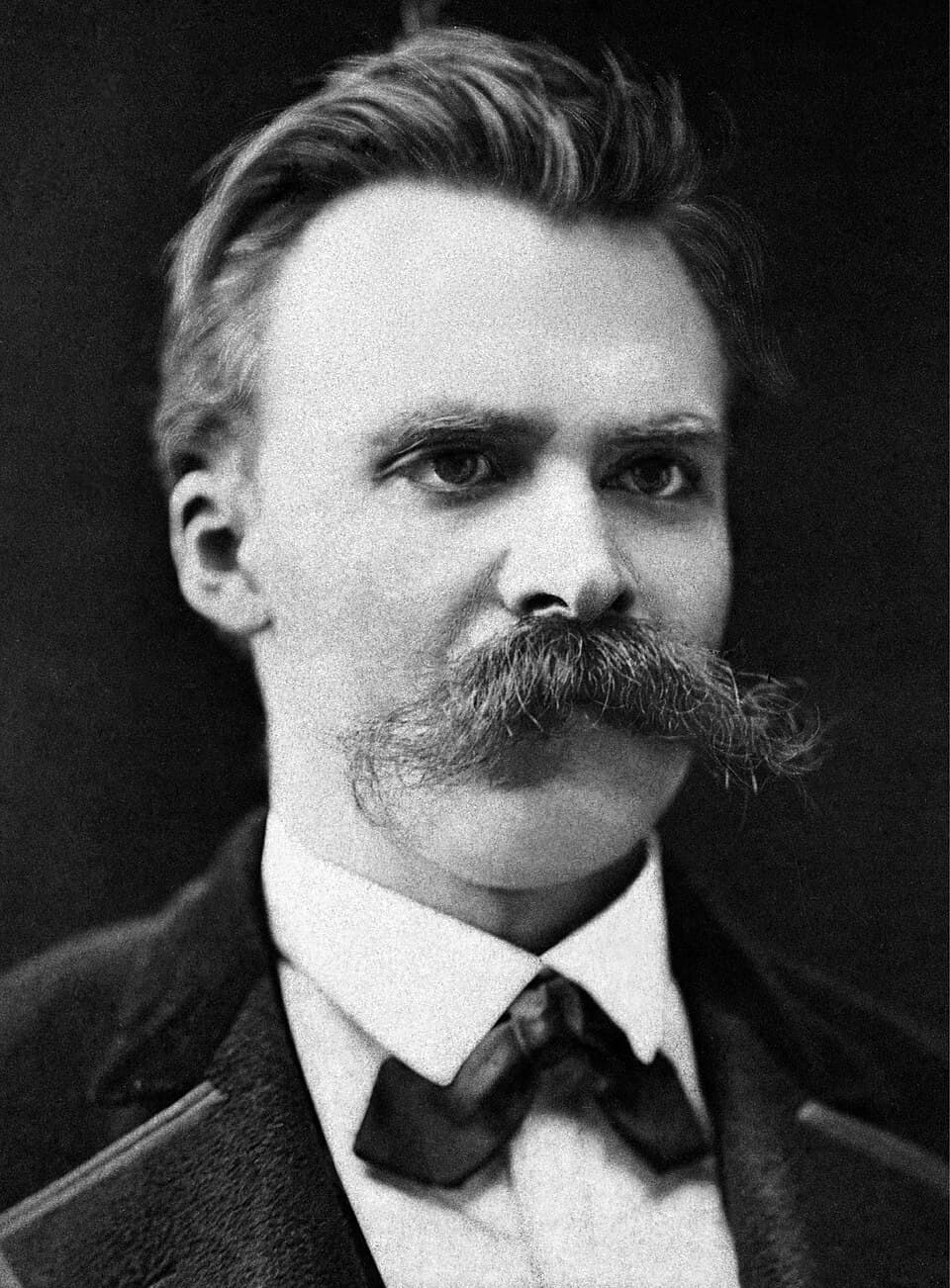
Friedrich Nietzsche
Beyond Good and Evil

The author posits that moral systems are merely a 'sign-language of the emotions,' serving as tools for individuals to justify, tranquilize, glorify, or exercise power over themselves and others.

...hoever has thoroughly realized how absurdly false and sentimental this proposition is, in a world whose essence is Will to Power, may be reminded that Schopenhauer, although a pessimist, ACTUALLY--played the flute... daily after dinner: one may read about the matter in his biography. A question by the way: a pessimist, a repudiator of God and of the world, who MAKES A HALT at morality--who assents to morality, and plays the flute to laede-neminem morals, what? Is that really--a pessimist? 187.
Apart from the value of such assertions as "there is a categorical imperative in us," one can always ask: What does such an assertion indicate about him who makes it? There are systems of morals which are meant to justify their author in the eyes of other people; other systems of morals are meant to tranquilize him, and make him self-satisfied; with other systems he wants to crucify and humble himself, with others he wishes to take revenge, with others to conceal himself, with others to glorify himself and gave superiority and distinction,--this system of morals helps its author to forget, that system makes him, or something of him,…
188. In contrast to laisser-aller, every system of morals is a sort of tyranny against "nature" and also against "reason", that is, however, no objection, unless one should again decree by some system of morals, that all kinds of tyranny and unreasonableness are unlawful What is essential and invaluable in every system of morals, is that it is a long constraint. In order to understand Stoicism, or Port Royal, or Puritanism, one should remember the constraint under which every language has atta...
Continue reading →
5
4 of 27 in Chapter V. THE NATURAL HISTORY OF MORALS126 of 261 in work
Morality as Constraint
Friedrich Nietzsche
Beyond Good and Evil

Nietzsche argues that the value of morality lies in its 'long constraint' and tyranny over nature, much like how the arbitrary rules of poetry and language are necessary to achieve strength and freedom.

...elf and gave superiority and distinction,--this system of morals helps its author to forget, that system makes him, or something of him, forgotten, many a moralist would like to exercise power and creative arbitrariness over mankind, many another, perhaps, Kant especially, gives us to understand by his morals that "what is estimable in me, is that I know how to obey--and with you it SHALL not be otherwise than with me!" In short, systems of morals are only a SIGN-LANGUAGE OF THE EMOTIONS. 188.
In contrast to laisser-aller, every system of morals is a sort of tyranny against "nature" and also against "reason", that is, however, no objection, unless one should again decree by some system of morals, that all kinds of tyranny and unreasonableness are unlawful What is essential and invaluable in every system of morals, is that it is a long constraint. In order to understand Stoicism, or Port Royal, or Puritanism, one should remember the constraint under which every language has attained to strength and freedom--the metrical constraint, the tyranny of rhyme and rhythm. How much trouble have the poets and orators of every nation given…
The singular fact remains, however, that everything of the nature of freedom, elegance, boldness, dance, and masterly certainty, which exists or has existed, whether it be in thought itself, or in administration, or in speaking and persuading, in art just as in conduct, has only developed by means of the tyranny of such arbitrary law, and in all seriousness, it is not at all improbable that precisely this is "nature" and "natural"--and not laisser-aller! Every artist knows how different from th...
Continue reading →
5
5 of 27 in Chapter V. THE NATURAL HISTORY OF MORALS127 of 261 in work
Tyranny's Creative Freedom
Friedrich Nietzsche
Beyond Good and Evil

The author contends that true freedom and artistic mastery are achieved through the 'tyranny' of strict, arbitrary laws and self-imposed constraints rather than through a state of 'letting oneself go.'

...every language has attained to strength and freedom--the metrical constraint, the tyranny of rhyme and rhythm. How much trouble have the poets and orators of every nation given themselves!--not excepting some of the prose writers of today, in whose ear dwells an inexorable conscientiousness--"for the sake of a folly," as utilitarian bunglers say, and thereby deem themselves wise--"from submission to arbitrary laws," as the anarchists say, and thereby fancy themselves "free," even free-spirited.
The singular fact remains, however, that everything of the nature of freedom, elegance, boldness, dance, and masterly certainty, which exists or has existed, whether it be in thought itself, or in administration, or in speaking and persuading, in art just as in conduct, has only developed by means of the tyranny of such arbitrary law, and in all seriousness, it is not at all improbable that precisely this is "nature" and "natural"--and not laisser-aller! Every artist knows how different from the state of letting himself go, is his "most natural" condition, the free arranging, locating, disposing, and constructing in the moments of…
The essential thing "in heaven and in earth" is, apparently (to repeat it once more), that there should be long OBEDIENCE in the same direction, there thereby results, and has always resulted in the long run, something which has made life worth living; for instance, virtue, art, music, dancing, reason, spirituality--anything whatever that is transfiguring, refined, foolish, or divine. The long bondage of the spirit, the distrustful constraint in the communicability of ideas, the discipline whic...
Continue reading →
6
6 of 27 in Chapter V. THE NATURAL HISTORY OF MORALS128 of 261 in work
Long Obedience's Reward
Friedrich Nietzsche
Beyond Good and Evil

Nietzsche suggests that the long-term discipline and 'bondage' of the spirit under strict religious or philosophical systems are precisely what have given the European mind its strength, refinement, and mobility.

..."nature" and "natural"--and not laisser-aller! Every artist knows how different from the state of letting himself go, is his "most natural" condition, the free arranging, locating, disposing, and constructing in the moments of "inspiration"--and how strictly and delicately he then obeys a thousand laws, which, by their very rigidness and precision, defy all formulation by means of ideas (even the most stable idea has, in comparison therewith, something floating, manifold, and ambiguous in it).
The essential thing "in heaven and in earth" is, apparently (to repeat it once more), that there should be long OBEDIENCE in the same direction, there thereby results, and has always resulted in the long run, something which has made life worth living; for instance, virtue, art, music, dancing, reason, spirituality--anything whatever that is transfiguring, refined, foolish, or divine. The long bondage of the spirit, the distrustful constraint in the communicability of ideas, the discipline which the thinker imposed on himself to think in accordance with the rules of a church or a court, or conformable to Aristotelian premises, the persistent…
That for centuries European thinkers only thought in order to prove something--nowadays, on the contrary, we are suspicious of every thinker who "wishes to prove something"--that it was always settled beforehand what WAS TO BE the result of their strictest thinking, as it was perhaps in the Asiatic astrology of former times, or as it is still at the present day in the innocent, Christian-moral explanation of immediate personal events "for the glory of God," or "for the good of the soul":--this...
Continue reading →
2
7 of 27 in Chapter V. THE NATURAL HISTORY OF MORALS129 of 261 in work
Morality's Narrowing Lens
Friedrich Nietzsche
Beyond Good and Evil

The author argues that morality is a natural imperative for 'narrowing perspectives' and imposing obedience, which serves the survival of the species rather than the individual.

...BE the result of their strictest thinking, as it was perhaps in the Asiatic astrology of former times, or as it is still at the present day in the innocent, Christian-moral explanation of immediate personal events "for the glory of God," or "for the good of the soul":--this tyranny, this arbitrariness, this severe and magnificent stupidity, has EDUCATED the spirit; slavery, both in the coarser and the finer sense, is apparently an indispensable means even of spiritual education and discipline.
One may look at every system of morals in this light: it is "nature" therein which teaches to hate the laisser-aller, the too great freedom, and implants the need for limited horizons, for immediate duties--it teaches the NARROWING OF PERSPECTIVES, and thus, in a certain sense, that stupidity is a condition of life and development. "Thou must obey some one, and for a long time; OTHERWISE thou wilt come to grief, and lose all respect for thyself"--this seems to me to be the moral imperative of nature, which is certainly neither "categorical," as old Kant wished (consequently the "otherwise"), nor does it address itself to the individual (what…
189. Industrious races find it a great hardship to be idle: it was a master stroke of ENGLISH instinct to hallow and begloom Sunday to such an extent that the Englishman unconsciously hankers for his week--and work-day again:--as a kind of cleverly devised, cleverly intercalated FAST, such as is also frequently found in the ancient world (although, as is appropriate in southern nations, not precisely with respect to work). Many kinds of fasts are necessary; and wherever powerful influences and...
Continue reading →
4