4 of 6 in Chapter I: GENERAL REMARKS4 of 99 in work
Morality's Missing Root
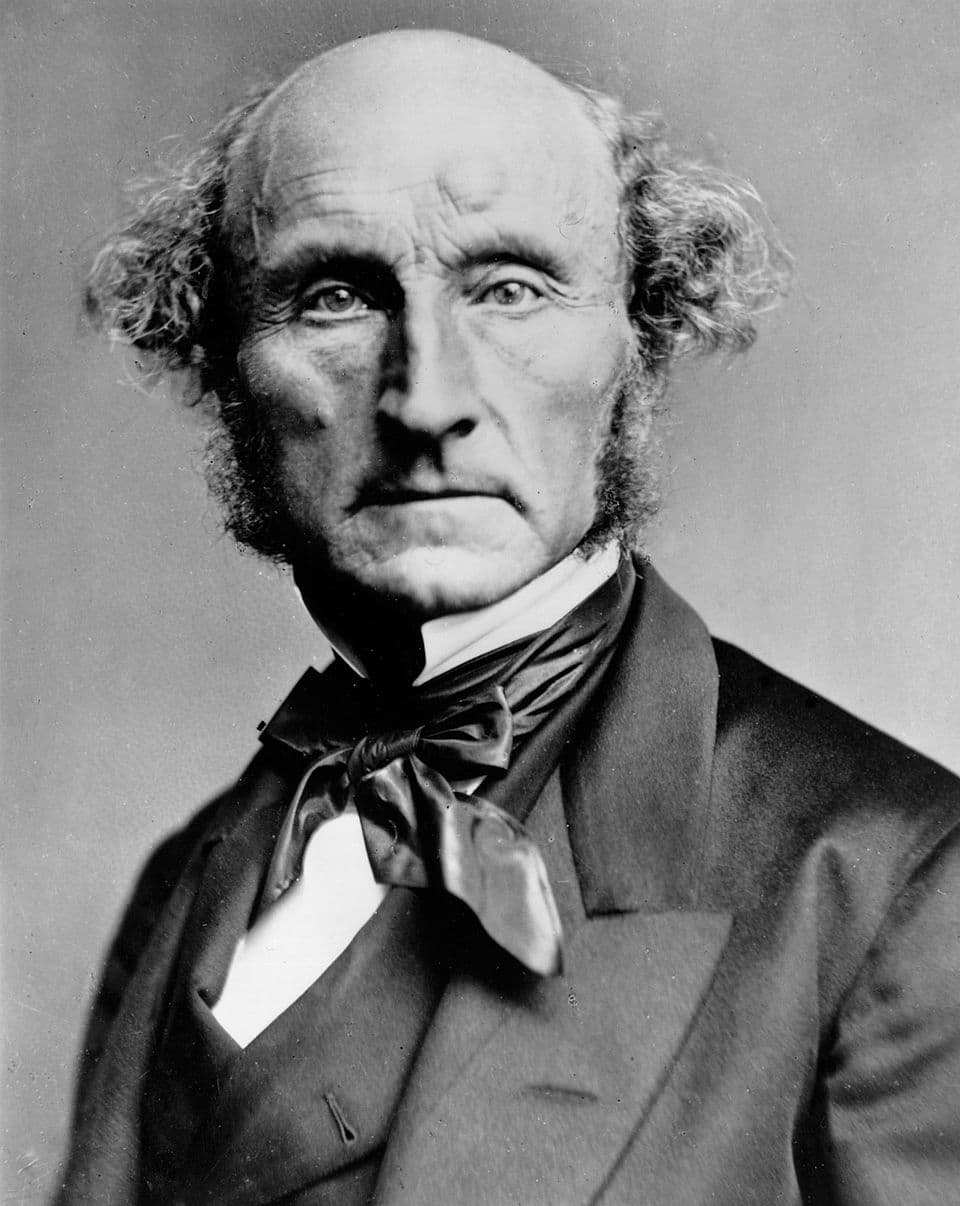
John Stewart Mill
Utilitarianism

Mill argues for the necessity of a single, self-evident fundamental principle of morality to provide a determinate order of precedence when specific maxims conflict.

...as well as truth and falsehood, are questions of observation and experience. But both hold equally that morality must be deduced from principles; and the intuitive school affirm as strongly as the inductive, that there is a science of morals. Yet they seldom attempt to make out a list of the à priori principles which are to serve as the premises of the science; still more rarely do they make any effort to reduce those various principles to one first principle, or common ground of obligation.
They either assume the ordinary precepts of morals as of à priori authority, or they lay down as the common groundwork of those maxims, some generality much less obviously authoritative than the maxims themselves, and which has never succeeded in gaining popular acceptance. Yet to support their pretensions there ought either to be some one fundamental principle or law, at the root of all morality, or if there be several, there should be a determinate order of precedence among them; and the one principle, or the rule for deciding between the various principles when they conflict, ought to be self-evident.
To inquire how far the bad effects of this deficiency have been mitigated in practice, or to what extent the moral beliefs of mankind have been vitiated or made uncertain by the absence of any distinct recognition of an ultimate standard, would imply a complete survey and criticism of past and present ethical doctrine. It would, however, be easy to show that whatever steadiness or consistency these moral beliefs have attained, has been mainly due to the tacit influence of a standard not recogn...
6
5 of 6 in Chapter I: GENERAL REMARKS5 of 99 in work
Utility's Hidden Influence
John Stewart Mill
Utilitarianism

Mill argues that the principle of utility has historically shaped moral doctrines even among those who reject it, as the effects of actions on happiness are an undeniable consideration in all ethical systems.

...nquire how far the bad effects of this deficiency have been mitigated in practice, or to what extent the moral beliefs of mankind have been vitiated or made uncertain by the absence of any distinct recognition of an ultimate standard, would imply a complete survey and criticism of past and present ethical doctrine. It would, however, be easy to show that whatever steadiness or consistency these moral beliefs have attained, has been mainly due to the tacit influence of a standard not recognised.
Although the non-existence of an acknowledged first principle has made ethics not so much a guide as a consecration of men's actual sentiments, still, as men's sentiments, both of favour and of aversion, are greatly influenced by what they suppose to be the effects of things upon their happiness, the principle of utility, or as Bentham latterly called it, the greatest happiness principle, has had a large share in forming the moral doctrines even of those who most scornfully reject its authority. Nor is there any school of thought which refuses to admit that the influence of actions on happiness is a most material and even predominant…
I might go much further, and say that to all those à priori moralists who deem it necessary to argue at all, utilitarian arguments are indispensable. It is not my present purpose to criticise these thinkers; but I cannot help referring, for illustration, to a systematic treatise by one of the most illustrious of them, the Metaphysics of Ethics, by Kant. This remarkable man, whose system of thought will long remain one of the landmarks in the history of philosophical speculation, does, in th...
Continue reading →
3
6 of 6 in Chapter I: GENERAL REMARKS6 of 99 in work
Unprovable Ultimate Ends
John Stewart Mill
Utilitarianism

The author asserts that ultimate ends, such as the goodness of pleasure or health, cannot be proven through reasoning but must be accepted as the foundational goals toward which all other things serve as means.

...the most outrageously immoral rules of conduct. All he shows is that the consequences of their universal adoption would be such as no one would choose to incur. On the present occasion, I shall, without further discussion of the other theories, attempt to contribute something towards the understanding and appreciation of the Utilitarian or Happiness theory, and towards such proof as it is susceptible of. It is evident that this cannot be proof in the ordinary and popular meaning of the term.
Questions of ultimate ends are not amenable to direct proof. Whatever can be proved to be good, must be so by being shown to be a means to something admitted to be good without proof. The medical art is proved to be good, by its conducing to health; but how is it possible to prove that health is good? The art of music is good, for the reason, among others, that it produces pleasure; but what proof is it possible to give that pleasure is good? If, then, it is asserted that there is a comprehensive formula, including all things which are in themselves good, and that whatever else is good, is not so as an end, but as a mean, the formula may be…
We are not, however, to infer that its acceptance or rejection must depend on blind impulse, or arbitrary choice. There is a larger meaning of the word proof, in which this question is as amenable to it as any other of the disputed questions of philosophy. The subject is within the cognizance of the rational faculty; and neither does that faculty deal with it solely in the way of intuition. Considerations may be presented capable of determining the intellect either to give or withhold its assen...
Continue reading →
6
1 of 34 in Chapter II: WHAT UTILITARIANISM IS7 of 99 in work
Now entering Chapter II: WHAT UTILITARIANISM IS
Morality as Utility
John Stewart Mill
Utilitarianism

Mill defines the foundation of utilitarianism as the Greatest Happiness Principle, which holds that actions are right if they promote pleasure and wrong if they produce pain.

...t implied superiority to frivolity and the mere pleasures of the moment. And this perverted use is the only one in which the word is popularly known, and the one from which the new generation are acquiring their sole notion of its meaning. Those who introduced the word, but who had for many years discontinued it as a distinctive appellation, may well feel themselves called upon to resume it, if by doing so they can hope to contribute anything towards rescuing it from this utter degradation.[A]
The creed which accepts as the foundation of morals, Utility, or the Greatest Happiness Principle, holds that actions are right in proportion as they tend to promote happiness, wrong as they tend to produce the reverse of happiness. By happiness is intended pleasure, and the absence of pain; by unhappiness, pain, and the privation of pleasure. To give a clear view of the moral standard set up by the theory, much more requires to be said; in particular, what things it includes in the ideas of pain and pleasure; and to what extent this is left an open question.
But these supplementary explanations do not affect the theory of life on which this theory of morality is grounded--namely, that pleasure, and freedom from pain, are the only things desirable as ends; and that all desirable things (which are as numerous in the utilitarian as in any other scheme) are desirable either for the pleasure inherent in themselves, or as means to the promotion of pleasure and the prevention of pain. Now, such a theory of life excites in many minds, and among them in so...
4
2 of 34 in Chapter II: WHAT UTILITARIANISM IS8 of 99 in work
Pleasure as End
John Stewart Mill
Utilitarianism

The author defines the core of utilitarianism as the 'theory of life' where pleasure and the absence of pain are the only inherently desirable ends.

...y well feel themselves called upon to resume it, if by doing so they can hope to contribute anything towards rescuing it from this utter degradation.[A] The creed which accepts as the foundation of morals, Utility, or the Greatest Happiness Principle, holds that actions are right in proportion as they tend to promote happiness, wrong as they tend to produce the reverse of happiness. By happiness is intended pleasure, and the absence of pain; by unhappiness, pain, and the privation of pleasure.
To give a clear view of the moral standard set up by the theory, much more requires to be said; in particular, what things it includes in the ideas of pain and pleasure; and to what extent this is left an open question. But these supplementary explanations do not affect the theory of life on which this theory of morality is grounded--namely, that pleasure, and freedom from pain, are the only things desirable as ends; and that all desirable things (which are as numerous in the utilitarian as in any other scheme) are desirable either for the pleasure inherent in themselves, or as means to the promotion of pleasure and the prevention of pain.
Now, such a theory of life excites in many minds, and among them in some of the most estimable in feeling and purpose, inveterate dislike. To suppose that life has (as they express it) no higher end than pleasure--no better and nobler object of desire and pursuit--they designate as utterly mean and grovelling; as a doctrine worthy only of swine, to whom the followers of Epicurus were, at a very early period, contemptuously likened; and modern holders of the doctrine are occasionally made the s...
6