The author suggests that long-standing philosophical disputes usually arise from ambiguous language rather than fundamental differences in human reason.
3 of 23 in Section VIII, Part I95 of 198 in work
The Ambiguity of Language
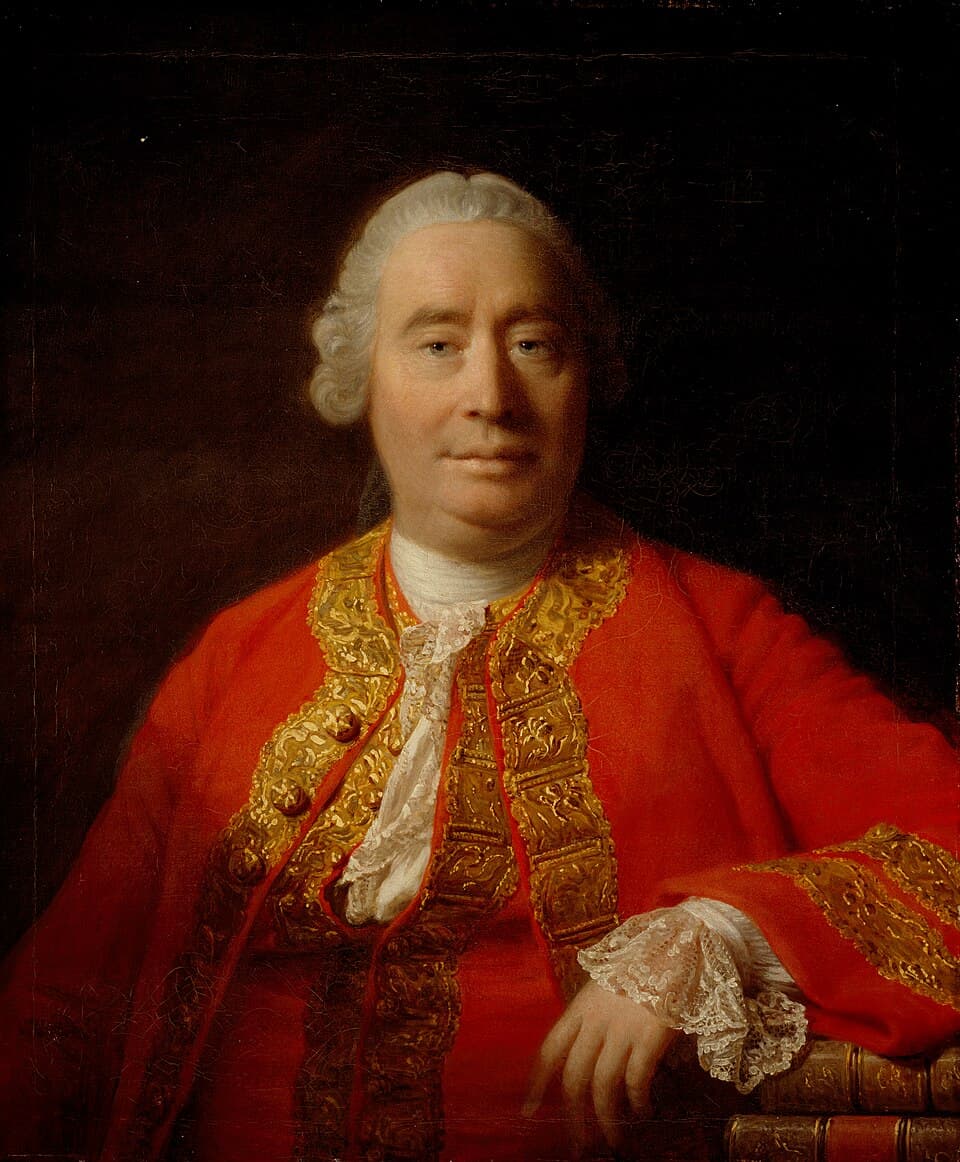
David Hume
An Enquiry Concerning Human Understanding...ions of the terms employed in reasoning, and make these definitions, not the mere sound of words, the object of future scrutiny and examination? But if we consider the matter more narrowly, we shall be apt to draw a quite opposite conclusion. From this circumstance alone, that a controversy has been long kept on foot, and remains still undecided, we may presume that there is some ambiguity in the expression, and that the disputants affix different ideas to the terms employed in the controversy.
For as the faculties of the mind are supposed to be naturally alike in every individual; otherwise nothing could be more fruitless than to reason or dispute together; it were impossible, if men affix the same ideas to their terms, that they could so long form different opinions of the same subject; especially when they communicate their views, and each party turn themselves on all sides, in search of arguments which may give them the victory over their antagonists. It is true, if men attempt the discussion of questions which lie entirely beyond the reach of human capacity, such as those concerning the origin of worlds, or the economy of the…
63. This has been the case in the long disputed question concerning liberty and necessity; and to so remarkable a degree that, if I be not much mistaken, we shall find, that all mankind, both learned and ignorant, have always been of the same opinion with regard to this subject, and that a few intelligible definitions would immediately have put an end to the whole controversy. I own that this dispute has been so much canvassed on all hands, and has led philosophers into such a labyrinth of obs...
Continue reading →
3
4 of 23 in Section VIII, Part I96 of 198 in work
⚖The Necessity of Matter

David Hume
An Enquiry Concerning Human UnderstandingThe author posits that matter operates by a necessary force and that to understand necessity, one must examine the origins of the idea in the operation of bodies.
..., serve to renew his attention; as it has more novelty, promises at least some decision of the controversy, and will not much disturb his ease by any intricate or obscure reasoning. I hope, therefore, to make it appear that all men have ever agreed in the doctrine both of necessity and of liberty, according to any reasonable sense, which can be put on these terms; and that the whole controversy has hitherto turned merely upon words. We shall begin with examining the doctrine of necessity. 64.
It is universally allowed that matter, in all its operations, is actuated by a necessary force, and that every natural effect is so precisely determined by the energy of its cause that no other effect, in such particular circumstances, could possibly have resulted from it. The degree and direction of every motion is, by the laws of nature, prescribed with such exactness that a living creature may as soon arise from the shock of two bodies as motion in any other degree or direction than what is actually produced by it. Would we, therefore, form a just and precise idea of necessity, we must consider whence that idea arises when we apply it to the operation of bodies.
It seems evident that, if all the scenes of nature were continually shifted in such a manner that no two events bore any resemblance to each other, but every object was entirely new, without any similitude to whatever had been seen before, we should never, in that case, have attained the least idea of necessity, or of a connexion among these objects. We might say, upon such a supposition, that one object or event has followed another; not that one was produced by the other. The relation of cau...
2
5 of 23 in Section VIII, Part I97 of 198 in work
⚖The Necessity of Similarity

David Hume
An Enquiry Concerning Human UnderstandingThe author argues that the concept of cause and effect is entirely dependent on the observed regularity of events, without which we would have no idea of necessity.
...se that no other effect, in such particular circumstances, could possibly have resulted from it. The degree and direction of every motion is, by the laws of nature, prescribed with such exactness that a living creature may as soon arise from the shock of two bodies as motion in any other degree or direction than what is actually produced by it. Would we, therefore, form a just and precise idea of necessity, we must consider whence that idea arises when we apply it to the operation of bodies.
It seems evident that, if all the scenes of nature were continually shifted in such a manner that no two events bore any resemblance to each other, but every object was entirely new, without any similitude to whatever had been seen before, we should never, in that case, have attained the least idea of necessity, or of a connexion among these objects. We might say, upon such a supposition, that one object or event has followed another; not that one was produced by the other. The relation of cause and effect must be utterly unknown to mankind. Inference and reasoning concerning the operations of nature would, from that moment, be at an end; and…
Our idea, therefore, of necessity and causation arises entirely from the uniformity observable in the operations of nature, where similar objects are constantly conjoined together, and the mind is determined by custom to infer the one from the appearance of the other. These two circumstances form the whole of that necessity, which we ascribe to matter. Beyond the constant conjunction of similar objects, and the consequent inference from one to the other, we have no notion of any necessity o...
Continue reading →
2
6 of 23 in Section VIII, Part I98 of 198 in work
⚖Necessity as Customary Inference

David Hume
An Enquiry Concerning Human UnderstandingThe author posits that our concept of necessity arises solely from the constant conjunction of objects and the mind's customary inference between them.
...ed the least idea of necessity, or of a connexion among these objects. We might say, upon such a supposition, that one object or event has followed another; not that one was produced by the other. The relation of cause and effect must be utterly unknown to mankind. Inference and reasoning concerning the operations of nature would, from that moment, be at an end; and the memory and senses remain the only canals, by which the knowledge of any real existence could possibly have access to the mind.
Our idea, therefore, of necessity and causation arises entirely from the uniformity observable in the operations of nature, where similar objects are constantly conjoined together, and the mind is determined by custom to infer the one from the appearance of the other. These two circumstances form the whole of that necessity, which we ascribe to matter. Beyond the constant conjunction of similar objects, and the consequent inference from one to the other, we have no notion of any necessity or connexion. If it appear, therefore, that all mankind have ever allowed, without any doubt or hesitation, that these two circumstances take place in…
65. As to the first circumstance, the constant and regular conjunction of similar events, we may possibly satisfy ourselves by the following considerations. It is universally acknowledged that there is a great uniformity among the actions of men, in all nations and ages, and that human nature remains still the same, in its principles and operations. The same motives always produce the same actions. The same events follow from the same causes. Ambition, avarice, self-love, vanity, friendship, g...
Continue reading →
2
7 of 23 in Section VIII, Part I99 of 198 in work
⚖Human Nature's Constancy

David Hume
An Enquiry Concerning Human UnderstandingThe text claims that human nature is uniform across all ages and that the same motives consistently produce the same actions in society.
...herefore, that all mankind have ever allowed, without any doubt or hesitation, that these two circumstances take place in the voluntary actions of men, and in the operations of mind; it must follow, that all mankind have ever agreed in the doctrine of necessity, and that they have hitherto disputed, merely for not understanding each other. 65. As to the first circumstance, the constant and regular conjunction of similar events, we may possibly satisfy ourselves by the following considerations.
It is universally acknowledged that there is a great uniformity among the actions of men, in all nations and ages, and that human nature remains still the same, in its principles and operations. The same motives always produce the same actions. The same events follow from the same causes. Ambition, avarice, self-love, vanity, friendship, generosity, public spirit: these passions, mixed in various degrees, and distributed through society, have been, from the beginning of the world, and still are, the source of all the actions and enterprises, which have ever been observed among mankind.
Would you know the sentiments, inclinations, and course of life of the Greeks and Romans? Study well the temper and actions of the French and English: You cannot be much mistaken in transferring to the former most of the observations which you have made with regard to the latter. Mankind are so much the same, in all times and places, that history informs us of nothing new or strange in this particular. Its chief use is only to discover the constant and universal principles of human nature, by...
5