16 of 16 in Section VII, Part I84 of 198 in work
The Incomprehensible Force
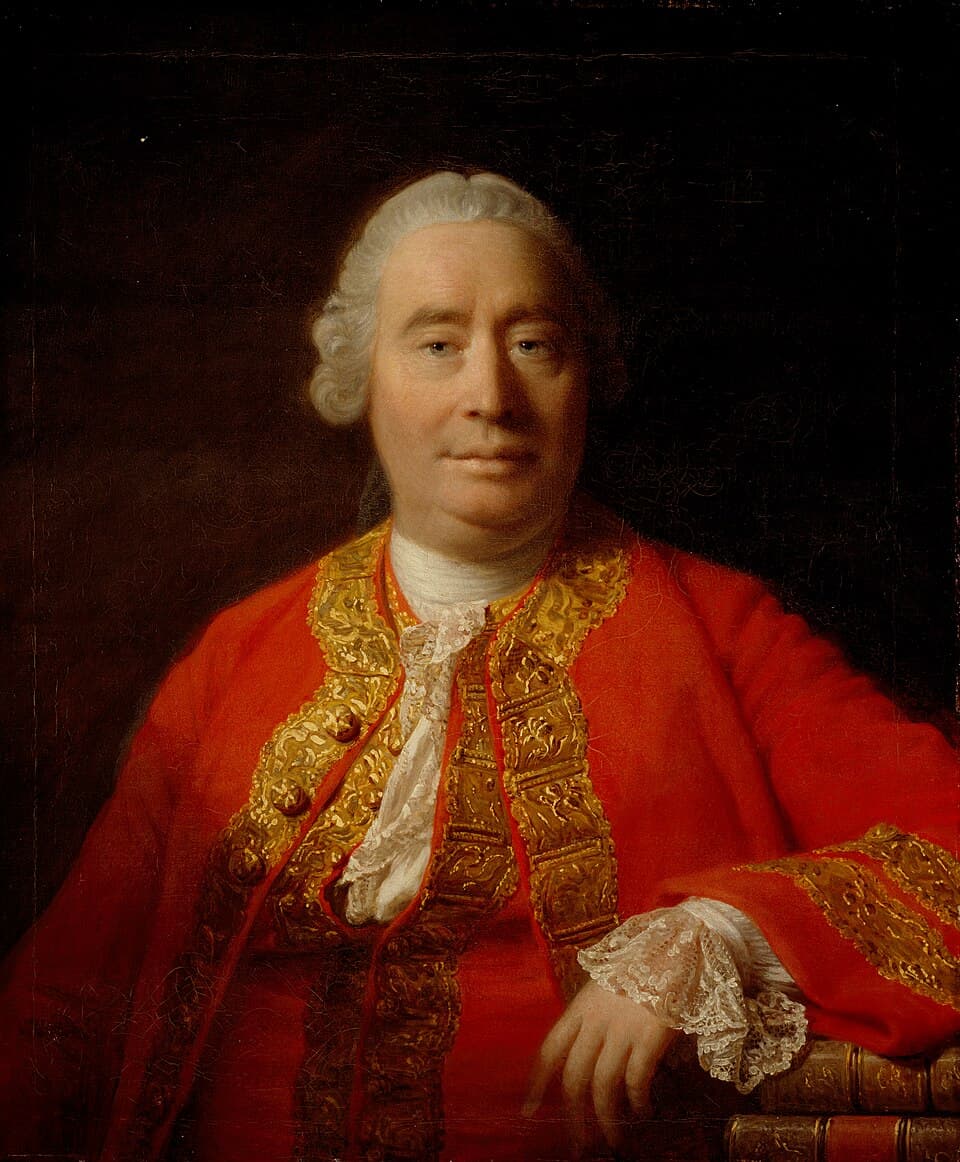
David Hume
An Enquiry Concerning Human Understanding

Hume argues that our ignorance of physical force is no different from our ignorance of mental or divine force, as we lack a direct impression of either.

...e is too short to fathom such immense abysses. And however we may flatter ourselves that we are guided, in every step which we take, by a kind of verisimilitude and experience, we may be assured that this fancied experience has no authority when we thus apply it to subjects that lie entirely out of the sphere of experience. But on this we shall have occasion to touch afterwards.[14] [14] Section XII. Secondly, I cannot perceive any force in the arguments on which this theory is founded.
We are ignorant, it is true, of the manner in which bodies operate on each other: Their force or energy is entirely incomprehensible: But are we not equally ignorant of the manner or force by which a mind, even the supreme mind, operates either on itself or on body? Whence, I beseech you, do we acquire any idea of it? We have no sentiment or consciousness of this power in ourselves. We have no idea of the Supreme Being but what we learn from reflection on our own faculties. Were our ignorance, therefore, a good reason for rejecting any thing, we should be led into that principle of denying all energy in the Supreme Being as much as in the…
We surely comprehend as little the operations of one as of the other. Is it more difficult to conceive that motion may arise from impulse than that it may arise from volition? All we know is our profound ignorance in both cases[15]. [15] I need not examine at length the vis inertiae which is so much talked of in the new philosophy, and which is ascribed to matter. We find by experience, that a body at rest or in motion continues for ever in its present state, till put from...
Continue reading →
4
1 of 8 in Section VII, Part II85 of 198 in work
Now entering Section VII, Part II
The Missing Connection
David Hume
An Enquiry Concerning Human Understanding

The text argues that we cannot perceive the actual 'power' or 'necessary connection' between events, whether in physical interactions or the mind's control over the body.

...isting on it. MALEBRANCHE and other CARTESIANS made it the foundation of all their philosophy. It had, however, no authority in England. LOCKE, CLARKE, and CUDWORTH, never so much as take notice of it, but suppose all along, that matter has a real, though subordinate and derived power. By what means has it become so prevalent among our modern metaphysicians? PART II. 58. But to hasten to a conclusion of this argument, which is already drawn out to too great a length:
We have sought in vain for an idea of power or necessary connexion in all the sources from which we could suppose it to be derived. It appears that, in single instances of the operation of bodies, we never can, by our utmost scrutiny, discover any thing but one event following another, without being able to comprehend any force or power by which the cause operates, or any connexion between it and its supposed effect. The same difficulty occurs in contemplating the operations of mind on body--where we observe the motion of the latter to follow upon the volition of the former, but are not able to observe or conceive the tie which binds together…
The authority of the will over its own faculties and ideas is not a whit more comprehensible: So that, upon the whole, there appears not, throughout all nature, any one instance of connexion which is conceivable by us. All events seem entirely loose and separate. One event follows another; but we never can observe any tie between them. They seem conjoined, but never connected. And as we can have no idea of any thing which never appeared to our outward sense or inward sentiment, the necessar...
Continue reading →
2
2 of 8 in Section VII, Part II86 of 198 in work
The Illusion of Connection
David Hume
An Enquiry Concerning Human Understanding

Hume concludes that because we only observe events as conjoined and never as connected, the philosophical concept of 'power' or 'connection' is meaningless.

...force or power by which the cause operates, or any connexion between it and its supposed effect. The same difficulty occurs in contemplating the operations of mind on body--where we observe the motion of the latter to follow upon the volition of the former, but are not able to observe or conceive the tie which binds together the motion and volition, or the energy by which the mind produces this effect. The authority of the will over its own faculties and ideas is not a whit more comprehensible:
So that, upon the whole, there appears not, throughout all nature, any one instance of connexion which is conceivable by us. All events seem entirely loose and separate. One event follows another; but we never can observe any tie between them. They seem conjoined, but never connected. And as we can have no idea of any thing which never appeared to our outward sense or inward sentiment, the necessary conclusion seems to be that we have no idea of connexion or power at all, and that these words are absolutely without any meaning, when employed either in philosophical reasonings or common life.
59. But there still remains one method of avoiding this conclusion, and one source which we have not yet examined. When any natural object or event is presented, it is impossible for us, by any sagacity or penetration, to discover, or even conjecture, without experience, what event will result from it, or to carry our foresight beyond that object which is immediately present to the memory and senses. Even after one instance or experiment where we have observed a particular event to follow upon...
2
3 of 8 in Section VII, Part II87 of 198 in work
One Experiment's Temerity
David Hume
An Enquiry Concerning Human Understanding

The text argues that it is impossible to predict the outcome of any natural event without prior experience, as nature cannot be judged by a single experiment.

...any tie between them. They seem conjoined, but never connected. And as we can have no idea of any thing which never appeared to our outward sense or inward sentiment, the necessary conclusion seems to be that we have no idea of connexion or power at all, and that these words are absolutely without any meaning, when employed either in philosophical reasonings or common life. 59. But there still remains one method of avoiding this conclusion, and one source which we have not yet examined.
When any natural object or event is presented, it is impossible for us, by any sagacity or penetration, to discover, or even conjecture, without experience, what event will result from it, or to carry our foresight beyond that object which is immediately present to the memory and senses. Even after one instance or experiment where we have observed a particular event to follow upon another, we are not entitled to form a general rule, or foretell what will happen in like cases; it being justly esteemed an unpardonable temerity to judge of the whole course of nature from one single experiment, however accurate or certain.
But when one particular species of event has always, in all instances, been conjoined with another, we make no longer any scruple of foretelling one upon the appearance of the other, and of employing that reasoning, which can alone assure us of any matter of fact or existence. We then call the one object, Cause; the other, Effect. We suppose that there is some connexion between them; some power in the one, by which it infallibly produces the other, and operates with the greatest certainty a...
2
4 of 8 in Section VII, Part II88 of 198 in work
Habit's Necessary Connection
David Hume
An Enquiry Concerning Human Understanding

The author defines the idea of 'necessary connexion' as a sentiment or internal impression produced by the mind's habit of transitioning between conjoined events.

...species of event has always, in all instances, been conjoined with another, we make no longer any scruple of foretelling one upon the appearance of the other, and of employing that reasoning, which can alone assure us of any matter of fact or existence. We then call the one object, Cause; the other, Effect. We suppose that there is some connexion between them; some power in the one, by which it infallibly produces the other, and operates with the greatest certainty and strongest necessity.
It appears, then, that this idea of a necessary connexion among events arises from a number of similar instances which occur of the constant conjunction of these events; nor can that idea ever be suggested by any one of these instances, surveyed in all possible lights and positions. But there is nothing in a number of instances, different from every single instance, which is supposed to be exactly similar; except only, that after a repetition of similar instances, the mind is carried by habit, upon the appearance of one event, to expect its usual attendant, and to believe that it will exist. This connexion, therefore, which we feel in the…
Nothing farther is in the case. Contemplate the subject on all sides; you will never find any other origin of that idea. This is the sole difference between one instance, from which we can never receive the idea of connexion, and a number of similar instances, by which it is suggested. The first time a man saw the communication of motion by impulse, as by the shock of two billiard balls, he could not pronounce that the one event was connected: but only that it was conjoined with the other....
Continue reading →
2