Hume advises philosophy to abandon the pursuit of 'sublime mysteries' like divine decree and return to the modest examination of common life.
9 of 9 in Section VIII, Part II124 of 198 in work
Philosophy's Proper Province
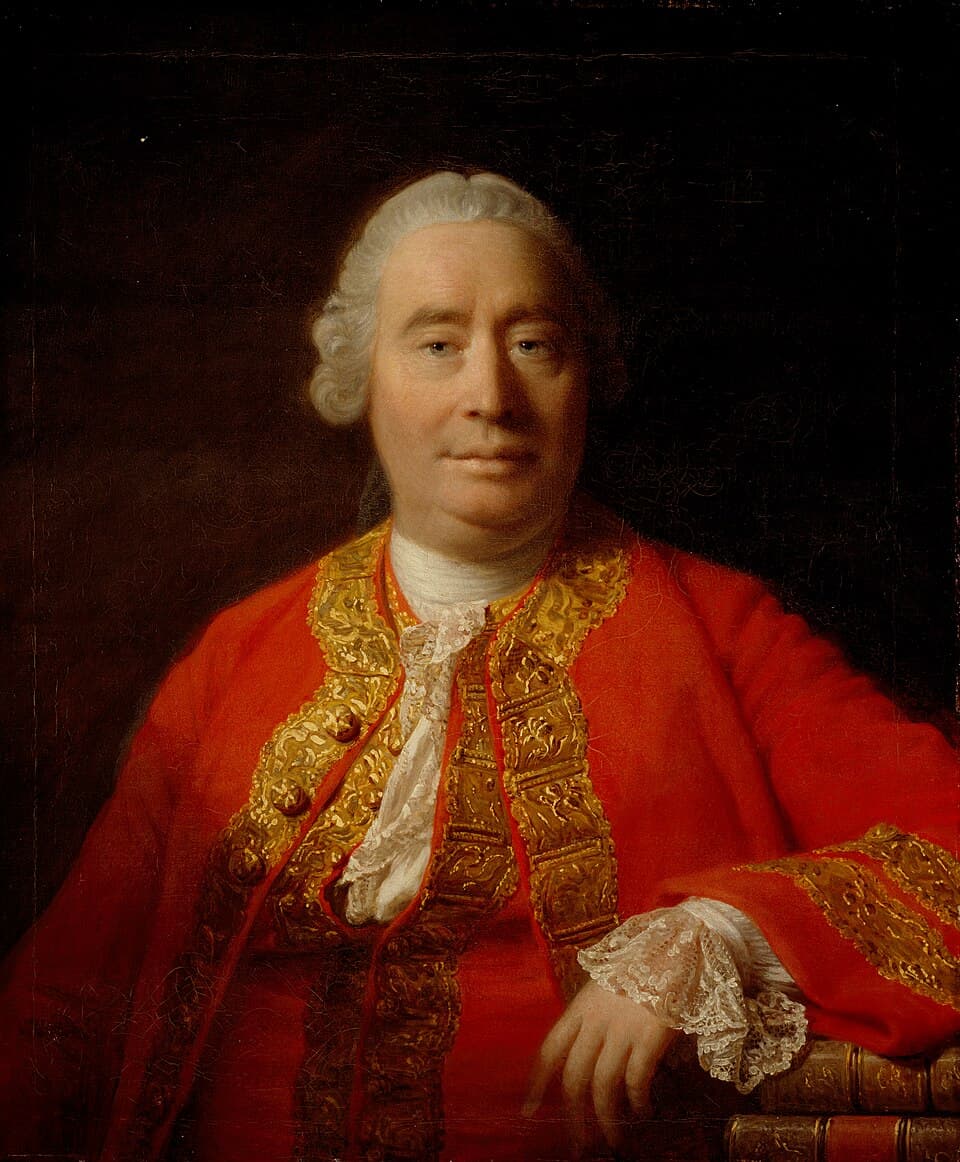
David Hume
An Enquiry Concerning Human Understanding...he second objection admits not of so easy and satisfactory an answer; nor is it possible to explain distinctly, how the Deity can be the mediate cause of all the actions of men, without being the author of sin and moral turpitude. These are mysteries, which mere natural and unassisted reason is very unfit to handle; and whatever system she embraces, she must find herself involved in inextricable difficulties, and even contradictions, at every step which she takes with regard to such subjects.
To reconcile the indifference and contingency of human actions with prescience; or to defend absolute decrees, and yet free the Deity from being the author of sin, has been found hitherto to exceed all the power of philosophy. Happy, if she be thence sensible of her temerity, when she pries into these sublime mysteries; and leaving a scene so full of obscurities and perplexities, return, with suitable modesty, to her true and proper province, the examination of common life; where she will find difficulties enough to employ her enquiries, without launching into so boundless an ocean of doubt, uncertainty, and contradiction!
SECTION IX. OF THE REASON OF ANIMALS. 82. All our reasonings concerning matter of fact are founded on a species of Analogy, which leads us to expect from any cause the same events, which we have observed to result from similar causes. Where the causes are entirely similar, the analogy is perfect, and the inference, drawn from it, is regarded as certain and conclusive: nor does any man ever entertain a doubt, where he sees a piece of iron, that it will have weight and cohesion of parts; as...
4
1 of 6 in Section IX125 of 198 in work
Now entering Section IX
⚖Analogy's Causal Inference

David Hume
An Enquiry Concerning Human UnderstandingThe author argues that reasoning about facts relies on analogy, where the certainty of our conclusions is proportional to the similarity between past and present cases.
...hitherto to exceed all the power of philosophy. Happy, if she be thence sensible of her temerity, when she pries into these sublime mysteries; and leaving a scene so full of obscurities and perplexities, return, with suitable modesty, to her true and proper province, the examination of common life; where she will find difficulties enough to employ her enquiries, without launching into so boundless an ocean of doubt, uncertainty, and contradiction! SECTION IX. OF THE REASON OF ANIMALS. 82.
All our reasonings concerning matter of fact are founded on a species of Analogy, which leads us to expect from any cause the same events, which we have observed to result from similar causes. Where the causes are entirely similar, the analogy is perfect, and the inference, drawn from it, is regarded as certain and conclusive: nor does any man ever entertain a doubt, where he sees a piece of iron, that it will have weight and cohesion of parts; as in all other instances, which have ever fallen under his observation. But where the objects have not so exact a similarity, the analogy is less perfect, and the inference is less conclusive; though…
The anatomical observations, formed upon one animal, are, by this species of reasoning, extended to all animals; and it is certain, that when the circulation of the blood, for instance, is clearly proved to have place in one creature, as a frog, or fish, it forms a strong presumption, that the same principle has place in all. These analogical observations may be carried farther, even to this science, of which we are now treating; and any theory, by which we explain the operations of the underst...
Continue reading →
2
2 of 6 in Section IX126 of 198 in work
⚖Animal vs Philosophical Inference

David Hume
An Enquiry Concerning Human UnderstandingThe author argues that neither animals, children, nor philosophers rely on formal reasoning to navigate the regularities of the world in daily life.
...hat you mean him rather than any of his fellows, and intend to call him, when you pronounce it in a certain manner, and with a certain tone and accent? In all these cases, we may observe, that the animal infers some fact beyond what immediately strikes his senses; and that this inference is altogether founded on past experience, while the creature expects from the present object the same consequences, which it has always found in its observation to result from similar objects. 84. Secondly,
It is impossible, that this inference of the animal can be founded on any process of argument or reasoning, by which he concludes, that like events must follow like objects, and that the course of nature will always be regular in its operations. For if there be in reality any arguments of this nature, they surely lie too abstruse for the observation of such imperfect understandings; since it may well employ the utmost care and attention of a philosophic genius to discover and observe them. Animals, therefore, are not guided in these inferences by reasoning: Neither are children: Neither are the generality of mankind, in their ordinary actions…
Nature must have provided some other principle, of more ready, and more general use and application; nor can an operation of such immense consequence in life, as that of inferring effects from causes, be trusted to the uncertain process of reasoning and argumentation. Were this doubtful with regard to men, it seems to admit of no question with regard to the brute creation; and the conclusion being once firmly established in the one, we have a strong presumption, from all the rules of analogy, t...
Continue reading →
2
3 of 6 in Section IX127 of 198 in work
⚖Custom's Animal Inference

David Hume
An Enquiry Concerning Human UnderstandingThe author asserts that the ability to infer causes is an instinctive operation of custom shared by humans and animals, rather than a result of complex reasoning.
...bstruse for the observation of such imperfect understandings; since it may well employ the utmost care and attention of a philosophic genius to discover and observe them. Animals, therefore, are not guided in these inferences by reasoning: Neither are children: Neither are the generality of mankind, in their ordinary actions and conclusions: Neither are philosophers themselves, who, in all the active parts of life, are, in the main, the same with the vulgar, and are governed by the same maxims.
Nature must have provided some other principle, of more ready, and more general use and application; nor can an operation of such immense consequence in life, as that of inferring effects from causes, be trusted to the uncertain process of reasoning and argumentation. Were this doubtful with regard to men, it seems to admit of no question with regard to the brute creation; and the conclusion being once firmly established in the one, we have a strong presumption, from all the rules of analogy, that it ought to be universally admitted, without any exception or reserve. It is custom alone, which engages animals, from every object, that strikes…
No other explication can be given of this operation, in all the higher, as well as lower classes of sensitive beings, which fall under our notice and observation [19]. [19] Since all reasonings concerning facts or causes is derived merely from custom, it may be asked how it happens, that men so much surpass animals in reasoning, and one man so much surpasses another? Has not the same custom the same influence on all? We shall here endeavour briefly to explain the great...
Continue reading →
2
4 of 6 in Section IX128 of 198 in work
⚖Custom's Universal Inference

David Hume
An Enquiry Concerning Human UnderstandingThe author identifies custom as the primary mechanism by which sensitive beings infer future events from past appearances, forming the basis of belief.
...neral use and application; nor can an operation of such immense consequence in life, as that of inferring effects from causes, be trusted to the uncertain process of reasoning and argumentation. Were this doubtful with regard to men, it seems to admit of no question with regard to the brute creation; and the conclusion being once firmly established in the one, we have a strong presumption, from all the rules of analogy, that it ought to be universally admitted, without any exception or reserve.
It is custom alone, which engages animals, from every object, that strikes their senses, to infer its usual attendant, and carries their imagination, from the appearance of the one, to conceive the other, in that particular manner, which we denominate belief. No other explication can be given of this operation, in all the higher, as well as lower classes of sensitive beings, which fall under our notice and observation . Since all reasonings concerning facts or causes is derived merely from custom, it may be asked how it happens, that men so much surpass animals in reasoning, and one man so much surpasses another? Has not the same custom the same influence on all?
We shall here endeavour briefly to explain the great difference in human understandings: After which the reason of the difference between men and animals will easily be comprehended. 1. When we have lived any time, and have been accustomed to the uniformity of nature, we acquire a general habit, by which we always transfer the known to the unknown, and conceive the latter to resemble the former. By means of this general habitual principle, we regard even one ex...
2