19 of 20 in Section XI177 of 198 in work
Tolerate All Philosophy
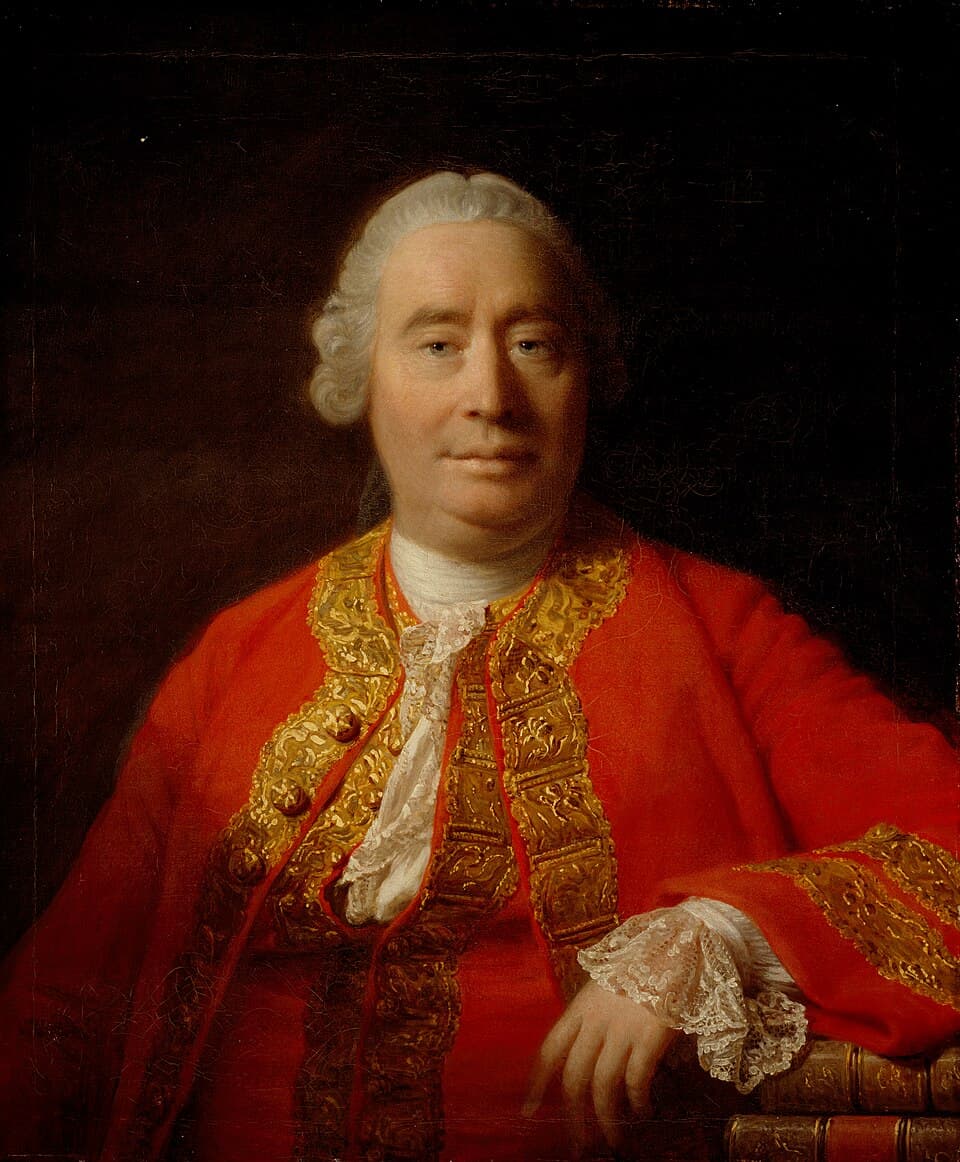
David Hume
An Enquiry Concerning Human Understanding

The author advocates for state tolerance of all philosophical principles, arguing that intellectual restraint leads to dangerous political and scientific consequences.

...t must still be the same. And, those, who attempt to disabuse them of such prejudices, may, for aught I know, be good reasoners, but I cannot allow them to be good citizens and politicians; since they free men from one restraint upon their passions, and make the infringement of the laws of society, in one respect, more easy and secure. After all, I may, perhaps, agree to your general conclusion in favour of liberty, though upon different premises from those, on which you endeavour to found it.
I think, that the state ought to tolerate every principle of philosophy; nor is there an instance, that any government has suffered in its political interests by such indulgence. There is no enthusiasm among philosophers; their doctrines are not very alluring to the people; and no restraint can be put upon their reasonings, but what must be of dangerous consequence to the sciences, and even to the state, by paving the way for persecution and oppression in points, where the generality of mankind are more deeply interested and concerned.
115. But there occurs to me (continued I) with regard to your main topic, a difficulty, which I shall just propose to you without insisting on it; lest it lead into reasonings of too nice and delicate a nature. In a word, I much doubt whether it be possible for a cause to be known only by its effect (as you have all along supposed) or to be of so singular and particular a nature as to have no parallel and no similarity with any other cause or object, that has ever fallen under our observation....
4
20 of 20 in Section XI178 of 198 in work
The Singularity Problem
David Hume
An Enquiry Concerning Human Understanding

Hume asserts that we cannot infer a cause from a singular effect without prior experience of similar species of objects being constantly conjoined.

...e people; and no restraint can be put upon their reasonings, but what must be of dangerous consequence to the sciences, and even to the state, by paving the way for persecution and oppression in points, where the generality of mankind are more deeply interested and concerned. 115. But there occurs to me (continued I) with regard to your main topic, a difficulty, which I shall just propose to you without insisting on it; lest it lead into reasonings of too nice and delicate a nature. In a word,
I much doubt whether it be possible for a cause to be known only by its effect (as you have all along supposed) or to be of so singular and particular a nature as to have no parallel and no similarity with any other cause or object, that has ever fallen under our observation. It is only when two species of objects are found to be constantly conjoined, that we can infer the one from the other; and were an effect presented, which was entirely singular, and could not be comprehended under any known species, I do not see, that we could form any conjecture or inference at all concerning its cause. If experience and observation and analogy be,…
I leave it to your own reflection to pursue the consequences of this principle. I shall just observe, that, as the antagonists of Epicurus always suppose the universe, an effect quite singular and unparalleled, to be the proof of a Deity, a cause no less singular and unparalleled; your reasonings, upon that supposition, seem, at least, to merit our attention. There is, I own, some difficulty, how we can ever return from the cause to the effect, and, reasoning from our ideas of the former, infer...
Continue reading →
2
1 of 9 in Section XII, Part I179 of 198 in work
Now entering Section XII, Part I
The Circular Doubt
David Hume
An Enquiry Concerning Human Understanding

The author critiques Cartesian skepticism, arguing that an antecedent universal doubt is incurable because it undermines the very faculties needed to resolve it.

...existence of these monsters. The Sceptic is another enemy of religion, who naturally provokes the indignation of all divines and graver philosophers; though it is certain, that no man ever met with any such absurd creature, or conversed with a man, who had no opinion or principle concerning any subject, either of action or speculation. This begets a very natural question; What is meant by a sceptic? And how far it is possible to push these philosophical principles of doubt and uncertainty?
There is a species of scepticism, antecedent to all study and philosophy, which is much inculcated by Des Cartes and others, as a sovereign preservative against error and precipitate judgement. It recommends an universal doubt, not only of all our former opinions and principles, but also of our very faculties; of whose veracity, say they, we must assure ourselves, by a chain of reasoning, deduced from some original principle, which cannot possibly be fallacious or deceitful. But neither is there any such original principle, which has a prerogative above others, that are self-evident and convincing: or if there were, could we advance a step…
It must, however, be confessed, that this species of scepticism, when more moderate, may be understood in a very reasonable sense, and is a necessary preparative to the study of philosophy, by preserving a proper impartiality in our judgements, and weaning our mind from all those prejudices, which we may have imbibed from education or rash opinion. To begin with clear and self-evident principles, to advance by timorous and sure steps, to review frequently our conclusions, and examine accuratel...
Continue reading →
6
2 of 9 in Section XII, Part I180 of 198 in work
The Instinct of External Reality
David Hume
An Enquiry Concerning Human Understanding

The author observes that humans and animals possess a blind, natural instinct to believe in an external world, often confusing mental images with the objects themselves.

...ture. These sceptical topics, indeed, are only sufficient to prove, that the senses alone are not implicitly to be depended on; but that we must correct their evidence by reason, and by considerations, derived from the nature of the medium, the distance of the object, and the disposition of the organ, in order to render them, within their sphere, the proper criteria of truth and falsehood. There are other more profound arguments against the senses, which admit not of so easy a solution. 118.
It seems evident, that men are carried, by a natural instinct or prepossession, to repose faith in their senses; and that, without any reasoning, or even almost before the use of reason, we always suppose an external universe, which depends not on our perception, but would exist, though we and every sensible creature were absent or annihilated. Even the animal creation are governed by a like opinion, and preserve this belief of external objects, in all their thoughts, designs, and actions. It seems also evident, that, when men follow this blind and powerful instinct of nature, they always suppose the very images, presented by the senses, to…
This very table, which we see white, and which we feel hard, is believed to exist, independent of our perception, and to be something external to our mind, which perceives it. Our presence bestows not being on it: our absence does not annihilate it. It preserves its existence uniform and entire, independent of the situation of intelligent beings, who perceive or contemplate it. But this universal and primary opinion of all men is soon destroyed by the slightest philosophy, which teaches us, th...
Continue reading →
4
3 of 9 in Section XII, Part I181 of 198 in work
Perception's Illusion
David Hume
An Enquiry Concerning Human Understanding

The author argues that reason reveals we never perceive external objects directly, but only fleeting mental images or representations of those objects.

...e the external objects, and never entertain any suspicion, that the one are nothing but representations of the other. This very table, which we see white, and which we feel hard, is believed to exist, independent of our perception, and to be something external to our mind, which perceives it. Our presence bestows not being on it: our absence does not annihilate it. It preserves its existence uniform and entire, independent of the situation of intelligent beings, who perceive or contemplate it.
But this universal and primary opinion of all men is soon destroyed by the slightest philosophy, which teaches us, that nothing can ever be present to the mind but an image or perception, and that the senses are only the inlets, through which these images are conveyed, without being able to produce any immediate intercourse between the mind and the object. The table, which we see, seems to diminish, as we remove farther from it: but the real table, which exists independent of us, suffers no alteration: it was, therefore, nothing but its image, which was present to the mind. These are the obvious dictates of reason; and no man, who reflects,…
119. So far, then, are we necessitated by reasoning to contradict or depart from the primary instincts of nature, and to embrace a new system with regard to the evidence of our senses. But here philosophy finds herself extremely embarrassed, when she would justify this new system, and obviate the cavils and objections of the sceptics. She can no longer plead the infallible and irresistible instinct of nature: for that led us to a quite different system, which is acknowledged fallible and even...
Continue reading →
5