2 of 20 in Section X, Part II140 of 198 in work
Religion's Credulity Spiral
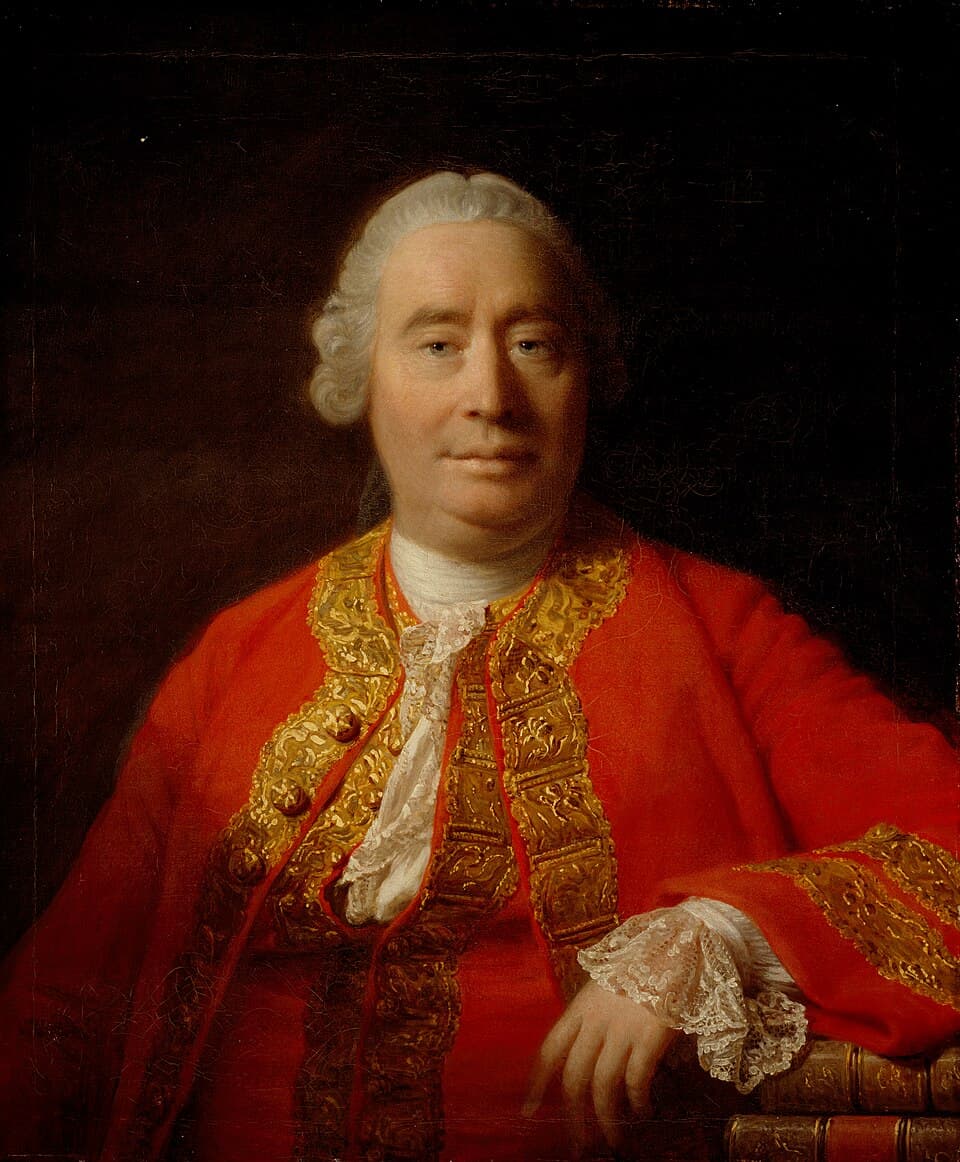
David Hume
An Enquiry Concerning Human Understanding

The author provides a cynical portrait of how religious enthusiasm and vanity overpower common sense and destroy the authority of human testimony.

...h it is derived. And this goes so far, that even those who cannot enjoy this pleasure immediately, nor can believe those miraculous events, of which they are informed, yet love to partake of the satisfaction at second-hand or by rebound, and place a pride and delight in exciting the admiration of others. With what greediness are the miraculous accounts of travellers received, their descriptions of sea and land monsters, their relations of wonderful adventures, strange men, and uncouth manners?
But if the spirit of religion join itself to the love of wonder, there is an end of common sense; and human testimony, in these circumstances, loses all pretensions to authority. A religionist may be an enthusiast, and imagine he sees what has no reality: he may know his narrative to be false, and yet persevere in it, with the best intentions in the world, for the sake of promoting so holy a cause: or even where this delusion has not place, vanity, excited by so strong a temptation, operates on him more powerfully than on the rest of mankind in any other circumstances; and self-interest with equal force. His auditors may not have, and…
Eloquence, when at its highest pitch, leaves little room for reason or reflection; but addressing itself entirely to the fancy or the affections, captivates the willing hearers, and subdues their understanding. Happily, this pitch it seldom attains. But what a Tully or a Demosthenes could scarcely effect over a Roman or Athenian audience, every Capuchin, every itinerant or stationary teacher can perform over the generality of mankind, and in a higher degree, by touching such gross and vulgar...
Continue reading →
2
3 of 20 in Section X, Part II141 of 198 in work
Propensity for Marvelous
David Hume
An Enquiry Concerning Human Understanding

Hume explains that the human passion for surprise and the pleasure of spreading interesting news lead people to believe and report miracles with an assurance that lacks evidentiary support.

...when at its highest pitch, leaves little room for reason or reflection; but addressing itself entirely to the fancy or the affections, captivates the willing hearers, and subdues their understanding. Happily, this pitch it seldom attains. But what a Tully or a Demosthenes could scarcely effect over a Roman or Athenian audience, every Capuchin, every itinerant or stationary teacher can perform over the generality of mankind, and in a higher degree, by touching such gross and vulgar passions.
The many instances of forged miracles, and prophecies, and supernatural events, which, in all ages, have either been detected by contrary evidence, or which detect themselves by their absurdity, prove sufficiently the strong propensity of mankind to the extraordinary and the marvellous, and ought reasonably to beget a suspicion against all relations of this kind. This is our natural way of thinking, even with regard to the most common and most credible events. For instance: There is no kind of report which rises so easily, and spreads so quickly, especially in country places and provincial towns, as those concerning marriages; insomuch that…
94. Thirdly. It forms a strong presumption against all supernatural and miraculous relations, that they are observed chiefly to abound among ignorant and barbarous nations; or if a civilized people has ever given admission to any of them, that people will be found to have received them from ignorant and barbarous ancestors, who transmitted them with that inviolable sanction and authority, which always attend received opinions. When we peruse the first histories of all nations, we are apt to...
Continue reading →
4
4 of 20 in Section X, Part II142 of 198 in work
The Marvelous Propensity
David Hume
An Enquiry Concerning Human Understanding

Hume posits that reports of miracles are primarily found among uneducated or ancient populations and stem from a universal human inclination toward the marvelous rather than factual reality.

...mediately join them together. The pleasure of telling a piece of news so interesting, of propagating it, and of being the first reporters of it, spreads the intelligence. And this is so well known, that no man of sense gives attention to these reports, till he find them confirmed by some greater evidence. Do not the same passions, and others still stronger, incline the generality of mankind to believe and report, with the greatest vehemence and assurance, all religious miracles? 94. Thirdly.
It forms a strong presumption against all supernatural and miraculous relations, that they are observed chiefly to abound among ignorant and barbarous nations; or if a civilized people has ever given admission to any of them, that people will be found to have received them from ignorant and barbarous ancestors, who transmitted them with that inviolable sanction and authority, which always attend received opinions. When we peruse the first histories of all nations, we are apt to imagine ourselves transported into some new world; where the whole frame of nature is disjointed, and every element performs its operations in a different manner, from…
It is strange, a judicious reader is apt to say, upon the perusal of these wonderful historians, that such prodigious events never happen in our days. But it is nothing strange, I hope, that men should lie in all ages. You must surely have seen instances enough of that frailty. You have yourself heard many such marvellous relations started, which, being treated with scorn by all the wise and judicious, have at last been abandoned even by the vulgar. Be assured, that those renowned lies,...
Continue reading →
4
5 of 20 in Section X, Part II143 of 198 in work
Lies' Fertile Soil
David Hume
An Enquiry Concerning Human Understanding

The author observes the human frailty of lying and explains how marvelous, false historical accounts gain traction among the vulgar despite being rejected by the wise.

...cles, judgements, quite obscure the few natural events, that are intermingled with them. But as the former grow thinner every page, in proportion as we advance nearer the enlightened ages, we soon learn, that there is nothing mysterious or supernatural in the case, but that all proceeds from the usual propensity of mankind towards the marvellous, and that, though this inclination may at intervals receive a check from sense and learning, it can never be thoroughly extirpated from human nature.
It is strange, a judicious reader is apt to say, upon the perusal of these wonderful historians, that such prodigious events never happen in our days. But it is nothing strange, I hope, that men should lie in all ages. You must surely have seen instances enough of that frailty. You have yourself heard many such marvellous relations started, which, being treated with scorn by all the wise and judicious, have at last been abandoned even by the vulgar. Be assured, that those renowned lies, which have spread and flourished to such a monstrous height, arose from like beginnings; but being sown in a more proper soil, shot up at last into prodigies almost equal to those which they relate.
It was a wise policy in that false prophet, Alexander, who though now forgotten, was once so famous, to lay the first scene of his impostures in Paphlagonia, where, as Lucian tells us, the people were extremely ignorant and stupid, and ready to swallow even the grossest delusion. People at a distance, who are weak enough to think the matter at all worth enquiry, have no opportunity of receiving better information. The stories come magnified to them by a hundred circumstances. Fools are industr...
2
6 of 20 in Section X, Part II144 of 198 in work
The Spread of Falsehood
David Hume
An Enquiry Concerning Human Understanding

The author explains how religious or miraculous impostures thrive in ignorant or remote populations where lack of communication prevents the debunking of false reports.

...deride its absurdity, without informing themselves of the particular facts, by which it may be distinctly refuted. And thus the impostor above mentioned was enabled to proceed, from his ignorant Paphlagonians, to the enlisting of votaries, even among the Grecian philosophers, and men of the most eminent rank and distinction in Rome: nay, could engage the attention of that sage emperor Marcus Aurelius; so far as to make him trust the success of a military expedition to his delusive prophecies.
The advantages are so great, of starting an imposture among an ignorant people, that, even though the delusion should be too gross to impose on the generality of them (which, though seldom, is sometimes the case) it has a much better chance for succeeding in remote countries, than if the first scene had been laid in a city renowned for arts and knowledge. The most ignorant and barbarous of these barbarians carry the report abroad. None of their countrymen have a large correspondence, or sufficient credit and authority to contradict and beat down the delusion. Men's inclination to the marvellous has full opportunity to display itself. And…
But had Alexander fixed his residence at Athens, the philosophers of that renowned mart of learning had immediately spread, throughout the whole Roman empire, their sense of the matter; which, being supported by so great authority, and displayed by all the force of reason and eloquence, had entirely opened the eyes of mankind. It is true; Lucian, passing by chance through Paphlagonia, had an opportunity of performing this good office. But, though much to be wished, it does not always happen, th...
Continue reading →
5