The author explains how humans develop a habit of transferring past experiences to unknown future events, forming the basis of all empirical reasoning.
5 of 6 in Section IX129 of 198 in work
Habit's Predictive Leap
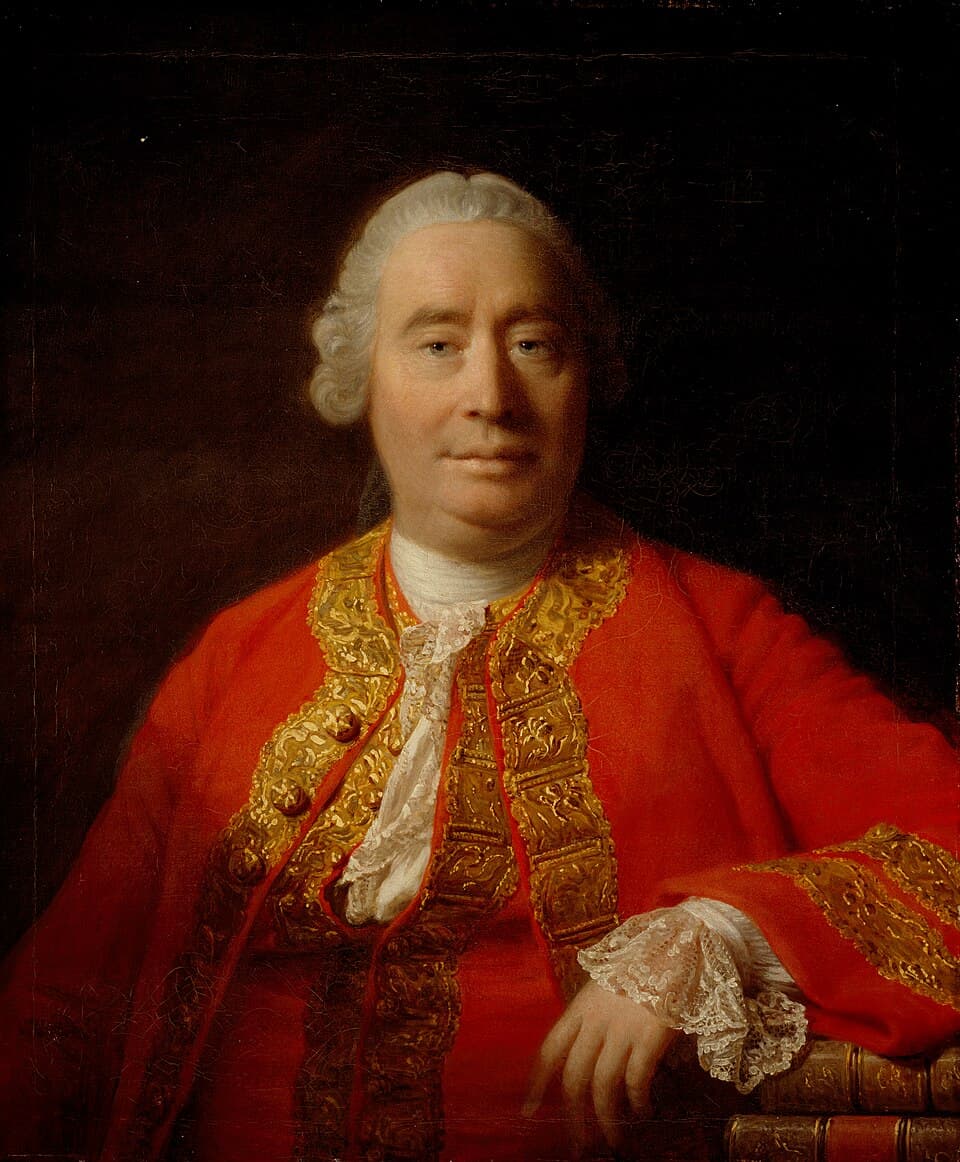
David Hume
An Enquiry Concerning Human Understanding...and observation [19]. [19] Since all reasonings concerning facts or causes is derived merely from custom, it may be asked how it happens, that men so much surpass animals in reasoning, and one man so much surpasses another? Has not the same custom the same influence on all? We shall here endeavour briefly to explain the great difference in human understandings: After which the reason of the difference between men and animals will easily be comprehended. 1.
When we have lived any time, and have been accustomed to the uniformity of nature, we acquire a general habit, by which we always transfer the known to the unknown, and conceive the latter to resemble the former. By means of this general habitual principle, we regard even one experiment as the foundation of reasoning, and expect a similar event with some degree of certainty, where the experiment has been made accurately, and free from all foreign circumstances. It is therefore considered as a matter of great importance to observe the consequences of things; and as one man may very much surpass another in attention and memory and observation, this will make a very great difference in their reasoning.
2. Where there is a complication of causes to produce any effect, one mind may be much larger than another, and better able to comprehend the whole system of objects, and to infer justly their consequences. 3. One man is able to carry on a chain of consequences to a greater length than another. 4. Few men can think long without running into a confusion of ideas, and mistaking one for another; and there are various degrees of this infirmity. 5. The cir...
2
6 of 6 in Section IX130 of 198 in work
⚖Reasoning as Instinct

David Hume
An Enquiry Concerning Human UnderstandingHume suggests that human experimental reasoning is actually a form of instinct similar to that of animals, acting as a mechanical power rather than a purely intellectual faculty.
...ience or the greater promptitude of suggesting analogies, will be the better reasoner. 8. Byasses from prejudice, education, passion, party, &c. hang more upon one mind than another. 9. After we have acquired a confidence in human testimony, books and conversation enlarge much more the sphere of one man's experience and thought than those of another. It would be easy to discover many other circumstances that make a difference in the understandings of men. 85.
But though animals learn many parts of their knowledge from observation, there are also many parts of it, which they derive from the original hand of nature; which much exceed the share of capacity they possess on ordinary occasions; and in which they improve, little or nothing, by the longest practice and experience. These we denominate Instincts, and are so apt to admire as something very extraordinary, and inexplicable by all the disquisitions of human understanding. But our wonder will, perhaps, cease or diminish, when we consider, that the experimental reasoning itself, which we possess in common with beasts, and on which the whole…
SECTION X. OF MIRACLES. PART I. 86. There is, in Dr. Tillotson's writings, an argument against the real presence, which is as concise, and elegant, and strong as any argument can possibly be supposed against a doctrine, so little worthy of a serious refutation. It is acknowledged on all hands, says that learned prelate, that the authority, either of the scripture or of tradition, is founded merely in the testimony of the apostles, who were eye-witnesses to those miracles of our Saviou...
Continue reading →
4
1 of 8 in Section X, Part I131 of 198 in work
Now entering Section X, Part I
⚖Proportion Belief to Evidence

David Hume
An Enquiry Concerning Human UnderstandingThe author advises that because experience provides varying degrees of certainty, a wise individual must always proportion their level of belief to the strength of the available evidence.
...this kind, which must at least silence the most arrogant bigotry and superstition, and free us from their impertinent solicitations. I flatter myself, that I have discovered an argument of a like nature, which, if just, will, with the wise and learned, be an everlasting check to all kinds of superstitious delusion, and consequently, will be useful as long as the world endures. For so long, I presume, will the accounts of miracles and prodigies be found in all history, sacred and profane. 87.
Though experience be our only guide in reasoning concerning matters of fact; it must be acknowledged, that this guide is not altogether infallible, but in some cases is apt to lead us into errors. One, who in our climate, should expect better weather in any week of June than in one of December, would reason justly, and conformably to experience; but it is certain, that he may happen, in the event, to find himself mistaken. However, we may observe, that, in such a case, he would have no cause to complain of experience; because it commonly informs us beforehand of the uncertainty, by that contrariety of events, which we may learn from a…
In such conclusions as are founded on an infallible experience, he expects the event with the last degree of assurance, and regards his past experience as a full proof of the future existence of that event. In other cases, he proceeds with more caution: He weighs the opposite experiments: He considers which side is supported by the greater number of experiments: to that side he inclines, with doubt and hesitation; and when at last he fixes his judgement, the evidence exceeds not what we prope...
Continue reading →
2
2 of 8 in Section X, Part I132 of 198 in work
⚖Belief Proportioned to Evidence

David Hume
An Enquiry Concerning Human UnderstandingHume advises that a wise person should always proportion their belief to the available evidence, weighing probabilities based on the frequency of past experiences.
...ontrariety of events, which we may learn from a diligent observation. All effects follow not with like certainty from their supposed causes. Some events are found, in all countries and all ages, to have been constantly conjoined together: Others are found to have been more variable, and sometimes to disappoint our expectations; so that, in our reasonings concerning matter of fact, there are all imaginable degrees of assurance, from the highest certainty to the lowest species of moral evidence.
A wise man, therefore, proportions his belief to the evidence. In such conclusions as are founded on an infallible experience, he expects the event with the last degree of assurance, and regards his past experience as a full proof of the future existence of that event. In other cases, he proceeds with more caution: He weighs the opposite experiments: He considers which side is supported by the greater number of experiments: to that side he inclines, with doubt and hesitation; and when at last he fixes his judgement, the evidence exceeds not what we properly call probability. All probability, then, supposes an opposition of experiments and…
A hundred instances or experiments on one side, and fifty on another, afford a doubtful expectation of any event; though a hundred uniform experiments, with only one that is contradictory, reasonably beget a pretty strong degree of assurance. In all cases, we must balance the opposite experiments, where they are opposite, and deduct the smaller number from the greater, in order to know the exact force of the superior evidence. 88. To apply these principles to a particular instance; we may obse...
Continue reading →
2
3 of 8 in Section X, Part I133 of 198 in work
⚖Testimony's Human Foundation

David Hume
An Enquiry Concerning Human UnderstandingThe text asserts that our trust in human testimony is not innate but is a learned probability based on our experience of human veracity and memory.
...of human testimony, and of the usual conformity of facts to the reports of witnesses. It being a general maxim, that no objects have any discoverable connexion together, and that all the inferences, which we can draw from one to another, are founded merely on our experience of their constant and regular conjunction; it is evident, that we ought not to make an exception to this maxim in favour of human testimony, whose connexion with any event seems, in itself, as little necessary as any other.
Were not the memory tenacious to a certain degree, had not men commonly an inclination to truth and a principle of probity; were they not sensible to shame, when detected in a falsehood: Were not these, I say, discovered by experience to be qualities, inherent in human nature, we should never repose the least confidence in human testimony. A man delirious, or noted for falsehood and villany, has no manner of authority with us. And as the evidence, derived from witnesses and human testimony, is founded on past experience, so it varies with the experience, and is regarded either as a proof or a probability, according as the conjunction…
There are a number of circumstances to be taken into consideration in all judgements of this kind; and the ultimate standard, by which we determine all disputes, that may arise concerning them, is always derived from experience and observation. Where this experience is not entirely uniform on any side, it is attended with an unavoidable contrariety in our judgements, and with the same opposition and mutual destruction of argument as in every other kind of evidence. We frequently hesitate concer...
Continue reading →
2