The author defends a skeptical philosophy as harmless and innocent, asserting that natural instinct will always prevent abstract doubts from destroying practical action.
3 of 12 in Section V, Part I46 of 198 in work
Truth's Lonely Passion
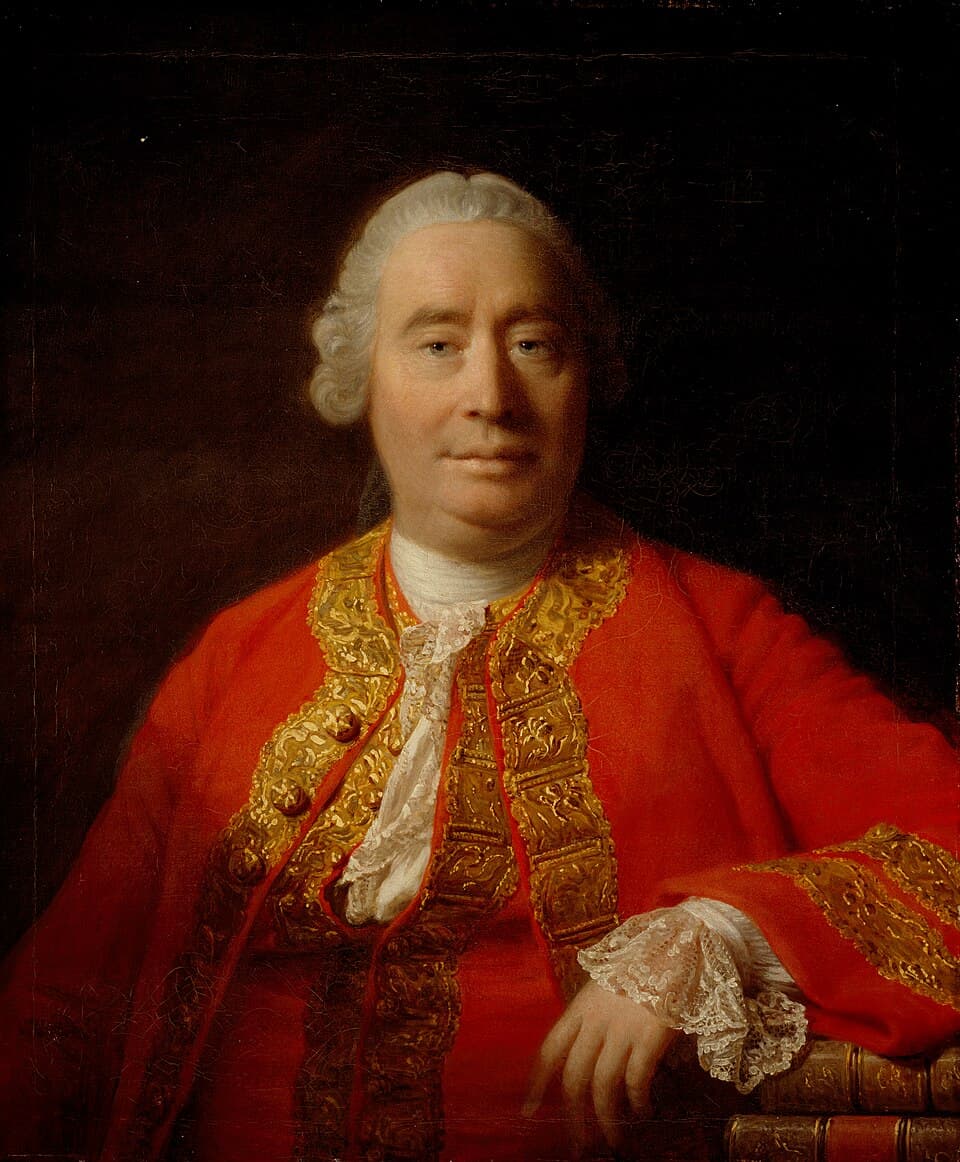
David Hume
An Enquiry Concerning Human Understanding...pensity; and that is the Academic or Sceptical philosophy. The academics always talk of doubt and suspense of judgement, of danger in hasty determinations, of confining to very narrow bounds the enquiries of the understanding, and of renouncing all speculations which lie not within the limits of common life and practice. Nothing, therefore, can be more contrary than such a philosophy to the supine indolence of the mind, its rash arrogance, its lofty pretensions, and its superstitious credulity.
Every passion is mortified by it, except the love of truth; and that passion never is, nor can be, carried to too high a degree. It is surprising, therefore, that this philosophy, which, in almost every instance, must be harmless and innocent, should be the subject of so much groundless reproach and obloquy. But, perhaps, the very circumstance which renders it so innocent is what chiefly exposes it to the public hatred and resentment. By flattering no irregular passion, it gains few partizans: By opposing so many vices and follies, it raises to itself abundance of enemies, who stigmatize it as libertine profane, and irreligious. Nor need we…
Though we should conclude, for instance, as in the foregoing section, that, in all reasonings from experience, there is a step taken by the mind which is not supported by any argument or process of the understanding; there is no danger that these reasonings, on which almost all knowledge depends, will ever be affected by such a discovery. If the mind be not engaged by argument to make this step, it must be induced by some other principle of equal weight and authority; and that principle will pr...
Continue reading →
2
4 of 12 in Section V, Part I47 of 198 in work
⚖Nature's Prevailing Rights

David Hume
An Enquiry Concerning Human UnderstandingThe author asserts that human nature and instinct will always prevail over abstract skeptical reasoning, ensuring that we continue to act on experience.
...nnocent is what chiefly exposes it to the public hatred and resentment. By flattering no irregular passion, it gains few partizans: By opposing so many vices and follies, it raises to itself abundance of enemies, who stigmatize it as libertine profane, and irreligious. Nor need we fear that this philosophy, while it endeavours to limit our enquiries to common life, should ever undermine the reasonings of common life, and carry its doubts so far as to destroy all action, as well as speculation.
Nature will always maintain her rights, and prevail in the end over any abstract reasoning whatsoever. Though we should conclude, for instance, as in the foregoing section, that, in all reasonings from experience, there is a step taken by the mind which is not supported by any argument or process of the understanding; there is no danger that these reasonings, on which almost all knowledge depends, will ever be affected by such a discovery. If the mind be not engaged by argument to make this step, it must be induced by some other principle of equal weight and authority; and that principle will preserve its influence as long as human nature remains the same.
What that principle is may well be worth the pains of enquiry. 35. Suppose a person, though endowed with the strongest faculties of reason and reflection, to be brought on a sudden into this world; he would, indeed, immediately observe a continual succession of objects, and one event following another; but he would not be able to discover anything farther. He would not, at first, by any reasoning, be able to reach the idea of cause and effect; since the particular powers, by which all natural...
3
5 of 12 in Section V, Part I48 of 198 in work
⚖The Naive Observer

David Hume
An Enquiry Concerning Human UnderstandingThe author imagines a person suddenly brought into the world to illustrate that reason alone, without experience, cannot discover the relation of cause and effect.
...en by the mind which is not supported by any argument or process of the understanding; there is no danger that these reasonings, on which almost all knowledge depends, will ever be affected by such a discovery. If the mind be not engaged by argument to make this step, it must be induced by some other principle of equal weight and authority; and that principle will preserve its influence as long as human nature remains the same. What that principle is may well be worth the pains of enquiry. 35.
Suppose a person, though endowed with the strongest faculties of reason and reflection, to be brought on a sudden into this world; he would, indeed, immediately observe a continual succession of objects, and one event following another; but he would not be able to discover anything farther. He would not, at first, by any reasoning, be able to reach the idea of cause and effect; since the particular powers, by which all natural operations are performed, never appear to the senses; nor is it reasonable to conclude, merely because one event, in one instance, precedes another, that therefore the one is the cause, the other the effect. Their…
Suppose, again, that he has acquired more experience, and has lived so long in the world as to have observed familiar objects or events to be constantly conjoined together; what is the consequence of this experience? He immediately infers the existence of one object from the appearance of the other. Yet he has not, by all his experience, acquired any idea or knowledge of the secret power by which the one object produces the other; nor is it, by any process of reasoning, he is engaged to draw t...
Continue reading →
1
6 of 12 in Section V, Part I49 of 198 in work
⚖Custom's Invisible Force

David Hume
An Enquiry Concerning Human UnderstandingHume identifies 'Custom or Habit' as the non-rational principle that determines the mind to infer one object from another after repeated experience.
...reasonable to conclude, merely because one event, in one instance, precedes another, that therefore the one is the cause, the other the effect. Their conjunction may be arbitrary and casual. There may be no reason to infer the existence of one from the appearance of the other. And in a word, such a person, without more experience, could never employ his conjecture or reasoning concerning any matter of fact, or be assured of anything beyond what was immediately present to his memory and senses.
Suppose, again, that he has acquired more experience, and has lived so long in the world as to have observed familiar objects or events to be constantly conjoined together; what is the consequence of this experience? He immediately infers the existence of one object from the appearance of the other. Yet he has not, by all his experience, acquired any idea or knowledge of the secret power by which the one object produces the other; nor is it, by any process of reasoning, he is engaged to draw this inference. But still he finds himself determined to draw it: And though he should be convinced that his understanding has no part in the operation,…
For wherever the repetition of any particular act or operation produces a propensity to renew the same act or operation, without being impelled by any reasoning or process of the understanding, we always say, that this propensity is the effect of Custom. By employing that word, we pretend not to have given the ultimate reason of such a propensity. We only point out a principle of human nature, which is universally acknowledged, and which is well known by its effects. Perhaps we can push our e...
Continue reading →
2
7 of 12 in Section V, Part I50 of 198 in work
⚖Custom's Ultimate Principle

David Hume
An Enquiry Concerning Human UnderstandingHume acknowledges 'Custom' as an ultimate principle of human nature beyond which inquiry cannot go, urging acceptance of the limits of our faculties.
...erience, acquired any idea or knowledge of the secret power by which the one object produces the other; nor is it, by any process of reasoning, he is engaged to draw this inference. But still he finds himself determined to draw it: And though he should be convinced that his understanding has no part in the operation, he would nevertheless continue in the same course of thinking. There is some other principle which determines him to form such a conclusion. 36. This principle is Custom or Habit.
For wherever the repetition of any particular act or operation produces a propensity to renew the same act or operation, without being impelled by any reasoning or process of the understanding, we always say, that this propensity is the effect of Custom. By employing that word, we pretend not to have given the ultimate reason of such a propensity. We only point out a principle of human nature, which is universally acknowledged, and which is well known by its effects. Perhaps we can push our enquiries no farther, or pretend to give the cause of this cause; but must rest contented with it as the ultimate principle, which we can assign, of all…
And it is certain we here advance a very intelligible proposition at least, if not a true one, when we assert that, after the constant conjunction of two objects--heat and flame, for instance, weight and solidity--we are determined by custom alone to expect the one from the appearance of the other. This hypothesis seems even the only one which explains the difficulty, why we draw, from a thousand instances, an inference which we are not able to draw from one instance, that is, in no respect, di...
Continue reading →
4