A prescription for stripping away the outward pomp and 'vile' reality of worldly objects to see them for what they truly are, thereby avoiding being beguiled by appearances.
7 of 33 in THE SIXTH BOOK107 of 309 in work
Unmasking False Gravity
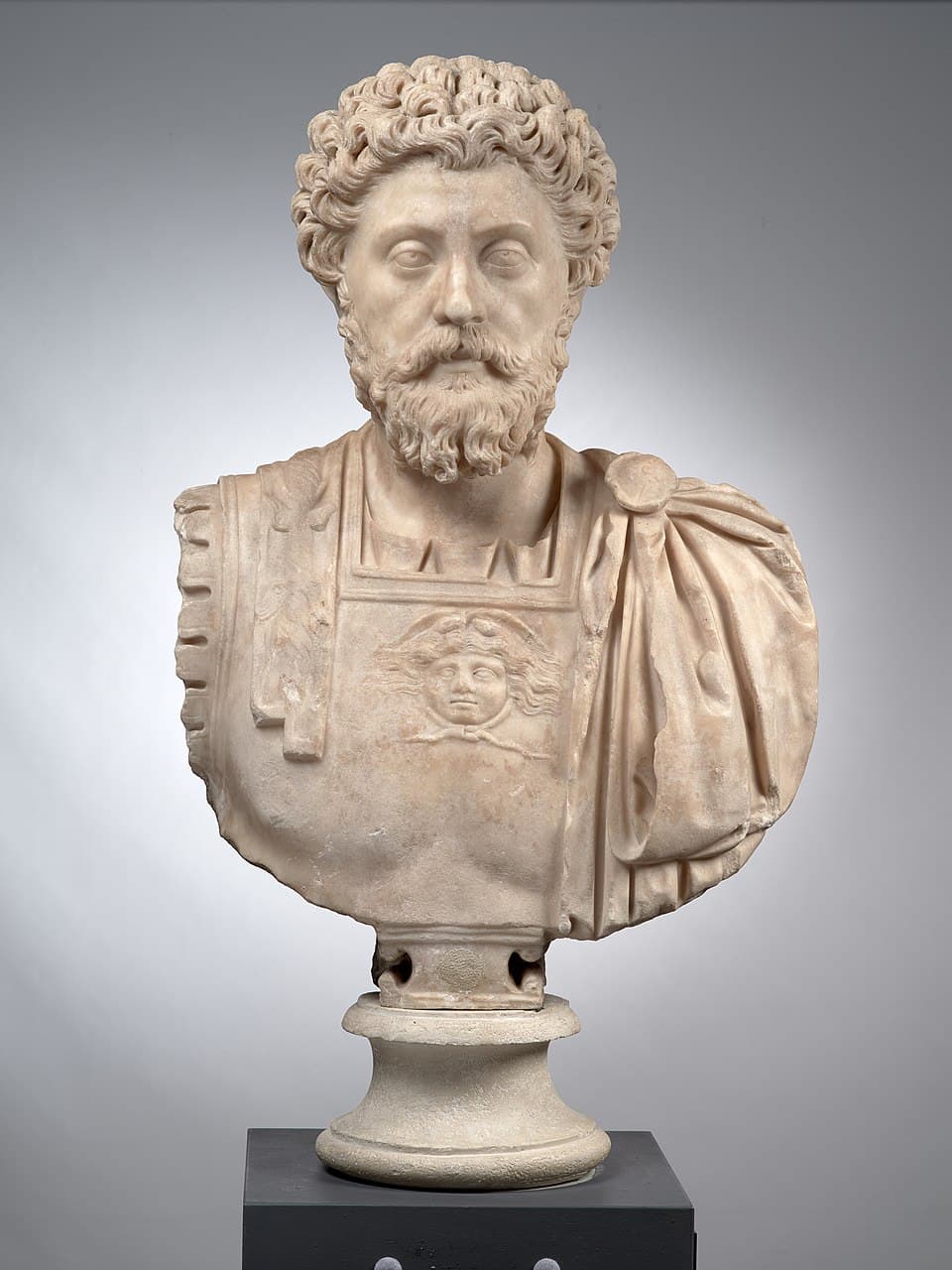
Marcus Aurelius
Meditations...right apprehension and imagination! as for example: This is the carcass of a fish; this of a bird; and this of a hog. And again more generally; This phalernum, this excellent highly commended wine, is but the bare juice of an ordinary grape. This purple robe, but sheep's hairs, dyed with the blood of a shellfish. So for coitus, it is but the attrition of an ordinary base entrail, and the excretion of a little vile snivel, with a certain kind of convulsion: according to Hippocrates his opinion.
How excellent useful are these lively fancies and representations of things, thus penetrating and passing through the objects, to make their true nature known and apparent! This must thou use all thy life long, and upon all occasions: and then especially, when matters are apprehended as of great worth and respect, thy art and care must be to uncover them, and to behold their vileness, and to take away from them all those serious circumstances and expressions, under which they made so grave a show. For outward pomp and appearance is a great juggler; and then especially art thou most in danger to be beguiled by it, when (to a man's thinking)…
XII. See what Crates pronounceth concerning Xenocrates himself. XIII. Those things which the common sort of people do admire, are most of them such things as are very general, and may be comprehended under things merely natural, or naturally affected and qualified: as stones, wood, figs, vines, olives. Those that be admired by them that are more moderate and restrained, are comprehended under things animated: as flocks and herds. Those that are yet more gentle and curious, their admiration is...
Continue reading →
2
8 of 33 in THE SIXTH BOOK108 of 309 in work
⚖Hierarchy of Admiration

Marcus Aurelius
MeditationsAn observation on the varying levels of human admiration, ranging from the common appreciation of inanimate objects to the more refined but still limited admiration of skilled individuals.
...hended as of great worth and respect, thy art and care must be to uncover them, and to behold their vileness, and to take away from them all those serious circumstances and expressions, under which they made so grave a show. For outward pomp and appearance is a great juggler; and then especially art thou most in danger to be beguiled by it, when (to a man's thinking) thou most seemest to be employed about matters of moment. XII. See what Crates pronounceth concerning Xenocrates himself. XIII.
Those things which the common sort of people do admire, are most of them such things as are very general, and may be comprehended under things merely natural, or naturally affected and qualified: as stones, wood, figs, vines, olives. Those that be admired by them that are more moderate and restrained, are comprehended under things animated: as flocks and herds. Those that are yet more gentle and curious, their admiration is commonly confined to reasonable creatures only; not in general as they are reasonable, but as they are capable of art, or of some craft and subtile invention: or perchance barely to reasonable creatures; as they that delight in the possession of many slaves.
But he that honours a reasonable soul in general, as it is reasonable and naturally sociable, doth little regard anything else: and above all things is careful to preserve his own, in the continual habit and exercise both of reason and sociableness: and thereby doth co-operate with him, of whose nature he doth also participate; God. XIV. Some things hasten to be, and others to be no more. And even whatsoever now is, some part thereof hath already perished. Perpetual fluxes and alterations rene...
4
9 of 33 in THE SIXTH BOOK109 of 309 in work
⚖Perpetual Flux

Marcus Aurelius
MeditationsAn observation on the perpetual flux of the universe where all things are in a state of constant change, making it futile to become overly attached to any single, passing moment.
...re capable of art, or of some craft and subtile invention: or perchance barely to reasonable creatures; as they that delight in the possession of many slaves. But he that honours a reasonable soul in general, as it is reasonable and naturally sociable, doth little regard anything else: and above all things is careful to preserve his own, in the continual habit and exercise both of reason and sociableness: and thereby doth co-operate with him, of whose nature he doth also participate; God. XIV.
Some things hasten to be, and others to be no more. And even whatsoever now is, some part thereof hath already perished. Perpetual fluxes and alterations renew the world, as the perpetual course of time doth make the age of the world (of itself infinite) to appear always fresh and new. In such a flux and course of all things, what of these things that hasten so fast away should any man regard, since among all there is not any that a man may fasten and fix upon? as if a man would settle his affection upon some ordinary sparrow living by him, who is no sooner seen, than out of sight.
For we must not think otherwise of our lives, than as a mere exhalation of blood, or of an ordinary respiration of air. For what in our common apprehension is, to breathe in the air and to breathe it out again, which we do daily: so much is it and no more, at once to breathe out all thy respirative faculty into that common air from whence but lately (as being but from yesterday, and to-day), thou didst first breathe it in, and with it, life. XV. Not vegetative spiration, it is not surely (whic...
1
10 of 33 in THE SIXTH BOOK110 of 309 in work
⚖The Trap of Attachment

Marcus Aurelius
MeditationsThe author warns that true freedom and self-content are impossible if one remains attached to external things, as such desires inevitably lead to envy, suspicion, and internal confusion.
...d according to thine own true natural constitution and Construction only. And to this even ordinary arts and professions do lead us. For it is that which every art doth aim at, that whatsoever it is, that is by art effected and prepared, may be fit for that work that it is prepared for. This is the end that he that dresseth the vine, and he that takes upon him either to tame colts, or to train up dogs, doth aim at. What else doth the education of children, and all learned professions tend unto?
Certainly then it is that, which should be dear unto us also. If in this particular it go well with thee, care not for the obtaining of other things. But is it so, that thou canst not but respect other things also? Then canst not thou truly be free? then canst thou not have self-content: then wilt thou ever be subject to passions. For it is not possible, but that thou must be envious, and jealous, and suspicious of them whom thou knowest can bereave thee of such things; and again, a secret underminer of them, whom thou seest in present possession of that which is dear unto thee. To be short, he must of necessity be full of confusion within…
But if thou shalt honour and respect thy mind only, that will make thee acceptable towards thyself, towards thy friends very tractable; and conformable and concordant with the Gods; that is, accepting with praises whatsoever they shall think good to appoint and allot unto thee. XVI. Under, above, and about, are the motions of the elements; but the motion of virtue, is none of those motions, but is somewhat more excellent and divine. Whose way (to speed and prosper in it) must be through a way,...
Continue reading →
3
11 of 33 in THE SIXTH BOOK111 of 309 in work
⚖Honor Your Mind

Marcus Aurelius
MeditationsA prescription to prioritize the mind above all else, which leads to self-acceptance, harmonious relationships with others, and a pious alignment with the divine will.
...thou truly be free? then canst thou not have self-content: then wilt thou ever be subject to passions. For it is not possible, but that thou must be envious, and jealous, and suspicious of them whom thou knowest can bereave thee of such things; and again, a secret underminer of them, whom thou seest in present possession of that which is dear unto thee. To be short, he must of necessity be full of confusion within himself, and often accuse the Gods, whosoever stands in need of these things. But
If thou shalt honour and respect thy mind only, that will make thee acceptable towards thyself, towards thy friends very tractable; and conformable and concordant with the Gods; that is, accepting with praises whatsoever they shall think good to appoint and allot unto thee.
XVI. Under, above, and about, are the motions of the elements; but the motion of virtue, is none of those motions, but is somewhat more excellent and divine. Whose way (to speed and prosper in it) must be through a way, that is not easily comprehended. XVII. Who can choose but wonder at them? They will not speak well of them that are at the same time with them, and live with them; yet they themselves are very ambitious, that they that shall follow, whom they have never seen, nor shall ever se...
2