A comparison of Christian and Roman Stoic magnanimity, both of which advocate for enduring injustice with patience by appealing to a higher internal or divine judgment rather than public praise.
10 of 15 in INTRODUCTION10 of 309 in work
God's Censure vs Soul
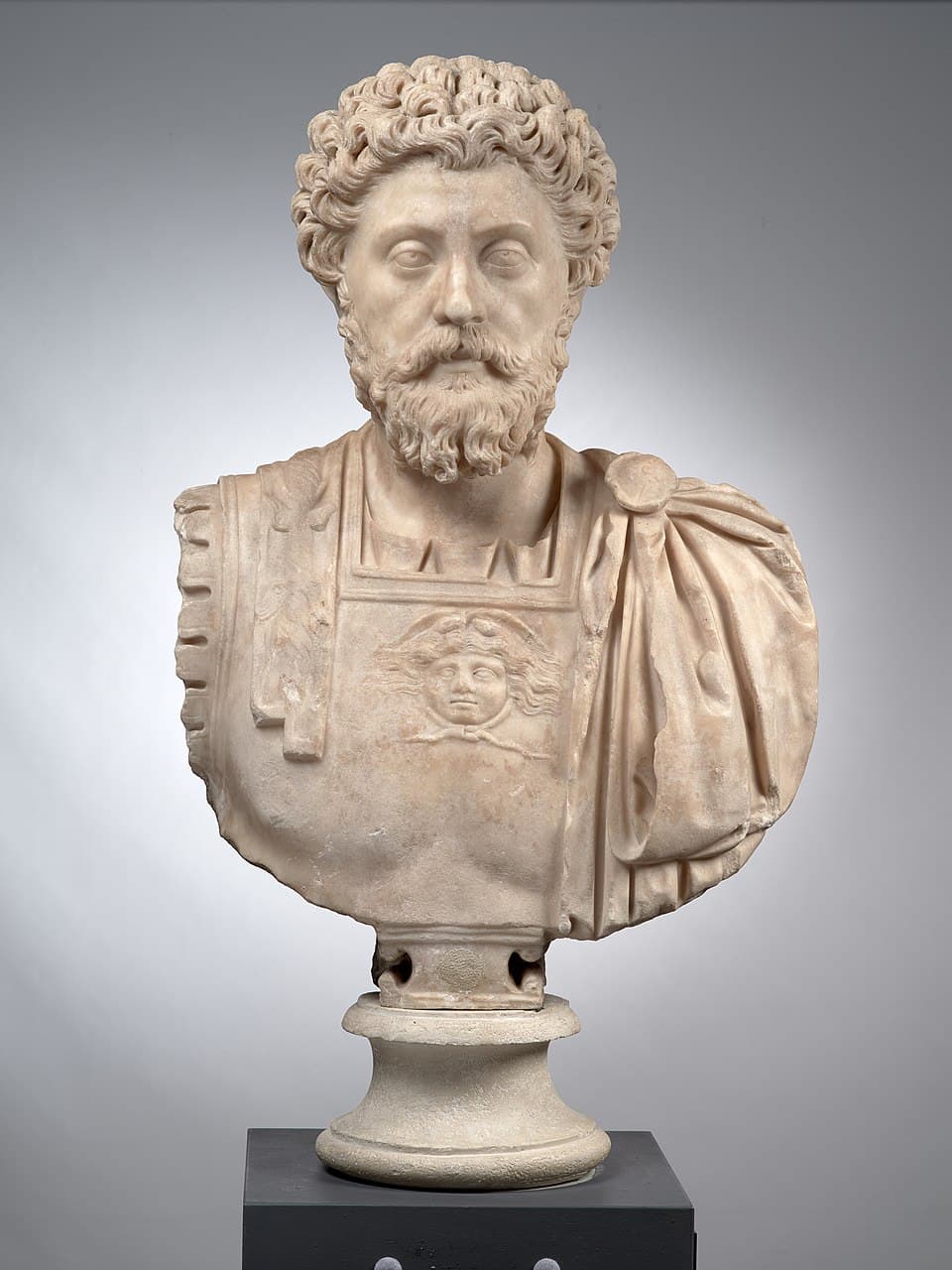
Marcus Aurelius
Meditations...istian aims at a more passive mood, humbleness and meekness, and reliance on the presence and personal friendship of God. The Roman scrutinises his faults with severity, but without the self-contempt which makes the Christian 'vile in his own sight.' The Christian, like the Roman, bids 'study to withdraw thine heart from the love of things visible'; but it is not the busy life of duty he has in mind so much as the contempt of all worldly things, and the 'cutting away of all lower delectations.'
Both rate men's praise or blame at their real worthlessness; 'Let not thy peace,' says the Christian, 'be in the mouths of men.' But it is to God's censure the Christian appeals, the Roman to his own soul. The petty annoyances of injustice or unkindness are looked on by each with the same magnanimity. 'Why doth a little thing said or done against thee make thee sorry? It is no new thing; it is not the first, nor shall it be the last, if thou live long. At best suffer patiently, if thou canst not suffer joyously.'
The Christian should sorrow more for other men's malice than for our own wrongs; but the Roman is inclined to wash his hands of the offender. 'Study to be patient in suffering and bearing other men's defaults and all manner infirmities,' says the Christian; but the Roman would never have thought to add, 'If all men were perfect, what had we then to suffer of other men for God?' The virtue of suffering in itself is an idea which does not meet us in the Meditations. Both alike realise that man...
5
11 of 15 in INTRODUCTION11 of 309 in work
⚖Community's Two Faces

Marcus Aurelius
MeditationsA comparison between Christian and Roman Stoic ethics, highlighting a shared sense of community but differing in their emphasis on emotion versus duty.
...canst not suffer joyously.' The Christian should sorrow more for other men's malice than for our own wrongs; but the Roman is inclined to wash his hands of the offender. 'Study to be patient in suffering and bearing other men's defaults and all manner infirmities,' says the Christian; but the Roman would never have thought to add, 'If all men were perfect, what had we then to suffer of other men for God?' The virtue of suffering in itself is an idea which does not meet us in the Meditations.
Both alike realise that man is one of a great community. 'No man is sufficient to himself,' says the Christian; 'we must bear together, help together, comfort together.' But while he sees a chief importance in zeal, in exalted emotion that is, and avoidance of lukewarmness, the Roman thought mainly of the duty to be done as well as might be, and less of the feeling which should go with the doing of it.
To the saint as to the emperor, the world is a poor thing at best. 'Verily it is a misery to live upon the earth,' says the Christian; few and evil are the days of man's life, which passeth away suddenly as a shadow. But there is one great difference between the two books we are considering. The Imitation is addressed to others, the Meditations by the writer to himself. We learn nothing from the Imitation of the author's own life, except in so far as he may be assumed to have practised h...
6
12 of 15 in INTRODUCTION12 of 309 in work
⚖The Stoic's Inner Purity

Marcus Aurelius
MeditationsA guide to serving the internal divine spirit by maintaining purity from passion, practicing unwavering courtesy, and viewing the errors of others with pity rather than anger.
...ial peccadilloes into heinous sins. But Marcus Aurelius is neither vulgar nor unctuous; he extenuates nothing, but nothing sets down in malice. He never poses before an audience; he may not be profound, he is always sincere. And it is a lofty and serene soul which is here disclosed before us. Vulgar vices seem to have no temptation for him; this is not one tied and bound with chains which he strives to break. The faults he detects in himself are often such as most men would have no eyes to see.
To serve the divine spirit which is implanted within him, a man must 'keep himself pure from all violent passion and evil affection, from all rashness and vanity, and from all manner of discontent, either in regard of the gods or men': or, as he says elsewhere, 'unspotted by pleasure, undaunted by pain.' Unwavering courtesy and consideration are his aims. 'Whatsoever any man either doth or saith, thou must be good;' 'doth any man offend? It is against himself that he doth offend: why should it trouble thee?' The offender needs pity, not wrath; those who must needs be corrected, should be treated with tact and gentleness; and one must be…
There are so many hints of offence forgiven, that we may believe the notes followed sharp on the facts. Perhaps he has fallen short of his aim, and thus seeks to call his principles to mind, and to strengthen himself for the future. That these sayings are not mere talk is plain from the story of Avidius Cassius, who would have usurped his imperial throne. Thus the emperor faithfully carries out his own principle, that evil must be overcome with good. For each fault in others, Nature (says he)...
Continue reading →
2
13 of 15 in INTRODUCTION13 of 309 in work
⚖Awakening from Dream

Marcus Aurelius
MeditationsA visionary reflection on death as a necessary and potentially transformative change, likening the process to a seed that must die to bring forth new life.
...d intellectually that his soul was destined to be absorbed, and to lose consciousness of itself, there were times when he felt, as all who hold it must sometimes feel, how unsatisfying is such a creed. Then he gropes blindly after something less empty and vain. 'Thou hast taken ship,' he says, 'thou hast sailed, thou art come to land, go out, if to another life, there also shalt thou find gods, who are everywhere.' There is more in this than the assumption of a rival theory for argument's sake.
If worldly things 'be but as a dream, the thought is not far off that there may be an awakening to what is real. When he speaks of death as a necessary change, and points out that nothing useful and profitable can be brought about without change, did he perhaps think of the change in a corn of wheat, which is not quickened except it die? Nature's marvellous power of recreating out of Corruption is surely not confined to bodily things.
Many of his thoughts sound like far-off echoes of St. Paul; and it is strange indeed that this most Christian of emperors has nothing good to say of the Christians. To him they are only sectaries 'violently and passionately set upon opposition. Profound as philosophy these Meditations certainly are not; but Marcus Aurelius was too sincere not to see the essence of such things as came within his experience. Ancient religions were for the most part concerned with outward things. Do the necessa...
2
14 of 15 in INTRODUCTION14 of 309 in work
⚖Happiness Beyond Pleasure

Marcus Aurelius
MeditationsA thesis asserting that true happiness consists of good inclinations and actions of the soul rather than the carnal pleasures enjoyed by the wicked.
...ood on the side of righteousness, they were concerned with the act more than with the intent. But Marcus Aurelius knows that what the heart is full of, the man will do. 'Such as thy thoughts and ordinary cogitations are,' he says, 'such will thy mind be in time.' And every page of the book shows us that he knew thought was sure to issue in act. He drills his soul, as it were, in right principles, that when the time comes, it may be guided by them. To wait until the emergency is to be too late.
He sees also the true essence of happiness. 'If happiness did consist in pleasure, how came notorious robbers, impure abominable livers, parricides, and tyrants, in so large a measure to have their part of pleasures?' He who had all the world's pleasures at command can write thus 'A happy lot and portion is, good inclinations of the soul, good desires, good actions.'
By the irony of fate this man, so gentle and good, so desirous of quiet joys and a mind free from care, was set at the head of the Roman Empire when great dangers threatened from east and west. For several years he himself commanded his armies in chief. In camp before the Quadi he dates the first book of his Meditations, and shows how he could retire within himself amid the coarse clangour of arms. The pomps and glories which he despised were all his; what to most men is an ambition or a dr...
6