Drawing on Epictetus, the author explains that acknowledging the inevitability of death and change is not ominous, but rather a recognition of the natural mutations of existence.
19 of 20 in THE ELEVENTH BOOK282 of 309 in work
Kiss with Tomorrow's Death
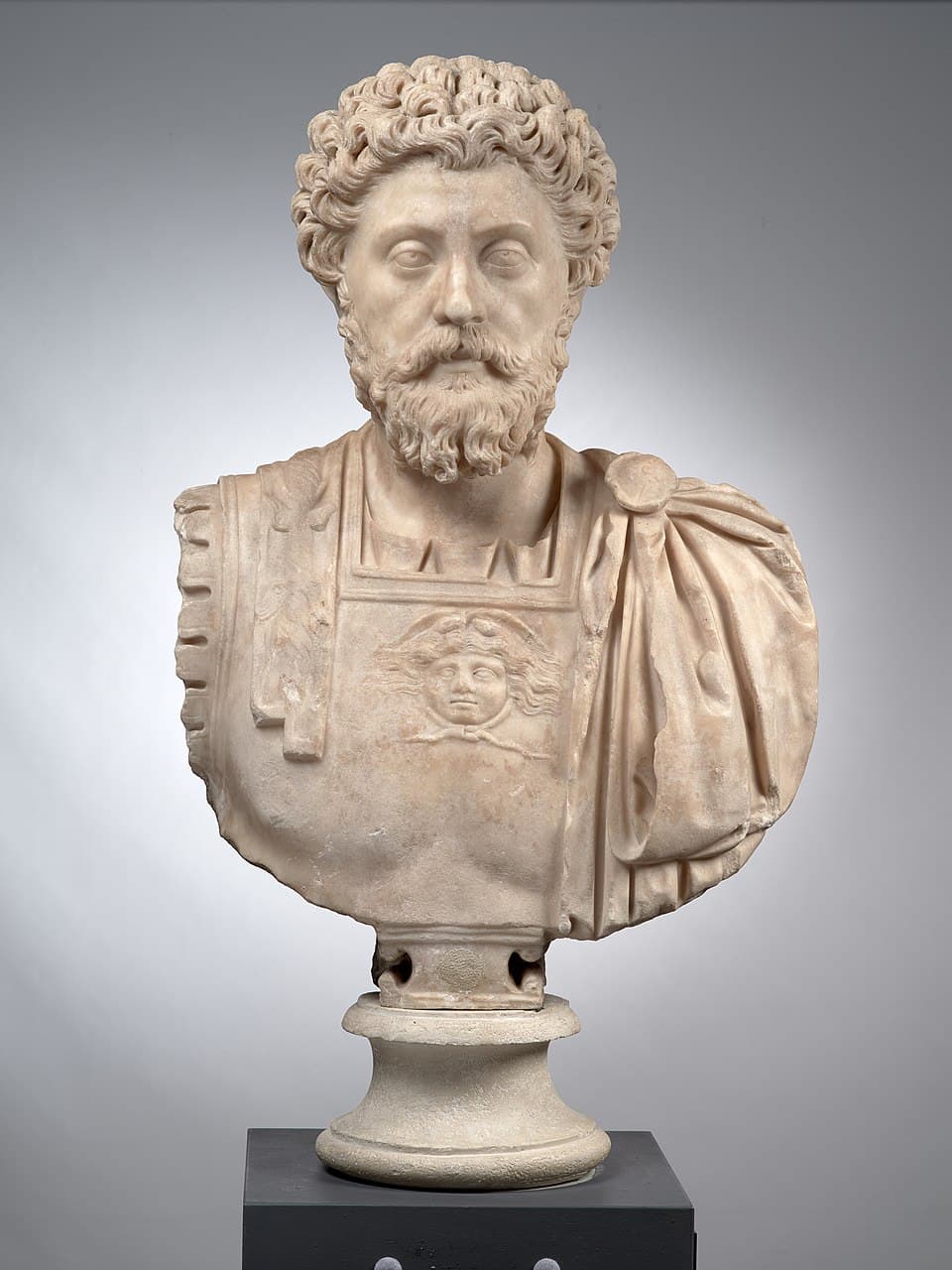
Marcus Aurelius
Meditations...writing or reading thou must needs be taught before thou can do either: much more in matter of life. 'For thou art born a mere slave, to thy senses and brutish affections;' destitute without teaching of all true knowledge and sound reason. XXVIII. 'My heart smiled within me.' 'They will accuse even virtue herself; with heinous and opprobrious words.' XXIX. As they that long after figs in winter when they cannot be had; so are they that long after children, before they be granted them. XXX.
'As often as a father kisseth his child, he should say secretly with himself' (said Epictetus,) 'tomorrow perchance shall he die.' But these words be ominous. No words ominous (said he) that signify anything that is natural: in very truth and deed not more ominous than this, 'to cut down grapes when they are ripe.' Green grapes, ripe grapes, dried grapes, or raisins: so many changes and mutations of one thing, not into that which was not absolutely, but rather so many several changes and mutations, not into that which hath no being at all, but into that which is not yet in being.
XXXI. 'Of the free will there is no thief or robber:' out of Epictetus; Whose is this also: that we should find a certain art and method of assenting; and that we should always observe with great care and heed the inclinations of our minds, that they may always be with their due restraint and reservation, always charitable, and according to the true worth of every present object. And as for earnest longing, that we should altogether avoid it: and to use averseness in those things only, that wh...
3
20 of 20 in THE ELEVENTH BOOK283 of 309 in work
⚖The Art of Assent

Marcus Aurelius
MeditationsDrawing on Epictetus, the author asserts that the true struggle of philosophy is the disciplined management of the will and the mind's inclinations to ensure they remain charitable and rational.
...'tomorrow perchance shall he die.' But these words be ominous. No words ominous (said he) that signify anything that is natural: in very truth and deed not more ominous than this, 'to cut down grapes when they are ripe.' Green grapes, ripe grapes, dried grapes, or raisins: so many changes and mutations of one thing, not into that which was not absolutely, but rather so many several changes and mutations, not into that which hath no being at all, but into that which is not yet in being. XXXI.
'Of the free will there is no thief or robber:' out of Epictetus; Whose is this also: that we should find a certain art and method of assenting; and that we should always observe with great care and heed the inclinations of our minds, that they may always be with their due restraint and reservation, always charitable, and according to the true worth of every present object. And as for earnest longing, that we should altogether avoid it: and to use averseness in those things only, that wholly depend of our own wills. It is not about ordinary petty matters, believe it, that all our strife and contention is, but whether, with the vulgar, we…
XXXII. Socrates said, 'What will you have? the souls of reasonable, or unreasonable creatures? Of reasonable. But what? Of those whose reason is sound and perfect? or of those whose reason is vitiated and corrupted? Of those whose reason is sound and perfect. Why then labour ye not for such? Because we have them already. What then do ye so strive and contend between you?' THE TWELFTH BOOK I. Whatsoever thou doest hereafter aspire unto, thou mayest even now enjoy and possess, if thou doest...
Continue reading →
2
1 of 20 in THE TWELFTH BOOK284 of 309 in work
Now entering THE TWELFTH BOOK
⚖Present Holiness and Righteousness

Marcus Aurelius
MeditationsThe author encourages seeking immediate happiness by forgetting the past, trusting Divine Providence for the future, and acting with holiness and justice in the present.
...whether, with the vulgar, we should be mad, or by the help of philosophy wise and sober, said he. XXXII. Socrates said, 'What will you have? the souls of reasonable, or unreasonable creatures? Of reasonable. But what? Of those whose reason is sound and perfect? or of those whose reason is vitiated and corrupted? Of those whose reason is sound and perfect. Why then labour ye not for such? Because we have them already. What then do ye so strive and contend between you?' THE TWELFTH BOOK I.
Whatsoever thou doest hereafter aspire unto, thou mayest even now enjoy and possess, if thou doest not envy thyself thine own happiness. And that will be, if thou shalt forget all that is past, and for the future, refer thyself wholly to the Divine Providence, and shalt bend and apply all thy present thoughts and intentions to holiness and righteousness. To holiness, in accepting willingly whatsoever is sent by the Divine Providence, as being that which the nature of the universe hath appointed unto thee, which also hath appointed thee for that, whatsoever it be. To righteousness, in speaking the truth freely, and without ambiguity; and in doing all things justly and discreetly.
Now in this good course, let not other men's either wickedness, or opinion, or voice hinder thee: no, nor the sense of this thy pampered mass of flesh: for let that which suffers, look to itself. If therefore whensoever the time of thy departing shall come, thou shalt readily leave all things, and shalt respect thy mind only, and that divine part of thine, and this shall be thine only fear, not that some time or other thou shalt cease to live, but thou shalt never begin to live according to nat...
2
2 of 20 in THE TWELFTH BOOK285 of 309 in work
⚖The Divine Acceptance

Marcus Aurelius
MeditationsThe author encourages a life of holiness and righteousness, where one accepts providence and speaks the truth, fearing only the failure to live according to nature rather than death itself.
.... Why then labour ye not for such? Because we have them already. What then do ye so strive and contend between you?' THE TWELFTH BOOK I. Whatsoever thou doest hereafter aspire unto, thou mayest even now enjoy and possess, if thou doest not envy thyself thine own happiness. And that will be, if thou shalt forget all that is past, and for the future, refer thyself wholly to the Divine Providence, and shalt bend and apply all thy present thoughts and intentions to holiness and righteousness.
To holiness, in accepting willingly whatsoever is sent by the Divine Providence, as being that which the nature of the universe hath appointed unto thee, which also hath appointed thee for that, whatsoever it be. To righteousness, in speaking the truth freely, and without ambiguity; and in doing all things justly and discreetly. Now in this good course, let not other men's either wickedness, or opinion, or voice hinder thee: no, nor the sense of this thy pampered mass of flesh: for let that which suffers, look to itself. If therefore whensoever the time of thy departing shall come, thou shalt readily leave all things, and shalt respect thy…
II. God beholds our minds and understandings, bare and naked from these material vessels, and outsides, and all earthly dross. For with His simple and pure understanding, He pierceth into our inmost and purest parts, which from His, as it were by a water pipe and channel, first flowed and issued. This if thou also shalt use to do, thou shalt rid thyself of that manifold luggage, wherewith thou art round about encumbered. For he that does regard neither his body, nor his clothing, nor his dwell...
Continue reading →
2
3 of 20 in THE TWELFTH BOOK286 of 309 in work
⚖God's Pure Understanding

Marcus Aurelius
MeditationsA vision of God perceiving the naked mind of man, encouraging the individual to strip away external concerns like body and possessions to find true rest.
...spect thy mind only, and that divine part of thine, and this shall be thine only fear, not that some time or other thou shalt cease to live, but thou shalt never begin to live according to nature: then shalt thou be a man indeed, worthy of that world, from which thou hadst thy beginning; then shalt thou cease to be a stranger in thy country, and to wonder at those things that happen daily, as things strange and unexpected, and anxiously to depend of divers things that are not in thy power. II.
God beholds our minds and understandings, bare and naked from these material vessels, and outsides, and all earthly dross. For with His simple and pure understanding, He pierceth into our inmost and purest parts, which from His, as it were by a water pipe and channel, first flowed and issued. This if thou also shalt use to do, thou shalt rid thyself of that manifold luggage, wherewith thou art round about encumbered. For he that does regard neither his body, nor his clothing, nor his dwelling, nor any such external furniture, must needs gain unto himself great rest and ease.
Three things there be in all, which thou doest consist of; thy body, thy life, and thy mind. Of these the two former, are so far forth thine, as that thou art bound to take care for them. But the third alone is that which is properly thine. If then thou shalt separate from thyself, that is from thy mind, whatsoever other men either do or say, or whatsoever thou thyself hast heretofore either done or said; and all troublesome thoughts concerning the future, and whatsoever, (as either belonging t...
2