7 of 10 in THE FIRST BOOK22 of 309 in work
Reduced Without Remiss
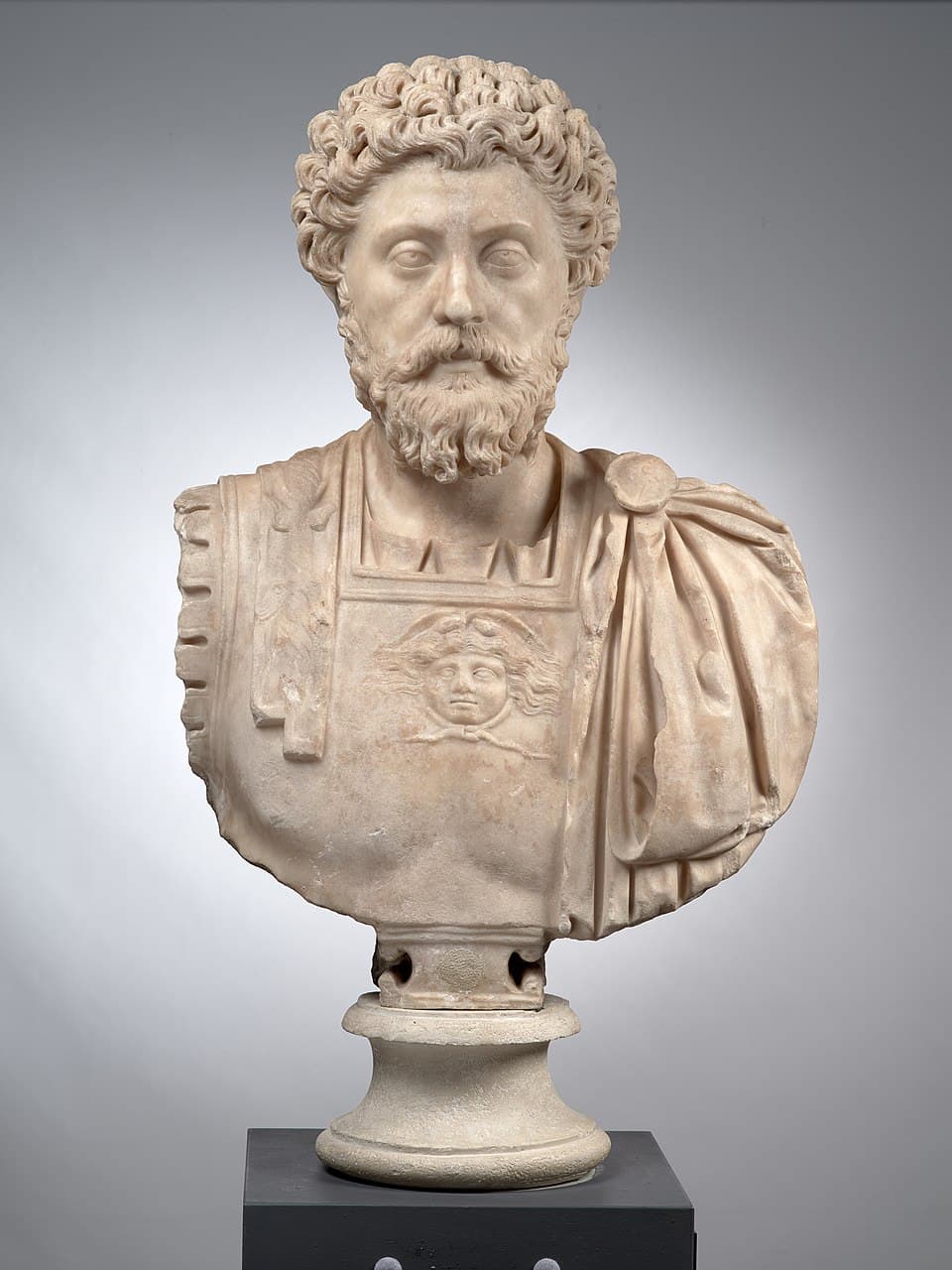
Marcus Aurelius
Meditations

The author recounts the lesson learned from his father that a ruler can live modestly without the trappings of state while still effectively fulfilling his public duties and authority.

...s transgressed against any of them, notwithstanding that my disposition was such, as that such a thing (if occasion had been) might very well have been committed by me, but that It was the mercy of the gods, to prevent such a concurring of matters and occasions, as might make me to incur this blame. That I was not long brought up by the concubine of my father; that I preserved the flower of my youth. That I took not upon me to be a man before my time, but rather put it off longer than I needed.
That I lived under the government of my lord and father, who would take away from me all pride and vainglory, and reduce me to that conceit and opinion that it was not impossible for a prince to live in the court without a troop of guards and followers, extraordinary apparel, such and such torches and statues, and other like particulars of state and magnificence; but that a man may reduce and contract himself almost to the state of a private man, and yet for all that not to become the more base and remiss in those public matters and affairs, wherein power and authority is requisite.
That I have had such a brother, who by his own example might stir me up to think of myself; and by his respect and love, delight and please me. That I have got ingenuous children, and that they were not born distorted, nor with any other natural deformity. That I was no great proficient in the study of rhetoric and poetry, and of other faculties, which perchance I might have dwelt upon, if I had found myself to go on in them with success. That I did by times prefer those, by whom I was brought...
2
8 of 10 in THE FIRST BOOK23 of 309 in work
Self-Blame for Delay
Marcus Aurelius
Meditations

A self-reflective confession where the author blames himself for failing to live according to nature despite the clear instructions and inspirations provided by the gods.

...I was no great proficient in the study of rhetoric and poetry, and of other faculties, which perchance I might have dwelt upon, if I had found myself to go on in them with success. That I did by times prefer those, by whom I was brought up, to such places and dignities, which they seemed unto me most to desire; and that I did not put them off with hope and expectation, that (since that they were yet but young) I would do the same hereafter. That I ever knew Apollonius and Rusticus, and Maximus.
That I have had occasion often and effectually to consider and meditate with myself, concerning that life which is according to nature, what the nature and manner of it is: so that as for the gods and such suggestions, helps and inspirations, as might be expected from them, nothing did hinder, but that I might have begun long before to live according to nature; or that even now that I was not yet partaker and in present possession of that life, that I myself (in that I did not observe those inward motions, and suggestions, yea and almost plain and apparent instructions and admonitions of the gods,) was the only cause of it.
That my body in such a life, hath been able to hold out so long. That I never had to do with Benedicta and Theodotus, yea and afterwards when I fell into some fits of love, I was soon cured. That having been often displeased with Rusticus, I never did him anything for which afterwards I had occasion to repent. That it being so that my mother was to die young, yet she lived with me all her latter years. That as often as I had a purpose to help and succour any that either were poor, or fallen int...
2
9 of 10 in THE FIRST BOOK24 of 309 in work
The Kinsman's Nature
Marcus Aurelius
Meditations

A prescription for dealing with difficult people by recognizing their ignorance of good and evil and remembering that all humans share a divine rational spark, making cooperation more natural than anger.

...that happened to thee in Cajeta, as unto Chryses when he prayed by the seashore. And when I did first apply myself to philosophy, that I did not fall into the hands of some sophists, or spent my time either in reading the manifold volumes of ordinary philosophers, nor in practising myself in the solution of arguments and fallacies, nor dwelt upon the studies of the meteors, and other natural curiosities. All these things without the assistance of the gods, and fortune, could not have been. XV.
In the country of the Quadi at Granua, these. Betimes in the morning say to thyself, This day I shalt have to do with an idle curious man, with an unthankful man, a railer, a crafty, false, or an envious man; an unsociable uncharitable man. All these ill qualities have happened unto them, through ignorance of that which is truly good and truly bad. But I that understand the nature of that which is good, that it only is to be desired, and of that which is bad, that it only is truly odious and shameful: who know moreover, that this transgressor, whosoever he be, is my kinsman, not by the same blood and seed, but by participation of the same…
XVI. Whatsoever I am, is either flesh, or life, or that which we commonly call the mistress and overruling part of man; reason. Away with thy books, suffer not thy mind any more to be distracted, and carried to and fro; for it will not be; but as even now ready to die, think little of thy flesh: blood, bones, and a skin; a pretty piece of knit and twisted work, consisting of nerves, veins and arteries; think no more of it, than so. And as for thy life, consider what it is; a wind; not one cons...
Continue reading →
2
10 of 10 in THE FIRST BOOK25 of 309 in work
The Threefold Self
Marcus Aurelius
Meditations

A prescription to prioritize the ruling faculty of reason over the distractions of the flesh and the fleeting nature of life, urging the soul to remain independent of lusts and fears.

...and of the same divine particle; How can I either be hurt by any of those, since it is not in their power to make me incur anything that is truly reproachful? or angry, and ill affected towards him, who by nature is so near unto me? for we are all born to be fellow-workers, as the feet, the hands, and the eyelids; as the rows of the upper and under teeth: for such therefore to be in opposition, is against nature; and what is it to chafe at, and to be averse from, but to be in opposition? XVI.
Whatsoever I am, is either flesh, or life, or that which we commonly call the mistress and overruling part of man; reason. Away with thy books, suffer not thy mind any more to be distracted, and carried to and fro; for it will not be; but as even now ready to die, think little of thy flesh: blood, bones, and a skin; a pretty piece of knit and twisted work, consisting of nerves, veins and arteries; think no more of it, than so. And as for thy life, consider what it is; a wind; not one constant wind neither, but every moment of an hour let out, and sucked in again. The third, is thy ruling part; and here consider; Thou art an old man; suffer…
XVII. Whatsoever proceeds from the gods immediately, that any man will grant totally depends from their divine providence. As for those things that are commonly said to happen by fortune, even those must be conceived to have dependence from nature, or from that first and general connection, and concatenation of all those things, which more apparently by the divine providence are administered and brought to pass. All things flow from thence: and whatsoever it is that is, is both necessary, and...
Continue reading →
2
1 of 12 in THE SECOND BOOK26 of 309 in work
Now entering THE SECOND BOOK
The Last Action
Marcus Aurelius
Meditations

A prescription to perform every task with gravity, justice, and the focus of one's last action, free from the distractions of self-love and hypocrisy. The author emphasizes that living a divine life requires observing only a few essential principles of reason and acceptance.

...it were, having been set unto thee by the gods, thou hast neglected it. It is high time for thee to understand the true nature both of the world, whereof thou art a part; and of that Lord and Governor of the world, from whom, as a channel from the spring, thou thyself didst flow: and that there is but a certain limit of time appointed unto thee, which if thou shalt not make use of to calm and allay the many distempers of thy soul, it will pass away and thou with it, and never after return. II.
Let it be thy earnest and incessant care as a Roman and a man to perform whatsoever it is that thou art about, with true and unfeigned gravity, natural affection, freedom and justice: and as for all other cares, and imaginations, how thou mayest ease thy mind of them. Which thou shalt do; if thou shalt go about every action as thy last action, free from all vanity, all passionate and wilful aberration from reason, and from all hypocrisy, and self-love, and dislike of those things, which by the fates or appointment of God have happened unto thee. Thou seest that those things, which for a man to hold on in a prosperous course, and to live a…
III. Do, soul, do; abuse and contemn thyself; yet a while and the time for thee to respect thyself, will be at an end. Every man's happiness depends from himself, but behold thy life is almost at an end, whiles affording thyself no respect, thou dost make thy happiness to consist in the souls, and conceits of other men. IV. Why should any of these things that happen externally, so much distract thee? Give thyself leisure to learn some good thing, and cease roving and wandering to and fro. Tho...
Continue reading →
2