14 of 42 in Book XI310 of 415 in work
Time's Impossible Measure
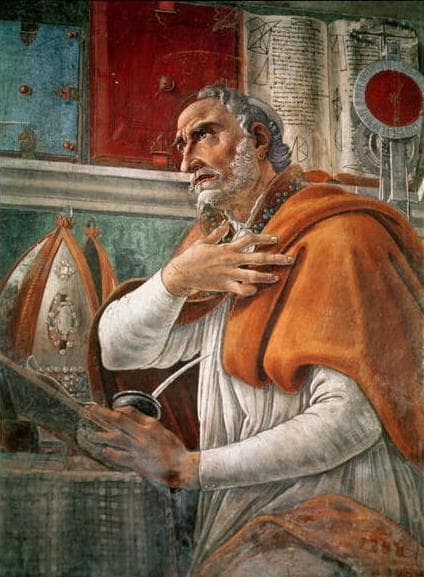
Augustine of Hippo
Confessions

Augustine argues that it is illogical to ask what God did before creation, as time itself is a created thing and there was no 'then' before time began.

...s to raise a laugh at him who asketh deep things and gain praise for one who answereth false things. But I say that Thou, our God, art the Creator of every creature: and if by the name "heaven and earth," every creature be understood; I boldly say, "that before God made heaven and earth, He did not make any thing." For if He made, what did He make but a creature? And would I knew whatsoever I desire to know to my profit, as I know, that no creature was made, before there was made any creature.
But if any excursive brain rove over the images of forepassed times, and wonder that Thou the God Almighty and All-creating and All-supporting, Maker of heaven and earth, didst for innumerable ages forbear from so great a work, before Thou wouldest make it; let him awake and consider, that he wonders at false conceits. For whence could innumerable ages pass by, which Thou madest not, Thou the Author and Creator of all ages? or what times should there be, which were not made by Thee? or how should they pass by, if they never were? Seeing then Thou art the Creator of all times, if any time was before Thou madest heaven and earth, why say they…
Nor dost Thou by time, precede time: else shouldest Thou not precede all times. But Thou precedest all things past, by the sublimity of an ever-present eternity; and surpassest all future because they are future, and when they come, they shall be past; but Thou art the Same, and Thy years fail not. Thy years neither come nor go; whereas ours both come and go, that they all may come. Thy years stand together, because they do stand; nor are departing thrust out by coming years, for they pass not...
Continue reading →
4
15 of 42 in Book XI311 of 415 in work
Eternity's Ever-Present Now
Augustine of Hippo
Confessions

The author describes God's relationship to time, asserting that the divine 'Today' is an unchanging eternity that precedes and surpasses all past and future.

...f all ages? or what times should there be, which were not made by Thee? or how should they pass by, if they never were? Seeing then Thou art the Creator of all times, if any time was before Thou madest heaven and earth, why say they that Thou didst forego working? For that very time didst Thou make, nor could times pass by, before Thou madest those times. But if before heaven and earth there was no time, why is it demanded, what Thou then didst? For there was no "then," when there was no time.
Nor dost Thou by time, precede time: else shouldest Thou not precede all times. But Thou precedest all things past, by the sublimity of an ever-present eternity; and surpassest all future because they are future, and when they come, they shall be past; but Thou art the Same, and Thy years fail not. Thy years neither come nor go; whereas ours both come and go, that they all may come. Thy years stand together, because they do stand; nor are departing thrust out by coming years, for they pass not away; but ours shall all be, when they shall no more be. Thy years are one day; and Thy day is not daily, but To-day, seeing Thy To-day gives not place…
therefore didst Thou beget The Coeternal, to whom Thou saidst, This day have I begotten Thee. Thou hast made all things; and before all times Thou art: neither in any time was time not. At no time then hadst Thou not made any thing, because time itself Thou madest. And no times are coeternal with Thee, because Thou abidest; but if they abode, they should not be times. For what is time? Who can readily and briefly explain this? Who can even in thought comprehend it, so as to utter a word about...
Continue reading →
1
16 of 42 in Book XI312 of 415 in work
Time's Elusive Being
Augustine of Hippo
Confessions

A philosophical inquiry into the nature of time, arguing that the past and future do not exist and that the present only exists by constantly passing away.

...not. At no time then hadst Thou not made any thing, because time itself Thou madest. And no times are coeternal with Thee, because Thou abidest; but if they abode, they should not be times. For what is time? Who can readily and briefly explain this? Who can even in thought comprehend it, so as to utter a word about it? But what in discourse do we mention more familiarly and knowingly, than time? And, we understand, when we speak of it; we understand also, when we hear it spoken of by another.
What then is time? If no one asks me, I know: if I wish to explain it to one that asketh, I know not: yet I say boldly that I know, that if nothing passed away, time past were not; and if nothing were coming, a time to come were not; and if nothing were, time present were not. Those two times then, past and to come, how are they, seeing the past now is not, and that to come is not yet? But the present, should it always be present, and never pass into time past, verily it should not be time, but eternity. If time present (if it is to be time) only cometh into existence, because it passeth into time past, how can we say that either this is,…
And yet we say, "a long time" and "a short time"; still, only of time past or to come. A long time past (for example) we call an hundred years since; and a long time to come, an hundred years hence. But a short time past, we call (suppose) often days since; and a short time to come, often days hence. But in what sense is that long or short, which is not? For the past, is not now; and the future, is not yet. Let us not then say, "it is long"; but of the past, "it hath been long"; and of the fut...
Continue reading →
5
17 of 42 in Book XI313 of 415 in work
Time's Fleeting Particles
Augustine of Hippo
Confessions

A logical deconstruction of the concept of time, arguing that even a single day or hour is not fully 'present' but composed of passing particles.

...s first, the rest are to come; if the second, the first is already past, and the rest are not yet. Therefore, neither is the year now current present; and if not present as a whole, then is not the year present. For twelve months are a year; of which whatever by the current month is present; the rest past, or to come. Although neither is that current month present; but one day only; the rest being to come, if it be the first; past, if the last; if any of the middle, then amid past and to come.
See how the present time, which alone we found could be called long, is abridged to the length scarce of one day. But let us examine that also; because neither is one day present as a whole. For it is made up of four and twenty hours of night and day: of which, the first hath the rest to come; the last hath them past; and any of the middle hath those before it past, those behind it to come. Yea, that one hour passeth away in flying particles.
Whatsoever of it hath flown away, is past; whatsoever remaineth, is to come. If an instant of time be conceived, which cannot be divided into the smallest particles of moments, that alone is it, which may be called present. Which yet flies with such speed from future to past, as not to be lengthened out with the least stay. For if it be, it is divided into past and future. The present hath no space. Where then is the time, which we may call long? Is it to come? Of it we do not say, "it is long"...
5
18 of 42 in Book XI314 of 415 in work
The Fleeting Present
Augustine of Hippo
Confessions

The author provides a logical deconstruction of time, concluding that the 'present' has no duration because it is merely a point of transition between the past and the future.

..., which alone we found could be called long, is abridged to the length scarce of one day. But let us examine that also; because neither is one day present as a whole. For it is made up of four and twenty hours of night and day: of which, the first hath the rest to come; the last hath them past; and any of the middle hath those before it past, those behind it to come. Yea, that one hour passeth away in flying particles. Whatsoever of it hath flown away, is past; whatsoever remaineth, is to come.
If an instant of time be conceived, which cannot be divided into the smallest particles of moments, that alone is it, which may be called present. Which yet flies with such speed from future to past, as not to be lengthened out with the least stay. For if it be, it is divided into past and future. The present hath no space. Where then is the time, which we may call long? Is it to come? Of it we do not say, "it is long"; because it is not yet, so as to be long; but we say, "it will be long."
When therefore will it be? For if even then, when it is yet to come, it shall not be long (because what can be long, as yet is not), and so it shall then be long, when from future which as yet is not, it shall begin now to be, and have become present, that so there should exist what may be long; then does time present cry out in the words above, that it cannot be long. And yet, Lord, we perceive intervals of times, and compare them, and say, some are shorter, and others longer. We measure als...
5