Nationalism's Artificial Unity
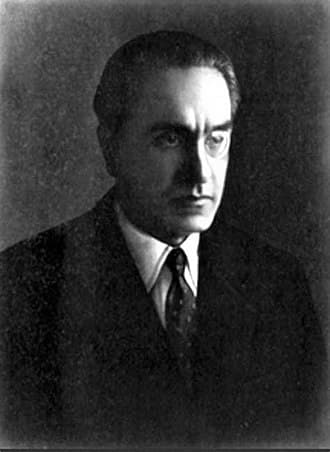
Julius Evola
Revolt Against the Modern World

The author argues that modern nationalism is an artificial construct used to galvanize the masses after the destruction of authentic, qualitative traditional hierarchies.

...n various nationalities, and while the types of the warrior, noble, merchant, and artisan conformed to the characteristics of this or of that nation, these articulations represented at the same time wider, international units. Hence, the possibility for the members of the same caste who came from different nations to understand each other better than the members of different castes within the same nation. Modern nationalism represents, with regard to this, a movement in the opposite direction.
Modern nationalism is not based on a natural unity, but on an artificial and centralizing one. The need for this type of unity was increasingly felt at the same time as the natural and healthy sense of nationality was lost and as individuals approached the state of pure quantity, of being merely the masses, after every authentic tradition and qualitative articulation was destroyed. Nationalism acts upon these masses through myths and suggestions that are likely to galvanize them, awaken elementary instincts in them, flatter them with the perspectives and fancies of supremacy, exclusivism, and power.
Regardless of its myths, the substance of modern nationalism is not an ethnos but a demos, and its prototype always remains the plebeian one produced by the French Revolution. This is why nationalism has a double face. It accentuates and elevates to the state of absolute value a particularistic principle; therefore, the possibilities of mutual understanding and cooperation between nations are reduced to a bare minimum, without even considering the forms of leveling guaranteed by modern civiliz...
5

Julius Evola

Revolt Against the Modern World

The Mechanical Unity

This excerpt extends the parent text by explicitly describing how modern unity replaces the living traditions and sacred law of ancient societies with an exterior, mechanical unity that collects individuals without organic relation, leading to collective forms based on material existence. It directly echoes Evola's claim that modern nationalism is an artificial and centralizing construct.

...elf the mass of the other casteless and, in the end, the brute power of the collectivity. Thus, the process of disintegration continues and what ensues is a regression from the personal to the anonymous, the herd, and the pure, chaotic, and inorganic realm of quantity. Just as the scientific enterprise has sought, from the outside, to recreate the multiplicity of particular phenomena (while having lost that inner and true unity that exists only in the context of metaphysical knowledge), so have
Moderns tried to replace the unity that in ancient societies consisted of living traditions and sacred law with an exterior, anodyne, and mechanical unity in which individuals are brought together without an organic relation to each other, and without seeing any superior principle or figure, the obeying of which would mean consent, and submission to which would represent an acknowledgment and elevation. In this way new collective forms arise that are essentially based on the conditions of material existence and on the various factors of a merely social life,. which in turn is dominated by the...
These collective forms soon overthrow individualism; and whether they present themselves in the guise of democracies or national states, republics or dictatorships, they begin to be carried along by independent subhuman forces. The most decisive episode in the unleashing of the European plebs, the French Revolution, already displays the typical traits of this overthrow. When studying the French Revolution it is possible to see how these forces soon escape from the control of those who have ev...

Friedrich Nietzsche

Beyond Good and Evil

The Common Experience

Nietzsche defines a nation as originating from shared living conditions and experiences, implying a natural, experiential basis for national unity. This challenges Evola's premise that modern nationalism is not grounded in any natural unity, suggesting instead that nations arise from genuine commonalities.

...THAT HE IS ON A HEIGHT. 266. "One can only truly esteem him who does not LOOK OUT FOR himself."--Goethe to Rath Schlosser. 267. The Chinese have a proverb which mothers even teach their children: "SIAO-SIN" ("MAKE THY HEART SMALL"). This is the essentially fundamental tendency in latter-day civilizations. I have no doubt that an ancient Greek, also, would first of all remark the self-dwarfing in us Europeans of today--in this respect alone we should immediately be "distasteful" to him. 268.
What, after all, is ignobleness?--Words are vocal symbols for ideas; ideas, however, are more or less definite mental symbols for frequently returning and concurring sensations, for groups of sensations. It is not sufficient to use the same words in order to understand one another: we must also employ the same words for the same kind of internal experiences, we must in the end have experiences IN COMMON. On this account the people of one nation understand one another better than those belonging to different nations, even when they use the same language; or rather, when people have lived long t...
In all souls a like number of frequently recurring experiences have gained the upper hand over those occurring more rarely: about these matters people understand one another rapidly and always more rapidly--the history of language is the history of a process of abbreviation; on the basis of this quick comprehension people always unite closer and closer. The greater the danger, the greater is the need of agreeing quickly and readily about what is necessary; not to misunderstand one another in da...

Julius Evola

Revolt Against the Modern World

State's Spiritual Descent

This text explains the mechanism behind the parent's claims: the idea that the state derives from the demos represents a regression that logically leads to the triumph of the collectivistic world of the masses. It details the downward spiral from spiritual authority to mass democracy, addressing why the loss of tradition and rise of artificial unity occur.

...am von Eschenbach's view the Grail was a mysterious "divine stone" that also had the power of revealing who was worthy of the royal dignity. Hence, the obvious meaning of the trial consisting in being able to draw a sword from a stone (Theseus in Hellas, Sohrab in Persia, King Arthur in ancient Britannia, and so on). The doctrine of the two natures—which is the foundation of the traditional view of life—is also reflected in the relationship that exists between the state and the people (demos).
The idea that the state derives its origin from the demos and that the principle of its legitimacy and its foundation rests upon it is an ideological perversion typical of the modern world and essentially represents a regression; with this view we regress to what was typical of naturalistic social forms lacking an authentic spiritual chrism. Once this direction was taken, an inevitable downward spiraling occurred, which ended with the triumph of the collectivistic world of the masses and with the advent of radical democracy. This regression proceeds from a logical necessity and from the physic...
Between these two poles there is a deep tension, which in the traditional world was resolved in the sense of a transfiguration and of the establishment of an order from above. Thus, the very notion of "natural rights" is a mere fiction, and the antitraditional and subversive use of that is well documented. There is no such thing as a nature that is "good" in itself and in which the inalienable rights of an individual, which are to be equally enjoyed by every human being, are preformed and roote...

Arthur Schopenhauer

The Wisdom of Life

Individuality Over Nationality

Schopenhauer reframes the discussion away from analyzing natural versus artificial national unity, arguing instead that individuality is far more important than nationality. He shifts the value axis to personal qualities and moral consideration of the individual, suggesting the real issue is not the nature of nationalism but the primacy of the person over the collective.

...ichtenberg asks, Why is it that a man who is not a German does not care about pretending that he is one; and that if he makes any pretence at all, it is to be a Frenchman or an Englishman?[1] [Footnote 1: Translator's Note.--It should be remembered that these remarks were written in the earlier part of the present century, and that a German philosopher now-a-days, even though he were as apt to say bitter things as Schopenhauer, could hardly write in a similar strain.] However that may be,
Individuality is a far more important thing than nationality, and in any given man deserves a thousand-fold more consideration. And since you cannot speak of national character without referring to large masses of people, it is impossible to be loud in your praises and at the same time honest. National character is only another name for the particular form which the littleness, perversity and baseness of mankind take in every country. If we become disgusted with one, we praise another, until we get disgusted with this too. Every nation mocks at other nations, and all are right.
The contents of this chapter, which treats, as I have said, of what we represent in the world, or what we are in the eyes of others, may be further distributed under three heads: honor rank and fame. Section 3.--Rank. Let us take rank first, as it may be dismissed in a few words, although it plays an important part in the eyes of the masses and of the philistines, and is a most useful wheel in the machinery of the State. It has a purely conventional value. Strictly speaking, it is a sha...

Friedrich Nietzsche

Beyond Good and Evil

Spirit's Assimilation Power

Nietzsche describes how the spirit appropriates and falsifies external elements to create a feeling of growth, highlighting the subjective and constructive nature of our concepts. This meta-commentary questions our ability to objectively settle what a nation or nationalism is, as our understanding is shaped by assimilative processes that simplify and reinterpret reality.

...mental will of the spirit" may not be understood without further details; I may be allowed a word of explanation.--That imperious something which is popularly called "the spirit," wishes to be master internally and externally, and to feel itself master; it has the will of a multiplicity for a simplicity, a binding, taming, imperious, and essentially ruling will. Its requirements and capacities here, are the same as those assigned by physiologists to everything that lives, grows, and multiplies.
The power of the spirit to appropriate foreign elements reveals itself in a strong tendency to assimilate the new to the old, to simplify the manifold, to overlook or repudiate the absolutely contradictory; just as it arbitrarily re-underlines, makes prominent, and falsifies for itself certain traits and lines in the foreign elements, in every portion of the "outside world." Its object thereby is the incorporation of new "experiences," the assortment of new things in the old arrangements--in short, growth; or more properly, the FEELING of growth, the feeling of increased power--is its object.
This same will has at its service an apparently opposed impulse of the spirit, a suddenly adopted preference of ignorance, of arbitrary shutting out, a closing of windows, an inner denial of this or that, a prohibition to approach, a sort of defensive attitude against much that is knowable, a contentment with obscurity, with the shutting-in horizon, an acceptance and approval of ignorance: as that which is all necessary according to the degree of its appropriating power, its "digestive power,"...