The Philistine's Affliction
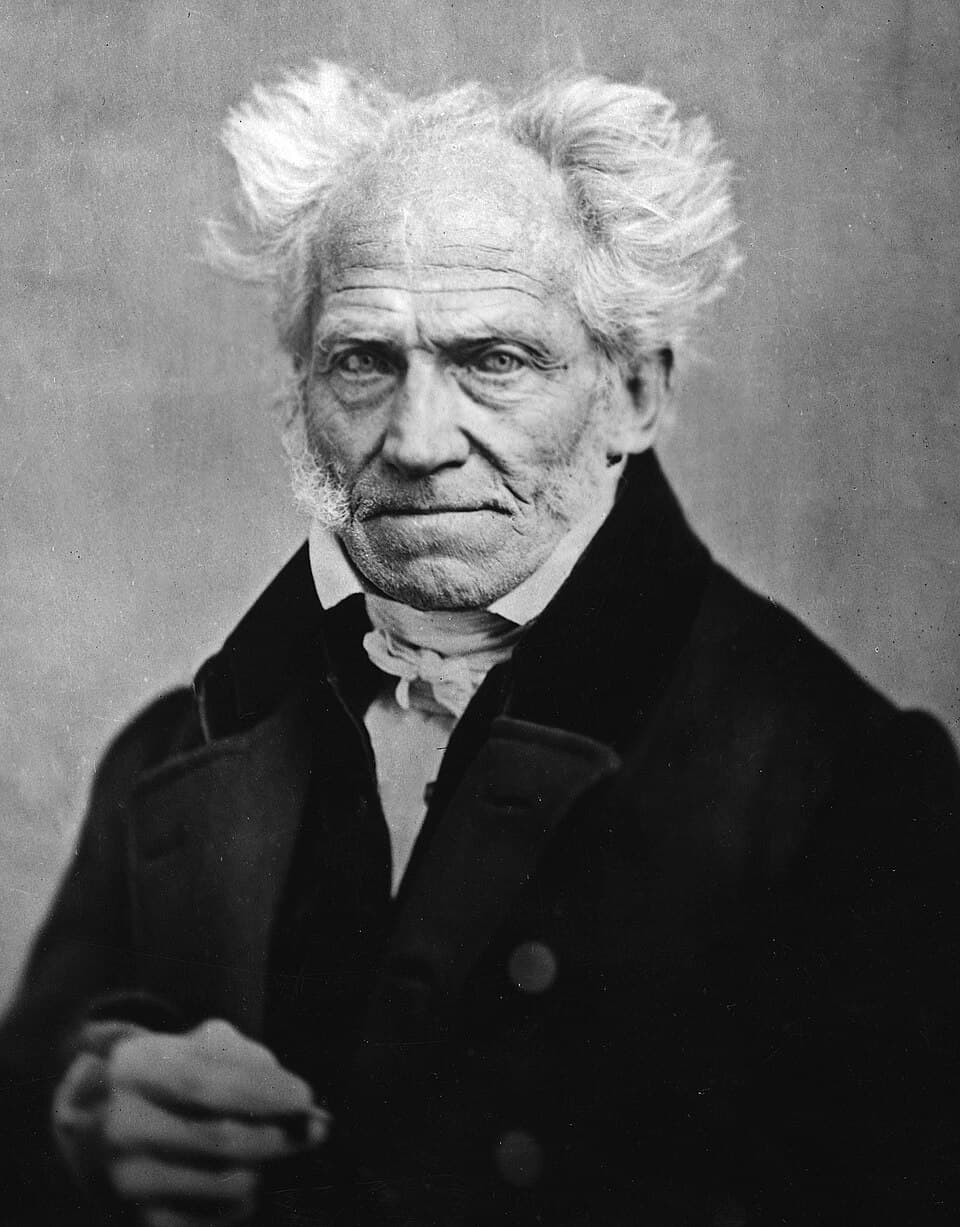
Arthur Schopenhauer
The Wisdom of Life

The author contrasts the 'philistine' need for volatile real-world stimulation with the calm, limitless satisfaction found in the world of ideas.

...concealed even from himself. Nevertheless, it sometimes grows into a secret feeling of rancor. But for all that, it will never occur to him to make his own ideas of worth or value conform to the standard of such qualities; he will continue to give the preference to rank and riches, power and influence, which in his eyes seem to be the only genuine advantages in the world; and his wish will be to excel in them himself. All this is the consequence of his being a man without intellectual needs.
The great affliction of all philistines is that they have no interest in ideas, and that, to escape being bored, they are in constant need of realities. But realities are either unsatisfactory or dangerous; when they lose their interest, they become fatiguing. But the ideal world is illimitable and calm, something afar From the sphere of our sorrow.
NOTE.--In these remarks on the personal qualities which go to make happiness, I have been mainly concerned with the physical and intellectual nature of man. For an account of the direct and immediate influence of morality upon happiness, let me refer to my prize essay on The Foundation of Morals (Sec. 22.) CHAPTER III. PROPERTY, OR WHAT A MAN HAS. Epicurus divides the needs of mankind into three classes, and the division made by this great professor of happiness is a true and a fin...
6

Arthur Schopenhauer

The Wisdom of Life

The Mind's Protection

This excerpt extends the parent's thesis by detailing how the life of the mind shields us from boredom and its harmful effects, reinforcing the idea that the ideal world provides a serene refuge from suffering.

...be a real superfluity of power, set free from the service of the will and devoted to that of the intellect; for, as Seneca says, otium sine litteris mors est et vivi hominis sepultura--illiterate leisure is a form of death, a living tomb. Varying with the amount of the superfluity, there will be countless developments in this second life, the life of the mind; it may be the mere collection and labelling of insects, birds, minerals, coins, or the highest achievements of poetry and philosophy.
The life of the mind is not only a protection against boredom; it also wards off the pernicious effects of boredom; it keeps us from bad company, from the many dangers, misfortunes, losses and extravagances which the man who places his happiness entirely in the objective world is sure to encounter, My philosophy, for instance, has never brought me in a six-pence;
but it has spared me many an expense. The ordinary man places his life's happiness in things external to him, in property, rank, wife and children, friends, society, and the like, so that when he loses them or finds them disappointing, the foundation of his happiness is destroyed. In other words, his centre of gravity is not in himself; it is constantly changing its place, with every wish and whim. If he is a man of means, one day it will be his house in the country, another buying horses, or...

Friedrich Nietzsche

Beyond Good and Evil

Nihilism's Secret Faith

This excerpt challenges the parent's elevation of the ideal world by suggesting that a turn to transcendent ideas like God or the soul may stem from weariness and nihilism, rather than representing a superior path.

...ot certainly boast of the sharpest ears. In rare and isolated cases, it may really have happened that such a Will to Truth--a certain extravagant and adventurous pluck, a metaphysician's ambition of the forlorn hope--has participated therein: that which in the end always prefers a handful of "certainty" to a whole cartload of beautiful possibilities; there may even be puritanical fanatics of conscience, who prefer to put their last trust in a sure nothing, rather than in an uncertain something.
But that is Nihilism, and the sign of a despairing, mortally wearied soul, notwithstanding the courageous bearing such a virtue may display. It seems, however, to be otherwise with stronger and livelier thinkers who are still eager for life. In that they side AGAINST appearance, and speak superciliously of "perspective," in that they rank the credibility of their own bodies about as low as the credibility of the ocular evidence that "the earth stands still," and thus, apparently, allowing with complacency their securest possession to escape (for what does one at present believe in more firmly...
There is DISTRUST of these modern ideas in this mode of looking at things, a disbelief in all that has been constructed yesterday and today; there is perhaps some slight admixture of satiety and scorn, which can no longer endure the BRIC-A-BRAC of ideas of the most varied origin, such as so-called Positivism at present throws on the market; a disgust of the more refined taste at the village-fair motleyness and patchiness of all these reality-philosophasters, in whom there is nothing either new...

Blaise Pascal

Pensees

Rest Through Struggle

This excerpt provides a psychological explanation for the behavior described in the parent text: people seek external amusement due to secret instincts arising from a sense of unhappiness, aiming at rest through excitement.

...y do not know themselves.[70] They do not know that it is the chase, and not the quarry, which they seek. Dancing: we must consider rightly where to place our feet.--A gentleman sincerely believes that hunting is great and royal sport; but a beater is not of this opinion. They imagine that if they obtained such a post, they would then rest with pleasure, and are insensible of the insatiable nature of their desire. They think they are truly seeking quiet, and they are only seeking excitement.
They have a secret instinct which impels them to seek amusement and occupation abroad, and which arises from the sense of their constant unhappiness. They have another secret instinct, a remnant of the greatness of our original nature, which teaches them that happiness in reality consists only in rest, and not in stir. And of these two contrary instincts they form within themselves a confused idea, which hides itself from their view in the depths of their soul, inciting them to aim at rest through excitement, and always to fancy that the satisfaction which they have not will come to them, if,...
For we think either of the misfortunes we have or of those which threaten us. And even if we should see ourselves sufficiently sheltered on all sides, weariness of its own accord would not fail to arise from the depths of the heart wherein it has its natural roots, and to fill the mind with its poison. Thus so wretched is man that he would weary even without any cause for weariness from the peculiar state of his disposition; and so frivolous is he, that, though full of a thousand reasons for w...

John Stewart Mill

Utilitarianism

Affection's Lifelong Interest

This excerpt reframes the discussion from a dichotomy of ideas versus realities to the importance of personal affections and mental cultivation, suggesting these are the true sources of a satisfying life.

...e in whom indolence amounts to a vice, that do not desire excitement after an interval of repose; it is only those in whom the need of excitement is a disease, that feel the tranquillity which follows excitement dull and insipid, instead of pleasurable in direct proportion to the excitement which preceded it. When people who are tolerably fortunate in their outward lot do not find in life sufficient enjoyment to make it valuable to them, the cause generally is, caring for nobody but themselves.
To those who have neither public nor private affections, the excitements of life are much curtailed, and in any case dwindle in value as the time approaches when all selfish interests must be terminated by death: while those who leave after them objects of personal affection, and especially those who have also cultivated a fellow-feeling with the collective interests of mankind, retain as lively an interest in life on the eve of death as in the vigour of youth and health. Next to selfishness, the principal cause which makes life unsatisfactory, is want of mental cultivation. A cultivated mind-...
It is possible, indeed, to become indifferent to all this, and that too without having exhausted a thousandth part of it; but only when one has had from the beginning no moral or human interest in these things, and has sought in them only the gratification of curiosity. Now there is absolutely no reason in the nature of things why an amount of mental culture sufficient to give an intelligent interest in these objects of contemplation, should not be the inheritance of every one born in a civili...

David Hume

An Enquiry Concerning Human Understanding

Scepticism's Mortifying Passion

This excerpt questions our ability to settle philosophical claims by advocating for Academic skepticism, which emphasizes doubt, suspense of judgment, and confinement to common life, thus casting doubt on the certainty of any claims about ideas or realities.

...t of Epictetus, and other Stoics, only a more refined system of selfishness, and reason ourselves out of all virtue as well as social enjoyment. While we study with attention the vanity of human life, and turn all our thoughts towards the empty and transitory nature of riches and honours, we are, perhaps, all the while flattering our natural indolence, which, hating the bustle of the world, and drudgery of business, seeks a pretence of reason to give itself a full and uncontrolled indulgence.
There is, however, one species of philosophy which seems little liable to this inconvenience, and that because it strikes in with no disorderly passion of the human mind, nor can mingle itself with any natural affection or propensity; and that is the Academic or Sceptical philosophy. The academics always talk of doubt and suspense of judgement, of danger in hasty determinations, of confining to very narrow bounds the enquiries of the understanding, and of renouncing all speculations which lie not within the limits of common life and practice. Nothing, therefore, can be more contrary than such...
It is surprising, therefore, that this philosophy, which, in almost every instance, must be harmless and innocent, should be the subject of so much groundless reproach and obloquy. But, perhaps, the very circumstance which renders it so innocent is what chiefly exposes it to the public hatred and resentment. By flattering no irregular passion, it gains few partizans: By opposing so many vices and follies, it raises to itself abundance of enemies, who stigmatize it as libertine profane, and irre...

Friedrich Nietzsche

Beyond Good and Evil

Master of Emotions

This excerpt offers practical guidance on how to live with tranquility and mastery over one's emotions and virtues, suggesting a way to navigate life beyond the dichotomy of ideas and realities.

...tunity and provocation to constant MISUNDERSTANDING. To be able to allow oneself this veritable luxury of taste and morality, one must not live among intellectual imbeciles, but rather among men whose misunderstandings and mistakes amuse by their refinement--or one will have to pay dearly for it!--"He praises me, THEREFORE he acknowledges me to be right"--this asinine method of inference spoils half of the life of us recluses, for it brings the asses into our neighbourhood and friendship. 284.
To live in a vast and proud tranquility; always beyond... To have, or not to have, one's emotions, one's For and Against, according to choice; to lower oneself to them for hours; to SEAT oneself on them as upon horses, and often as upon asses:--for one must know how to make use of their stupidity as well as of their fire. To conserve one's three hundred foregrounds; also one's black spectacles: for there are circumstances when nobody must look into our eyes, still less into our "motives." And to choose for company that roguish and cheerful vice, politeness. And to remain master of one's four v...
285. The greatest events and thoughts--the greatest thoughts, however, are the greatest events--are longest in being comprehended: the generations which are contemporary with them do not EXPERIENCE such events--they live past them. Something happens there as in the realm of stars. The light of the furthest stars is longest in reaching man; and before it has arrived man DENIES--that there are stars there. "How many centuries does a mind require to be understood?"--that is also a standard, one a...