Rules Without Exceptions
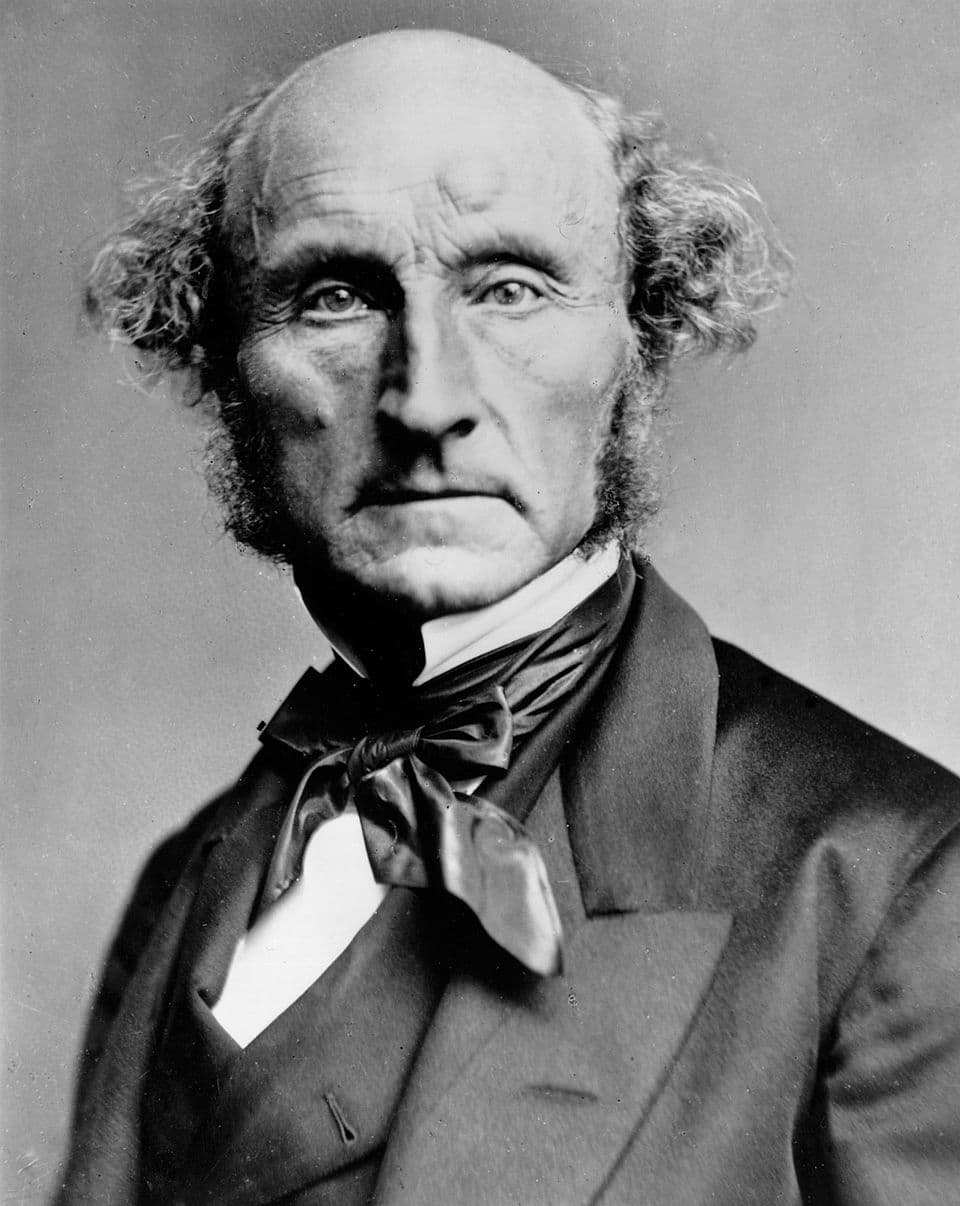
John Stewart Mill
Utilitarianism

The author observes that no moral system can be perfectly rigid, as the complexity of human affairs necessitates exceptions and the resolution of conflicting duties.

...o make his own particular case an exception to moral rules, and, when under temptation, will see an utility in the breach of a rule, greater than he will see in its observance. But is utility the only creed which is able to furnish us with excuses for evil doing, and means of cheating our own conscience? They are afforded in abundance by all doctrines which recognise as a fact in morals the existence of conflicting considerations; which all doctrines do, that have been believed by sane persons.
It is not the fault of any creed, but of the complicated nature of human affairs, that rules of conduct cannot be so framed as to require no exceptions, and that hardly any kind of action can safely be laid down as either always obligatory or always condemnable. There is no ethical creed which does not temper the rigidity of its laws, by giving a certain latitude, under the moral responsibility of the agent, for accommodation to peculiarities of circumstances; and under every creed, at the opening thus made, self-deception and dishonest casuistry get in. There exists no moral system under which there do not arise unequivocal cases of conflicting obligation.
These are the real difficulties, the knotty points both in the theory of ethics, and in the conscientious guidance of personal conduct. They are overcome practically with greater or with less success according to the intellect and virtue of the individual; but it can hardly be pretended that any one will be the less qualified for dealing with them, from possessing an ultimate standard to which conflicting rights and duties can be referred. If utility is the ultimate source of moral obligations,...
6

John Stewart Mill

Utilitarianism

Conflicting Obligations

Directly extends the parent's claim that conflicting obligations arise in every moral system by arguing that an ultimate standard (utility) is needed to resolve such conflicts.

...re of human affairs, that rules of conduct cannot be so framed as to require no exceptions, and that hardly any kind of action can safely be laid down as either always obligatory or always condemnable. There is no ethical creed which does not temper the rigidity of its laws, by giving a certain latitude, under the moral responsibility of the agent, for accommodation to peculiarities of circumstances; and under every creed, at the opening thus made, self-deception and dishonest casuistry get in.
There exists no moral system under which there do not arise unequivocal cases of conflicting obligation. These are the real difficulties, the knotty points both in the theory of ethics, and in the conscientious guidance of personal conduct. They are overcome practically with greater or with less success according to the intellect and virtue of the individual; but it can hardly be pretended that any one will be the less qualified for dealing with them, from possessing an ultimate standard to which conflicting rights and duties can be referred. If utility is the ultimate source of moral obligati...
Though the application of the standard may be difficult, it is better than none at all: while in other systems, the moral laws all claiming independent authority, there is no common umpire entitled to interfere between them; their claims to precedence one over another rest on little better than sophistry, and unless determined, as they generally are, by the unacknowledged influence of considerations of utility, afford a free scope for the action of personal desires and partialities. We must rem...

Aristotle

Nicomachean Ethics

The Unforgivable Acts

Directly opposes the parent's assertion by stating that some actions (like adultery, theft, homicide) are always wrong, regardless of circumstances, thus claiming that some actions can indeed be laid down as always condemnable.

...s a middle state between too faulty ones, in the way of excess on one side and of defect on the other: and it is so moreover, because the faulty states on one side fall short of, and those on the other exceed, what is right, both in the case of the feelings and the actions; but Virtue finds, and when found adopts, the mean. And so, viewing it in respect of its essence and definition, Virtue is a mean state; but in reference to the chief good and to excellence it is the highest state possible.
But it must not be supposed that every action or every feeling is capable of subsisting in this mean state, because some there are which are so named as immediately to convey the notion of badness, as malevolence, shamelessness, envy; or, to instance in actions, adultery, theft, homicide; for all these and suchlike are blamed because they are in themselves bad, not the having too much or too little of them. In these then you never can go right, but must always be wrong: nor in such does the right or wrong depend on the selection of a proper person, time, or manner (take adultery for instance),...
You might as well require that there should be determined a mean state, an excess and a defect in respect of acting unjustly, being cowardly, or giving up all control of the passions: for at this rate there will be of excess and defect a mean state; of excess, excess; and of defect, defect. But just as of perfected self-mastery and courage there is no excess and defect, because the mean is in one point of view the highest possible state, so neither of those faulty states can you have a mean s...

Aristotle

Nicomachean Ethics

Law's Necessary Error

Explains the underlying cause: laws (rules) are necessarily universal statements, but the matter of action is particular and variable, which is why exceptions and corrections (equity) are needed.

...esis different; or if both are good then they are identical. This is a tolerably fair statement of the difficulty which on these grounds arises in respect of the Equitable; but, in fact, all these may be reconciled and really involve no contradiction: for the Equitable is Just, being also better than one form of Just, but is not better than the Just as though it were different from it in kind: Just and Equitable then are identical, and, both being good, the Equitable is the better of the two.
What causes the difficulty is this; the Equitable is Just, but not the Just which is in accordance with written law, being in fact a correction of that kind of Just. And the account of this is, that every law is necessarily universal while there are some things which it is not possible to speak of rightly in any universal or general statement. Where then there is a necessity for general statement, while a general statement cannot apply rightly to all cases, the law takes the generality of cases, being fully aware of the error thus involved; and rightly too notwithstanding, because the fault is...
When then the law has spoken in general terms, and there arises a case of exception to the general rule, it is proper, in so far as the lawgiver omits the case and by reason of his universality of statement is wrong, to set right the omission by ruling it as the lawgiver himself would rule were he there present, and would have provided by law had he foreseen the case would arise. And so the Equitable is Just but better than one form of Just; I do not mean the abstract Just but the error which...

Friedrich Nietzsche

Beyond Good and Evil

Morality's Ranked Gradations

Shifts the focus from the problem of exceptions in rules to the problem of universal morality itself, arguing that moral systems should recognize gradations of rank and that what is right for one may not be proper for another.

...use force with her. 221. "It sometimes happens," said a moralistic pedant and trifle-retailer, "that I honour and respect an unselfish man: not, however, because he is unselfish, but because I think he has a right to be useful to another man at his own expense. In short, the question is always who HE is, and who THE OTHER is. For instance, in a person created and destined for command, self-denial and modest retirement, instead of being virtues, would be the waste of virtues: so it seems to me.
Every system of unegoistic morality which takes itself unconditionally and appeals to every one, not only sins against good taste, but is also an incentive to sins of omission, an ADDITIONAL seduction under the mask of philanthropy--and precisely a seduction and injury to the higher, rarer, and more privileged types of men. Moral systems must be compelled first of all to bow before the GRADATIONS OF RANK; their presumption must be driven home to their conscience--until they thoroughly understand at last that it is IMMORAL to say that 'what is right for one is proper for another.'"
--So said my moralistic pedant and bonhomme. Did he perhaps deserve to be laughed at when he thus exhorted systems of morals to practise morality? But one should not be too much in the right if one wishes to have the laughers on ONE'S OWN side; a grain of wrong pertains even to good taste. 222. Wherever sympathy (fellow-suffering) is preached nowadays--and, if I gather rightly, no other religion is any longer preached--let the psychologist have his ears open through all the vanity, through all...

David Hume

An Enquiry Concerning Human Understanding

Judgement's Uncertain Balance

Questions our ability to make certain moral judgments, noting that when experience is not uniform, we face contrariety and must balance opposing circumstances, leading to diminished assurance.

...inherent in human nature, we should never repose the least confidence in human testimony. A man delirious, or noted for falsehood and villany, has no manner of authority with us. And as the evidence, derived from witnesses and human testimony, is founded on past experience, so it varies with the experience, and is regarded either as a proof or a probability, according as the conjunction between any particular kind of report and any kind of object has been found to be constant or variable.
There are a number of circumstances to be taken into consideration in all judgements of this kind; and the ultimate standard, by which we determine all disputes, that may arise concerning them, is always derived from experience and observation. Where this experience is not entirely uniform on any side, it is attended with an unavoidable contrariety in our judgements, and with the same opposition and mutual destruction of argument as in every other kind of evidence. We frequently hesitate concerning the reports of others. We balance the opposite circumstances, which cause any doubt or uncertain...
89. This contrariety of evidence, in the present case, may be derived from several different causes; from the opposition of contrary testimony; from the character or number of the witnesses; from the manner of their delivering their testimony; or from the union of all these circumstances. We entertain a suspicion concerning any matter of fact, when the witnesses contradict each other; when they are but few, or of a doubtful character; when they have an interest in what they affirm; when they d...

Søren Kierkegaard

Fear and Trembling

Ethics' Severe Reality

Offers practical guidance for dealing with moral complexity: believe in reality, have courage to fight afflictions, avoid playing providence, and rely on ethics for assistance when reality decides.

...greatly about time, whether in jest or seriousness time flies equally fast for it. But ethics knows nothing about that chance or about that sentimentality, nor has it so speedy a concept of time. Thereby the matter receives a different aspect. It is no good arguing with ethics for it has pure categories. It does not appeal to experience, which of all ludicrous things is the most ludicrous, and which so far from making a man wise rather makes him mad if he knows nothing higher than this.
Ethics has in its possession no chance, and so matters do not come to an explanation, it does not jest with dignities, it lays a prodigious responsibility upon the shoulders of the puny hero, it denounces as presumption his wanting to play providence by his actions, but it also denounces him for wanting to do it by his suffering. It bids a man believe in reality and have courage to fight against all the afflictions of reality, and still more against the bloodless sufferings he has assumed on his own responsibility. It warns against believing the calculations of the understanding, which are mor...
If, however, there was something deeper which moved in these two, if there was seriousness to see the task, seriousness to commence it, then something will come of them; but ethics cannot help, it is offended, for they keep a secret from it, a secret they hold at their own peril. So aesthetics required concealment and rewarded it, ethics required revelation and punished concealment. At times, however, even aesthetics requires revelation. When the hero ensnared in the aesthetic illusion...