Philosophy with Humanity
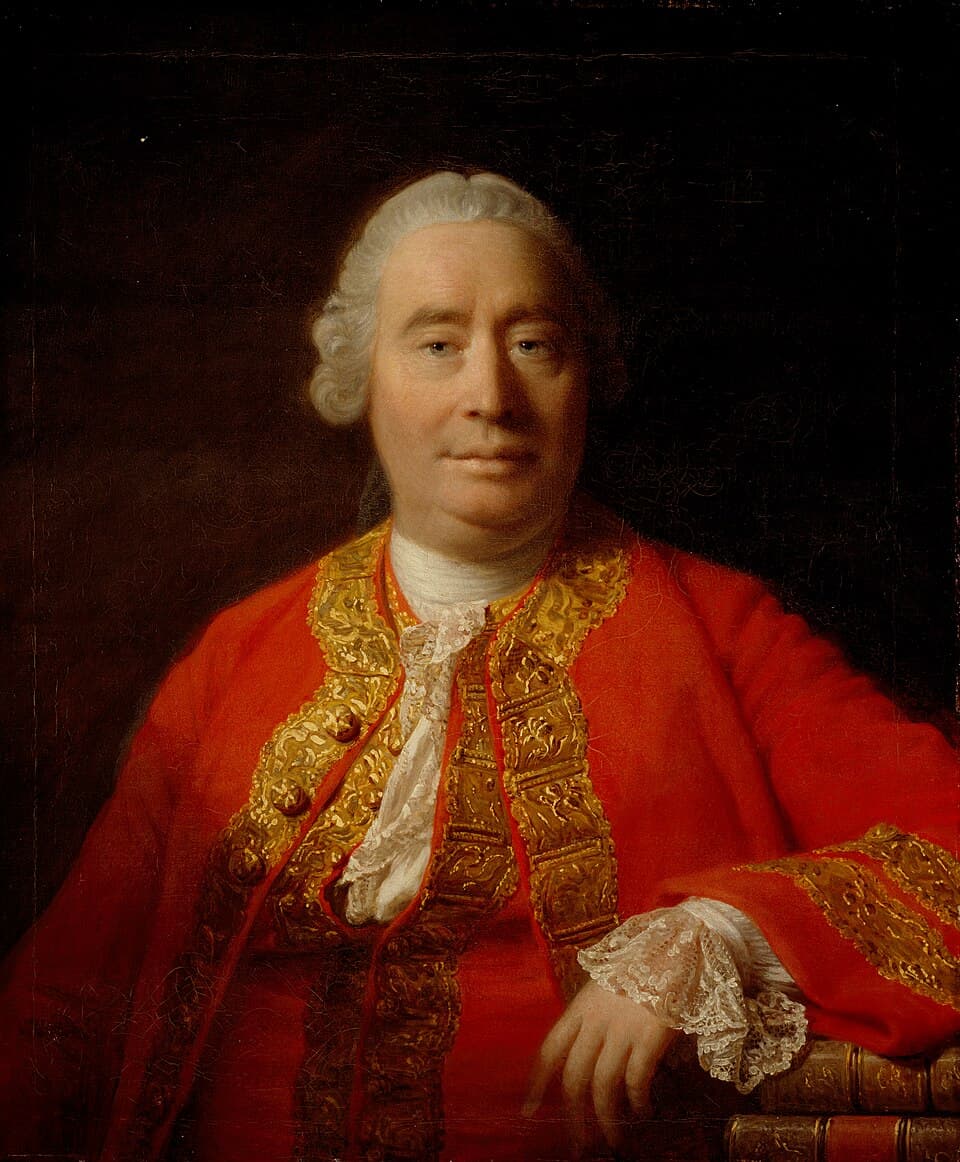
David Hume
An Enquiry Concerning Human Understanding

The author provides a famous command to balance intellectual pursuits with human nature, urging the reader to be a philosopher but also to remain a social being.

...m. Man is also an active being; and from that disposition, as well as from the various necessities of human life, must submit to business and occupation: But the mind requires some relaxation, and cannot always support its bent to care and industry. It seems, then, that nature has pointed out a mixed kind of life as most suitable to the human race, and secretly admonished them to allow none of these biasses to draw too much, so as to incapacitate them for other occupations and entertainments.
Indulge your passion for science, says she, but let your science be human, and such as may have a direct reference to action and society. Abstruse thought and profound researches I prohibit, and will severely punish, by the pensive melancholy which they introduce, by the endless uncertainty in which they involve you, and by the cold reception which your pretended discoveries shall meet with, when communicated. Be a philosopher; but, amidst all your philosophy, be still a man.
5. Were the generality of mankind contented to prefer the easy philosophy to the abstract and profound, without throwing any blame or contempt on the latter, it might not be improper, perhaps, to comply with this general opinion, and allow every man to enjoy, without opposition, his own taste and sentiment. But as the matter is often carried farther, even to the absolute rejecting of all profound reasonings, or what is commonly called metaphysics, we shall now proceed to consider what can re...
4

Aristotle

Nicomachean Ethics

Science's Intuitive Foundation

Aristotle presents a starkly alternative view, elevating theoretical science as the highest form of knowledge—the study of the most precious objects. This champions abstruse contemplation over practical utility, directly opposing Hume's dismissal of remote and profound research.

...ighest accuracy;[22] Phidias, for instance, we call a Scientific or cunning sculptor; Polycleitus a Scientific or cunning statuary; meaning, in this instance, nothing else by Science than an excellence of art: in the other sense, we think some to be Scientific in a general way, not in any particular line or in any particular thing, just as Homer says of a man in his Margites; “Him the Gods made neither a digger of the ground, nor ploughman, nor in any other way Scientific.” So it is plain that
Science must mean the most accurate of all Knowledge; but if so, then the Scientific man must not merely know the deductions from the First Principles but be in possession of truth respecting the First Principles. So that Science must be equivalent to Intuition and Knowledge; it is, so to speak, Knowledge of the most precious objects, with a head on. I say of the most precious things, because it is absurd to suppose πολιτικὴ, or Practical Wisdom, to be the highest, unless it can be shown that Man is the most excellent of all that exists in the Universe.
Now if “healthy” and “good” are relative terms, differing when applied to men or to fish, but “white” and “straight” are the same always, men must allow that the Scientific is the same always, but the Practically Wise varies: for whatever provides all things well for itself, to this they would apply the term Practically Wise, and commit these matters to it; which is the reason, by the way, that they call some brutes Practically Wise, such that is as plainly have a faculty of forethought respect...

Blaise Pascal

Pensees

Man's Paradoxical Nature

Pascal offers a potent counterargument, asserting that human reason is riddled with contradictions and incapable of grasping our true condition. He contends that we must humble our reason and seek guidance beyond ourselves, challenging Hume's confidence in a science confined to common life and human understanding.

...he is being pinched, or whether he is being burned? Shall he doubt whether he doubts? Shall he doubt whether he exists? We cannot go so far as that; and I lay it down as a fact that there never has been a real complete sceptic. Nature sustains our feeble reason, and prevents it raving to this extent. Shall he then say, on the contrary, that he certainly possesses truth--he who, when pressed ever so little, can show no title to it, and is forced to let go his hold? What a chimera then is man!
What a novelty! What a monster, what a chaos, what a contradiction, what a prodigy! Judge of all things, imbecile worm of the earth; depositary of truth, a sink of uncertainty and error; the pride and refuse of the universe! Who will unravel this tangle? Nature confutes the sceptics, and reason confutes the dogmatists. What then will you become, O men! who try to find out by your natural reason what is your true condition? You cannot avoid one of these sects, nor adhere to one of them. Know then, proud man, what a paradox you are to yourself. Humble yourself, weak reason; be silent, foolish na...
Hear God. For in fact, if man had never been corrupt, he would enjoy in his innocence both truth and happiness with assurance; and if man had always been corrupt, he would have no idea of truth or bliss. But, wretched as we are, and more so than if there were no greatness in our condition, we have an idea of happiness, and cannot reach it. We perceive an image of truth, and possess only a lie. Incapable of absolute ignorance and of certain knowledge, we have thus been manifestly in a degree of...

Marcus Aurelius

Meditations

Nature's True Requirement

This excerpt grounds Hume's prescription by arguing that true happiness is not found in abstract logical subtleties or external pursuits, but in fulfilling the practical requirements of human nature. It justifies focusing on action-oriented science by showing that abstruse speculation fails to satisfy our deepest needs.

...u hast therefore been confounded in thy course, and henceforth it will be hard for thee to recover the title and credit of a philosopher. And to it also is thy calling and profession repugnant. If therefore thou dost truly understand, what it is that is of moment indeed; as for thy fame and credit, take no thought or care for that: let it suffice thee if all the rest of thy life, be it more or less, thou shalt live as thy nature requireth, or according to the true and natural end of thy making.
Take pains therefore to know what it is that thy nature requireth, and let nothing else distract thee. Thou hast already had sufficient experience, that of those many things that hitherto thou hast erred and wandered about, thou couldst not find happiness in any of them. Not in syllogisms, and logical subtilties, not in wealth, not in honour and reputation, not in pleasure. In none of all these. Wherein then is it to be found? In the practice of those things, which the nature of man, as he is a man, doth require.
How then shall he do those things? if his dogmata, or moral tenets and opinions (from which all motions and actions do proceed), be right and true. Which be those dogmata? Those that concern that which is good or evil, as that there is nothing truly good and beneficial unto man, but that which makes him just, temperate, courageous, liberal; and that there is nothing truly evil and hurtful unto man, but that which causeth the contrary effects. II. Upon every action that thou art about, put this...

Marcus Aurelius

Meditations

Action Meets Contemplation

This excerpt provides a concrete method: in all activities, one should seamlessly join action with contemplation, ensuring that practical duties are performed diligently while preserving the pleasure of understanding things according to their true nature. This practice embodies Hume's ideal of integrating philosophy into daily life.

...natural creatures, the fig tree for example; the dog the bee: both do, all of them, and apply themselves unto that which by their natural constitution, is proper unto them; so man likewise should do that, which by his nature, as he is a man, belongs unto him. IX. Toys and fooleries at home, wars abroad: sometimes terror, sometimes torpor, or stupid sloth: this is thy daily slavery. By little and little, if thou doest not better look to it, those sacred dogmata will be blotted out of thy mind.
How many things be there, which when as a mere naturalist, thou hast barely considered of according to their nature, thou doest let pass without any further use? Whereas thou shouldst in all things so join action and contemplation, that thou mightest both at the same time attend all present occasions, to perform everything duly and carefully and yet so intend the contemplative part too, that no part of that delight and pleasure, which the contemplative knowledge of everything according to its true nature doth of itself afford, might be lost.
Or, that the true and contemnplative knowledge of everything according to its own nature, might of itself, (action being subject to many lets and impediments) afford unto thee sufficient pleasure and happiness. Not apparent indeed, but not concealed. And when shalt thou attain to the happiness of true simplicity, and unaffected gravity? When shalt thou rejoice in the certain knowledge of every particular object according to its true nature: as what the matter and substance of it is; what use it...