Revolution's Inevitable Chain
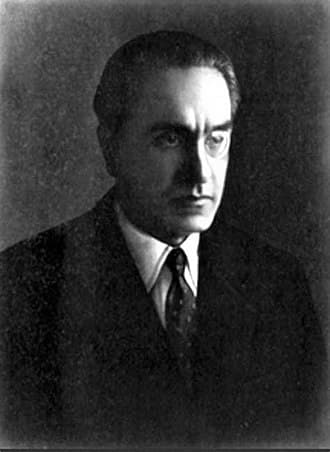
Julius Evola
Revolt Against the Modern World

A description of the 'concatenation of revolution,' where liberalism and democracy are seen as necessary precursors that pave the way for the eventual triumph of communism.

...phenomena, but rather artificial phenomena that are provoked by forces that have the same function in the healthy body of people and states that bacteria have in the generation of diseases in the human body; that nationalism, as it emerged in his own day and age, was only the mask of revolution; that revolution was essentially an international event and that the individual revolutionary phenomena are only localized and partial manifestations of the same subversive current of global proportions.
Metternich also saw very clearly the concatenation of the various degrees of revolution; liberalism and constitutionalism unavoidably pave the way for democracy, which in turn paves the way for socialism, which in turn paves the way for radicalism and finally for communism—the entire liberal revolution of the Third Estate only being instrumental in preparing the way for the revolution of the Fourth Estate, which is destined to inexorably remove the representatives of the former and their world as soon as they have completed their assignment as the avant-garde in charge of opening a breach.
This is why Metternich saw folly in coming to terms with subversion: if you give it a hand it will soon take the arm and the rest of the body as well. Having understood the revolutionary phenomenon in its unity and essence, Metternich indicated the only possible antidote: a similar supernational front of all the traditional states and the establishment of a defensive and offensive league of all the monarchs of divine right. This is what his Holy Alliance was meant to be. Unfortunately, the mat...
5

Julius Evola

Revolt Against the Modern World

The Chain of Usurpation

This excerpt extends the parent's idea by detailing the historical stages from absolutism to liberal democracy and finally to collectivized society, agreeing that liberal democracy is a prelude to collectivism.

...state, she was the first to witness the demise of the monarchical system and the advent of the republican regime in the sense of a decisive and manifest shift of power to the Third Estate. Thus, in the whole of European nations, France became the main hotbed of the revolutionary ferment and of the lay and rationalistic mentality, which is highly deleterious for any surviving residue of the traditional spirit. There is another specific and interesting complementary aspect of historical nemesis.
The emancipation of the Empire from the states that had become absolutist was followed by the emancipation of sovereign, free, and autonomous individuals from the state. The former usurpation attracted and presaged the latter; eventually, in the atomized and anarchical states (as sovereign nations) the usurped sovereignity of the state was destined to be replaced with popular sovereignity in the context of which every authority and law are legitimate only and exclusively as the expressions of the will of the citizens who are single sovereign individuals; this is the democraticized and "liberal...
Beside the causes "from above," however, we should not forget the causes "from below," which are distinct though parallel to the former ones. Every traditional organization is a dynamic system that presupposes forces of chaos, inferior impulses, and interests as well as lower social and ethnic strata that are dominated and restrained by a principle of "form"; it also includes the dynamism of the two antagonistic poles. The superior pole, connected to the supernatural element of the higher stra...

John Stewart Mill

Utilitarianism

History's Stigmatized Transitions

This excerpt presents a positive view of social transitions as moral progress, challenging the parent's negative portrayal of the revolutionary descent as an inevitable decline.

...the reverse. And hence all social inequalities which have ceased to be considered expedient, assume the character not of simple inexpediency, but of injustice, and appear so tyrannical, that people are apt to wonder how they ever could have been tolerated; forgetful that they themselves perhaps tolerate other inequalities under an equally mistaken notion of expediency, the correction of which would make that which they approve seem quite as monstrous as what they have at last learnt to condemn.
The entire history of social improvement has been a series of transitions, by which one custom or institution after another, from being a supposed primary necessity of social existence, has passed into the rank of an universally stigmatized injustice and tyranny. So it has been with the distinctions of slaves and freemen, nobles and serfs, patricians and plebeians; and so it will be, and in part already is, with the aristocracies of colour, race, and sex. It appears from what has been said, that justice is a name for certain moral requirements, which, regarded collectively, stand higher in the...
Thus, to save a life, it may not only be allowable, but a duty, to steal, or take by force, the necessary food or medicine, or to kidnap, and compel to officiate, the only qualified medical practitioner. In such cases, as we do not call anything justice which is not a virtue, we usually say, not that justice must give way to some other moral principle, but that what is just in ordinary cases is, by reason of that other principle, not just in the particular case. By this useful accommodation of...

Julius Evola

Revolt Against the Modern World

Individualism's Collectivist Backlash

This excerpt explains the causal mechanism behind the parent's claimed progression, stating that collectivist upheaval automatically follows individualistic usurpation due to a law of action-reaction.

...ue, institution, and authority. Once the fides was secularized the revolt against spiritual authority was followed by the revolt against temporal power and by the revendication of "human rights"; by the affirmation of freedom and the equality of all human beings; by the definitive abolition of the idea of caste (which came to be understood in socioeconomic terms as "functional class") and of privilege; and by a disintegration of the traditional social structures promoted by libertarianism. But
The law of action-reaction determines a collectivist upheaval to follow automatically every individualistic usurpation. The casteless, the emancipated slave, and the glorified pariah (the modern "free man") has against himself the mass of the other casteless and, in the end, the brute power of the collectivity. Thus, the process of disintegration continues and what ensues is a regression from the personal to the anonymous, the herd, and the pure, chaotic, and inorganic realm of quantity.
Just as the scientific enterprise has sought, from the outside, to recreate the multiplicity of particular phenomena (while having lost that inner and true unity that exists only in the context of metaphysical knowledge), so have moderns tried to replace the unity that in ancient societies consisted of living traditions and sacred law with an exterior, anodyne, and mechanical unity in which individuals are brought together without an organic relation to each other, and without seeing any superi...

Friedrich Nietzsche

Beyond Good and Evil

The Strong Exception

This excerpt reframes the discussion from political stages to anthropological effects, arguing that democratic leveling creates conditions for exceptional individuals rather than merely representing decline.

...e art and power of adaptation as his typical distinction. This process of the EVOLVING EUROPEAN, which can be retarded in its TEMPO by great relapses, but will perhaps just gain and grow thereby in vehemence and depth--the still-raging storm and stress of "national sentiment" pertains to it, and also the anarchism which is appearing at present--this process will probably arrive at results on which its naive propagators and panegyrists, the apostles of "modern ideas," would least care to reckon.
The same new conditions under which on an average a levelling and mediocrising of man will take place--a useful, industrious, variously serviceable, and clever gregarious man--are in the highest degree suitable to give rise to exceptional men of the most dangerous and attractive qualities. For, while the capacity for adaptation, which is every day trying changing conditions, and begins a new work with every generation, almost with every decade, makes the POWERFULNESS of the type impossible; while the collective impression of such future Europeans will probably be that of numerous, talkative, w...
I meant to say that the democratising of Europe is at the same time an involuntary arrangement for the rearing of TYRANTS--taking the word in all its meanings, even in its most spiritual sense. 243. I hear with pleasure that our sun is moving rapidly towards the constellation Hercules: and I hope that the men on this earth will do like the sun. And we foremost, we good Europeans! 244. There was a time when it was customary to call Germans "deep" by way of distinction; but now that the most su...

Friedrich Nietzsche

Beyond Good and Evil

New Philosophers' Hope

This excerpt offers practical guidance by advocating hope in new philosophers who will transvalue values and redirect the course of history, answering 'what should we do?' in response to decline.

...involuntary beglooming and heart-softening, under the spell of which Europe seems to be threatened with a new Buddhism; at one in their belief in the morality of MUTUAL sympathy, as though it were morality in itself, the climax, the ATTAINED climax of mankind, the sole hope of the future, the consolation of the present, the great discharge from all the obligations of the past; altogether at one in their belief in the community as the DELIVERER, in the herd, and therefore in "themselves." 203.
We, who hold a different belief--we, who regard the democratic movement, not only as a degenerating form of political organization, but as equivalent to a degenerating, a waning type of man, as involving his mediocrising and depreciation: where have WE to fix our hopes? In NEW PHILOSOPHERS--there is no other alternative: in minds strong and original enough to initiate opposite estimates of value, to transvalue and invert "eternal valuations"; in forerunners, in men of the future, who in the present shall fix the constraints and fasten the knots which will compel millenniums to take NEW paths.
To teach man the future of humanity as his WILL, as depending on human will, and to make preparation for vast hazardous enterprises and collective attempts in rearing and educating, in order thereby to put an end to the frightful rule of folly and chance which has hitherto gone by the name of "history" (the folly of the "greatest number" is only its last form)--for that purpose a new type of philosopher and commander will some time or other be needed, at the very idea of which everything that h...