Three Mental Presents
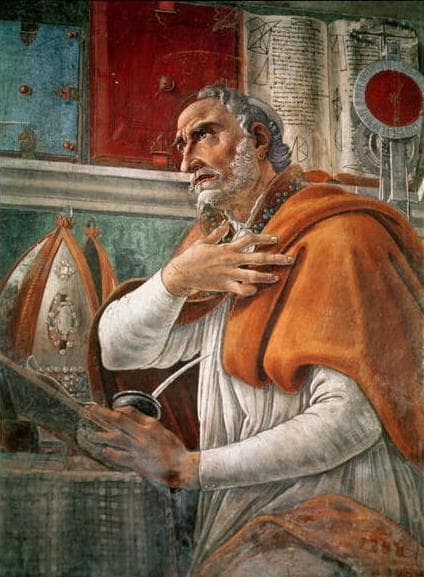
Augustine of Hippo
Confessions

The author redefines the three types of time as the present of things past (memory), the present of things present (sight), and the present of things future (expectation).

...gs present, which are already, and are seen. Thou then, Ruler of Thy creation, by what way dost Thou teach souls things to come? For Thou didst teach Thy Prophets. By what way dost Thou, to whom nothing is to come, teach things to come; or rather of the future, dost teach things present? For, what is not, neither can it be taught. Too far is this way of my ken: it is too mighty for me, I cannot attain unto it; but from Thee I can, when Thou shalt vouchsafe it, O sweet light of my hidden eyes.
What now is clear and plain is, that neither things to come nor past are. Nor is it properly said, "there be three times, past, present, and to come": yet perchance it might be properly said, "there be three times; a present of things past, a present of things present, and a present of things future." For these three do exist in some sort, in the soul, but otherwhere do I not see them; present of things past, memory; present of things present, sight; present of things future, expectation. If thus we be permitted to speak, I see three times, and I confess there are three.
Let it be said too, "there be three times, past, present, and to come": in our incorrect way. See, I object not, nor gainsay, nor find fault, if what is so said be but understood, that neither what is to be, now is, nor what is past. For but few things are there, which we speak properly, most things improperly; still the things intended are understood. I said then even now, we measure times as they pass, in order to be able to say, this time is twice so much as that one; or, this is just so mu...
5

Marcus Aurelius

Meditations

All Things Connected

The candidate agrees with the parent's emphasis on the present moment by asserting that seeing the present allows one to see all that ever was or shall be, since all things are interconnected. This extends the parent's idea that the present encompasses past and future, though from a more cosmic perspective rather than a psychological one.

...come from one beginning; either all severally and particularly deliberated and resolved upon, by the general ruler and governor of all; or all by necessary consequence. So that the dreadful hiatus of a gaping lion, and all poison, and all hurtful things, are but (as the thorn and the mire) the necessary consequences of goodly fair things. Think not of these therefore, as things contrary to those which thou dost much honour, and respect; but consider in thy mind the true fountain of all. XXXIV
He that seeth the things that are now, hath Seen all that either was ever, or ever shall be, for all things are of one kind; and all like one unto another. Meditate often upon the connection of all things in the world; and upon the mutual relation that they have one unto another. For all things are after a sort folded and involved one within another, and by these means all agree well together. For one thing is consequent unto another, by local motion, by natural conspiration and agreement, and by substantial union, or, reduction of all substances into one.
XXXV. Fit and accommodate thyself to that estate and to those occurrences, which by the destinies have been annexed unto thee; and love those men whom thy fate it is to live with; but love them truly. An instrument, a tool, an utensil, whatsoever it be, if it be fit for the purpose it was made for, it is as it should be though he perchance that made and fitted it, be out of sight and gone. But in things natural, that power which hath framed and fitted them, is and abideth within them still: fo...

Augustine of Hippo

Confessions

Memory's Vast Court

This candidate explains the psychological processes behind the parent's claim: memory retains past experiences, and from these we infer future events. This describes the mechanism by which the soul has a 'present of things past' (memory) and a 'present of things future' (expectation).

...still, and my throat mute, so can I sing as much as I will; nor do those images of colours, which notwithstanding be there, intrude themselves and interrupt, when another store is called for, which flowed in by the ears. So the other things, piled in and up by the other senses, I recall at my pleasure. Yea, I discern the breath of lilies from violets, though smelling nothing; and I prefer honey to sweet wine, smooth before rugged, at the time neither tasting nor handling, but remembering only.
These things do I within, in that vast court of my memory. For there are present with me, heaven, earth, sea, and whatever I could think on therein, besides what I have forgotten. There also meet I with myself, and recall myself, and when, where, and what I have done, and under what feelings. There be all which I remember, either on my own experience, or other's credit. Out of the same store do I myself with the past continually combine fresh and fresh likenesses of things which I have experienced, or, from what I have experienced, have believed: and thence again infer future actions, events a...
"I will do this or that," say I to myself, in that great receptacle of my mind, stored with the images of things so many and so great, "and this or that will follow." "O that this or that might be!" "God avert this or that!" So speak I to myself: and when I speak, the images of all I speak of are present, out of the same treasury of memory; nor would I speak of any thereof, were the images wanting. Great is this force of memory, excessive great, O my God; a large and boundless chamber! who eve...

Blaise Pascal

Pensees

Time's Fleeting Present

The candidate reframes the discussion from a metaphysical analysis of time to a moral and psychological critique of human behavior, arguing that we foolishly wander in times that are not ours instead of focusing on the present. This shifts the value axis from 'what is time?' to 'how should we live in time?'

...ousand accidents, which bring inevitable griefs. 171 Misery.--The only thing which consoles us for our miseries is diversion, and yet this it the greatest of our miseries. For it is this which principally hinders us from reflecting upon ourselves, and which makes us insensibly ruin ourselves. Without this we should be in a state of weariness, and this weariness would spur us to seek a more solid means of escaping from it. But diversion amuses us, and leads us unconsciously to death. 172
We do not rest satisfied with the present. We anticipate the future as too slow in coming, as if in order to hasten its course; or we recall the past, to stop its too rapid flight. So imprudent are we that we wander in the times which are not ours, and do not think of the only one which belongs to us; and so idle are we that we dream of those times which are no more, and thoughtlessly overlook that which alone exists.
For the present is generally painful to us. We conceal it from our sight, because it troubles us; and if it be delightful to us, we regret to see it pass away. We try to sustain it by the future, and think of arranging matters which are not in our power, for a time which we have no certainty of reaching. Let each one examine his thoughts, and he will find them all occupied with the past and the future. We scarcely ever think of the present; and if we think of it, it is only to take light from...

Augustine of Hippo

Confessions

Time's Elusive Being

This candidate questions our very ability to define or understand time, highlighting the paradox that we know what time is until we try to explain it. This meta-level inquiry aligns with the parent's philosophical exploration but focuses on the limits of human comprehension.

...not. At no time then hadst Thou not made any thing, because time itself Thou madest. And no times are coeternal with Thee, because Thou abidest; but if they abode, they should not be times. For what is time? Who can readily and briefly explain this? Who can even in thought comprehend it, so as to utter a word about it? But what in discourse do we mention more familiarly and knowingly, than time? And, we understand, when we speak of it; we understand also, when we hear it spoken of by another.
What then is time? If no one asks me, I know: if I wish to explain it to one that asketh, I know not: yet I say boldly that I know, that if nothing passed away, time past were not; and if nothing were coming, a time to come were not; and if nothing were, time present were not. Those two times then, past and to come, how are they, seeing the past now is not, and that to come is not yet? But the present, should it always be present, and never pass into time past, verily it should not be time, but eternity. If time present (if it is to be time) only cometh into existence, because it passeth into...
And yet we say, "a long time" and "a short time"; still, only of time past or to come. A long time past (for example) we call an hundred years since; and a long time to come, an hundred years hence. But a short time past, we call (suppose) often days since; and a short time to come, often days hence. But in what sense is that long or short, which is not? For the past, is not now; and the future, is not yet. Let us not then say, "it is long"; but of the past, "it hath been long"; and of the fut...

Marcus Aurelius

Meditations

The Threefold Readiness

The candidate provides practical guidance on what to keep in mind: acting justly, accepting external events, and contemplating the transience and interdependence of all things. This answers the 'so what should I do?' question in response to reflections on time and existence.

...nerally, as it is both expedient and seasonable to the whole, that in that respect it must needs be good. It is that also, which is brought unto us by the order and appointment of the Divine Providence; so that he whose will and mind in these things runs along with the Divine ordinance, and by this concurrence of his will and mind with the Divine Providence, is led and driven along, as it were by God Himself; may truly be termed and esteemed the θεοφόρητος, or divinely led and inspired. XVIII.
These three things thou must have always in a readiness: first concerning thine own actions, whether thou doest nothing either idly, or otherwise, than justice and equity do require: and concerning those things that happen unto thee externally, that either they happen unto thee by chance, or by providence; of which two to accuse either, is equally against reason. Secondly, what like unto our bodies are whilest yet rude and imperfect, until they be animated: and from their animation, until their expiration: of what things they are compounded, and into what things they shall be dissolved. Thirdl...
And that as often as thou shalt behold them, thou shalt still see the same: as the same things, so the same shortness of continuance of all those things. And, behold, these be the things that we are so proud and puffed up for. XIX. Cast away from thee opinion, and thou art safe. And what is it that hinders thee from casting of it away? When thou art grieved at anything, hast thou forgotten that all things happen according to the nature of the universe; and that him only it concerns, who is in...