Right as Social Defense
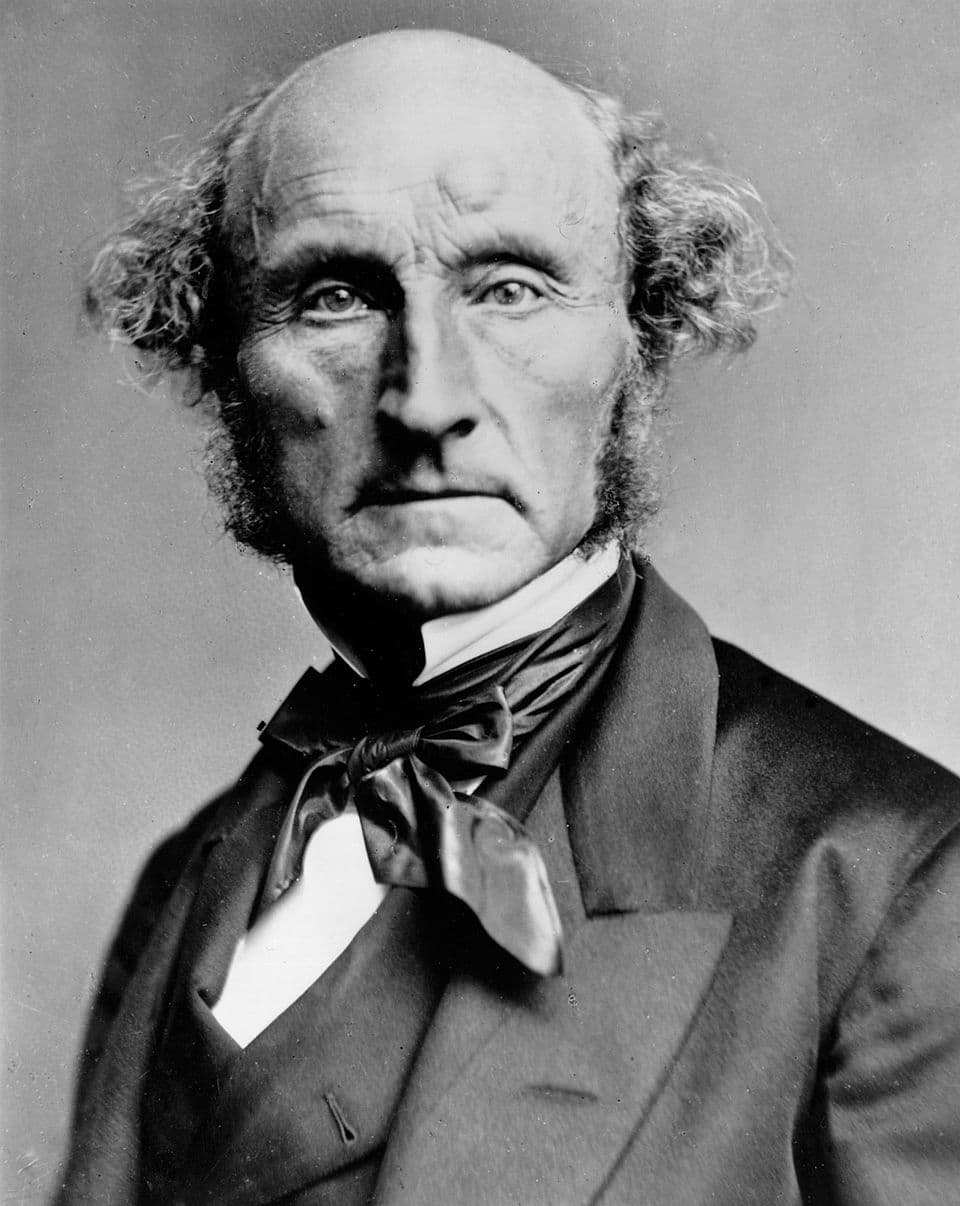
John Stewart Mill
Utilitarianism

The author defines a right as a claim that society ought to protect based on general utility, specifically the vital interest of security, which is fueled by both rational calculation and the animal instinct for retaliation.

...etition; because society ought not to allow any other person to hinder him from endeavouring to earn in that manner as much as he can. But he has not a right to three hundred a-year, though he may happen to be earning it; because society is not called on to provide that he shall earn that sum. On the contrary, if he owns ten thousand pounds three per cent. stock, he has a right to three hundred a-year; because society has come under an obligation to provide him with an income of that amount.
To have a right, then, is, I conceive, to have something which society ought to defend me in the possession of. If the objector goes on to ask why it ought, I can give him no other reason than general utility. If that expression does not seem to convey a sufficient feeling of the strength of the obligation, nor to account for the peculiar energy of the feeling, it is because there goes to the composition of the sentiment, not a rational only but also an animal element, the thirst for retaliation; and this thirst derives its intensity, as well as its moral justification, from the extraordinarily important and impressive kind of utility which is concerned. The interest involved is that of security, to every one's feelings the most vital of all interests.
Nearly all other earthly benefits are needed by one person, not needed by another; and many of them can, if necessary, be cheerfully foregone, or replaced by something else; but security no human being can possibly do without; on it we depend for all our immunity from evil, and for the whole value of all and every good, beyond the passing moment; since nothing but the gratification of the instant could be of any worth to us, if we could be deprived of everything the next instant by whoever was...
5

John Stewart Mill

Utilitarianism

Right as Social Guarantee

This excerpt directly restates the parent's definition of a right as a valid claim on society for protection, reinforcing the core idea that society ought to defend the individual.

...treated the idea of a right residing in the injured person, and violated by the injury, not as a separate element in the composition of the idea and sentiment, but as one of the forms in which the other two elements clothe themselves. These elements are, a hurt to some assignable person or persons on the one hand, and a demand for punishment on the other. An examination of our own minds, I think, will show, that these two things include all that we mean when we speak of violation of a right.
When we call anything a person's right, we mean that he has a valid claim on society to protect him in the possession of it, either by the force of law, or by that of education and opinion. If he has what we consider a sufficient claim, on whatever account, to have something guaranteed to him by society, we say that he has a right to it. If we desire to prove that anything does not belong to him by right, we think this done as soon as it is admitted that society ought not to take measures for securing it to him, but should leave it to chance, or to his own exertions.
Thus, a person is said to have a right to what he can earn in fair professional competition; because society ought not to allow any other person to hinder him from endeavouring to earn in that manner as much as he can. But he has not a right to three hundred a-year, though he may happen to be earning it; because society is not called on to provide that he shall earn that sum. On the contrary, if he owns ten thousand pounds three per cent. stock, he has a right to three hundred a-year; because...

Friedrich Nietzsche

Beyond Good and Evil

Life as Exploitation

This excerpt fundamentally opposes the parent's utilitarian foundation by arguing that principles of non-injury and equality are a denial of life's essential nature, which is appropriation and exploitation.

...ciety is NOT allowed to exist for its own sake, but only as a foundation and scaffolding, by means of which a select class of beings may be able to elevate themselves to their higher duties, and in general to a higher EXISTENCE: like those sun-seeking climbing plants in Java--they are called Sipo Matador,--which encircle an oak so long and so often with their arms, until at last, high above it, but supported by it, they can unfold their tops in the open light, and exhibit their happiness. 259.
To refrain mutually from injury, from violence, from exploitation, and put one's will on a par with that of others: this may result in a certain rough sense in good conduct among individuals when the necessary conditions are given (namely, the actual similarity of the individuals in amount of force and degree of worth, and their co-relation within one organization). As soon, however, as one wished to take this principle more generally, and if possible even as the FUNDAMENTAL PRINCIPLE OF SOCIETY, it would immediately disclose what it really is--namely, a Will to the DENIAL of life, a principle...
Even the organization within which, as was previously supposed, the individuals treat each other as equal--it takes place in every healthy aristocracy--must itself, if it be a living and not a dying organization, do all that towards other bodies, which the individuals within it refrain from doing to each other it will have to be the incarnated Will to Power, it will endeavour to grow, to gain ground, attract to itself and acquire ascendancy--not owing to any morality or immorality, but because...

John Stewart Mill

Utilitarianism

Justice as Widened Retaliation

This excerpt elaborates on the psychological composition of the sentiment of justice, identifying the animal desire for retaliation as its core, which aligns with and expands upon the parent's mention of an 'animal element' in the feeling of right.

...ly deciding on the morality of the act. Otherwise he uses words without a meaning: for, that a rule even of utter selfishness could not possibly be adopted by all rational beings--that there is any insuperable obstacle in the nature of things to its adoption--cannot be even plausibly maintained. To give any meaning to Kant's principle, the sense put upon it must be, that we ought to shape our conduct by a rule which all rational beings might adopt with benefit to their collective interest.
To recapitulate: the idea of justice supposes two things; a rule of conduct, and a sentiment which sanctions the rule. The first must be supposed common to all mankind, and intended for their good. The other (the sentiment) is a desire that punishment may be suffered by those who infringe the rule. There is involved, in addition, the conception of some definite person who suffers by the infringement; whose rights (to use the expression appropriated to the case) are violated by it. And the sentiment of justice appears to me to be, the animal desire to repel or retaliate a hurt or damage to ones...
I have, throughout, treated the idea of a right residing in the injured person, and violated by the injury, not as a separate element in the composition of the idea and sentiment, but as one of the forms in which the other two elements clothe themselves. These elements are, a hurt to some assignable person or persons on the one hand, and a demand for punishment on the other. An examination of our own minds, I think, will show, that these two things include all that we mean when we speak of v...

Arthur Schopenhauer

The Wisdom of Life

Motive Over Method

This excerpt shifts the discussion from utility and social defense to the motives behind actions, suggesting that moral justification depends entirely on motives rather than consequences or social arrangements.

...f which I have spoken, recognizes no other right than might, that is, the right of the stronger, and appeals to a Judgment of God as the basis of the whole code. For to kill a man in a fair fight, is to prove that you are superior to him in strength or skill; and to justify the deed, you must assume that the right of the stronger is really a right. But the truth is that, if my opponent is unable to defend himself, it gives me the possibility, but not by any means the right, of killing him.
The right, the moral justification, must depend entirely upon the motives which I have for taking his life. Even supposing that I have sufficient motive for taking a man's life, there is no reason why I should make his death depend upon whether I can shoot or fence better than he. In such a case, it is immaterial in what way I kill him, whether I attack him from the front or the rear. From a moral point of view, the right of the stronger is no more convincing than the right of the more skillful; and it is skill which is employed if you murder a a man treacherously.
Might and skill are in this case equally right; in a duel, for instance, both the one and the other come into play; for a feint is only another name for treachery. If I consider myself morally justified in taking a man's life, it is stupid of me to try first of all whether he can shoot or fence better than I; as, if he can, he will not only have wronged me, but have taken my life into the bargain. It is Rousseau's opinion that the proper way to avenge an insult is, not to fight a duel with you...

David Hume

An Enquiry Concerning Human Understanding

Moral Sentiments from Society

This excerpt questions whether philosophical reasoning can override our natural moral sentiments, casting doubt on our ability to settle ethical questions through speculation alone.

...he affections take a narrower and more natural survey of their object; and by an economy, more suitable to the infirmity of human minds, regard alone the beings around us, and are actuated by such events as appear good or ill to the private system. 80. The case is the same with moral as with physical ill. It cannot reasonably be supposed, that those remote considerations, which are found of so little efficacy with regard to one, will have a more powerful influence with regard to the other.
The mind of man is so formed by nature that, upon the appearance of certain characters, dispositions, and actions, it immediately feels the sentiment of approbation or blame; nor are there any emotions more essential to its frame and constitution. The characters which engage our approbation are chiefly such as contribute to the peace and security of human society; as the characters which excite blame are chiefly such as tend to public detriment and disturbance: Whence it may reasonably be presumed, that the moral sentiments arise, either mediately or immediately, from a reflection of these opp...
A man who is robbed of a considerable sum; does he find his vexation for the loss anywise diminished by these sublime reflections? Why then should his moral resentment against the crime be supposed incompatible with them? Or why should not the acknowledgment of a real distinction between vice and virtue be reconcileable to all speculative systems of philosophy, as well as that of a real distinction between personal beauty and deformity? Both these distinctions are founded in the natural sentime...