The Necessary Confinement
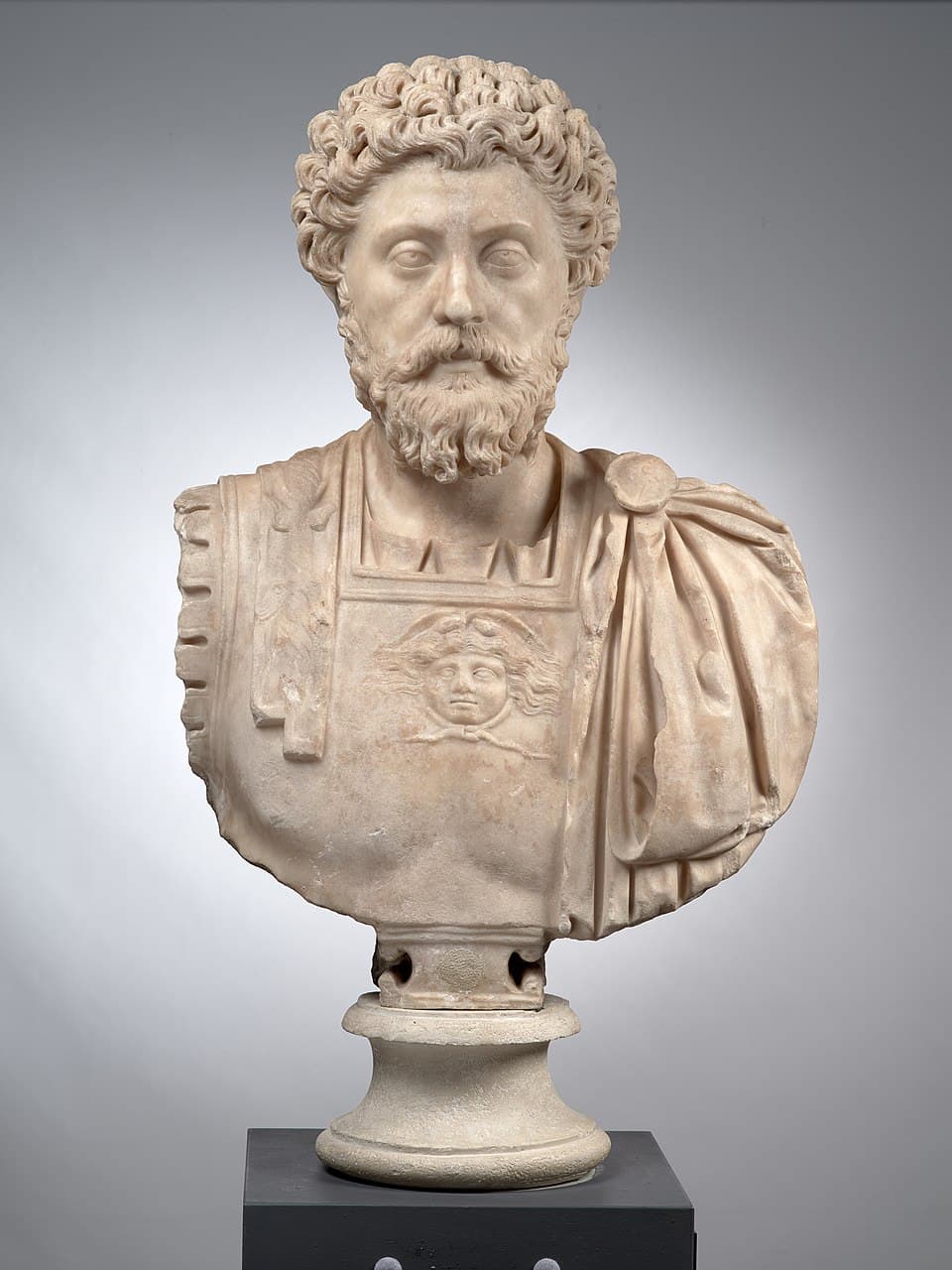
Marcus Aurelius
Meditations

The author argues that limiting oneself to necessary, socially beneficial actions produces cheerfulness and leisure, and suggests that one must also prune unnecessary thoughts to prevent unnecessary deeds.

...ion of every fancy, that presents itself. XIX. Whatsoever is expedient unto thee, O World, is expedient unto me; nothing can either be 'unseasonable unto me, or out of date, which unto thee is seasonable. Whatsoever thy seasons bear, shall ever by me be esteemed as happy fruit, and increase. O Nature! from thee are all things, in thee all things subsist, and to thee all tend. Could he say of Athens, Thou lovely city of Cecrops; and shalt not thou say of the world, Thou lovely city of God? XX.
They will say commonly, Meddle not with many things, if thou wilt live cheerfully. Certainly there is nothing better, than for a man to confine himself to necessary actions; to such and so many only, as reason in a creature that knows itself born for society, will command and enjoin. This will not only procure that cheerfulness, which from the goodness, but that also, which from the paucity of actions doth usually proceed. For since it is so, that most of those things, which we either speak or do, are unnecessary; if a man shall cut them off, it must needs follow that he shall thereby gain much leisure, and save much trouble, and therefore at every action a man must privately by way of admonition suggest unto himself, What? may not this that now I go about, be of the number of unnecessary actions? Neither must he use himself to cut off actions only, but thoughts and imaginations also, that are unnecessary for so will unnecessary consequent actions the better be prevented and cut off.
XXI. Try also how a good man's life; (of one, who is well pleased with those things whatsoever, which among the common changes and chances of this world fall to his own lot and share; and can live well contented and fully satisfied in the justice of his own proper present action, and in the goodness of his disposition for the future:) will agree with thee. Thou hast had experience of that other kind of life: make now trial of this also. Trouble not thyself any more henceforth, reduce thyself u...
4

Marcus Aurelius

Meditations

Mind Your Own Mind

This excerpt extends the parent's advice by specifically cautioning against wasting mental energy on the thoughts and actions of others, reinforcing the focus on one's own rational and social nature as the path to peace.

...ked ungodly men. How then stands the case? Thou hast taken ship, thou hast sailed, thou art come to land, go out, if to another life, there also shalt thou find gods, who are everywhere. If all life and sense shall cease, then shalt thou cease also to be subject to either pains or pleasures; and to serve and tend this vile cottage; so much the viler, by how much that which ministers unto it doth excel; the one being a rational substance, and a spirit, the other nothing but earth and blood. IV.
Spend not the remnant of thy days in thoughts and fancies concerning other men, when it is not in relation to some common good, when by it thou art hindered from some other better work. That is, spend not thy time in thinking, what such a man doth, and to what end: what he saith, and what he thinks, and what he is about, and such other things or curiosities, which make a man to rove and wander from the care and observation of that part of himself, which is rational, and overruling. See therefore in the whole series and connection of thy thoughts, that thou be careful to prevent whatsoever is i...
He that is such, is he surely that doth not put off to lay hold on that which is best indeed, a very priest and minister of the gods, well acquainted and in good correspondence with him especially that is seated and placed within himself, as in a temple and sacrary: to whom also he keeps and preserves himself unspotted by pleasure, undaunted by pain; free from any manner of wrong, or contumely, by himself offered unto himself: not capable of any evil from others: a wrestler of the best sort, an...

Blaise Pascal

Pensees

The Chase as Distraction

Pascal challenges the Stoic ideal of cutting off unnecessary actions by arguing that such distractions serve a vital human need: they shield us from the unbearable awareness of our mortality and suffering, suggesting that a life stripped of them might be more miserable, not more cheerful.

...love noise and stir; hence it comes that the prison is so horrible a punishment; hence it comes that the pleasure of solitude is a thing incomprehensible. And it is in fact the greatest source of happiness in the condition of kings, that men try incessantly to divert them, and to procure for them all kinds of pleasures. The king is surrounded by persons whose only thought is to divert the king, and to prevent his thinking of self. For he is unhappy, king though he be, if he think of himself.
This is all that men have been able to discover to make themselves happy. And those who philosophise on the matter, and who think men unreasonable for spending a whole day in chasing a hare which they would not have bought, scarce know our nature. The hare in itself would not screen us from the sight of death and calamities; but the chase which turns away our attention from these, does screen us. The advice given to Pyrrhus to take the rest which he was about to seek with so much labour, was full of difficulties. [To bid a man live quietly is to bid him live happily.
It is to advise him to be in a state perfectly happy, in which he can think at leisure without finding therein a cause of distress. This is to misunderstand nature. As men who naturally understand their own condition avoid nothing so much as rest, so there is nothing they leave undone in seeking turmoil. Not that they have an instinctive knowledge of true happiness ... So we are wrong in blaming them. Their error does not lie in seeking excitement, if they seek it only as a diversion; the evi...

Blaise Pascal

Pensees

The Restless Mind

Pascal identifies the root psychological cause of the restless pursuit of unnecessary activities: humans cannot bear to remain quietly alone with themselves. This explains why we so often engage in the very behaviors Marcus Aurelius advises against.

...t becomes only brutality. We never seek things for themselves, but for the search. Likewise in plays, scenes which do not rouse the emotion of fear are worthless, so are extreme and hopeless misery, brutal lust, and extreme cruelty. 136 A mere trifle consoles us, for a mere trifle distresses us.[68] 137 Without examining every particular pursuit, it is enough to comprehend them under diversion. 138 Men naturally slaters and of all callings, save in their own rooms. 139 Diversion.--
When I have occasionally set myself to consider the different distractions of men, the pains and perils to which they expose themselves at court or in war, whence arise so many quarrels, passions, bold and often bad ventures, etc., I have discovered that all the unhappiness of men arises from one single fact, that they cannot stay quietly in their own chamber. A man who has enough to live on, if he knew how to stay with pleasure at home, would not leave it to go to sea or to besiege a town. A commission in the army would not be bought so dearly, but that it is found insufferable not to budge f...
But on further consideration, when, after finding the cause of all our ills, I have sought to discover the reason of it, I have found that there is one very real reason, namely, the natural poverty of our feeble and mortal condition, so miserable that nothing can comfort us when we think of it closely. Whatever condition we picture to ourselves, if we muster all the good things which it is possible to possess, royalty is the finest position in the world. Yet, when we imagine a king attended w...

Marcus Aurelius

Meditations

Retreat to Self

This passage offers direct practical instruction: regularly retreat into your own mind, guard against distraction, and approach all matters with the calm perspective of one dedicated to virtue and social harmony, providing a concrete method for implementing the parent's advice.

...quickly all things that are, are forgotten, and what an immense chaos of eternity was before, and will follow after all things: and the vanity of praise, and the inconstancy and variableness of human judgments and opinions, and the narrowness of the place, wherein it is limited and circumscribed? For the whole earth is but as one point; and of it, this inhabited part of it, is but a very little part; and of this part, how many in number, and what manner of men are they, that will commend thee?
What remains then, but that thou often put in practice this kind of retiring of thyself, to this little part of thyself; and above all things, keep thyself from distraction, and intend not anything vehemently, but be free and consider all things, as a man whose proper object is Virtue, as a man whose true nature is to be kind and sociable, as a citizen, as a mortal creature.
Among other things, which to consider, and look into thou must use to withdraw thyself, let those two be among the most obvious and at hand. One, that the things or objects themselves reach not unto the soul, but stand without still and quiet, and that it is from the opinion only which is within, that all the tumult and all the trouble doth proceed. The next, that all these things, which now thou seest, shall within a very little while be changed, and be no more: and ever call to mind, how many...