Memory's Self-Paradox
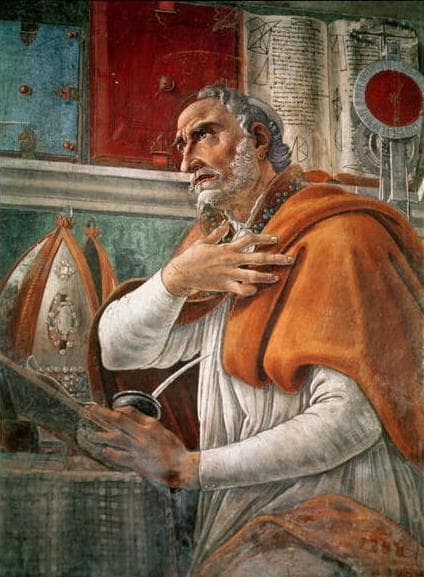
Augustine of Hippo
ConfessionsThe author explores the paradox of memory, questioning how the mind can contain and identify the concept of forgetfulness without contradicting its own function.
...orgetfulness when we remember it, is not present to the memory by itself but by its image: because if it were present by itself, it would not cause us to remember, but to forget. Who now shall search out this? who shall comprehend how it is? Lord, I, truly, toil therein, yea and toil in myself; I am become a heavy soil requiring over much sweat of the brow. For we are not now searching out the regions of heaven, or measuring the distances of the stars, or enquiring the balancings of the earth.
It is I myself who remember, I the mind. It is not so wonderful, if what I myself am not, be far from me. But what is nearer to me than myself? And lo, the force of mine own memory is not understood by me; though I cannot so much as name myself without it. For what shall I say, when it is clear to me that I remember forgetfulness? Shall I say that that is not in my memory, which I remember? or shall I say that forgetfulness is for this purpose in my memory, that I might not forget? Both were most absurd.
What third way is there? How can I say that the image of forgetfulness is retained by my memory, not forgetfulness itself, when I remember it? How could I say this either, seeing that when the image of any thing is impressed on the memory, the thing itself must needs be first present, whence that image may be impressed? For thus do I remember Carthage, thus all places where I have been, thus men's faces whom I have seen, and things reported by the other senses; thus the health or sickness of th...
6