Nature's True Requirement
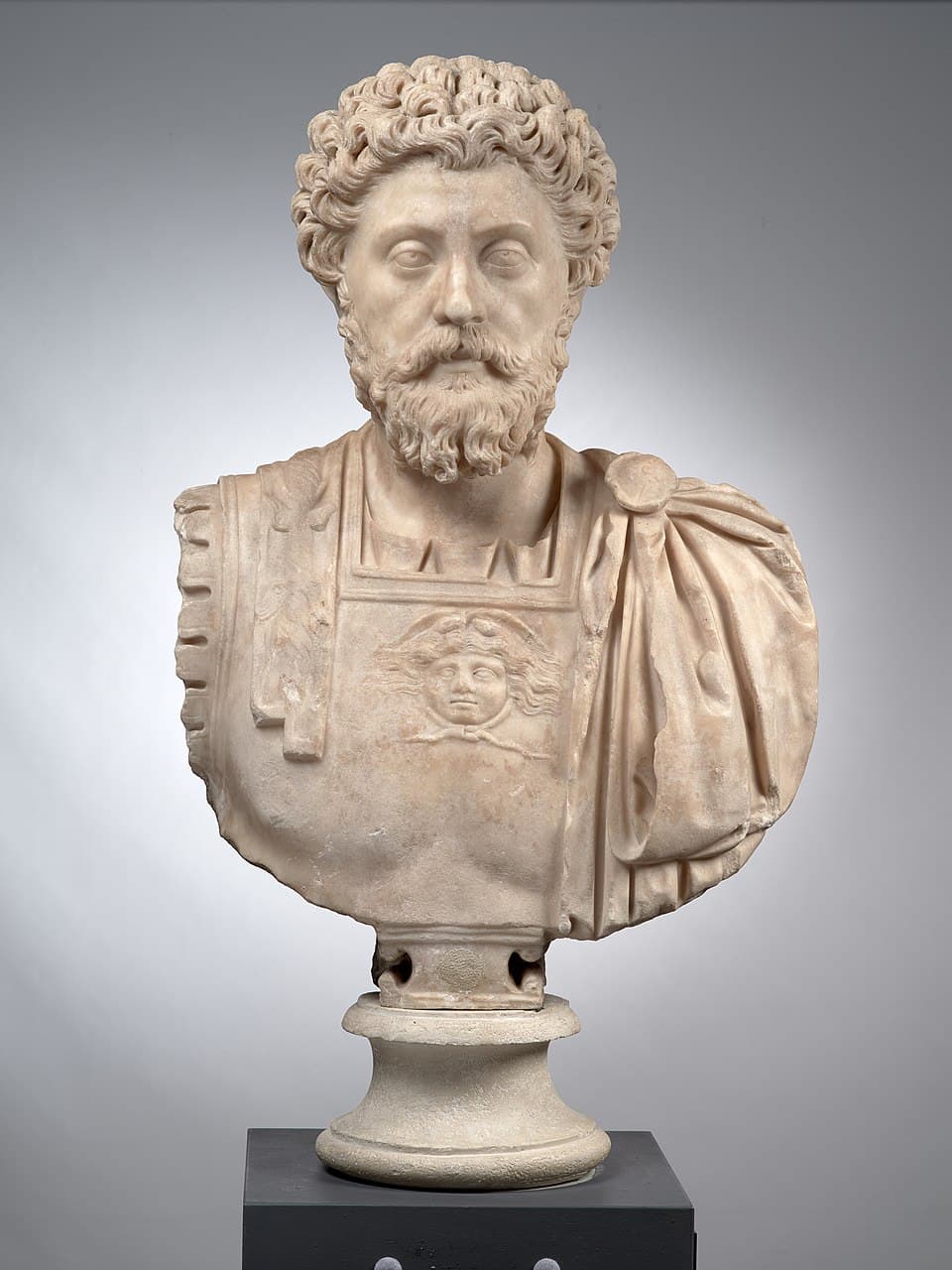
Marcus Aurelius
Meditations

A prescription to seek happiness not in logic, wealth, or fame, but solely in the practice of those virtues that align with the fundamental requirements of human nature.

...u hast therefore been confounded in thy course, and henceforth it will be hard for thee to recover the title and credit of a philosopher. And to it also is thy calling and profession repugnant. If therefore thou dost truly understand, what it is that is of moment indeed; as for thy fame and credit, take no thought or care for that: let it suffice thee if all the rest of thy life, be it more or less, thou shalt live as thy nature requireth, or according to the true and natural end of thy making.
Take pains therefore to know what it is that thy nature requireth, and let nothing else distract thee. Thou hast already had sufficient experience, that of those many things that hitherto thou hast erred and wandered about, thou couldst not find happiness in any of them. Not in syllogisms, and logical subtilties, not in wealth, not in honour and reputation, not in pleasure. In none of all these. Wherein then is it to be found? In the practice of those things, which the nature of man, as he is a man, doth require.
How then shall he do those things? if his dogmata, or moral tenets and opinions (from which all motions and actions do proceed), be right and true. Which be those dogmata? Those that concern that which is good or evil, as that there is nothing truly good and beneficial unto man, but that which makes him just, temperate, courageous, liberal; and that there is nothing truly evil and hurtful unto man, but that which causeth the contrary effects. II. Upon every action that thou art about, put this...
4

Blaise Pascal

Pensees

The Chase as Distraction

Pascal suggests that distractions, like chasing a hare, serve to screen us from thoughts of death and calamities. This challenges the parent's dismissal of distractions by highlighting a psychological need they might fulfill, indicating that simply avoiding them may not address deeper human anxieties.

...love noise and stir; hence it comes that the prison is so horrible a punishment; hence it comes that the pleasure of solitude is a thing incomprehensible. And it is in fact the greatest source of happiness in the condition of kings, that men try incessantly to divert them, and to procure for them all kinds of pleasures. The king is surrounded by persons whose only thought is to divert the king, and to prevent his thinking of self. For he is unhappy, king though he be, if he think of himself.
This is all that men have been able to discover to make themselves happy. And those who philosophise on the matter, and who think men unreasonable for spending a whole day in chasing a hare which they would not have bought, scarce know our nature. The hare in itself would not screen us from the sight of death and calamities; but the chase which turns away our attention from these, does screen us. The advice given to Pyrrhus to take the rest which he was about to seek with so much labour, was full of difficulties. [To bid a man live quietly is to bid him live happily.
It is to advise him to be in a state perfectly happy, in which he can think at leisure without finding therein a cause of distress. This is to misunderstand nature. As men who naturally understand their own condition avoid nothing so much as rest, so there is nothing they leave undone in seeking turmoil. Not that they have an instinctive knowledge of true happiness ... So we are wrong in blaming them. Their error does not lie in seeking excitement, if they seek it only as a diversion; the evi...

Blaise Pascal

Pensees

Reason's Sovereign Good

This excerpt enumerates various philosophical schools' views on the sovereign good—virtue, pleasure, knowledge, ignorance, etc.—presenting alternative rules for happiness that contrast with the Stoic focus on human nature as the sole guide.

...very thing we least understand. Man is to himself the most wonderful object in nature; for he cannot conceive what the body is, still less what the mind is, and least of all how a body should be united to a mind. This is the consummation of his difficulties, and yet it is his very being. Modus quo corporibus adhærent spiritus comprehendi ab hominibus non potest, et hoc tamen homo est.[35] Finally, to complete the proof of our weakness, I shall conclude with these two considerations.... 73
[But perhaps this subject goes beyond the capacity of reason. Let us therefore examine her solutions to problems within her powers. If there be anything to which her own interest must have made her apply herself most seriously, it is the inquiry into her own sovereign good. Let us see, then, wherein these strong and clear-sighted souls have placed it, and whether they agree. One says that the sovereign good consists in virtue, another in pleasure, another in the knowledge of nature, another in truth, Felix qui potuit rerum cognoscere causas, another in total ignorance, another in indolence,...
We are well satisfied. To transpose after the laws to the following title. We must see if this fine philosophy have gained nothing certain from so long and so intent study; perhaps at least the soul will know itself. Let us hear the rulers of the world on this subject. What have they thought of her substance? 394.[38] Have they been more fortunate in locating her? 395.[39] What have they found out about her origin, duration, and departure? 399.[40] Is then the soul too noble a subject for...

Marcus Aurelius

Meditations

Nature's True Desires

This excerpt delves into why following nature is essential, arguing that what is according to nature is 'more kind and pleasing' and questioning whether pleasure—often mistaken as natural—truly compares to virtues like magnanimity and equanimity. It grounds the parent's prescription in the inherent agreeableness of aligning with one's true nature.

...t that only which thou dust return unto: a philosopher's life, and proper occupation after the most exact manner. And when thou dust return to thy philosophy, return not unto it as the manner of some is, after play and liberty as it were, to their schoolmasters and pedagogues; but as they that have sore eyes to their sponge and egg: or as another to his cataplasm; or as others to their fomentations: so shalt not thou make it a matter of ostentation at all to obey reason but of ease and comfort.
And remember that philosophy requireth nothing of thee, but what thy nature requireth, and wouldest thou thyself desire anything that is not according to nature? for which of these sayest thou; that which is according to nature or against it, is of itself more kind and pleasing? Is it not for that respect especially, that pleasure itself is to so many men's hurt and overthrow, most prevalent, because esteemed commonly most kind, and natural? But consider well whether magnanimity rather, and true liberty, and true simplicity, and equanimity, and holiness; whether these be not most kind and natu...
And prudency itself, what more kind and amiable than it, when thou shalt truly consider with thyself, what it is through all the proper objects of thy rational intellectual faculty currently to go on without any fall or stumble? As for the things of the world, their true nature is in a manner so involved with obscurity, that unto many philosophers, and those no mean ones, they seemed altogether incomprehensible, and the Stoics themselves, though they judge them not altogether incomprehensible,...

Marcus Aurelius

Meditations

Retreat to Self

This excerpt offers a practical method: retreating into one's own soul to find tranquility and avoid distraction. This exercise directly supports the parent's call to focus on what nature requires by providing a tangible way to turn inward and renew oneself.

...s out contrary to its first intentions, even that afterwards it makes its proper object. Even as the fire when it prevails upon those things that are in his way; by which things indeed a little fire would have been quenched, but a great fire doth soon turn to its own nature, and so consume whatsoever comes in his way: yea by those very things it is made greater and greater. II. Let nothing be done rashly, and at random, but all things according to the most exact and perfect rules of art. III.
They seek for themselves private retiring places, as country villages, the sea-shore, mountains; yea thou thyself art wont to long much after such places. But all this thou must know proceeds from simplicity in the highest degree. At what time soever thou wilt, it is in thy power to retire into thyself, and to be at rest, and free from all businesses. A man cannot any whither retire better than to his own soul; he especially who is beforehand provided of such things within, which whensoever he doth withdraw himself to look in, may presently afford unto him perfect ease and tranquillity. By tra...
Let these precepts be brief and fundamental, which as soon as thou dost call them to mind, may suffice thee to purge thy soul throughly, and to send thee away well pleased with those things whatsoever they be, which now again after this short withdrawing of thy soul into herself thou dost return unto. For what is it that thou art offended at? Can it be at the wickedness of men, when thou dost call to mind this conclusion, that all reasonable creatures are made one for another? and that it is pa...