Moderation as Performance
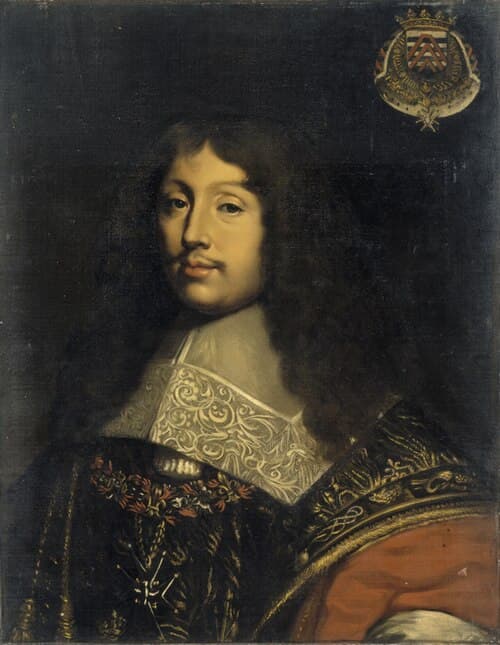
Francois de La Rochefoucauld
Maxims

Moderation is presented as a calculated display of mental strength intended to avoid envy and project an image of being superior to one's own good fortune.

Moderation is caused by the fear of exciting the envy and contempt which those merit who are intoxicated with their good fortune; it is a vain display of our strength of mind, and in short the moderation of men at their greatest height is only a desire to appear greater than their fortune.
6

Francois de La Rochefoucauld

Maxims

Moderation as Social Tool

This candidate extends the parent's cynical view by suggesting moderation is socially constructed to curb ambition and console the ordinary, reinforcing the idea that it is not an inherent virtue.

Moderation is made a virtue to limit the ambition of the great; to console ordinary people for their small fortune and equally small ability.

Aristotle

Nicomachean Ethics

The Golden Mean

Aristotle presents moderation as a genuine mean between excess and defect, essential for preserving virtues like courage and self-mastery, directly opposing the parent's claim that it is merely a vain display.

...f health. And if the subject in its general maxims is such, still less in its application to particular cases is exactness attainable:[5] because these fall not under any art or system of rules, but it must be left in each instance to the individual agents to look to the exigencies of the particular case, as it is in the art of healing, or that of navigating a ship. Still, though the present subject is confessedly such, we must try and do what we can for it. First then this must be noted, that
It is the nature of such things to be spoiled by defect and excess; as we see in the case of health and strength (since for the illustration of things which cannot be seen we must use those that can), for excessive training impairs the strength as well as deficient: meat and drink, in like manner, in too great or too small quantities, impair the health: while in due proportion they cause, increase, and preserve it. Thus it is therefore with the habits of perfected Self-Mastery and Courage and the rest of the Virtues: for the man who flies from and fears all things, and never stands up against...
Furthermore, not only do the origination, growth, and marring of the habits come from and by the same circumstances, but also the acts of working after the habits are formed will be exercised on the same: for so it is also with those other things which are more directly matters of sight, strength for instance: for this comes by taking plenty of food and doing plenty of work, and the man who has attained strength is best able to do these: and so it is with the Virtues, for not only do we by abs...

Blaise Pascal

Pensees

Living in Others' Minds

Pascal explains the psychological drive behind vain displays: we neglect our real selves to craft an imaginary existence in others' minds, attaching virtues to that image. This illuminates why one might moderate behavior to gain reputation.

...or us according to the world, not according to God.] 146 Man is obviously made to think. It is his whole dignity and his whole merit; and his whole duty is to think as he ought. Now, the order of thought is to begin with self, and with its Author and its end. Now, of what does the world think? Never of this, but of dancing, playing the lute, singing, making verses, running at the ring, etc., fighting, making oneself king, without thinking what it is to be a king and what to be a man. 147
We do not content ourselves with the life we have in ourselves and in our own being; we desire to live an imaginary life in the mind of others, and for this purpose we endeavour to shine. We labour unceasingly to adorn and preserve this imaginary existence, and neglect the real. And if we possess calmness, or generosity, or truthfulness, we are eager to make it known, so as to attach these virtues to that imaginary existence. We would rather separate them from ourselves to join them to it; and we would willingly be cowards in order to acquire the reputation of being brave.
A great proof of the nothingness of our being, not to be satisfied with the one without the other, and to renounce the one for the other! For he would be infamous who would not die to preserve his honour. 148 We are so presumptuous that we would wish to be known by all the world, even by people who shall come after, when we shall be no more; and we are so vain that the esteem of five or six neighbours delights and contents us. 149 We do not trouble ourselves about being esteemed in the to...

Arthur Schopenhauer

The Wisdom of Life

Guard Inner Fountains

Schopenhauer shifts the focus from social appearance to inner happiness, framing moderation of desires as a wise practice to preserve independence and leisure, rather than a response to envy or contempt.

...ived for twenty years in the deepest solitude in Holland, and, apart from report, was known to her only by a single essay: M. Descartes, she said, is the happiest of men, and his condition seems to me much to be envied.[1] Of course, as was the case with Descartes, external circumstances must be favorable enough to allow a man to be master of his life and happiness; or, as we read in Ecclesiastes[2]--Wisdom is good together with an inheritance, and profitable unto them that see the sun.
The man to whom nature and fate have granted the blessing of wisdom, will be most anxious and careful to keep open the fountains of happiness which he has in himself; and for this, independence and leisure are necessary. To obtain them, he will be willing to moderate his desires and harbor his resources, all the more because he is not, like others, restricted to the external world for his pleasures.
So he will not be misled by expectations of office, or money, or the favor and applause of his fellowmen, into surrendering himself in order to conform to low desires and vulgar tastes; nay, in such a case he will follow the advice that Horace gives in his epistle to Maecenas.[3] [Footnote 1: Vie de Descartes, par Baillet. Liv. vii., ch. 10.] [Footnote 2: vii. 12.] [Footnote 3: Lib. 1., ep. 7.] Nec somnum plebis laudo, satur altilium, nec Otia divitiis Arabum liberrima muto. It is...

Blaise Pascal

Pensees

Touching Both Extremes

Pascal questions whether true virtue involves balancing extremes or merely oscillating between them, casting doubt on our ability to definitively characterize virtues like moderation.

...possesses, others can do likewise. There are feverish movements which health cannot imitate. Epictetus[130] concludes that since there are consistent Christians, every man can easily be so. 351 Those great spiritual efforts, which the soul sometimes assays, are things on which it does not lay hold.[131] It only leaps to them, not as upon a throne, for ever, but merely for an instant. 352 The strength of a man's virtue must not be measured by his efforts, but by his ordinary life. 353
I do not admire the excess of a virtue as of valour, except I see at the same time the excess of the opposite virtue, as in Epaminondas, who had the greatest valour and the greatest kindness. For otherwise it is not to rise, it is to fall. We do not display greatness by going to one extreme, but in touching both at once, and filling all the intervening space. But perhaps this is only a sudden movement of the soul from one to the other extreme, and in fact it is ever at one point only, as in the case of a firebrand. Be it so, but at least this indicates agility if not expanse of soul.
354 Man's nature is not always to advance; it has its advances and retreats. Fever has its cold and hot fits; and the cold proves as well as the hot the greatness of the fire of fever. The discoveries of men from age to age turn out the same. The kindness and the malice of the world in general are the same. Plerumque gratæ principibus vices.[133] 355 Continuous eloquence wearies. Princes and kings sometimes play. They are not always on their thrones. They weary there. Grandeur must b...

Arthur Schopenhauer

The Wisdom of Life

Honor's Double-Edged Sword

Schopenhauer offers practical advice: to safeguard happiness and peace of mind, one should consciously limit susceptibility to others' opinions, addressing the vanity that underlies the parent's view of moderation.

...ome, if the matter is one on which he prides himself. If only other people will applaud him, a man may console himself for downright misfortune or for the pittance he gets from the two sources of human happiness already discussed: and conversely, it is astonishing how infallibly a man will be annoyed, and in some cases deeply pained, by any wrong done to his feeling of self-importance, whatever be the nature, degree, or circumstances of the injury, or by any depreciation, slight, or disregard.
If the feeling of honor rests upon this peculiarity of human nature, it may have a very salutary effect upon the welfare of a great many people, as a substitute for morality; but upon their happiness, more especially upon that peace of mind and independence which are so essential to happiness, its effect will be disturbing and prejudicial rather than salutary. Therefore it is advisable, from our point of view, to set limits to this weakness, and duly to consider and rightly to estimate the relative value of advantages, and thus temper, as far as possible, this great susceptibility to other peo...
Otherwise, a man is the slave of what other people are pleased to think,--and how little it requires to disconcert or soothe the mind that is greedy of praise: Sic leve, sic parvum est, animum quod laudis avarum Subruit ac reficit.[1] [Footnote 1: Horace, Epist: II., 1, 180.] Therefore it will very much conduce to our happiness if we duly compare the value of what a man is in and for himself with what he is in the eyes of others. Under the former conies everything that fills up the spa...