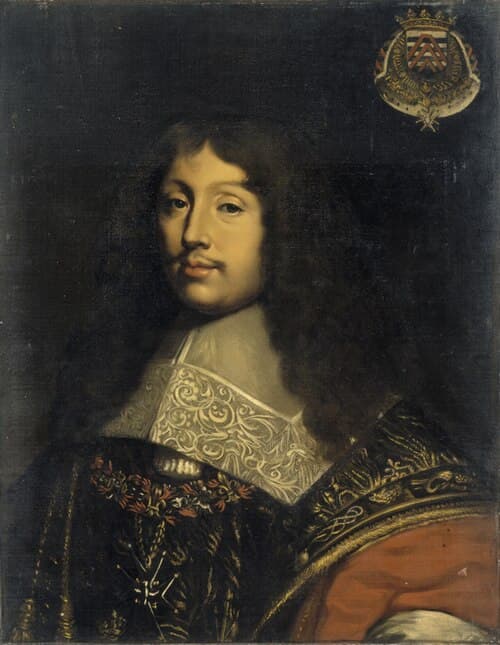
Virtue as Accident
Francois de La Rochefoucauld
Maxims

The author suggests that what is perceived as virtue is often merely a lucky arrangement of actions and interests managed by fortune rather than inherent moral character.

What we term virtue is often but a mass of various actions and divers interests, which fortune, or our own industry, manage to arrange; and it is not always from valour or from chastity that men are brave, and women chaste. "Who combats bravely is not therefore brave, He dreads a death-bed like the meanest slave; Who reasons wisely is not therefore wise, His pride in reasoning, not in acting, lies." Pope, Moral Essays, Ep. i. line 115.
6

Francois de La Rochefoucauld

Maxims

Vanity's False Virtues

This excerpt directly agrees with the parent's skepticism about pure virtue, specifying that non-virtuous motives like vanity and shame often underlie apparent bravery and chastity.

Vanity, shame, and above all disposition, often make men brave and women chaste.

Aristotle

Nicomachean Ethics

Virtue's Inner Motive

This directly challenges the parent by asserting that true virtue requires acting from moral choice and for the sake of the virtuous act itself, not from external factors or mixed motives.

...as Man is accomplished by virtue of Practical Wisdom and Moral Virtue, the latter giving the right aim and direction, the former the right means to its attainment;[49] but of the fourth part of the Soul, the mere nutritive principle, there is no such Excellence, because nothing is in its power to do or leave undone.[50] As to our not being more apt to do what is noble and just by reason of possessing Practical Wisdom, we must begin a little higher up,[51] taking this for our starting-point.
As we say that men may do things in themselves just and yet not be just men; for instance, when men do what the laws require of them, either against their will, or by reason of ignorance or something else, at all events not for the sake of the things themselves; and yet they do what they ought and all that the good man should do; so it seems that to be a good man one must do each act in a particular frame of mind, I mean from Moral Choice and for the sake of the things themselves which are done. Now it is Virtue which makes the Moral Choice right, but whatever is naturally required to carry ou...
We must halt, as it were, awhile, and speak more clearly on these points. There is then a certain faculty, commonly named Cleverness, of such a nature as to be able to do and attain whatever conduces to any given purpose: now if that purpose be a good one the faculty is praiseworthy; if otherwise, it goes by a name which, denoting strictly the ability, implies the willingness to do anything; we accordingly call the Practically-Wise Clever, and also those who can and will do anything.[52]...

Francois de La Rochefoucauld

Maxims

Bravery's Hidden Motives

This explains the psychological drivers behind what is commonly called bravery, detailing the selfish interests and fears that motivate such behavior, thus providing a mechanism for the parent's claim.

Love of glory, fear of shame, greed of fortune, the desire to make life agreeable and comfortable, and the wish to depreciate others are often causes of that bravery so vaunted among men.

Niccolo Machiavelli

The Prince

Virtue's Political Paradox

This reframes the discussion from personal moral motives to political consequences, suggesting that for a ruler, what matters is not the appearance of virtue but the preservation of the state, introducing a different value axis.

...e ought to live, that he who neglects what is done for what ought to be done, sooner effects his ruin than his preservation; for a man who wishes to act entirely up to his professions of virtue soon meets with what destroys him among so much that is evil. Hence it is necessary for a prince wishing to hold his own to know how to do wrong, and to make use of it or not according to necessity. Therefore, putting on one side imaginary things concerning a prince, and discussing those which are real,
I say that all men when they are spoken of, and chiefly princes for being more highly placed, are remarkable for some of those qualities which bring them either blame or praise; and thus it is that one is reputed liberal, another miserly, using a Tuscan term (because an avaricious person in our language is still he who desires to possess by robbery, whilst we call one miserly who deprives himself too much of the use of his own); one is reputed generous, one rapacious; one cruel, one compassionate; one faithless, another faithful; one effeminate and cowardly, another bold and brave; one affable...
CHAPTER XVI. CONCERNING LIBERALITY AND MEANNESS Commencing then with the first of the above-named characteristics, I say that it would be well to be reputed liberal. Nevertheless, liberality exercised in a way that does not bring you the reputation for it, injures you; for if one exercises it honestly and as it should be exercised, it may not become known, and you will not avoid the reproach of its opposite. Therefore, any one wishing to maintain among men the name of liberal is obliged t...

Blaise Pascal

Pensees

The Angel-Brute Paradox

This questions the possibility of pure virtue, suggesting that human virtue is inherently a balance between extremes and that aiming for angelic purity may lead to brutishness, thus complicating our ability to judge virtue simply.

...in its course. 356 The nourishment of the body is little by little. Fullness of nourishment and smallness of substance. 357 When we would pursue virtues to their extremes on either side, vices present themselves, which insinuate themselves insensibly there, in their insensible journey towards the infinitely little: and vices present themselves in a crowd towards the infinitely great, so that we lose ourselves in them, and no longer see virtues. We find fault with perfection itself. 358
Man is neither angel nor brute, and the unfortunate thing is that he who would act the angel acts the brute. 359 We do not sustain ourselves in virtue by our own strength, but by the balancing of two opposed vices, just as we remain upright amidst two contrary gales.
Remove one of the vices, and we fall into the other. 360 What the Stoics propose is so difficult and foolish! The Stoics lay down that all those who are not at the high degree of wisdom are equally foolish and vicious, as those who are two inches under water. 361 The sovereign good. Dispute about the sovereign good.--Ut sis contentus temetipso et ex te nascentibus bonis.[135] There is a contradiction, for in the end they advise suicide. Oh! What a happy life, from which we are to fre...

Aristotle

Nicomachean Ethics

Virtue Through Practice

This provides practical guidance: to become virtuous, one must repeatedly perform virtuous actions, habituating oneself to the right feelings and behaviors in various circumstances.

...ing just actions we come to be just; by doing the actions of self-mastery we come to be perfected in self-mastery; and by doing brave actions brave. And to the truth of this testimony is borne by what takes place in communities: because the law-givers make the individual members good men by habituation, and this is the intention certainly of every law-giver, and all who do not effect it well fail of their intent; and herein consists the difference between a good Constitution and a bad. Again,
Every Virtue is either produced or destroyed from and by the very same circumstances: art too in like manner; I mean it is by playing the harp that both the good and the bad harp-players are formed: and similarly builders and all the rest; by building well men will become good builders; by doing it badly bad ones: in fact, if this had not been so, there would have been no need of instructors, but all men would have been at once good or bad in their several arts without them. So too then is it with the Virtues: for by acting in the various relations in which we are thrown with our fellow men, w...
Similarly is it also with respect to the occasions of lust and anger: for some men come to be perfected in self-mastery and mild, others destitute of all self-control and passionate; the one class by behaving in one way under them, the other by behaving in another. Or, in one word, the habits are produced from the acts of working like to them: and so what we have to do is to give a certain character to these particular acts, because the habits formed correspond to the differences of these. So...