The World's Unwilling Workers
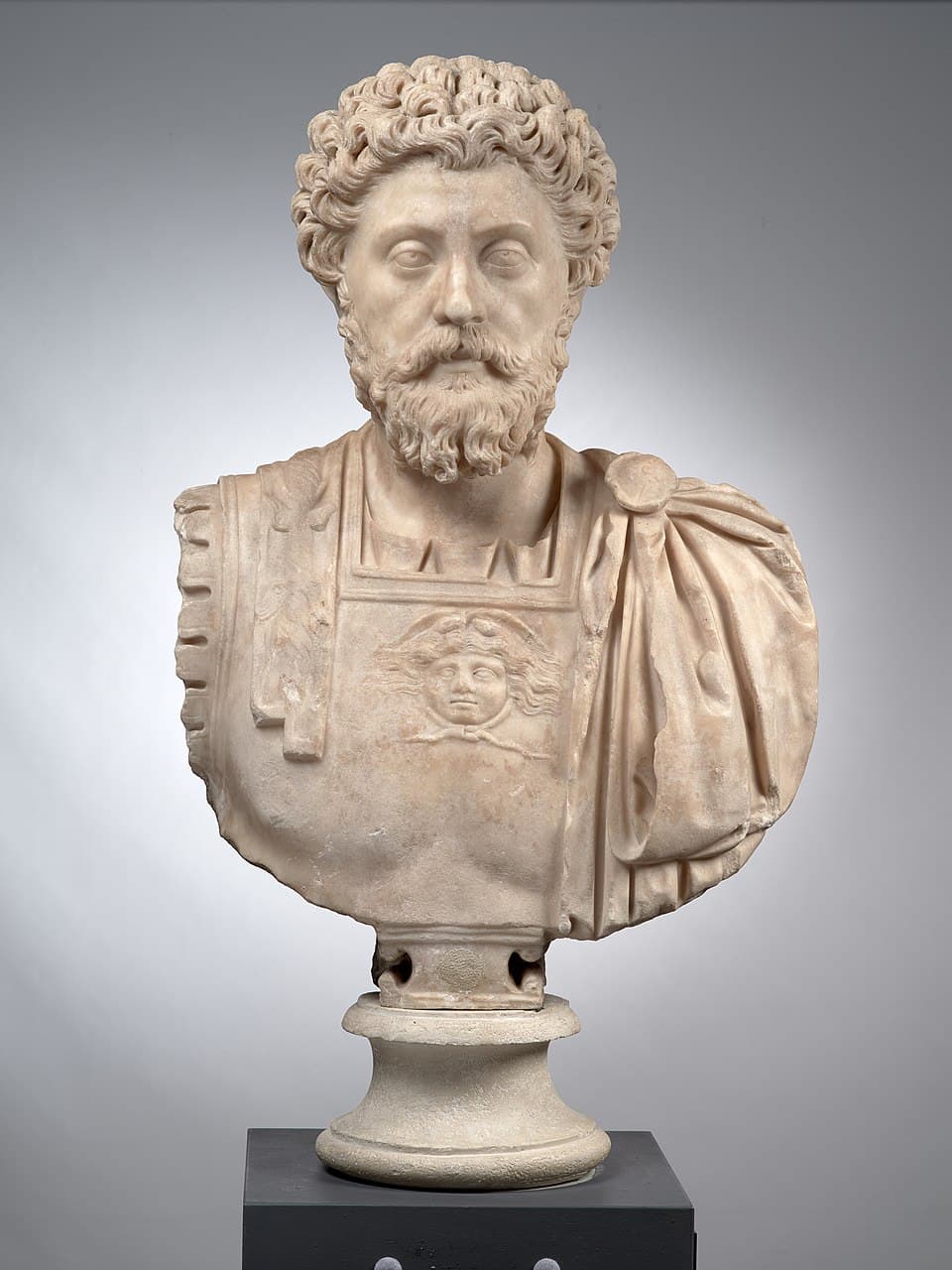
Marcus Aurelius
Meditations

The author argues that all people cooperate in the universal order, and even those who resist or complain are utilized by the Administrator of the world to further a greater purpose.

...and to hate those men, who either shall be so indeed, or shall by thee be suspected as the cause either of thy missing of the one, or falling into the other. And indeed we must needs commit many evils, if we incline to any of these things, more or less, with an opinion of any difference. But if we mind and fancy those things only, as good and bad, which wholly depend of our own wills, there is no more occasion why we should either murmur against the Gods, or be at enmity with any man. XXXVII.
We all work to one effect, some willingly, and with a rational apprehension of what we do: others without any such knowledge. As I think Heraclitus in a place speaketh of them that sleep, that even they do work in their kind, and do confer to the general operations of the world. One man therefore doth co-operate after one sort, and another after another sort; but even he that doth murmur, and to his power doth resist and hinder; even he as much as any doth co-operate. For of such also did the world stand in need. Now do thou consider among which of these thou wilt rank thyself. For as for him who is the Administrator of all, he will make good use of thee whether thou wilt or no, and make thee (as a part and member of the whole) so to co-operate with him, that whatsoever thou doest, shall turn to the furtherance of his own counsels, and resolutions.
But be not thou for shame such a part of the whole, as that vile and ridiculous verse (which Chrysippus in a place doth mention) is a part of the comedy. XXXVIII. Doth either the sun take upon him to do that which belongs to the rain? or his son Aesculapius that, which unto the earth doth properly belong? How is it with every one of the stars in particular? Though they all differ one from another, and have their several charges and functions by themselves, do they not all nevertheless concur an...
4

Marcus Aurelius

Meditations

The Universe's Co-option

This excerpt reinforces the parent's central claim that all things, even those that seem opposed, are utilized by the universal nature for its purposes. It extends the idea by suggesting that reasonable creatures can likewise use impediments as objects to further their own intended ends, aligning with the Stoic principle of turning obstacles to advantage.

...t, that once separated and cut off, it might be reunited, and come together again. But, behold, that GOODNESS how great and immense it is! which hath so much esteemed MAN. As at first he was so made, that he needed not, except he would himself, have divided himself from the whole; so once divided and cut off, IT hath so provided and ordered it, that if he would himself, he might return, and grow together again, and be admitted into its former rank and place of a part, as he was before. XXXIII.
As almost all her other faculties and properties the nature of the universe hath imparted unto every reasonable creature, so this in particular we have received from her, that as whatsoever doth oppose itself unto her, and doth withstand her in her purposes and intentions, she doth, though against its will and intention, bring it about to herself, to serve herself of it in the execution of her own destinated ends; and so by this though not intended co-operation of it with herself makes it part of herself whether it will or no. So may every reasonable creature, what crosses and impediments soev...
XXXIV. Let not the general representation unto thyself of the wretchedness of this our mortal life, trouble thee. Let not thy mind wander up and down, and heap together in her thoughts the many troubles and grievous calamities which thou art as subject unto as any other. But as everything in particular doth happen, put this question unto thyself, and say: What is it that in this present matter, seems unto thee so intolerable? For thou wilt be ashamed to confess it. Then upon this presently cal...

Niccolo Machiavelli

The Prince

Fortune vs Free Will

This excerpt challenges the parent's deterministic outlook by arguing that fortune governs only half of human actions, leaving significant scope for free will and human agency. It implies that not all actions are inevitably co-opted by a higher Administrator, contrasting with the parent's view of universal co-option.

...very bad to have neglected all other expedients for that, since you would never wish to fall because you trusted to be able to find someone later on to restore you. This again either does not happen, or, if it does, it will not be for your security, because that deliverance is of no avail which does not depend upon yourself; those only are reliable, certain, and durable that depend on yourself and your valour. CHAPTER XXV. WHAT FORTUNE CAN EFFECT IN HUMAN AFFAIRS AND HOW TO WITHSTAND HER
It is not unknown to me how many men have had, and still have, the opinion that the affairs of the world are in such wise governed by fortune and by God that men with their wisdom cannot direct them and that no one can even help them; and because of this they would have us believe that it is not necessary to labour much in affairs, but to let chance govern them. This opinion has been more credited in our times because of the great changes in affairs which have been seen, and may still be seen, every day, beyond all human conjecture. Sometimes pondering over this, I am in some degree inclined t...
[1] Frederick the Great was accustomed to say: “The older one gets the more convinced one becomes that his Majesty King Chance does three-quarters of the business of this miserable universe.” Sorel’s “Eastern Question.” I compare her to one of those raging rivers, which when in flood overflows the plains, sweeping away trees and buildings, bearing away the soil from place to place; everything flies before it, all yield to its violence, without being able in any way to withstand it; and ye...

Aristotle

Nicomachean Ethics

Contemplation as Divine

This excerpt reframes the discussion from the fact of universal co-operation to the quality and purpose of work. It posits that the highest form of work is contemplative speculation, which is the source of happiness for gods and humans, thereby shifting the value axis from mere contribution to the type of contribution that constitutes eudaimonia.

...e actions, withstanding objects of fear and meeting dangers, because it is noble to do so? or liberal ones? but to whom shall they be giving? and further, it is absurd to think they have money or anything of the kind. And as for actions of perfected self-mastery, what can theirs be? would it not be a degrading praise that they have no bad desires? In short, if one followed the subject into all details all the circumstances connected with Moral actions would appear trivial and unworthy of Gods.
Still, every one believes that they live, and therefore that they Work because it is not supposed that they sleep their time away like Endymion: now if from a living being you take away Action, still more if Creation, what remains but Contemplation? So then the Working of the Gods, eminent in blessedness, will be one apt for Contemplative Speculation; and of all human Workings that will have the greatest capacity for Happiness which is nearest akin to this. A corroboration of which position is the fact that the other animals do not partake of Happiness, being completely shut out from any such...
Happiness then is co-extensive with this Contemplative Speculation, and in proportion as people have the act of Contemplation so far have they also the being happy, not incidentally, but in the way of Contemplative Speculation because it is in itself precious. Chapter VII. So Happiness must be a kind of Contemplative Speculation; but since it is Man we are speaking of he will need likewise External Prosperity, because his Nature is not by itself sufficient for Speculation, but there must be...

Marcus Aurelius

Meditations

Reason's Generous Use

This excerpt provides practical Stoic guidance: focus on doing what is your own duty, use things rationally, carry yourself sociably toward fellow humans, and call upon the Gods. It directly addresses the parent's invitation to consider one's role and offers a blueprint for virtuous action.

...hend, as though we had had to do with an antagonist at the palestra. For as I said, it is very possible for us to avoid and decline, though we neither suspect, nor hate. XX. If anybody shall reprove me, and shall make it apparent unto me, that in any either opinion or action of mine I do err, I will most gladly retract. For it is the truth that I seek after, by which I am sure that never any man was hurt; and as sure, that he is hurt that continueth in any error, or ignorance whatsoever. XXI.
I for my part will do what belongs unto me; as for other things, whether things unsensible or things irrational; or if rational, yet deceived and ignorant of the true way, they shall not trouble or distract me. For as for those creatures which are not endued with reason and all other things and-matters of the world whatsoever I freely, and generously, as one endued with reason, of things that have none, make use of them. And as for men, towards them as naturally partakers of the same reason, my care is to carry myself sociably. But whatsoever it is that thou art about, remember to call upon th...
XXII. Alexander of Macedon, and he that dressed his mules, when once dead both came to one. For either they were both resumed into those original rational essences from whence all things in the world are propagated; or both after one fashion were scattered into atoms. XXIII Consider how many different things, whether they concern our bodies, or our souls, in a moment of time come to pass in every one of us, and so thou wilt not wonder if many more things or rather all things that are done, ca...