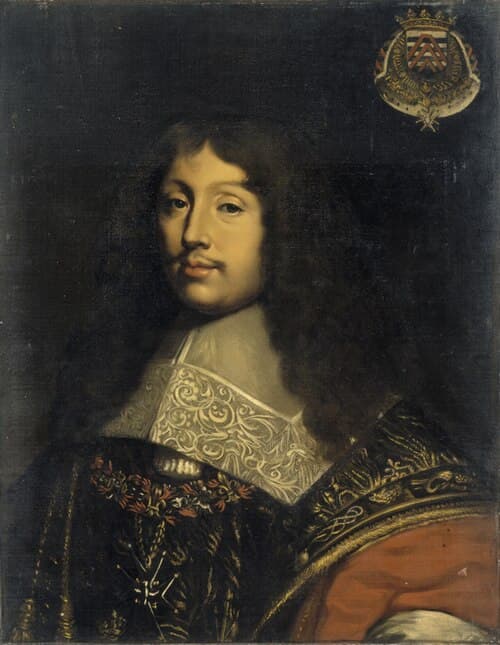
Judgment as Light
Francois de La Rochefoucauld
Maxims

The author argues that judgment is not a separate faculty from the mind, but rather the depth and clarity of the mind's own light.

We are deceived if we think that mind and judgment are two different matters: judgment is but the extent of the light of the mind. This light penetrates to the bottom of matters; it remarks all that can be remarked, and perceives what appears imperceptible. Therefore we must agree that it is the extent of the light in the mind that produces all the effects which we attribute to judgment.
5

David Hume

An Enquiry Concerning Human Understanding

Mind's Distinct Faculties

Hume directly asserts that the mind consists of distinct powers and faculties, such as will and understanding, and that these distinctions are real and discernible. This contradicts La Rochefoucauld's identification of judgment as merely the extent of the mind's light, arguing instead for a plurality of separate mental faculties.

...al geography, or delineation of the distinct parts and powers of the mind, it is at least a satisfaction to go so far; and the more obvious this science may appear (and it is by no means obvious) the more contemptible still must the ignorance of it be esteemed, in all pretenders to learning and philosophy. Nor can there remain any suspicion, that this science is uncertain and chimerical; unless we should entertain such a scepticism as is entirely subversive of all speculation, and even action.
It cannot be doubted, that the mind is endowed with several powers and faculties, that these powers are distinct from each other, that what is really distinct to the immediate perception may be distinguished by reflexion; and consequently, that there is a truth and falsehood in all propositions on this subject, and a truth and falsehood, which lie not beyond the compass of human understanding. There are many obvious distinctions of this kind, such as those between the will and understanding, the imagination and passions, which fall within the comprehension of every human creature; and the fine...
Some instances, especially late ones, of success in these enquiries, may give us a juster notion of the certainty and solidity of this branch of learning. And shall we esteem it worthy the labour of a philosopher to give us a true system of the planets, and adjust the position and order of those remote bodies; while we affect to overlook those, who, with so much success, delineate the parts of the mind, in which we are so intimately concerned? 9. But may we not hope, that philosophy, if cultiv...

John Stewart Mill

Utilitarianism

Instincts' Fallible Judgments

Mill suggests that judgment arises from intellectual instincts, which are not infallible, similar to animal instincts for action. This provides a naturalistic mechanism for how we form judgments, contrasting with the parent's more metaphorical description of judgment as a penetrating light.

...o it, though (as is commonly acknowledged) never, in the long run, disjoined from it in fact. In the case of this, as of our other moral sentiments, there is no necessary connexion between the question of its origin, and that of its binding force. That a feeling is bestowed on us by Nature, does not necessarily legitimate all its promptings. The feeling of justice might be a peculiar instinct, and might yet require, like our other instincts, to be controlled and enlightened by a higher reason.
If we have intellectual instincts, leading us to judge in a particular way, as well as animal instincts that prompt us to act in a particular way, there is no necessity that the former should be more infallible in their sphere than the latter in theirs: it may as well happen that wrong judgments are occasionally suggested by those, as wrong actions by these. But though it is one thing to believe that we have natural feelings of justice, and another to acknowledge them as an ultimate criterion of conduct, these two opinions are very closely connected in point of fact.
Mankind are always predisposed to believe that any subjective feeling, not otherwise accounted for, is a revelation of some objective reality. Our present object is to determine whether the reality, to which the feeling of justice corresponds, is one which needs any such special revelation; whether the justice or injustice of an action is a thing intrinsically peculiar, and distinct from all its other qualities, or only a combination of certain of those qualities, presented under a peculiar asp...

Blaise Pascal

Pensees

The Ignorance Spectrum

Pascal reframes the basis of good judgment away from the 'light of the mind' to the state of ignorance. He argues that natural ignorance or learned ignorance is the true ground for sound judgment, while partial knowledge leads to error. This shifts the discussion from intellectual illumination to humility and self-awareness.

...from a certain aspect. 326 Injustice.--It is dangerous to tell the people that the laws are unjust; for they obey them only because they think them just. Therefore it is necessary to tell them at the same time that they must obey them because they are laws, just as they must obey superiors, not because they are just, but because they are superiors. In this way all sedition is prevented, if this can be made intelligible, and it be understood what is the proper definition of justice. 327
The world is a good judge of things, for it is in natural ignorance, which is man's true state. The sciences have two extremes which meet. The first is the pure natural ignorance in which all men find themselves at birth. The other extreme is that reached by great intellects, who, having run through all that men can know, find they know nothing, and come back again to that same ignorance from which they set out; but this is a learned ignorance which is conscious of itself. Those between the two, who have departed from natural ignorance and not been able to reach the other, have some smattering...
The people and the wise constitute the world; these despise it, and are despised. They judge badly of everything, and the world judges rightly of them. 328 The reason of effects.--Continual alternation of pro and con. We have then shown that man is foolish, by the estimation he makes of things which are not essential; and all these opinions are destroyed. We have next shown that all these opinions are very sound, and that thus, since all these vanities are well founded, the people are not...

Blaise Pascal

Pensees

Mutual Deception

Pascal questions the reliability of our cognitive faculties, noting that reason and the senses deceive each other. This casts doubt on our ability to achieve the kind of penetrating insight La Rochefoucauld describes, highlighting the inherent limitations and deceptions in human understanding.

...re too blunt to touch them accurately. If they reach the point, they either crush it, or lean all round, more on the false than on the true. [Man is so happily formed that he has no ... good of the true, and several excellent of the false. Let us now see how much.... But the most powerful cause of error is the war existing between the senses and reason.] 83 We must thus begin the chapter on the deceptive powers. Man is only a subject full of error, natural and ineffaceable, without grace.
Nothing shows him the truth. Everything deceives him. These two sources of truth, reason and the senses, besides being both wanting in sincerity, deceive each other in turn. The senses mislead the reason with false appearances, and receive from reason in their turn the same trickery which they apply to her; reason has her revenge. The passions of the soul trouble the senses, and make false impressions upon them. They rival each other in falsehood and deception. But besides those errors which arise accidentally and through lack of intelligence, with these heterogeneous faculties ...
84 The imagination enlarges little objects so as to fill our souls with a fantastic estimate; and, with rash insolence, it belittles the great to its own measure, as when talking of God. 85 Things which have most hold on us, as the concealment of our few possessions, are often a mere nothing. It is a nothing which our imagination magnifies into a mountain. Another turn of the imagination would make us discover this without difficulty. 86 [My fancy makes me hate a croaker, and one who p...

David Hume

An Enquiry Concerning Human Understanding

Proportion Belief to Evidence

Hume offers practical advice for exercising judgment: proportion your belief to the evidence, recognizing that experience is not infallible. This guides how to navigate uncertainty and make reasoned conclusions in everyday life.

...this kind, which must at least silence the most arrogant bigotry and superstition, and free us from their impertinent solicitations. I flatter myself, that I have discovered an argument of a like nature, which, if just, will, with the wise and learned, be an everlasting check to all kinds of superstitious delusion, and consequently, will be useful as long as the world endures. For so long, I presume, will the accounts of miracles and prodigies be found in all history, sacred and profane. 87.
Though experience be our only guide in reasoning concerning matters of fact; it must be acknowledged, that this guide is not altogether infallible, but in some cases is apt to lead us into errors. One, who in our climate, should expect better weather in any week of June than in one of December, would reason justly, and conformably to experience; but it is certain, that he may happen, in the event, to find himself mistaken. However, we may observe, that, in such a case, he would have no cause to complain of experience; because it commonly informs us beforehand of the uncertainty, by that contra...
In such conclusions as are founded on an infallible experience, he expects the event with the last degree of assurance, and regards his past experience as a full proof of the future existence of that event. In other cases, he proceeds with more caution: He weighs the opposite experiments: He considers which side is supported by the greater number of experiments: to that side he inclines, with doubt and hesitation; and when at last he fixes his judgement, the evidence exceeds not what we prope...