Happiness as Sole End
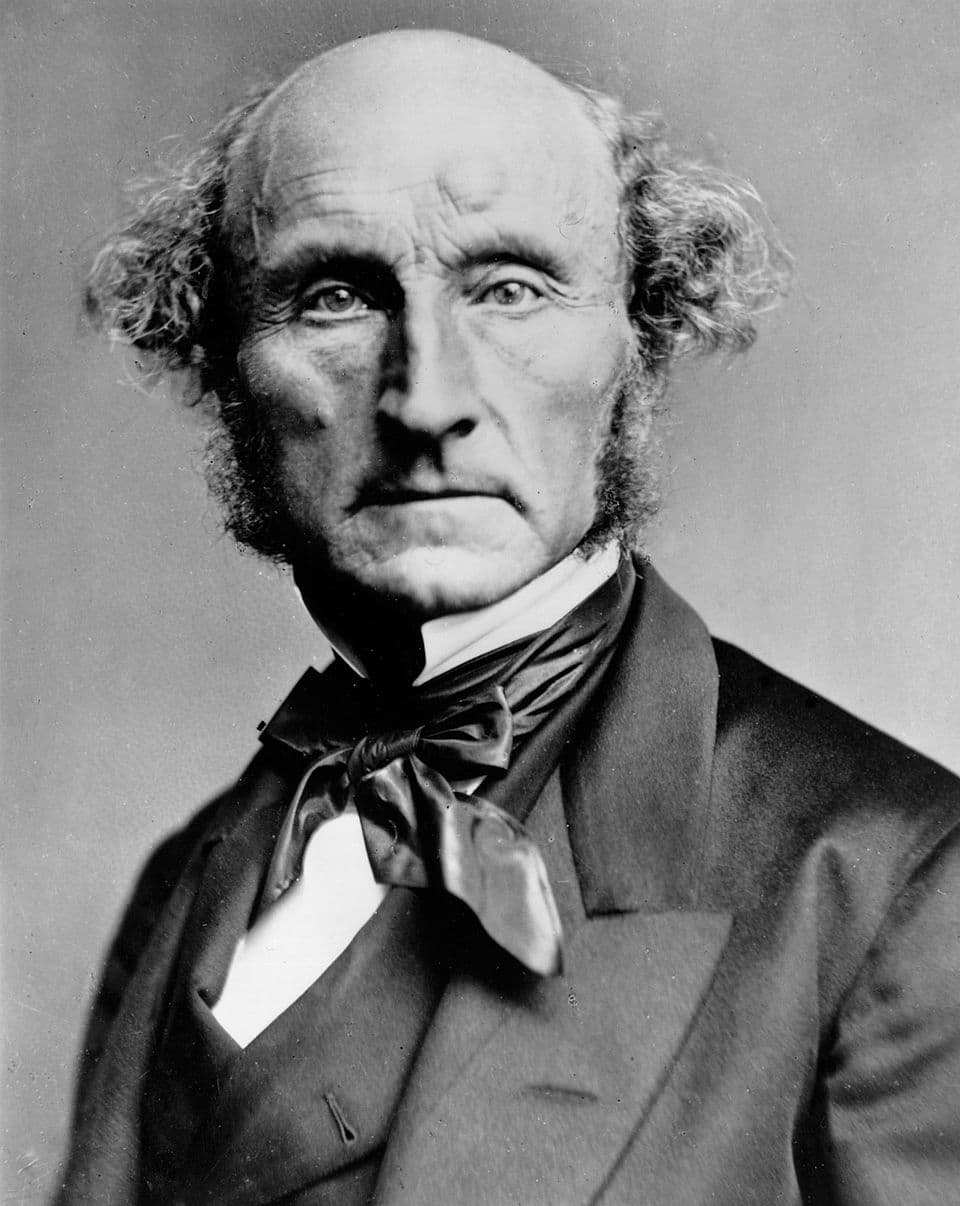
John Stewart Mill
Utilitarianism

Mill argues that because human nature is psychologically driven to desire happiness, it serves as the sole end of human action and the ultimate criterion for morality.

...he pleasure and pain seldom exist separately, but almost always together, the same person feeling pleasure in the degree of virtue attained, and pain in not having attained more. If one of these gave him no pleasure, and the other no pain, he would not love or desire virtue, or would desire it only for the other benefits which it might produce to himself or to persons whom he cared for. We have now, then, an answer to the question, of what sort of proof the principle of utility is susceptible.
If the opinion which I have now stated is psychologically true--if human nature is so constituted as to desire nothing which is not either a part of happiness or a means of happiness, we can have no other proof, and we require no other, that these are the only things desirable. If so, happiness is the sole end of human action, and the promotion of it the test by which to judge of all human conduct; from whence it necessarily follows that it must be the criterion of morality, since a part is included in the whole.
And now to decide whether this is really so; whether mankind do desire nothing for itself but that which is a pleasure to them, or of which the absence is a pain; we have evidently arrived at a question of fact and experience, dependent, like all similar questions, upon evidence. It can only be determined by practised self-consciousness and self-observation, assisted by observation of others. I believe that these sources of evidence, impartially consulted, will declare that desiring a thing an...
6

Aristotle

Nicomachean Ethics

Happiness as Ultimate End

This excerpt agrees that happiness is the ultimate end pursued for its own sake, while other goods are pursued both for themselves and for the sake of happiness, directly supporting the parent's claim that happiness is the sole end of human action.

...e object of our search: but if several, then the most final of them will be it. Now that which is an object of pursuit in itself we call more final than that which is so with a view to something else; that again which is never an object of choice with a view to something else than those which are so both in themselves and with a view to this ulterior object: and so by the term “absolutely final,” we denote that which is an object of choice always in itself, and never with a view to any other.
And of this nature Happiness is mostly thought to be, for this we choose always for its own sake, and never with a view to anything further: whereas honour, pleasure, intellect, in fact every excellence we choose for their own sakes, it is true (because we would choose each of these even if no result were to follow), but we choose them also with a view to happiness, conceiving that through their instrumentality we shall be happy: but no man chooses happiness with a view to them, nor in fact with a view to any other thing whatsoever.
The same result[15] is seen to follow also from the notion of self-sufficiency, a quality thought to belong to the final good. Now by sufficient for Self, we mean not for a single individual living a solitary life, but for his parents also and children and wife, and, in general, friends and countrymen; for man is by nature adapted to a social existence. But of these, of course, some limit must be fixed: for if one extends it to parents and descendants and friends’ friends, there is no end to i...

David Hume

An Enquiry Concerning Human Understanding

Moral Sentiments from Society

This excerpt challenges the parent's rational deduction by asserting that moral sentiments arise immediately from nature based on social utility, and questions whether philosophical reasoning can override these natural feelings, suggesting an alternative source for morality.

...he affections take a narrower and more natural survey of their object; and by an economy, more suitable to the infirmity of human minds, regard alone the beings around us, and are actuated by such events as appear good or ill to the private system. 80. The case is the same with moral as with physical ill. It cannot reasonably be supposed, that those remote considerations, which are found of so little efficacy with regard to one, will have a more powerful influence with regard to the other.
The mind of man is so formed by nature that, upon the appearance of certain characters, dispositions, and actions, it immediately feels the sentiment of approbation or blame; nor are there any emotions more essential to its frame and constitution. The characters which engage our approbation are chiefly such as contribute to the peace and security of human society; as the characters which excite blame are chiefly such as tend to public detriment and disturbance: Whence it may reasonably be presumed, that the moral sentiments arise, either mediately or immediately, from a reflection of these opp...
A man who is robbed of a considerable sum; does he find his vexation for the loss anywise diminished by these sublime reflections? Why then should his moral resentment against the crime be supposed incompatible with them? Or why should not the acknowledgment of a real distinction between vice and virtue be reconcileable to all speculative systems of philosophy, as well as that of a real distinction between personal beauty and deformity? Both these distinctions are founded in the natural sentime...

John Stewart Mill

Utilitarianism

Means Become Ends

This excerpt explains the psychological process by which objects originally desired as means to happiness become desired as ends in themselves, and thus part of happiness, providing a mechanism for why human nature desires nothing except as part of or means to happiness.

...st moving forces of human life, but money is, in many cases, desired in and for itself; the desire to possess it is often stronger than the desire to use it, and goes on increasing when all the desires which point to ends beyond it, to be compassed by it, are falling off. It may be then said truly, that money is desired not for the sake of an end, but as part of the end. From being a means to happiness, it has come to be itself a principal ingredient of the individual's conception of happiness.
The same may be said of the majority of the great objects of human life--power, for example, or fame; except that to each of these there is a certain amount of immediate pleasure annexed, which has at least the semblance of being naturally inherent in them; a thing which cannot be said of money. Still, however, the strongest natural attraction, both of power and of fame, is the immense aid they give to the attainment of our other wishes; and it is the strong association thus generated between them and all our objects of desire, which gives to the direct desire of them the intensity it often as...
The person is made, or thinks he would be made, happy by its mere possession; and is made unhappy by failure to obtain it. The desire of it is not a different thing from the desire of happiness, any more than the love of music, or the desire of health. They are included in happiness. They are some of the elements of which the desire of happiness is made up. Happiness is not an abstract idea, but a concrete whole; and these are some of its parts. And the utilitarian standard sanctions and approv...

David Hume

An Enquiry Concerning Human Understanding

Liberty's Moral Essential

This excerpt reframes the discussion by arguing that liberty is essential for actions to have any moral quality at all, shifting the focus from happiness as the criterion to freedom as a necessary condition for moral judgment.

...s not the whole character. Again, repentance wipes off every crime, if attended with a reformation of life and manners. How is this to be accounted for? but by asserting that actions render a person criminal merely as they are proofs of criminal principles in the mind; and when, by an alteration of these principles, they cease to be just proofs, they likewise cease to be criminal. But, except upon the doctrine of necessity, they never were just proofs, and consequently never were criminal. 77.
It will be equally easy to prove, and from the same arguments, that liberty, according to that definition above mentioned, in which all men agree, is also essential to morality, and that no human actions, where it is wanting, are susceptible of any moral qualities, or can be the objects either of approbation or dislike. For as actions are objects of our moral sentiment, so far only as they are indications of the internal character, passions, and affections; it is impossible that they can give rise either to praise or blame, where they proceed not from these principles, but are derived altoge...
78. I pretend not to have obviated or removed all objections to this theory, with regard to necessity and liberty. I can foresee other objections, derived from topics which have not here been treated of. It may be said, for instance, that, if voluntary actions be subjected to the same laws of necessity with the operations of matter, there is a continued chain of necessary causes, pre-ordained and pre-determined, reaching from the original cause of all to every single volition of every human cr...

Blaise Pascal

Pensees

Happiness's Universal Pursuit

This excerpt raises a meta-level doubt about humanity's ability to achieve happiness through our own efforts, suggesting that despite universal desire, we may be incapable of attaining the very end proposed as the criterion of morality.

...g how much his knowledge is obscured by the passions. I would indeed that he should hate in himself the lust which determined his will by itself, so that it may not blind him in making his choice, and may not hinder him when he has chosen. 424 All these contradictions, which seem most to keep me from the knowledge of religion, have led me most quickly to the true one. SECTION VII MORALITY AND DOCTRINE 425 Second part.--That man without faith cannot know the true good, nor justice.
All men seek happiness. This is without exception. Whatever different means they employ, they all tend to this end. The cause of some going to war, and of others avoiding it, is the same desire in both, attended with different views. The will never takes the least step but to this object. This is the motive of every action of every man, even of those who hang themselves. And yet after such a great number of years, no one without faith has reached the point to which all continually look. All complain, princes and subjects, noblemen and commoners, old and young, strong and weak, learned and igno...
But example teaches us little. No resemblance is ever so perfect that there is not some slight difference; and hence we expect that our hope will not be deceived on this occasion as before. And thus, while the present never satisfies us, experience dupes us, and from misfortune to misfortune leads us to death, their eternal crown. What is it then that this desire and this inability proclaim to us, but that there was once in man a true happiness of which there now remain to him only the mark an...

Aristotle

Nicomachean Ethics

Virtue's Pleasure-Pain Axis

This excerpt offers practical guidance on moral education, advising that children should be trained from an early age to feel pleasure and pain in response to appropriate objects, thereby cultivating virtue.

...e so we shall be best able to stand up against such objects. And for a test of the formation of the habits we must take the pleasure or pain which succeeds the acts; for he is perfected in Self-Mastery who not only abstains from the bodily pleasures but is glad to do so; whereas he who abstains but is sorry to do it has not Self-Mastery: he again is brave who stands up against danger, either with positive pleasure or at least without any pain; whereas he who does it with pain is not brave.[6]
For Moral Virtue has for its object-matter pleasures and pains, because by reason of pleasure we do what is bad, and by reason of pain decline doing what is right (for which cause, as Plato observes, men should have been trained straight from their childhood to receive pleasure and pain from proper objects, for this is the right education). Again: since Virtues have to do with actions and feelings, and on every feeling and every action pleasure and pain follow, here again is another proof that Virtue has for its object-matter pleasure and pain. The same is shown also by the fact that punishmen...
Again, to quote what we said before: every habit of the Soul by its very nature has relation to, and exerts itself upon, things of the same kind as those by which it is naturally deteriorated or improved: now such habits do come to be vicious by reason of pleasures and pains, that is, by men pursuing or avoiding respectively, either such as they ought not, or at wrong times, or in wrong manner, and so forth (for which reason, by the way, some people define the Virtues as certain states of impas...