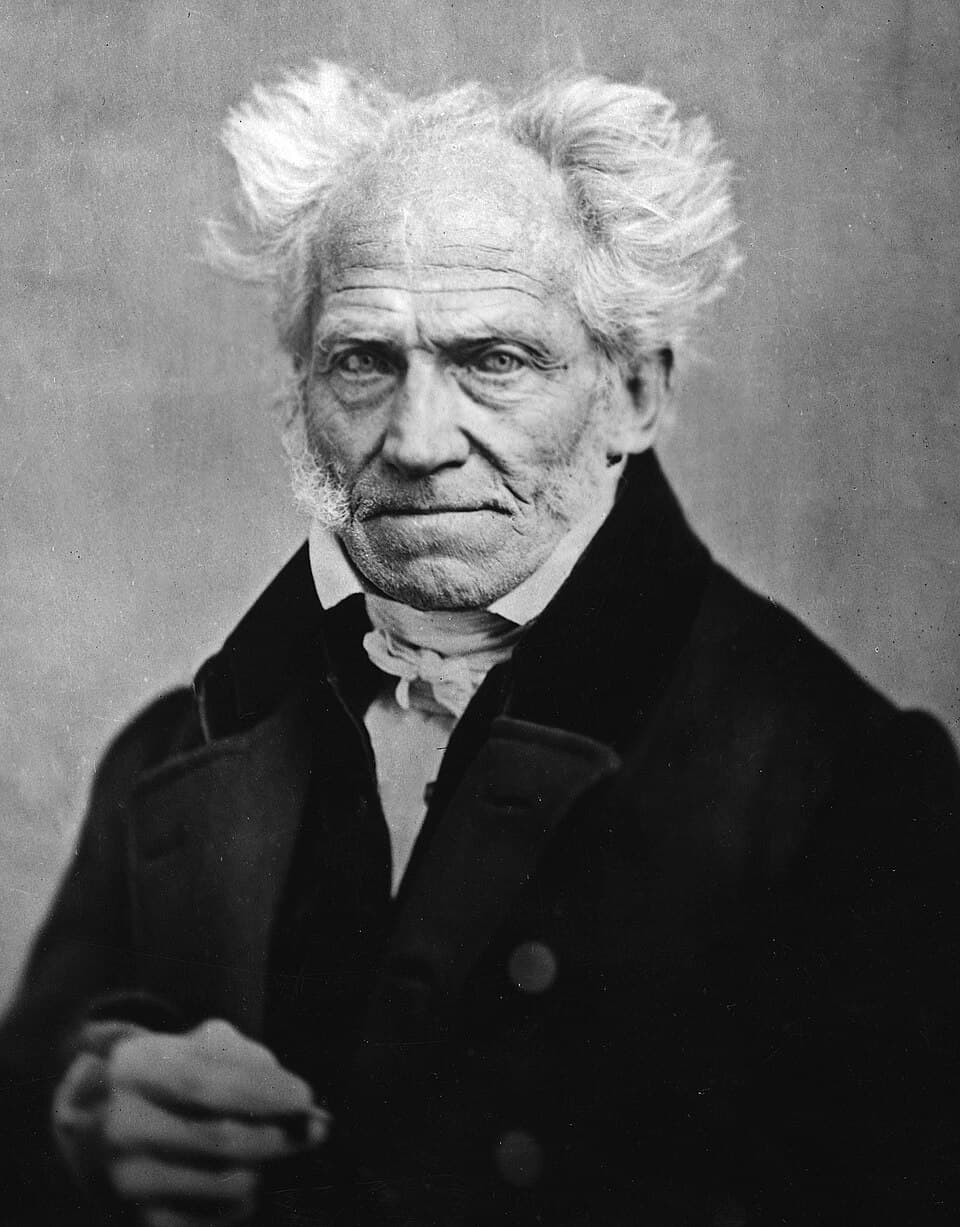
Works vs Actions
Arthur Schopenhauer
The Wisdom of Life

The author posits that while noble actions are eventually forgotten or fossilized by history, works of genius possess an immortal, living influence through the written word.

...ds its way. Everyone can make a claim to honor; very few to fame, as being attainable only in virtue of extraordinary achievements. These achievements may be of two kinds, either actions or works; and so to fame there are two paths open. On the path of actions, a great heart is the chief recommendation; on that of works, a great head. Each of the two paths has its own peculiar advantages and detriments; and the chief difference between them is that actions are fleeting, while works remain.
The influence of an action, be it never so noble, can last but a short time; but a work of genius is a living influence, beneficial and ennobling throughout the ages. All that can remain of actions is a memory, and that becomes weak and disfigured by time--a matter of indifference to us, until at last it is extinguished altogether; unless, indeed, history takes it up, and presents it, fossilized, to posterity. Works are immortal in themselves, and once committed to writing, may live for ever.
Of Alexander the Great we have but the name and the record; but Plato and Aristotle, Homer and Horace are alive, and as directly at work to-day as they were in their own lifetime. The Vedas, and their Upanishads, are still with us: but of all contemporaneous actions not a trace has come down to us.[1] [Footnote 1: Accordingly it is a poor compliment, though sometimes a fashionable one, to try to pay honor to a work by calling it an action. For a work is something essentially higher in its...
6

Arthur Schopenhauer

The Wisdom of Life

Intellect's Immortal Reward

This excerpt affirms the parent's claim by stating that greatness of intellect produces works that receive admiration for centuries, and that the value of posthumous fame lies in deserving it, which is its own reward. This extends the idea that works of genius have a living influence.

...e foreheads of the wise--like a man who owes his property to a forged will. The truest fame, the fame that comes after death, is never heard of by its recipient; and yet he is called a happy man. His happiness lay both in the possession of those great qualities which won him fame, and in the opportunity that was granted him of developing them--the leisure he had to act as he pleased, to dedicate himself to his favorite pursuits. It is only work done from the heart that ever gains the laurel.
Greatness of soul, or wealth of intellect, is what makes a man happy--intellect, such as, when stamped on its productions, will receive the admiration of centuries to come,--thoughts which make him happy at the time, and will in their turn be a source of study and delight to the noblest minds of the most remote posterity. The value of posthumous fame lies in deserving it; and this is its own reward. Whether works destined to fame attain it in the lifetime of their author is a chance affair, of no very great importance.
For the average man has no critical power of his own, and is absolutely incapable of appreciating the difficulty of a great work. People are always swayed by authority; and where fame is widespread, it means that ninety-nine out of a hundred take it on faith alone. If a man is famed far and wide in his own lifetime, he will, if he is wise, not set too much value upon it, because it is no more than the echo of a few voices, which the chance of a day has touched in his favor. Would a musician fe...

Marcus Aurelius

Meditations

The Vanity of Reputation

This excerpt directly questions the value of posthumous fame, arguing that those who remember you will soon die, and even if memory were immortal, it is of no relevance. This challenges the parent's emphasis on the importance of immortal works.

...t as though thou hadst thousands of years to live. Death hangs over thee: whilst yet thou livest, whilst thou mayest, be good. XV. Now much time and leisure doth he gain, who is not curious to know what his neighbour hath said, or hath done, or hath attempted, but only what he doth himself, that it may be just and holy? or to express it in Agathos' words, Not to look about upon the evil conditions of others, but to run on straight in the line, without any loose and extravagant agitation. XVI.
He who is greedy of credit and reputation after his death, doth not consider, that they themselves by whom he is remembered, shall soon after every one of them be dead; and they likewise that succeed those; until at last all memory, which hitherto by the succession of men admiring and soon after dying hath had its course, be quite extinct. But suppose that both they that shall remember thee, and thy memory with them should be immortal, what is that to thee? I will not say to thee after thou art dead; but even to thee living, what is thy praise?
But only for a secret and politic consideration, which we call οἰκονομίαν, or dispensation. For as for that, that it is the gift of nature, whatsoever is commended in thee, what might be objected from thence, let that now that we are upon another consideration be omitted as unseasonable. That which is fair and goodly, whatsoever it be, and in what respect soever it be, that it is fair and goodly, it is so of itself, and terminates in itself, not admitting praise as a part or member: that theref...

Arthur Schopenhauer

The Wisdom of Life

Intellect's Perfume

This excerpt provides a philosophical explanation: actions are based on motive and are fleeting because they are part of the universal Will, whereas works have a permanent character because they spring from the Intellect, which rises above the faults of the world of Will. This accounts for the difference in lasting influence.

...ander the Great we have but the name and the record; but Plato and Aristotle, Homer and Horace are alive, and as directly at work to-day as they were in their own lifetime. The Vedas, and their Upanishads, are still with us: but of all contemporaneous actions not a trace has come down to us.[1] [Footnote 1: Accordingly it is a poor compliment, though sometimes a fashionable one, to try to pay honor to a work by calling it an action. For a work is something essentially higher in its nature.
An action is always something based on motive, and, therefore, fragmentary and fleeting--a part, in fact, of that Will which is the universal and original element in the constitution of the world. But a great and beautiful work has a permanent character, as being of universal significance, and sprung from the Intellect, which rises, like a perfume, above the faults and follies of the world of Will.
The fame of a great action has this advantage, that it generally starts with a loud explosion; so loud, indeed, as to be heard all over Europe: whereas the fame of a great work is slow and gradual in its beginnings; the noise it makes is at first slight, but it goes on growing greater, until at last, after a hundred years perhaps, it attains its full force; but then it remains, because the works remain, for thousands of years. But in the other case, when the first explosion is over, the noise...

Friedrich Nietzsche

Beyond Good and Evil

Nobility as Self-Reverence

This excerpt shifts the focus from external achievements (actions or works) to internal disposition, arguing that nobility is determined not by what one does or creates, but by a fundamental self-reverence of the soul. This reframes the value axis from lasting influence to self-certainty.

...efore it has arrived man DENIES--that there are stars there. "How many centuries does a mind require to be understood?"--that is also a standard, one also makes a gradation of rank and an etiquette therewith, such as is necessary for mind and for star. 286. "Here is the prospect free, the mind exalted." [FOOTNOTE: Goethe's "Faust," Part II, Act V. The words of Dr. Marianus.]--But there is a reverse kind of man, who is also upon a height, and has also a free prospect--but looks DOWNWARDS. 287.
What is noble? What does the word "noble" still mean for us nowadays? How does the noble man betray himself, how is he recognized under this heavy overcast sky of the commencing plebeianism, by which everything is rendered opaque and leaden?--It is not his actions which establish his claim--actions are always ambiguous, always inscrutable; neither is it his "works." One finds nowadays among artists and scholars plenty of those who betray by their works that a profound longing for nobleness impels them; but this very NEED of nobleness is radically different from the needs of the noble soul itse...
-- 288. There are men who are unavoidably intellectual, let them turn and twist themselves as they will, and hold their hands before their treacherous eyes--as though the hand were not a betrayer; it always comes out at last that they have something which they hide--namely, intellect. One of the subtlest means of deceiving, at least as long as possible, and of successfully representing oneself to be stupider than one really is--which in everyday life is often as desirable as an umbrella,--is ca...

Friedrich Nietzsche

Beyond Good and Evil

Success as Disguise

This excerpt questions the reliability of historical judgment, asserting that success is a liar and that the 'work' invents its creator; what passes for immortal fame is often a later fiction. This casts doubt on our ability to truly know which works are immortal.

...TEMPT, the multitude, the educated, and the visionaries, have on their part learnt great reverence--reverence for "great men" and marvelous animals, for the sake of whom one blesses and honours the fatherland, the earth, the dignity of mankind, and one's own self, to whom one points the young, and in view of whom one educates them. And who knows but in all great instances hitherto just the same happened: that the multitude worshipped a God, and that the "God" was only a poor sacrificial animal!
SUCCESS has always been the greatest liar--and the "work" itself is a success; the great statesman, the conqueror, the discoverer, are disguised in their creations until they are unrecognizable; the "work" of the artist, of the philosopher, only invents him who has created it, is REPUTED to have created it; the "great men," as they are reverenced, are poor little fictions composed afterwards; in the world of historical values spurious coinage PREVAILS.
Those great poets, for example, such as Byron, Musset, Poe, Leopardi, Kleist, Gogol (I do not venture to mention much greater names, but I have them in my mind), as they now appear, and were perhaps obliged to be: men of the moment, enthusiastic, sensuous, and childish, light-minded and impulsive in their trust and distrust; with souls in which usually some flaw has to be concealed; often taking revenge with their works for an internal defilement, often seeking forgetfulness in their soaring fr...

Marcus Aurelius

Meditations

Fame's Vanishing Act

This excerpt offers practical guidance on how to live: focus on cultivating a just mind, charitable actions, truthful speech, and an understanding free from error, while embracing whatever happens as necessary. This answers the question of what one should do in light of the transience of fame.

...whom thou thyself in thy lifetime hast known much distracted about vain things, and in the meantime neglecting to do that, and closely and unseparably (as fully satisfied with it) to adhere unto it, which their own proper constitution did require. And here thou must remember, that thy carriage in every business must be according to the worth and due proportion of it, for so shalt thou not easily be tired out and vexed, if thou shalt not dwell upon small matters longer than is fitting. XXVIII.
Those words which once were common and ordinary, are now become obscure and obsolete; and so the names of men once commonly known and famous, are now become in a manner obscure and obsolete names. Camillus, Cæso, Volesius, Leonnatus; not long after, Scipio, Cato, then Augustus, then Adrianus, then Antoninus Pius: all these in a short time will be out of date, and, as things of another world as it were, become fabulous. And this I say of them, who once shined as the wonders of their ages, for as for the rest, no sooner are they expired, than with them all their fame and memory. And what is it t...
Willingly therefore, and wholly surrender up thyself unto that fatal concatenation, yielding up thyself unto the fates, to be disposed of at their pleasure. XXIX. Whatsoever is now present, and from day to day hath its existence; all objects of memories, and the minds and memories themselves, incessantly consider, all things that are, have their being by change and alteration. Use thyself therefore often to meditate upon this, that the nature of the universe delights in nothing more, than in a...