The Chain of Usurpation
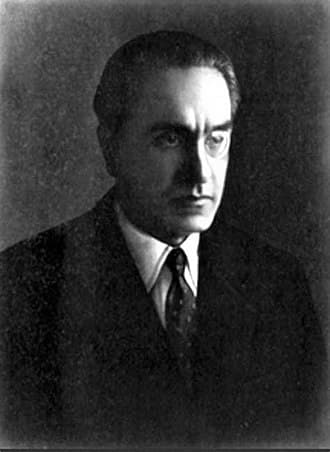
Julius Evola
Revolt Against the Modern World

A thesis on the political involution of the West, tracing the path from the breakdown of Empire to the rise of individual sovereignty, democracy, and eventually total collectivism.

...state, she was the first to witness the demise of the monarchical system and the advent of the republican regime in the sense of a decisive and manifest shift of power to the Third Estate. Thus, in the whole of European nations, France became the main hotbed of the revolutionary ferment and of the lay and rationalistic mentality, which is highly deleterious for any surviving residue of the traditional spirit. There is another specific and interesting complementary aspect of historical nemesis.
The emancipation of the Empire from the states that had become absolutist was followed by the emancipation of sovereign, free, and autonomous individuals from the state. The former usurpation attracted and presaged the latter; eventually, in the atomized and anarchical states (as sovereign nations) the usurped sovereignity of the state was destined to be replaced with popular sovereignity in the context of which every authority and law are legitimate only and exclusively as the expressions of the will of the citizens who are single sovereign individuals; this is the democraticized and "liberal" state, a prelude to the last phase of this general involution, that is, a purely collectivized society.
Beside the causes "from above," however, we should not forget the causes "from below," which are distinct though parallel to the former ones. Every traditional organization is a dynamic system that presupposes forces of chaos, inferior impulses, and interests as well as lower social and ethnic strata that are dominated and restrained by a principle of "form"; it also includes the dynamism of the two antagonistic poles. The superior pole, connected to the supernatural element of the higher stra...
4

Julius Evola

Revolt Against the Modern World

State's Spiritual Descent

Echoes the parent's thesis by explicitly describing the derivation of state authority from the people as a perversion that leads to collectivism, reinforcing the narrative of regression.

...am von Eschenbach's view the Grail was a mysterious "divine stone" that also had the power of revealing who was worthy of the royal dignity. Hence, the obvious meaning of the trial consisting in being able to draw a sword from a stone (Theseus in Hellas, Sohrab in Persia, King Arthur in ancient Britannia, and so on). The doctrine of the two natures—which is the foundation of the traditional view of life—is also reflected in the relationship that exists between the state and the people (demos).
The idea that the state derives its origin from the demos and that the principle of its legitimacy and its foundation rests upon it is an ideological perversion typical of the modern world and essentially represents a regression; with this view we regress to what was typical of naturalistic social forms lacking an authentic spiritual chrism. Once this direction was taken, an inevitable downward spiraling occurred, which ended with the triumph of the collectivistic world of the masses and with the advent of radical democracy. This regression proceeds from a logical necessity and from the physic...
Between these two poles there is a deep tension, which in the traditional world was resolved in the sense of a transfiguration and of the establishment of an order from above. Thus, the very notion of "natural rights" is a mere fiction, and the antitraditional and subversive use of that is well documented. There is no such thing as a nature that is "good" in itself and in which the inalienable rights of an individual, which are to be equally enjoyed by every human being, are preformed and roote...

Friedrich Nietzsche

Thus Spake Zarathustra

The State as Lie

Directly contradicts the parent's notion of legitimate popular sovereignty by characterizing the state as a deceitful entity that falsely claims to embody the people.

...t have it commanded unto you. Let your love to life be love to your highest hope; and let your highest hope be the highest thought of life! Your highest thought, however, ye shall have it commanded unto you by me—and it is this: man is something that is to be surpassed. So live your life of obedience and of war! What matter about long life! What warrior wisheth to be spared! I spare you not, I love you from my very heart, my brethren in war!— Thus spake Zarathustra. XI. THE NEW IDOL.
Somewhere there are still peoples and herds, but not with us, my brethren: here there are states. A state? What is that? Well! open now your ears unto me, for now will I say unto you my word concerning the death of peoples. A state, is called the coldest of all cold monsters. Coldly lieth it also; and this lie creepeth from its mouth: “I, the state, am the people.” It is a lie! Creators were they who created peoples, and hung a faith and a love over them: thus they served life. Destroyers, are they who lay snares for many, and call it the state: they hang a sword and a hundred cravings over th...
Where there is still a people, there the state is not understood, but hated as the evil eye, and as sin against laws and customs. This sign I give unto you: every people speaketh its language of good and evil: this its neighbour understandeth not. Its language hath it devised for itself in laws and customs. But the state lieth in all languages of good and evil; and whatever it saith it lieth; and whatever it hath it hath stolen. False is everything in it; with stolen teeth it biteth, the bi...

Julius Evola

Revolt Against the Modern World

The Caste Rebellion Cycle

Explains the causal mechanism: rebellion of a lower caste causes the higher caste to lose its character, paving the way for demagogy and revolution, which aligns with the parent's description of successive emancipations.

...lph ideal. What replaced the Empire was not the Church at the head of a reinvigorated "Christendom," but the multiplicity of national states that were increasingly intolerant of any higher principle of authority. Moreover, the deconsecration of the rulers as well as their insubordination toward the Empire, by depriving the organisms over which they presided of the chrism bestowed by a higher principle, unavoidably pushed them into the orbit of lower forces that were destined to slowly prevail.
Generally speaking, whenever a caste rebels against a higher caste and claims its independence, the higher caste unavoidably loses the character that it had within the hierarchy and thereby reflects the character of the immediately lower caste. Absolutism—the materialistic transposition of the traditional idea of unity—paved the way for demagogy and for republican, national, and antimonarchical revolutions. And in those countries in which the kings, in their struggle against feudal aristocracy and their work of political centralization favored the claims of the bourgeoisie and of the plebs, th...
Philip the Fair, who anticipated and exemplified the various stages of the involutive process, is often singled out as an example. With the pope's complicity he destroyed the Templar order that was the most characteristic expression of the tendency to reconstruct the unity of the priestly and the warrior elements that was the soul of medieval chivalry. He started the process of lay emancipation of the state from the Church, which was promoted without interruptions by his successors, just as the...

Friedrich Nietzsche

Beyond Good and Evil

Luxury Discipline

Reframes the emergence of individualism not as a decline from traditional hierarchy but as a natural and even splendid development in conditions of abundance and relaxed discipline.

...for the degenerating): it counts intolerance itself among the virtues, under the name of "justice." A type with few, but very marked features, a species of severe, warlike, wisely silent, reserved, and reticent men (and as such, with the most delicate sensibility for the charm and nuances of society) is thus established, unaffected by the vicissitudes of generations; the constant struggle with uniform UNFAVOURABLE conditions is, as already remarked, the cause of a type becoming stable and hard.
Finally, however, a happy state of things results, the enormous tension is relaxed; there are perhaps no more enemies among the neighbouring peoples, and the means of life, even of the enjoyment of life, are present in superabundance. With one stroke the bond and constraint of the old discipline severs: it is no longer regarded as necessary, as a condition of existence--if it would continue, it can only do so as a form of LUXURY, as an archaizing TASTE. Variations, whether they be deviations (into the higher, finer, and rarer), or deteriorations and monstrosities, appear suddenly on the scene...
At this turning-point of history there manifest themselves, side by side, and often mixed and entangled together, a magnificent, manifold, virgin-forest-like up-growth and up-striving, a kind of TROPICAL TEMPO in the rivalry of growth, and an extraordinary decay and self-destruction, owing to the savagely opposing and seemingly exploding egoisms, which strive with one another "for sun and light," and can no longer assign any limit, restraint, or forbearance for themselves by means of the hither...