Ride the Wave
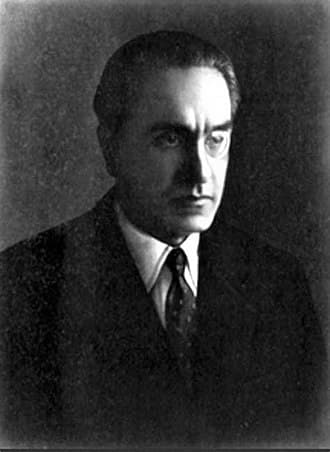
Julius Evola
Revolt Against the Modern World

The author prescribes a path of silent endurance for a principled few who, by remaining unmoved by modern decadence, act as a 'pole' of truth that may eventually trigger a liberating crisis in others.

...d new ears in order to perceive things that have become invisible and mute with the passing of time. It is only by going back to the meanings and the visions that existed before the establishment of the causes of the present civilization that it is possible to achieve an absolute reference point—the key for the real understanding of all modern deviations—and at the same time to find a strong defense and an unbreakable line of resistance for those who, despite everything, will still be standing.
The only thing that matters today is the activity of those who can "ride the wave" and remain firm in their principles, unmoved by any concessions and indifferent to the fevers, the convulsions, the superstitions, and the prostitutions that characterize modern generations. The only thing that matters is the silent endurance of a few, whose impassible presence as "stone guests" helps to create new relationships, new distances, new values, and helps to construct a pole that, although it will certainly not prevent this world inhabited by the distracted and restless from being what it is, will still help to transmit to someone the sensation of the truth—a sensation that could become for them the principle of a liberating crisis.
Within the limits of my possibilities, this book hopes to be a contribution to such a task. Its main thesis is the idea of the decadent nature of the modern world. Its purpose is to present evidence supporting this idea through reference to the spirit of universal civilization, on the ruins of which everything that is modern has arisen; this will serve as the basis of every possibility and as the categorical legitimization of a revolt, since only then will it become clear what one is reacting...
4

Blaise Pascal

Pensees

The Moral Harbor

Pascal's excerpt provides the grounding principle that in a world of universal agitation, a fixed point is necessary for judgment and moral orientation. This justifies the need for steadfast individuals who, by remaining unmoved, offer a reference against excess.

...te and infatuated about it. If one considers one's work immediately after having done it, one is entirely prepossessed in its favour; by delaying too long, one can no longer enter into the spirit of it. So with pictures seen from too far or too near; there is but one exact point which is the true place wherefrom to look at them: the rest are too near, too far, too high, or too low. Perspective determines that point in the art of painting. But who shall determine it in truth and morality? 382
When all is equally agitated, nothing appears to be agitated, as in a ship. When all tend to debauchery, none appears to do so. He who stops draws attention to the excess of others, like a fixed point. 383 The licentious tell men of orderly lives that they stray from nature's path, while they themselves follow it; as people in a ship think those move who are on the shore. On all sides the language is similar. We must have a fixed point in order to judge. The harbour decides for those who are in a ship; but where shall we find a harbour in morality?
384 Contradiction is a bad sign of truth; several things which are certain are contradicted; several things which are false pass without contradiction. Contradiction is not a sign of falsity, nor the want of contradiction a sign of truth. 385 Scepticism.--Each thing here is partly true and partly false. Essential truth is not so; it is altogether pure and altogether true. This mixture dishonours and annihilates it. Nothing is purely true, and thus nothing is true, meaning by that pure t...

Friedrich Nietzsche

Beyond Good and Evil

The Despairing Certainty

Nietzsche critiques the rigid adherence to certainty as a form of nihilism, suggesting that the 'puritanical fanatics of conscience' who prefer a sure nothing over an uncertain something are driven by despair. This challenges the parent's prescription by implying that such steadfastness may be a symptom of weariness rather than strength.

...t cannot do otherwise; philosophy is this tyrannical impulse itself, the most spiritual Will to Power, the will to "creation of the world," the will to the causa prima. 10. The eagerness and subtlety, I should even say craftiness, with which the problem of "the real and the apparent world" is dealt with at present throughout Europe, furnishes food for thought and attention; and he who hears only a "Will to Truth" in the background, and nothing else, cannot certainly boast of the sharpest ears.
In rare and isolated cases, it may really have happened that such a Will to Truth--a certain extravagant and adventurous pluck, a metaphysician's ambition of the forlorn hope--has participated therein: that which in the end always prefers a handful of "certainty" to a whole cartload of beautiful possibilities; there may even be puritanical fanatics of conscience, who prefer to put their last trust in a sure nothing, rather than in an uncertain something. But that is Nihilism, and the sign of a despairing, mortally wearied soul, notwithstanding the courageous bearing such a virtue may display.
It seems, however, to be otherwise with stronger and livelier thinkers who are still eager for life. In that they side AGAINST appearance, and speak superciliously of "perspective," in that they rank the credibility of their own bodies about as low as the credibility of the ocular evidence that "the earth stands still," and thus, apparently, allowing with complacency their securest possession to escape (for what does one at present believe in more firmly than in one's body?),--who knows if they...

Friedrich Nietzsche

Thus Spake Zarathustra

The Playful Spirit

Nietzsche proposes an opposing ideal: a spirit that plays naively with all that is holy, embracing a superhuman welfare that often appears inhuman. This alternative values creative irreverence and the transvaluation of values over silent endurance, aiming to commence a new seriousness through parody and danger.

...ess dangerously healthy, always healthy again,—it would seem as if, in recompense for it all, that we have a still undiscovered country before us, the boundaries of which no one has yet seen, a beyond to all countries and corners of the ideal known hitherto, a world so over-rich in the beautiful, the strange, the questionable, the frightful, and the divine, that our curiosity as well as our thirst for possession thereof, have got out of hand—alas! that nothing will now any longer satisfy us!—
“How could we still be content with THE MAN OF THE PRESENT DAY after such outlooks, and with such a craving in our conscience and consciousness? Sad enough; but it is unavoidable that we should look on the worthiest aims and hopes of the man of the present-day with ill-concealed amusement, and perhaps should no longer look at them. Another ideal runs on before us, a strange, tempting ideal full of danger, to which we should not like to persuade any one, because we do not so readily acknowledge any one’s RIGHT THERETO: the ideal of a spirit who plays naively (that is to say involuntarily and fr...
Although the figure of Zarathustra and a large number of the leading thoughts in this work had appeared much earlier in the dreams and writings of the author, “Thus Spake Zarathustra” did not actually come into being until the month of August 1881 in Sils Maria; and it was the idea of the Eternal Recurrence of all things which finally induced my brother to set forth his new views in poetic language. In regard to his first conception of this idea, his autobiographical sketch, “Ecce Homo”, writ...

Julius Evola

Revolt Against the Modern World

Remembering Nonhuman Truths

Evola outlines a concrete method: to access traditional truths, one must free oneself from the obstacles of human constructions and attain a nonhuman, objective perspective. This practice enables the individual to become a vessel for the 'sensation of truth' described in the parent text.

...pproach are well known: "Arbitrary!" "Subjective!" "Preposterous!" In my perspective there is no arbitrariness, subjectivity, or fantasy, just like there is no objectivity and scientific causality the way modern men understand them. All these notions are unreal; all these notions are outside Tradition. Tradition begins wherever it is possible to rise above these notions by achieving a superindividual and nonhuman perspective; thus, I will have a minimal concern for debating and "demonstrating."
The truths that may reveal the world of Tradition are not those that can be "learned" or "discussed"; either they are or they are not. It is only possible to remember them, and this happens when one becomes free of the obstacles represented by various human constructions, first among which are all the results and the methods of specialized researchers; in other words, one becomes free of these encumbrances when the capacity for seeing from that nonhuman perspective, which is the same as the traditional perspective, has been attained. This is one of the essential "protests" that should be made...
Universality is typical of this world; the axiom, " quod ubique, quad ab omnibus et quod semper " characterizes it. Inherent to the idea of "traditional civilization" is the idea of an equivalence or homology of its various forms realized in space and time. The correspondences may not be noticeable from the outside; one may be taken aback by the diversity of several possible and yet equivalent expressions; in some case the correspondences are respected in the spirit, in other cases only formall...