Memory's Boundless Chamber
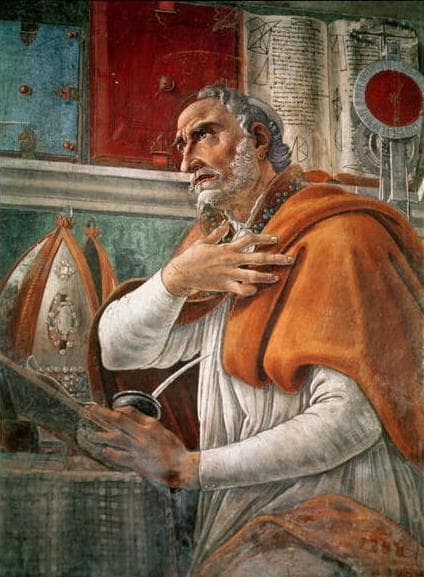
Augustine of Hippo
ConfessionsThe author analyzes the vast and incomprehensible nature of memory, arguing that the mind is too narrow to fully contain or understand its own power.
...ence again infer future actions, events and hopes, and all these again I reflect on, as present. "I will do this or that," say I to myself, in that great receptacle of my mind, stored with the images of things so many and so great, "and this or that will follow." "O that this or that might be!" "God avert this or that!" So speak I to myself: and when I speak, the images of all I speak of are present, out of the same treasury of memory; nor would I speak of any thereof, were the images wanting.
Great is this force of memory, excessive great, O my God; a large and boundless chamber! who ever sounded the bottom thereof? yet is this a power of mine, and belongs unto my nature; nor do I myself comprehend all that I am. Therefore is the mind too strait to contain itself. And where should that be, which it containeth not of itself? Is it without it, and not within? how then doth it not comprehend itself? A wonderful admiration surprises me, amazement seizes me upon this.
And men go abroad to admire the heights of mountains, the mighty billows of the sea, the broad tides of rivers, the compass of the ocean, and the circuits of the stars, and pass themselves by; nor wonder that when I spake of all these things, I did not see them with mine eyes, yet could not have spoken of them, unless I then actually saw the mountains, billows, rivers, stars which I had seen, and that ocean which I believe to be, inwardly in my memory, and that, with the same vast spaces betwee...
6