Pleasure's Quality vs Quantity
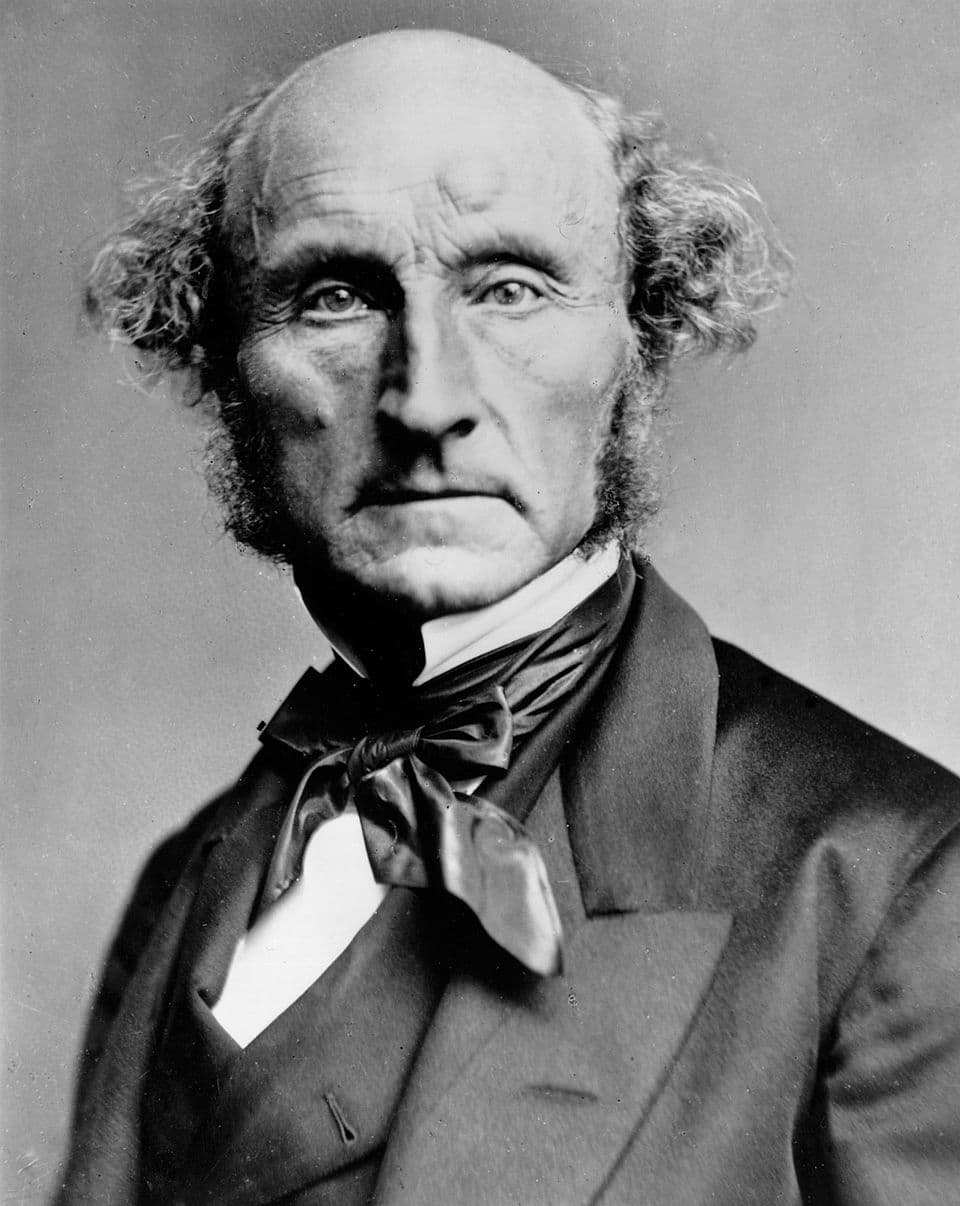
John Stewart Mill
Utilitarianism

Mill argues that the principle of utility must account for the quality of pleasures as well as quantity, suggesting that the preference of those who have experienced both is the ultimate test of superior value.

...pleasures than to those of mere sensation. It must be admitted, however, that utilitarian writers in general have placed the superiority of mental over bodily pleasures chiefly in the greater permanency, safety, uncostliness, &c., of the former--that is, in their circumstantial advantages rather than in their intrinsic nature. And on all these points utilitarians have fully proved their case; but they might have taken the other, and, as it may be called, higher ground, with entire consistency.
It is quite compatible with the principle of utility to recognise the fact, that some kinds of pleasure are more desirable and more valuable than others. It would be absurd that while, in estimating all other things, quality is considered as well as quantity, the estimation of pleasures should be supposed to depend on quantity alone. If I am asked, what I mean by difference of quality in pleasures, or what makes one pleasure more valuable than another, merely as a pleasure, except its being greater in amount, there is but one possible answer. Of two pleasures, if there be one to which all or almost all who have experience of both give a decided preference, irrespective of any feeling of moral obligation to prefer it, that is the more desirable pleasure.
If one of the two is, by those who are competently acquainted with both, placed so far above the other that they prefer it, even though knowing it to be attended with a greater amount of discontent, and would not resign it for any quantity of the other pleasure which their nature is capable of, we are justified in ascribing to the preferred enjoyment a superiority in quality, so far outweighing quantity as to render it, in comparison, of small account. Now it is an unquestionable fact that tho...
4

John Stewart Mill

Utilitarianism

Socrates over Pig

This excerpt extends the argument by illustrating that those who have experienced both higher and lower pleasures will prefer the former, using the famous comparison between human and pig, Socrates and fool. This reinforces the idea that quality of pleasure is recognized by competent judges.

...is indisputable that the being whose capacities of enjoyment are low, has the greatest chance of having them fully satisfied; and a highly-endowed being will always feel that any happiness which he can look for, as the world is constituted, is imperfect. But he can learn to bear its imperfections, if they are at all bearable; and they will not make him envy the being who is indeed unconscious of the imperfections, but only because he feels not at all the good which those imperfections qualify.
It is better to be a human being dissatisfied than a pig satisfied; better to be Socrates dissatisfied than a fool satisfied. And if the fool, or the pig, is of a different opinion, it is because they only know their own side of the question. The other party to the comparison knows both sides. It may be objected, that many who are capable of the higher pleasures, occasionally, under the influence of temptation, postpone them to the lower. But this is quite compatible with a full appreciation of the intrinsic superiority of the higher.
Men often, from infirmity of character, make their election for the nearer good, though they know it to be the less valuable; and this no less when the choice is between two bodily pleasures, than when it is between bodily and mental. They pursue sensual indulgences to the injury of health, though perfectly aware that health is the greater good. It may be further objected, that many who begin with youthful enthusiasm for everything noble, as they advance in years sink into indolence and selfish...

Aristotle

Nicomachean Ethics

Pleasure's False Crown

This excerpt disputes the utilitarian premise that pleasure is the ultimate good, arguing that many things are choice-worthy even without pleasure, and that pleasure is not the chief good. This directly opposes Mill's claim that pleasures differ in quality as the basis for desirability.

...ent kinds of Pleasure: for the former is thought to have good as the object of his intercourse, the latter Pleasure only; and this last is reproached, but the former men praise as having different objects in his intercourse. Again, no one would choose to live with a child’s intellect all his life through, though receiving the highest possible Pleasure from such objects as children receive it from; or to take Pleasure in doing any of the most disgraceful things, though sure never to be pained.
There are many things also about which we should be diligent even though they brought no Pleasure; as seeing, remembering, knowing, possessing the various Excellences; and the fact that Pleasures do follow on these naturally makes no difference, because we should certainly choose them even though no Pleasure resulted from them. It seems then to be plain that Pleasure is not the Chief Good, nor is every kind of it choice-worthy: and that there are some choice-worthy in themselves, differing in kind, i.e. in the sources from which they are derived.
Let this then suffice by way of an account of the current maxims respecting Pleasure and Pain. Chapter III. Now what it is, and how characterised, will be more plain if we take up the subject afresh. An act of Sight is thought to be complete at any moment; that is to say, it lacks nothing the accession of which subsequently will complete its whole nature. Well, Pleasure resembles this: because it is a whole, as one may say; and one could not at any moment of time take a Pleasure whose whole...

Arthur Schopenhauer

The Wisdom of Life

Pleasure in Power

This excerpt explains that pleasure is derived from the exercise of one's faculties, and that nobler faculties yield greater pleasure, providing a causal account for why some pleasures are qualitatively superior.

...milar athletic pursuits, which sometimes take the form of sport, and sometimes of a military life and real warfare. Thirdly, there are the pleasures of sensibility, such as observation, thought, feeling, or a taste for poetry or culture, music, learning, reading, meditation, invention, philosophy and the like. As regards the value, relative worth and duration of each of these kinds of pleasure, a great deal might be said, which, however, I leave the reader to supply. But every one will see that
The nobler the power which is brought into play, the greater will be the pleasure which it gives; for pleasure always involves the use of one's own powers, and happiness consists in a frequent repetition of pleasure. No one will deny that in this respect the pleasures of sensibility occupy a higher place than either of the other two fundamental kinds; which exist in an equal, nay, in a greater degree in brutes; it is this preponderating amount of sensibility which distinguishes man from other animals.
Now, our mental powers are forms of sensibility, and therefore a preponderating amount of it makes us capable of that kind of pleasure which has to do with mind, so-called intellectual pleasure; and the more sensibility predominates, the greater the pleasure will be.[1] [Footnote 1: Nature exhibits a continual progress, starting from the mechanical and chemical activity of the inorganic world, proceeding to the vegetable, with its dull enjoyment of self, from that to the animal world, where in...

Aristotle

Nicomachean Ethics

Avoiding Bodily Pleasures

This excerpt offers practical advice on managing pleasures: avoid excessive bodily pleasures that lead to pain, and cultivate the pleasures proper to virtuous activity, guiding how to live in accordance with the recognition of higher and lower pleasures.

...e of the pure Intellect or from learning only promote each. Next. “No Pleasure is the work of any Art.” What else would you expect? No active working is the work of any Art, only the faculty of so working. Still the perfumer’s Art or the cook’s are thought to belong to Pleasure. Next. “The man of Perfected Self-Mastery avoids Pleasures.” “The man of Practical Wisdom aims at escaping Pain rather than at attaining Pleasure.” “Children and brutes pursue Pleasures.” One answer will do for all.
We have already said in what sense all Pleasures are good per se and in what sense not all are good: it is the latter class that brutes and children pursue, such as are accompanied by desire and pain, that is the bodily Pleasures (which answer to this description) and the excesses of them: in short, those in respect of which the man utterly destitute of Self-Control is thus utterly destitute. And it is the absence of the pain arising from these Pleasures that the man of Practical Wisdom aims at. It follows that these Pleasures are what the man of Perfected Self-Mastery avoids: for obviously...
Then again, it is allowed that Pain is an evil and a thing to be avoided partly as bad per se, partly as being a hindrance in some particular way. Now the contrary of that which is to be avoided, quâ it is to be avoided, i.e. evil, is good. Pleasure then must be a good. The attempted answer of Speusippus, “that Pleasure may be opposed and yet not contrary to Pain, just as the greater portion of any magnitude is contrary to the less but only opposed to the exact half,” will not hold: f...