Stripping Opinion's Layers
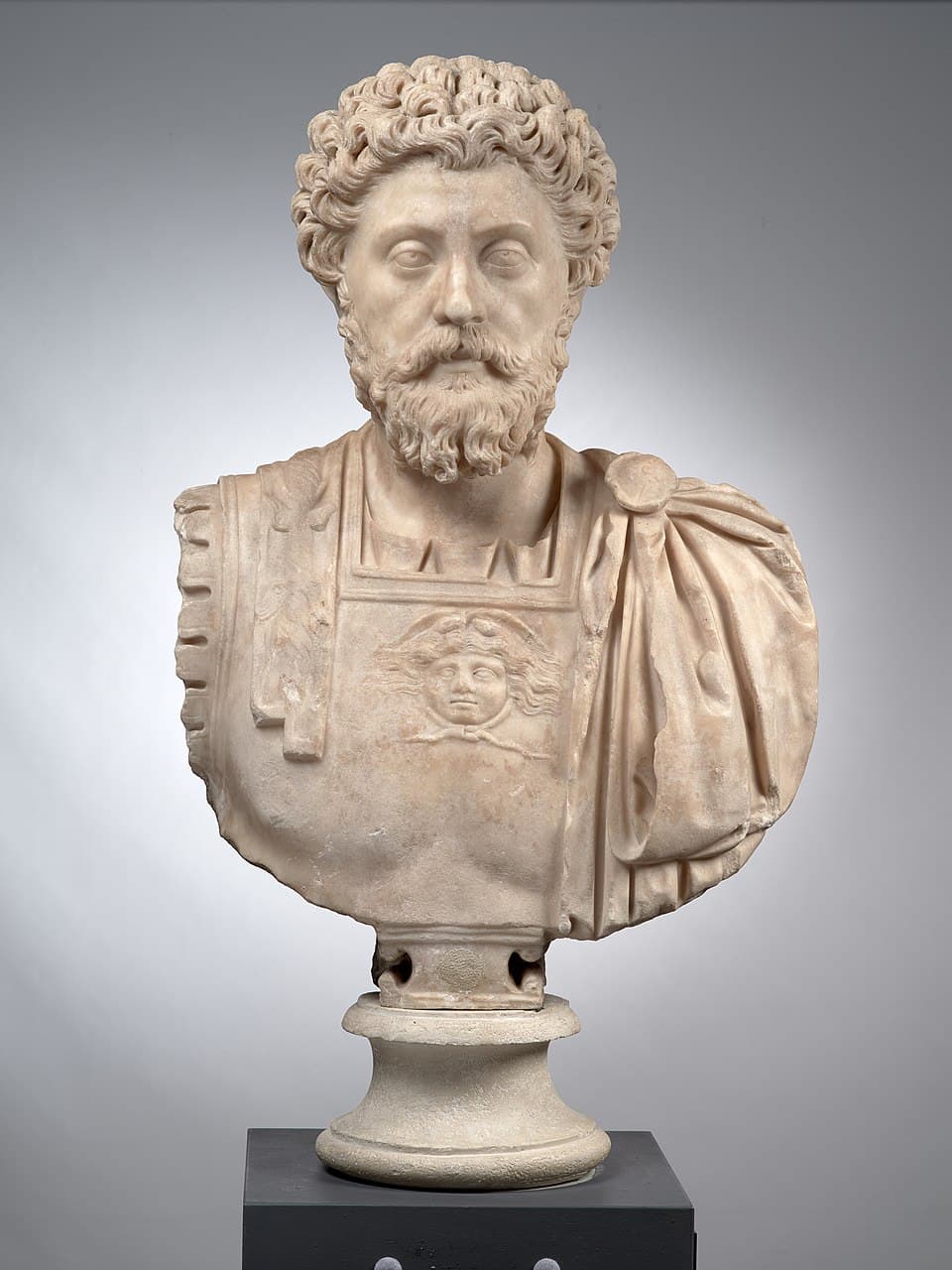
Marcus Aurelius
Meditations

The author reiterates the importance of distinguishing between external events and the internal judgments we form about them, urging the exclusion of harmful 'conceits.'

...le to judge of things with discretion? And therefore let thy chief fort and place of defence be, a mind free from passions. A stronger place, (whereunto to make his refuge, and so to become impregnable) and better fortified than this, hath no man. He that seeth not this is unlearned. He that seeth it, and betaketh not himself to this place of refuge, is unhappy. XLVII. Keep thyself to the first bare and naked apprehensions of things, as they present themselves unto thee, and add not unto them.
It is reported unto thee, that such a one speaketh ill of thee. Well; that he speaketh ill of thee, so much is reported. But that thou art hurt thereby, is not reported: that is the addition of opinion, which thou must exclude. I see that my child is sick. That he is sick, I see, but that he is in danger of his life also, I see it not. Thus thou must use to keep thyself to the first motions and apprehensions of things, as they present themselves outwardly; and add not unto them from within thyself through mere conceit and opinion. Or rather add unto them: hut as one that understandeth the true nature of all things that happen in the world.
XLVIII. Is the cucumber bitter? set it away. Brambles are in the way? avoid them. Let this suffice. Add not presently speaking unto thyself, What serve these things for in the world? For, this, one that is acquainted with the mysteries of nature, will laugh at thee for it; as a carpenter would or a shoemaker, if meeting in either of their shops with some shavings, or small remnants of their work, thou shouldest blame them for it. And yet those men, it is not for want of a place where to throw...
2
The Unconquerable Mind
Marcus Aurelius
Meditations

A reflection on the mind as an unconquerable fortress that, when free from passion and guided by reason, becomes a place of impregnable defense for the individual.

...doth hinder thee. Let it not grieve thee then, if it be not thy fault that the thing is not performed. 'Yea but it is a thing of that nature, as that thy life is not worth the while, except it may be performed.' If it be so, upon condition that thou be kindly and lovingly disposed towards all men, thou mayest be gone. For even then, as much as at any time, art thou in a very good estate of performance, when thou doest die in charity with those, that are an obstacle unto thy performance. XLVI.
Remember that thy mind is of that nature as that it becometh altogether unconquerable, when once recollected in herself, she seeks no other content than this, that she cannot be forced: yea though it so fall out, that it be even against reason itself, that it cloth bandy. How much less when by the help of reason she is able to judge of things with discretion? And therefore let thy chief fort and place of defence be, a mind free from passions. A stronger place, (whereunto to make his refuge, and so to become impregnable) and better fortified than this, hath no man.
He that seeth not this is unlearned. He that seeth it, and betaketh not himself to this place of refuge, is unhappy. XLVII. Keep thyself to the first bare and naked apprehensions of things, as they present themselves unto thee, and add not unto them. It is reported unto thee, that such a one speaketh ill of thee. Well; that he speaketh ill of thee, so much is reported. But that thou art hurt thereby, is not reported: that is the addition of opinion, which thou must exclude. I see that my child...
4
Mind's Unshaken Rest
Marcus Aurelius
Meditations

A vision of mental freedom where the soul remains tranquil and maintains right judgment regardless of physical suffering or external criticism. The author suggests that the mind can find purpose in any circumstance by viewing it as the very thing it was seeking to test its virtue.

...by herself to intend her own ends and occasions. XXXVIII. For it is a thing very possible, that a man should be a very divine man, and yet be altogether unknown. This thou must ever be mindful of, as of this also, that a man's true happiness doth consist in very few things. And that although thou dost despair, that thou shalt ever be a good either logician, or naturalist, yet thou art never the further off by it from being either liberal, or modest, or charitable, or obedient unto God. XXXIX.
Free from all compulsion in all cheerfulness and alacrity thou mayst run out thy time, though men should exclaim against thee never so much, and the wild beasts should pull in sunder the poor members of thy pampered mass of flesh. For what in either of these or the like cases should hinder the mind to retain her own rest and tranquillity, consisting both in the right judgment of those things that happen unto her, and in the ready use of all present matters and occasions? So that her judgment may say, to that which is befallen her by way of cross: this thou art in very deed, and according to thy true nature: notwithstanding that in the…
For whatsoever it be, that is now present, shall ever be embraced by me as a fit and seasonable object, both for my reasonable faculty, and for my sociable, or charitable inclination to work upon. And that which is principal in this matter, is that it may be referred either unto the praise of God, or to the good of men. For either unto God or man, whatsoever it is that doth happen in the world hath in the ordinary course of nature its proper reference; neither is there anything, that in regard...
Continue reading →
1
Blame's Futility
Marcus Aurelius
Meditations

A call to personal responsibility and pragmatism, advising that one should either fix what is wrong if it is within their power or accept it without complaint if it is not.

...cian also and to a pilot it is a shame either for the one to wonder, that such and such a one should have an ague; or for the other, that the winds should prove Contrary. XIV. Remember, that to change thy mind upon occasion, and to follow him that is able to rectify thee, is equally ingenuous, as to find out at the first, what is right and just, without help. For of thee nothing is required, ti, is beyond the extent of thine own deliberation and jun. merit, and of thine own understanding. XV.
If it were thine act and in thine own power, wouldest thou do it? If it were not, whom dost tin accuse? the atoms, or the Gods? For to do either, the part of a mad man. Thou must therefore blame nobody, but if it be in thy power, redress what is amiss; if it be not, to what end is it to complain? For nothing should be done but to some certain end.
XVI. Whatsoever dieth and falleth, however and wheresoever it die and fall, it cannot fall out of the world, here it have its abode and change, here also shall it have its dissolution into its proper elements. The same are the world's elements, and the elements of which thou dost consist. And they when they are changed, they murmur not; why shouldest thou? XVII. Whatsoever is, was made for something: as a horse, a vine. Why wonderest thou? The sun itself will say of itself, I was made for som...
2
The Soul's Blank Slate
Marcus Aurelius
Meditations

An overview of Stoic epistemology, describing the soul as a blank slate that develops general notions through the accumulation of sensory impressions and irresistible truths.

...ical. The soul of man is thus an emanation from the godhead, into whom it will eventually be re-absorbed. The divine ruling principle makes all things work together for good, but for the good of the whole. The highest good of man is consciously to work with God for the common good, and this is the sense in which the Stoic tried to live in accord with nature. In the individual it is virtue alone which enables him to do this; as Providence rules the universe, so virtue in the soul must rule man.
In Logic, the Stoic system is noteworthy for their theory as to the test of truth, the Criterion. They compared the new-born soul to a sheet of paper ready for writing. Upon this the senses write their impressions (φαντασίαι), and by experience of a number of these the soul unconsciously conceives general notions (κοιναὶ ἔννοιαι) or anticipations (προλήψεις). When the impression was such as to be irresistible it was called (καταληπτικὴ φαντασία) one that holds fast, or as they explained it, one proceeding from truth.
Ideas and inferences artificially produced by deduction or the like were tested by this 'holding perception.' Of the Ethical application I have already spoken. The highest good was the virtuous life. Virtue alone is happiness, and vice is unhappiness. Carrying this theory to its extreme, the Stoic said that there could be no gradations between virtue and vice, though of course each has its special manifestations. Moreover, nothing is good but virtue, and nothing but vice is bad. Those outside t...
6