Meditation on Frailty
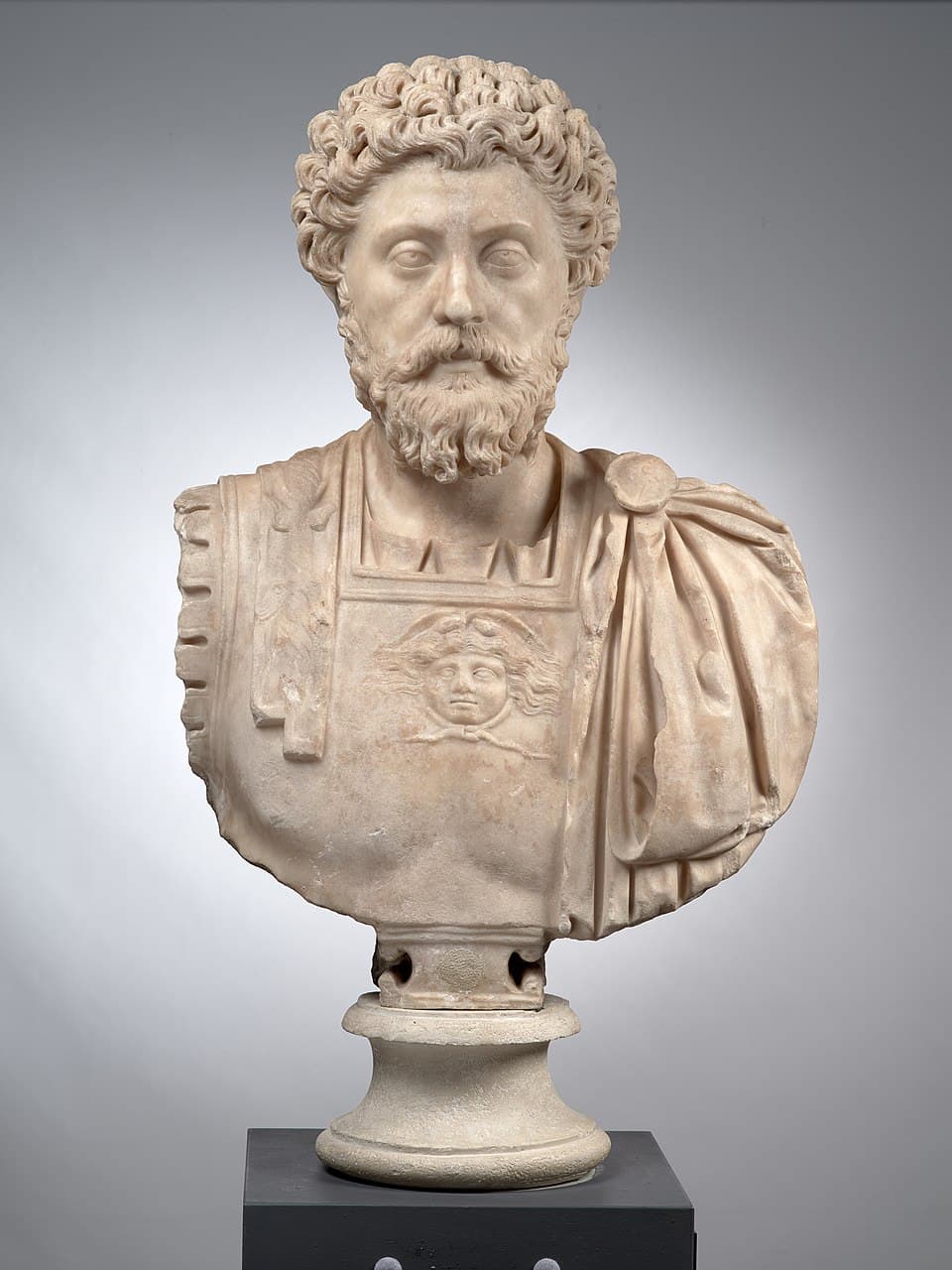
Marcus Aurelius
Meditations

The author encourages regular meditation on the brevity of life, the vastness of time, and the true nature of pain and pleasure. He asserts that all external things are mere opinion and that true rest can only be found within oneself.

...God. But were not the Gods both just and good in the highest degree, thou durst not thus reason with them. Now if just and good, it could not be that in the creation of the world, they should either unjustly or unreasonably oversee anything. V. Use thyself even unto those things that thou doest at first despair of. For the left hand we see, which for the most part lieth idle because not used; yet doth it hold the bridle with more strength than the right, because it hath been used unto it. VI.
Let these be the objects of thy ordinary meditation: to consider, what manner of men both for soul and body we ought to be, whensoever death shall surprise us: the shortness of this our mortal life: the immense vastness of the time that hath been before, and will he after us: the frailty of every worldly material object: all these things to consider, and behold clearly in themselves, all disguisement of external outside being removed and taken away. Again, to consider the efficient causes of all things: the proper ends and references of all actions: what pain is in itself; what pleasure, what death: what fame or honour, how every man is the…
As for the use of thy dogmata, thou must carry thyself in the practice of them, rather like unto a pancratiastes, or one that at the same time both fights and wrestles with hands and feet, than a gladiator. For this, if he lose his sword that he fights with, he is gone: whereas the other hath still his hand free, which he may easily turn and manage at his will. VII. All worldly things thou must behold and consider, dividing them into matter, form, and reference, or their proper end. VIII. How...
Continue reading →
2
Self-Blame for Delay
Marcus Aurelius
Meditations

A self-reflective confession where the author blames himself for failing to live according to nature despite the clear instructions and inspirations provided by the gods.

...I was no great proficient in the study of rhetoric and poetry, and of other faculties, which perchance I might have dwelt upon, if I had found myself to go on in them with success. That I did by times prefer those, by whom I was brought up, to such places and dignities, which they seemed unto me most to desire; and that I did not put them off with hope and expectation, that (since that they were yet but young) I would do the same hereafter. That I ever knew Apollonius and Rusticus, and Maximus.
That I have had occasion often and effectually to consider and meditate with myself, concerning that life which is according to nature, what the nature and manner of it is: so that as for the gods and such suggestions, helps and inspirations, as might be expected from them, nothing did hinder, but that I might have begun long before to live according to nature; or that even now that I was not yet partaker and in present possession of that life, that I myself (in that I did not observe those inward motions, and suggestions, yea and almost plain and apparent instructions and admonitions of the gods,) was the only cause of it.
That my body in such a life, hath been able to hold out so long. That I never had to do with Benedicta and Theodotus, yea and afterwards when I fell into some fits of love, I was soon cured. That having been often displeased with Rusticus, I never did him anything for which afterwards I had occasion to repent. That it being so that my mother was to die young, yet she lived with me all her latter years. That as often as I had a purpose to help and succour any that either were poor, or fallen int...
2
The Threefold Readiness
Marcus Aurelius
Meditations

A prescription for maintaining readiness by ensuring one's actions are just, recognizing the providential nature of external events, and contemplating the transience of all earthly things.

...nerally, as it is both expedient and seasonable to the whole, that in that respect it must needs be good. It is that also, which is brought unto us by the order and appointment of the Divine Providence; so that he whose will and mind in these things runs along with the Divine ordinance, and by this concurrence of his will and mind with the Divine Providence, is led and driven along, as it were by God Himself; may truly be termed and esteemed the θεοφόρητος, or divinely led and inspired. XVIII.
These three things thou must have always in a readiness: first concerning thine own actions, whether thou doest nothing either idly, or otherwise, than justice and equity do require: and concerning those things that happen unto thee externally, that either they happen unto thee by chance, or by providence; of which two to accuse either, is equally against reason. Secondly, what like unto our bodies are whilest yet rude and imperfect, until they be animated: and from their animation, until their expiration: of what things they are compounded, and into what things they shall be dissolved. Thirdly, how vain all things will appear unto thee when,…
And that as often as thou shalt behold them, thou shalt still see the same: as the same things, so the same shortness of continuance of all those things. And, behold, these be the things that we are so proud and puffed up for. XIX. Cast away from thee opinion, and thou art safe. And what is it that hinders thee from casting of it away? When thou art grieved at anything, hast thou forgotten that all things happen according to the nature of the universe; and that him only it concerns, who is in...
Continue reading →
2
Retreat to Self
Marcus Aurelius
Meditations

The author advises that true rest is found not in physical retreats like the countryside or seashore, but in the 'inner retreat' of one's own soul. By cultivating an orderly internal disposition, one can find perfect tranquillity and renewal at any moment.

...s out contrary to its first intentions, even that afterwards it makes its proper object. Even as the fire when it prevails upon those things that are in his way; by which things indeed a little fire would have been quenched, but a great fire doth soon turn to its own nature, and so consume whatsoever comes in his way: yea by those very things it is made greater and greater. II. Let nothing be done rashly, and at random, but all things according to the most exact and perfect rules of art. III.
They seek for themselves private retiring places, as country villages, the sea-shore, mountains; yea thou thyself art wont to long much after such places. But all this thou must know proceeds from simplicity in the highest degree. At what time soever thou wilt, it is in thy power to retire into thyself, and to be at rest, and free from all businesses. A man cannot any whither retire better than to his own soul; he especially who is beforehand provided of such things within, which whensoever he doth withdraw himself to look in, may presently afford unto him perfect ease and tranquillity. By tranquillity I understand a decent orderly…
Let these precepts be brief and fundamental, which as soon as thou dost call them to mind, may suffice thee to purge thy soul throughly, and to send thee away well pleased with those things whatsoever they be, which now again after this short withdrawing of thy soul into herself thou dost return unto. For what is it that thou art offended at? Can it be at the wickedness of men, when thou dost call to mind this conclusion, that all reasonable creatures are made one for another? and that it is pa...
Continue reading →
2
Daily Self-Examination
Marcus Aurelius
Meditations

A prescription for daily self-examination, urging the individual to review their thoughts and actions every morning and evening to maintain moral discipline.

...to bear the burden of duty and the countless annoyances of a busy life. It is instructive to compare the Meditations with another famous book, the Imitation of Christ. There is the same ideal of self-control in both. It should be a man's task, says the Imitation, 'to overcome himself, and every day to be stronger than himself.' 'In withstanding of the passions standeth very peace of heart.' 'Let us set the axe to the root, that we being purged of our passions may have a peaceable mind.'
To this end there must be continual self-examination. 'If thou may not continually gather thyself together, namely sometimes do it, at least once a day, the morning or the evening. In the morning purpose, in the evening discuss the manner, what thou hast been this day, in word, work, and thought.'
But while the Roman's temper is a modest self-reliance, the Christian aims at a more passive mood, humbleness and meekness, and reliance on the presence and personal friendship of God. The Roman scrutinises his faults with severity, but without the self-contempt which makes the Christian 'vile in his own sight.' The Christian, like the Roman, bids 'study to withdraw thine heart from the love of things visible'; but it is not the busy life of duty he has in mind so much as the contempt of all w...
2